Daily Support From Your Companion: Post-Surgery Care in China for International Patients
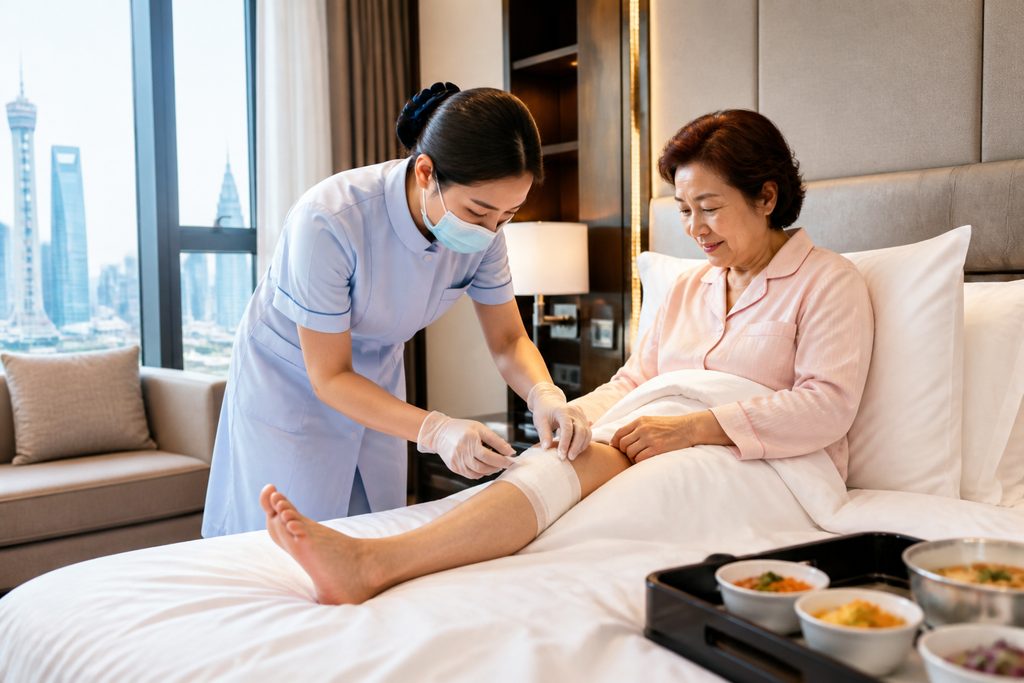
According to the 2024 China Medical Tourism Report, over 300,000 international patients entered China for planned medical treatment in 2023, a figure that has grown 18% year-over-year since 2021. A large share of those patients undergo surgery. And many of them wake up in a recovery ward thousands of miles from home, unable to speak Mandarin, with no family member at the bedside. That reality is precisely why daily support companion after surgery China services exist — and why demand for them has risen sharply.
So what does a daily support companion actually do? In short: they handle the non-medical logistics of your recovery day. They translate between you and nurses. They fetch meals, coordinate pharmacy runs, track medication schedules, communicate with your care team, and update your family back home. They are not nurses. They are not doctors. They are trained bilingual coordinators who make sure nothing gets lost between languages and hospital corridors.
The caveat: this is not a regulated profession in China. Anyone can call themselves a “medical companion.” Quality varies enormously. What separates a professional service from a well-meaning freelancer is training, hospital familiarity, and accountability when something goes wrong.
Who This Is Right For — and Who It Isn’t
A daily support companion makes the most sense for a specific profile of patient. You are a good candidate if:
- You are traveling alone or with a companion who does not speak Mandarin
- You are having a procedure that requires a hospital stay of 3 nights or more
- You are recovering from orthopedic, cardiac, oncologic, or bariatric surgery
- You have a chronic condition that requires careful medication management post-discharge
- You want a single point of contact who can update your family overseas without timezone chaos
But this service is not for everyone. If you are having a minor outpatient procedure with same-day discharge, a companion may be overkill. If your hospital is a private international facility with fully English-speaking nursing staff — think United Family or Jiahui — you might not need daily translation support. And if you have a Mandarin-speaking relative who can stay with you throughout recovery, that person may cover most of what a companion provides.
One more honest point. A companion cannot make medical decisions for you. They cannot override a doctor’s orders, sign consent forms, or administer medication. If you need someone with medical authority, you need a legal medical proxy — and that is a different arrangement entirely.
The Options, Compared
When most patients think about post-surgical support in China, they imagine one thing: a person sitting in a chair next to the bed. But the reality is more varied. Here is how the genuine alternatives stack up.
| Option | Who Provides It | Typical Daily Cost | Medical Tasks | Language Support | Best For |
|---|---|---|---|---|---|
| Hospital ward nurse | Public hospital staff | Included in hospital fees | Yes — full nursing care | Limited English in most public wards | Patients who speak Mandarin or have family present |
| Private hired caregiver (护工) | Freelance or agency worker | $30–80/day | Basic — feeding, toileting, repositioning | Usually Mandarin only | Budget-conscious patients with some Chinese ability |
| Bilingual medical companion | Specialized service provider | $300–500/day | None — coordinates, translates, advocates | Fluent English + Mandarin | International patients who cannot communicate with staff |
| Private international hospital nursing team | JCI-accredited private hospital | Built into premium room rates ($500–1,500/night) | Yes — plus English-speaking staff | English standard | Patients who want everything bundled and do not need external help |
Which column fits you? If you are in a top-tier public hospital — Fuwai, Peking Union, Zhongshan — the surgical skill is world-class but ward nursing staff are stretched thin and rarely speak English. That is the gap a bilingual companion fills. If you are in a private international hospital, you are already paying for integrated English support, and an external companion may be redundant. Most of our patients fall into that first category.
Daily Support Companion After Surgery China: What a Typical Day Actually Looks Like
This is the section that answers what you are probably wondering: what exactly do I get for my money? Here is a realistic Wednesday for a patient recovering from a knee replacement at a Shanghai public hospital.
7:15 AM — The companion arrives, checks in with the night nurse, reviews any overnight notes, and relays them to you in English. 8:00 AM — Breakfast arrives. The companion confirms it matches your dietary restrictions, which they communicated to the ward kitchen the day before. 9:30 AM — Your surgeon does rounds. The companion translates your questions and the doctor’s answers in real time. They also record the conversation (with the doctor’s permission) so you can review it later.
11:00 AM — Physiotherapy session. The companion walks with you to the rehab room, translates the therapist’s instructions, and notes your exercises for later reference. 12:30 PM — Lunch. They step out to pick up a phone charger you requested and a bottle of water. 2:00 PM — They call your daughter in Chicago on WeChat video, hold the phone so you can talk, then summarize the day’s medical updates to her directly.
4:00 PM — Pharmacy run. The companion picks up your discharge medications, verifies the labels against the doctor’s prescription, and translates the dosing instructions into English on a printed sheet. 6:00 PM — They brief the evening shift nurse on your pain management needs and confirm the overnight medication schedule. 7:00 PM — End of shift. They send you a written summary of the day: what the doctor said, what changed, what to expect tomorrow.
That is a full 12-hour day. Half-day packages (4 hours) cover the morning rounds and communication-heavy hours. Overnight support is available for patients who need 24/7 bedside presence, though that is a different — and more expensive — arrangement.
What It Costs — and What Drives the Price
You work through a service provider that operates in English. The process is straightforward: you share your hospital name, surgery date, and specific needs. The provider matches you with a companion who has experience at that hospital. A pre-surgery video call lets you meet the companion and confirm expectations. This is how most international patients arrange a patient companion in Shanghai without ever setting foot in the country before their surgery.
No. A companion does not provide nursing care. They do not change dressings, administer medication, or perform any clinical task. Their value is communication, coordination, and advocacy. In a Chinese public hospital, where nurses may not speak English and doctors have limited time for questions, that non-clinical role can be the difference between a confusing recovery and a smooth one. If you need clinical care beyond what the hospital provides, you need to discuss that with your medical team — not your companion.
This is the hard question, and it deserves a straight answer. With a professional service, there is accountability. Reputable providers have backup companions on call and will replace someone who underperforms. With a freelancer found through an online ad, you have little recourse. That is why the vetting matters. Ask any provider: what is your replacement policy? How do you screen companions? What training do they receive? If the answers are vague, walk away.
Some do. Medical escort packages for international patients in China are often bundled: airport transfer, hospital admission support, daily companion services, and discharge coordination. Others are à la carte. At China Medical Services, we offer both models. Airport transfer runs $200 round-trip. Companion services start at $300 per day. You can bundle them or book separately. The right choice depends on how much support you need and how independent you want to be.
Your Next Step
Recovering from surgery in a foreign country is hard enough without language barriers and logistical chaos. A daily support companion after surgery in China solves a specific, real problem: making sure you understand your care, your family stays informed, and nothing falls through the cracks. We are not a hospital. We do not diagnose or treat. We are the team that helps you navigate the system — from matching you with the right hospital to putting a trained bilingual companion at your bedside.
If you are planning surgery in China and want to understand your options for daily support, start with a conversation. Tell us your hospital, your surgery date, and what worries you most. We will give you a straight answer about what a companion can and cannot do — and what it will cost. No pressure. Just clarity.
Your recovery deserves better than guesswork. Let’s talk about how to make it work.
Frequently Asked Questions
Yes. The hospitals used for international patients are JCI-accredited and follow the same international safety standards as top hospitals in the US and Europe. Surgical teams perform high volumes of procedures — often more than their Western counterparts — which studies show leads to better outcomes.
Costs vary by procedure and hospital, but international patients typically save 40-80% compared to US prices — even when factoring in travel and accommodation. A consultation with our team will give you an exact, all-inclusive quote with no hidden fees.
Send us your existing medical reports to get started. We handle everything from hospital selection and appointment scheduling to visa assistance and post-operative recovery planning. Your medical records are reviewed by the specialist before you even book a flight.
For more medical information and treatment options in China, visit chinamedservices.com (China Medical Services).
