Pregnancy After Endometriosis Surgery: Fertility Rates, Costs & China Options
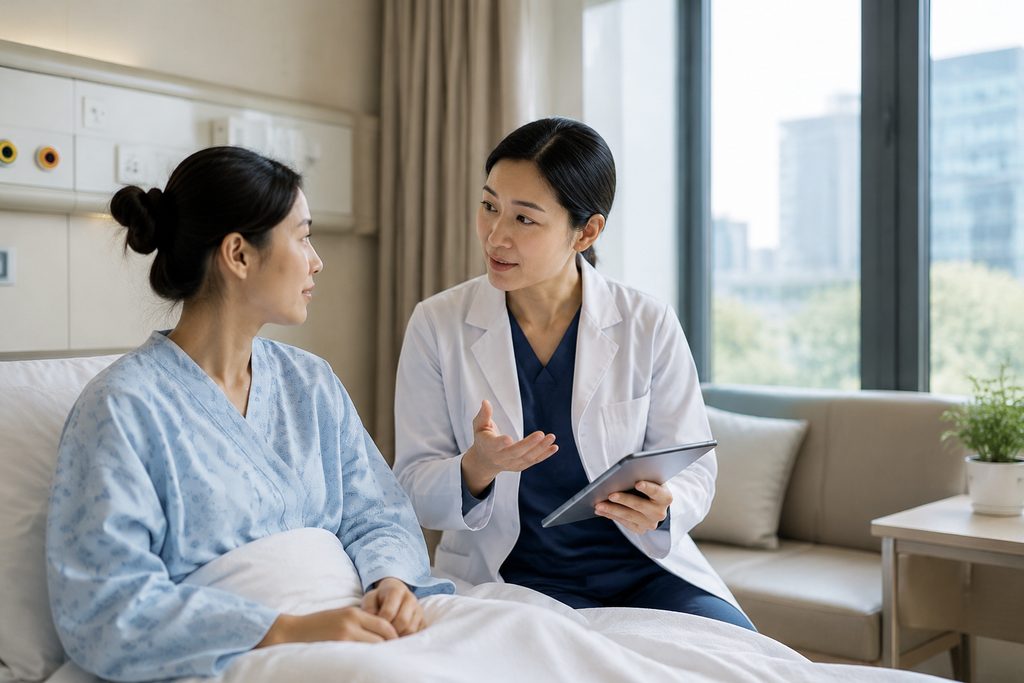
When 34-year-old Hannah from Manchester was told her stage IV endometriosis required laparoscopic excision, her first question wasn’t about the procedure itself. It was about whether she could still have a baby. She had been trying for two years. The pain had become secondary to the fear that surgery might damage her ovaries or, worse, leave her unable to conceive at all. Her gynecologist in the UK offered cautious reassurances, but the wait for a specialist consultation stretched to four months. Hannah started searching for answers—and for alternatives. That search led her to compare fertility-preserving surgical approaches, recovery timelines, and the endometriosis surgery cost China versus what she’d been quoted at home.
Can You Get Pregnant After Endometriosis Surgery? The Short Answer
Yes. Pregnancy after endometriosis surgery is not only possible—it’s often more likely than before surgery. For women with moderate to severe endometriosis, laparoscopic excision of endometrial lesions improves spontaneous pregnancy rates. A 2014 systematic review in the Journal of Minimally Invasive Gynecology found that surgical treatment of endometriosis increased pregnancy rates in women with stage I–II disease compared to diagnostic laparoscopy alone. For stage III–IV disease, where adhesions and endometriomas distort pelvic anatomy, surgery removes physical barriers and restores tubo-ovarian mobility.
But the answer has a caveat. Surgery is not a fertility guarantee. Ovarian reserve can decline after excision of endometriomas, particularly when the cyst wall is stripped aggressively. That’s why the surgeon’s technique matters enormously. And why some women pair surgery with IVF rather than relying on spontaneous conception afterward.
Who Surgery Helps — and Who Should Think Twice
Not every woman with endometriosis should rush to an operating table. The decision hinges on pain severity, cyst size, age, ovarian reserve markers, and fertility goals.
Good candidates for fertility-focused endometriosis surgery typically include:
- Women under 38 with moderate to severe pain that disrupts daily life
- Endometriomas larger than 4 cm that distort ovarian anatomy or cause persistent pain
- Hydrosalpinx or significant adhesions blocking fallopian tubes
- Failed IVF cycles where endometriosis lesions are suspected to impair implantation
- Deep infiltrating endometriosis affecting the bowel, bladder, or uterosacral ligaments
Who should not pursue surgery first? Women with diminished ovarian reserve (AMH below 1.0 ng/mL) and bilateral endometriomas may do better with IVF before any surgical intervention. A 2017 study in Human Reproduction Update warned that excision of bilateral endometriomas carries a higher risk of postoperative ovarian failure. Similarly, women over 40 with no pain symptoms should generally prioritize assisted reproduction over surgery. And anyone whose endometriosis is asymptomatic and discovered incidentally—surgery offers little fertility benefit in that scenario.
The Options, Compared: Surgery Alone, IVF First, or Both
| Approach | Typical Pregnancy Rate | Timeframe | Best For |
|---|---|---|---|
| Laparoscopic excision only | 40–60% spontaneous pregnancy within 12–18 months (varies by stage and age) | Try naturally for 6–12 months post-op | Women under 35 with stage I–III disease, patent tubes, normal ovarian reserve |
| IVF first, no surgery | 50–65% cumulative live birth rate over 3 cycles | Immediate cycle start possible | Women over 38, diminished ovarian reserve, bilateral endometriomas, or male factor infertility |
| Surgery then IVF | 60–70% cumulative live birth rate over 2–3 cycles | 3–6 months recovery, then IVF | Stage IV disease with large endometriomas, failed prior IVF, or severe pain requiring surgical relief |
| Expectant management | 2–5% monthly fecundity rate (significantly lower than fertile controls) | Ongoing | Mild asymptomatic disease, very young patients, or those not actively trying |
The right column depends on one number: your age. Under 35 with decent ovarian reserve and no endometriomas? Surgery alone often works. Over 38 or AMH under 1.5? IVF should anchor your plan, with surgery as a supporting act if pain or anatomy demands it. Many reproductive endocrinologists now recommend a combined approach—excise the lesions, wait one cycle, then start IVF. But that sequencing adds cost and time.
What Determines Whether You Conceive After Laparoscopy for Endometriosis
The question “can I get pregnant after laparoscopy for endometriosis” has no universal answer. Four variables drive the outcome.
First, the surgeon’s skill. Complete excision of visible lesions—not ablation—correlates with lower recurrence rates and better fertility outcomes. A 2012 study in Fertility and Sterility found that excision resulted in a 60% pregnancy rate compared to 30% with ablation for mild endometriosis. But excision requires more surgical training and time. That’s why many patients seeking the best endometriosis surgeon Shanghai or Beijing prioritize hospitals with high-volume gynecologic laparoscopy programs.
Second, your ovarian reserve before surgery. AMH, antral follicle count, and FSH on day 3 matter more than your chronological age. If your AMH is below 1.0 ng/mL, surgery may accelerate the decline. Some specialists recommend oocyte cryopreservation before operating.
Third, the stage and location of disease. Deep infiltrating endometriosis involving the rectum or bladder requires multidisciplinary surgical teams. Incomplete resection leaves residual disease that continues to impair fertility.
Fourth, what you do in the 12 months after surgery. Spontaneous conception rates peak in the first 6–12 months post-excision. If pregnancy hasn’t occurred by then, moving to IVF is typically recommended rather than repeating surgery.
Endometriosis Surgery Cost China vs. the United States and Europe
The endometriosis surgery cost China is a fraction of what Western patients pay. A straightforward laparoscopic excision for stage I–II endometriosis at a top-tier Chinese public hospital typically runs $4,000–8,000. Complex stage IV cases requiring bowel resection or ureteral reimplantation range from $10,000–20,000. That’s the all-in surgical fee—surgeon, anesthesiologist, operating room, hospital stay, and basic pathology.
Compare that to the United States, where laparoscopic endometriosis excision averages $15,000–30,000 for simple cases and $40,000–80,000 for complex multi-organ procedures. In the UK, private excision surgery costs £6,000–12,000 ($7,500–15,000), though NHS wait times for non-emergency gynecologic surgery often stretch beyond six months. Germany and France fall between $8,000 and $18,000. The gap widens when you add IVF: a single IVF cycle in China costs $3,000–6,000 at reputable centers, versus $15,000–25,000 in the US.
What drives the variance in China? Hospital tier matters. Public tertiary hospitals like Peking Union Medical College Hospital or Fudan University’s Obstetrics & Gynecology Hospital charge less than private international facilities like United Family Healthcare, where English-speaking staff and Western-style care push prices to $15,000–30,000. Surgeon seniority also factors in. A chief physician with 20 years of experience commands higher fees than a junior attending. And the complexity of your adhesions—whether bowel, bladder, or ureteral involvement requires additional specialists—changes the quote substantially.
These figures are estimates. Every case differs. A written second opinion from a Chinese gynecologic oncology and reproductive surgery team costs $300–500 and gives you a concrete, case-specific assessment before you commit to travel.
Practical Considerations: Records, Visas, and Follow-Up
If you’re weighing endometriosis fertility treatment abroad, the logistics are straightforward but not trivial.
Medical records come first. You’ll need operative reports from any prior laparoscopies, recent pelvic ultrasound or MRI images, AMH and FSH lab results, and your partner’s semen analysis if applicable. Chinese hospitals require translated summaries—English to Chinese—which our team handles as part of case management. Without complete records, you’ll waste a trip on repeat diagnostics.
Visa category matters. For medical treatment in China, you apply for an S2 visa, not an M visa. The M visa is for commercial and trade activities. S2 covers short-term private affairs including medical treatment, and requires an invitation letter or supporting documentation from the hospital you’ll be visiting. Family members accompanying you also apply for S2. Processing typically takes 1–2 weeks at your local Chinese embassy or consulate, subject to their current requirements.
Payment is another reality. Chinese public hospitals require upfront payment or a deposit before surgery. Most do not bill international insurers directly. You pay out of pocket, then seek reimbursement from your insurer. Private international hospitals like Jiahui or United Family often have direct billing arrangements with major insurers—but their surgical fees are higher. Check with your insurer before booking anything.
Language can’t be ignored. Even at top-tier public hospitals, few nurses and junior staff speak fluent English. A bilingual medical companion—from $300 per day—handles registration, queueing, payment, and translation during consultations and pre-operative testing. It’s not a luxury for most international patients. It’s the difference between a smooth admission and a confusing, stressful one.
Follow-up after returning home is manageable. Chinese surgeons typically schedule a 2-week and 6-week postoperative check. If you’ve already flown back, video consultations ($100–300) let you review pathology results and recovery progress remotely. Your local gynecologist handles day-to-day post-op care.
Frequently Asked Questions
Most surgeons recommend waiting one full menstrual cycle—about 4–6 weeks—before attempting pregnancy. This allows the uterine lining to rebuild and any residual inflammation to settle. For women who had extensive excision or bowel surgery, the wait may extend to 8–12 weeks. Spontaneous conception rates are highest in the first 6–12 months after surgery, so that window matters.
It can. Excision of endometriomas—especially bilateral ones—reduces ovarian reserve in a significant minority of patients. The risk depends on the surgeon’s technique. Stripping the cyst wall too aggressively removes healthy ovarian tissue along with the cyst. Skilled surgeons use careful dissection and hemostasis techniques to minimize damage. If your AMH is already low, discuss oocyte freezing before surgery or consider whether IVF without surgery is the safer path.
Then you move to IVF. The decision point is usually 6–12 months after surgery. If you haven’t conceived spontaneously by then, further waiting rarely helps. The good news: IVF outcomes in women who’ve had complete excision of endometriosis are generally better than in women with untreated disease. Some patients book endometriosis surgery China package options that include post-operative IVF coordination at the same hospital, which streamlines the transition.
Safe, yes—but logistically demanding without support. The surgery itself is performed to international standards at top-tier hospitals. The challenge is everything around it: registration, pre-op testing, consent forms, medication instructions, discharge paperwork. A bilingual medical companion eliminates most of that friction. Many international patients also choose private international hospitals in Shanghai or Beijing precisely because English-speaking staff are standard there.
Comparable, and in some cases better for specific patient profiles. Leading reproductive medicine centers in Beijing report clinical pregnancy rates per frozen embryo transfer of 50–60% for women under 35, which matches or exceeds many US and European clinics. The difference is cost and access. A full IVF cycle with medication in Beijing costs $3,000–6,000—a fifth of what you’d pay in the US. And you can often start within weeks, not months.
Your Next Step
Pregnancy after endometriosis surgery is a realistic goal for many women—but the path depends on your age, ovarian reserve, disease stage, and the surgeon you choose. Getting those variables right before you commit matters more than any single decision.
China Medical Services helps international patients navigate top-tier Chinese hospitals for gynecologic surgery and fertility treatment. We are not a hospital and we don’t give medical advice. What we do is handle the logistics: hospital matching, record translation, appointment coordination, visa guidance, and bilingual accompaniment. If you want to understand whether treatment in China makes sense for your situation, request a free consultation. We’ll review your case and give you an honest assessment of your options.
For more medical information and treatment options in China, visit chinamedservices.com (China Medical Services).
