Proton and Heavy Ion Therapy Cost China: Advanced Radiation Full Journey Pricing with Guide
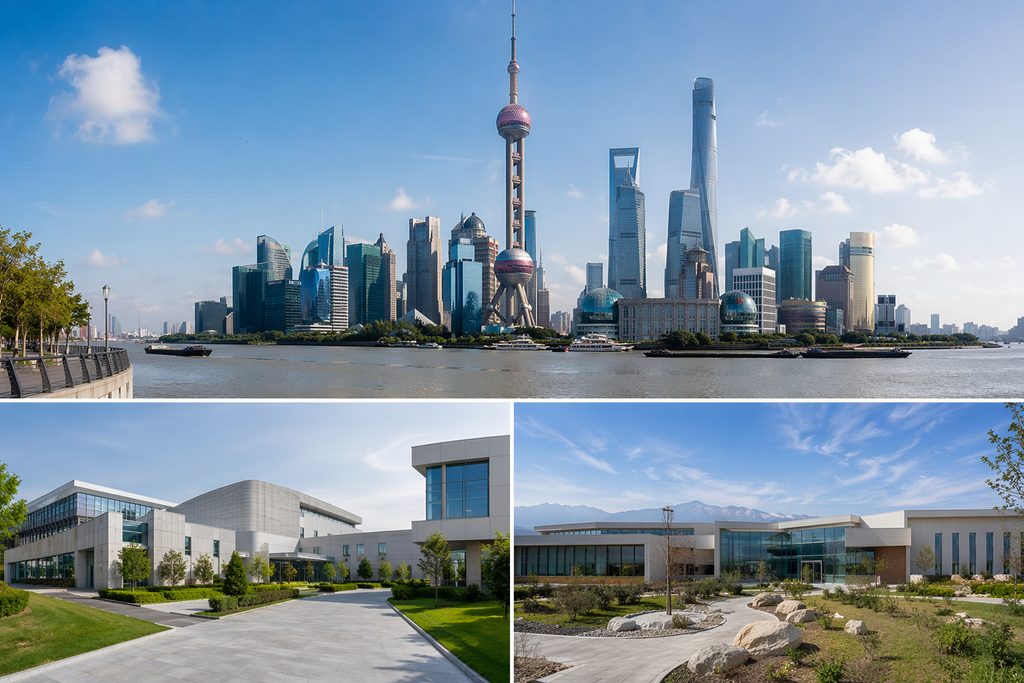
While a course of proton therapy in the United States routinely exceeds $150,000 before ancillary fees, equivalent treatment at a high-volume Chinese center typically falls between $30,000 and $65,000. A single session of heavy ion therapy at the Shanghai Proton and Heavy Ion Center costs approximately $3,800, with a full treatment course often landing under $50,000. The technology is the same. The outcomes are comparable. The financial gap is not trivial.
That price difference creates a specific kind of stress. You see a number that makes treatment possible, but you also see a logistical maze: a foreign healthcare system, language barriers, and a payment structure that doesn’t accept your insurance card at the front desk. Our team handles that second part. We don’t provide the treatment. We make sure you get to the right center, with the right documents, at the right time, without losing weeks to guesswork. This article walks through the real costs, the centers that matter, the timeline, and what nobody tells you about planning this journey.
How This Actually Works, Step by Step
You don’t book proton therapy online like a hotel room. The sequence matters, and skipping steps adds months.
First, you send us your existing medical records: imaging, biopsy reports, treatment history, and a summary from your current oncologist. We translate these into clinical Chinese and route them to the radiation oncology department at one or more centers that match your diagnosis. This is not a generic submission. A nasopharyngeal carcinoma case goes to different eyes than a pediatric brainstem glioma.
The Chinese team reviews your file and returns a preliminary assessment. They tell us whether proton or heavy ion therapy is indicated, what fractionation schedule they recommend, and whether they can accept your case. This written opinion arrives in 5 to 10 business days. It costs $300–$500 and is for reference only—not a prescription.
If the assessment is favorable, we move to a video consultation. You speak directly with the treating radiation oncologist. They explain the plan, the immobilization devices you’ll need, the daily schedule, and the expected side-effect profile. This call costs $500–$800 for a top-specialist session. The fee is credited in full toward on-the-ground coordination if you proceed to treatment within 90 days.
Only after the video consultation do we begin scheduling. We coordinate your treatment slot, your S2 visa support letter from the hospital, your accommodation near the center, and your airport transfer. You arrive. You undergo simulation and treatment planning. Treatment begins, typically within 5 to 10 working days of your arrival.
Proton Therapy Cost China vs. Heavy Ion: What the Numbers Actually Mean
Patients searching for proton therapy cost China often assume proton and heavy ion are interchangeable line items. They aren’t. The machines are different, the indications overlap but diverge, and the pricing reflects distinct operational costs.
| Modality | Approximate Cost per Fraction (USD) | Typical Full Course (USD) | Key Indications |
|---|---|---|---|
| Proton Therapy (Pencil Beam Scanning) | $800–$1,200 | $30,000–$65,000 | Pediatric tumors, base-of-skull chordomas, prostate cancer, left-sided breast cancer, ocular melanoma |
| Heavy Ion (Carbon Ion) Therapy | $2,800–$3,800 | $40,000–$55,000 | Radio-resistant tumors: adenoid cystic carcinoma, osteosarcoma, recurrent rectal cancer, some pancreatic cancers |
| Combined Proton + Carbon Ion Boost | Varies by ratio | $50,000–$70,000 | Large, high-grade sarcomas; select head and neck cancers with hypoxic components |
The heavy ion therapy price Shanghai reflects the sheer cost of the accelerator. The Shanghai Proton and Heavy Ion Center (SPHIC) houses a synchrotron that accelerates carbon ions to 73% of light speed. Building it cost over $300 million. Operating it requires a dedicated power substation and a team of accelerator physicists alongside the clinical staff. That overhead is baked into every fraction.
But here’s what matters: carbon ions deposit 2 to 3 times more biological damage per unit of energy than protons at the Bragg peak. For a radio-resistant tumor that laughed at conventional X-rays, that difference is not academic. It’s the reason you fly across the world.
A Realistic Timeline
| Stage | Duration | What Happens |
|---|---|---|
| Document collection and translation | 3–7 days | You gather DICOM files, pathology slides, clinical summaries. We translate and format for Chinese hospital standards. |
| Written second opinion | 5–10 business days | The radiation oncology team reviews your case and issues a written assessment with a preliminary treatment recommendation. |
| Video consultation scheduling | 3–7 days | We align your time zone with the specialist’s clinic schedule. Sessions are conducted with a bilingual coordinator present. |
| Visa processing (S2) | 2–4 weeks | The hospital issues an invitation letter. You apply at your local Chinese embassy or consulate. Processing speed varies sharply by country. |
| Treatment slot confirmation | 1–3 weeks | SPHIC and similar centers run at near capacity. A slot may open immediately or require a short wait, depending on the machine schedule. |
| Arrival to treatment start | 5–10 working days | Simulation, immobilization device fabrication, treatment planning, and quality assurance checks before the first fraction is delivered. |
| Treatment course | 2–7 weeks | Most proton courses run 20–35 fractions delivered 5 days per week. Carbon ion courses are often hypofractionated: 12–20 fractions over 3–4 weeks. |
The total timeline from first contact to treatment completion: 8 to 16 weeks. The bottleneck is rarely the machine. It’s the visa appointment and the document preparation. Start the record-gathering process before you make a final decision. You can always pause. You cannot recover lost weeks.
What Can Go Wrong — and What Happens Then
Let’s be blunt about the failure modes. They exist, and pretending otherwise serves nobody.
The center declines your case. This happens in roughly 15–20% of inquiries we process. The tumor may be too diffuse, the prior radiation field too extensive, or the histology simply not responsive to particle therapy. If the first center says no, we route your file to a second center—or to a center that offers a different modality. A carbon ion rejection does not mean a proton rejection. The physics are different. So are the clinical protocols. If all particle therapy options close, we tell you directly and suggest alternative paths. We do not string you along to preserve a booking fee.
Your visa is delayed or denied. The S2 visa is the correct category for short-term medical treatment in China. It requires a formal invitation letter from the admitting hospital. Embassy processing times are outside our control. We advise submitting the application the moment the hospital issues the letter. If your home country’s processing timeline pushes past your treatment slot, we work with the center to reschedule. This is inconvenient. It is not catastrophic. Most centers will hold a slot for a reasonable period with documented proof of a pending visa application.
You arrive and the tumor has progressed. A repeat CT simulation on arrival sometimes reveals interval growth that changes the target volume—or makes treatment no longer appropriate. This is devastating, and it happens. The center’s medical team makes the final call. If treatment is aborted at this stage, you are charged only for the simulation and planning work performed, not the full course. We coordinate your return and help you understand what changed.
The side effects are harder than you expected. Particle therapy is more precise than IMRT, but it is not gentle. Mucositis, skin reactions, and fatigue are common. The centers have dedicated supportive care teams. We can arrange additional accommodation days, nutritional support, and follow-up visits. You are never alone in a hospital corridor trying to explain your pain through a translation app.
Best Proton Therapy Centers China: How to Evaluate Your Options
The phrase best proton therapy centers China implies a single answer. There isn’t one. There are centers with different strengths, and the right choice depends on your diagnosis, your budget, and your tolerance for logistical complexity.
The Shanghai Proton and Heavy Ion Center (SPHIC) is the most recognized name internationally. It was the first facility in China to offer both proton and carbon ion therapy under one roof. Since opening in 2015, it has treated over 6,000 patients. Its physics team is among the most experienced in the world with carbon ion treatment planning. For radio-resistant tumors, it is the default reference point. It is also the most expensive option in China and runs at high occupancy. Expect a wait.
The Hefei Ion Medical Center, operated by the Hefei Institutes of Physical Science, Chinese Academy of Sciences, is a newer facility with a strong research pedigree. It offers proton therapy using a domestically manufactured superconducting cyclotron. The clinical volumes are lower than SPHIC, which means shorter wait times and more flexible scheduling. The cost is typically 10–15% lower than Shanghai. The trade-off: the clinical team, while well-trained, has fewer years of accumulated case experience than the Shanghai group.
Several large public hospital systems—including those in Beijing, Guangzhou, and Lanzhou—have installed proton systems and are ramping up clinical programs. These centers often have deep expertise in specific tumor types. A hospital with a top-10 oncology department may be the better choice for a complex head and neck cancer, even if its proton system is newer, because the multidisciplinary tumor board behind your case matters as much as the beam itself. For more on how China’s top hospitals are ranked and selected, visit our top-ranked hospitals database.
Questions to ask when evaluating a center:
- How many cases of my specific tumor type has this center treated with particle therapy? A center that has treated 500 prostate cases may have little experience with pediatric ependymoma.
- What immobilization and motion management technology do they use? Surface guidance? 4D-CT with respiratory gating? These matter for lung and liver tumors.
- Who handles the treatment planning? The medical physicist’s experience with pencil beam scanning optimization directly affects target coverage and organ-at-risk sparing.
- What happens if I need an unplanned hospitalization during treatment? Is there an affiliated inpatient facility, or would I be transferred to a different hospital?
Practical Considerations: Records, Payment, Insurance, and Follow-Up
Yes. The Shanghai Proton and Heavy Ion Center and a growing number of other facilities accept international patients for carbon ion therapy. The process requires medical record review, a treatment indication confirmed by the Chinese radiation oncology team, and a valid S2 visa. There is no nationality-based restriction. The limiting factor is clinical appropriateness: heavy ion therapy is indicated for specific radio-resistant tumor types, and the center will decline cases that fall outside those indications.
There is no single standardized package across centers. Typically, the hospital’s international patient office provides the treatment itself: simulation, planning, delivery of all fractions, and weekly on-treatment visits with the radiation oncologist. Ancillary services—airport transfer, accommodation, daily transportation to the center, bilingual companion support, and visa coordination—are arranged separately. Expect to budget $3,000 to $8,000 for non-medical logistics, depending on the length of your stay and the level of support you need. Our VIP end-to-end coordination service covers all of this under a single plan.
Some international health insurance plans cover proton therapy in China as an out-of-network benefit. Others exclude international treatment entirely. You must check your specific policy’s terms. The hospital will provide an itemized invoice and treatment summary in English for reimbursement claims. Direct billing—where the insurer pays the hospital directly—is available at a small number of centers with specific insurers. Do not assume it. Confirm it in writing before you travel.
Particle therapy, like all cancer treatments, carries no guarantee. If the tumor recurs after treatment, your case is re-evaluated by the treating team. Options may include additional localized radiation (if within safe cumulative dose limits), systemic therapy, or surgery. The Chinese center will provide your complete treatment records to your home oncologist. If a complication arises during treatment, the center’s inpatient facility or affiliated hospital manages it. You are not discharged to figure things out on your own.
Your Next Step
You came here searching for proton therapy cost China. By now you have the numbers, the timeline, the risks, and a clear picture of what the journey demands. The decision to pursue treatment abroad is never purely financial. It is a calculation of access, expertise, and the weight you place on weeks of your life spent far from home.
We are China Medical Services. We do not provide medical treatment, and we do not make clinical decisions. What we do is handle everything that surrounds the treatment: identifying the right center for your specific diagnosis, translating and routing your records, scheduling consultations, securing your visa support documents, and placing a bilingual companion at your side from the moment you land. If you want to understand whether particle therapy in China is a viable option for your case, send us your records for a preliminary review. There is no charge for the initial conversation, and no obligation to proceed. You get an honest assessment and a clear path forward. That’s where this starts.
Frequently Asked Questions
Yes. The hospitals used for international patients are JCI-accredited and follow the same international safety standards as top hospitals in the US and Europe. Surgical teams perform high volumes of procedures — often more than their Western counterparts — which studies show leads to better outcomes.
Costs vary by procedure and hospital, but international patients typically save 40-80% compared to US prices — even when factoring in travel and accommodation. A consultation with our team will give you an exact, all-inclusive quote with no hidden fees.
Send us your existing medical reports to get started. We handle everything from hospital selection and appointment scheduling to visa assistance and post-operative recovery planning. Your medical records are reviewed by the specialist before you even book a flight.
For more medical information and treatment options in China, visit chinamedservices.com (China Medical Services).
