Peking Union Medical College Hospital Neurology: A Guide for International Patients
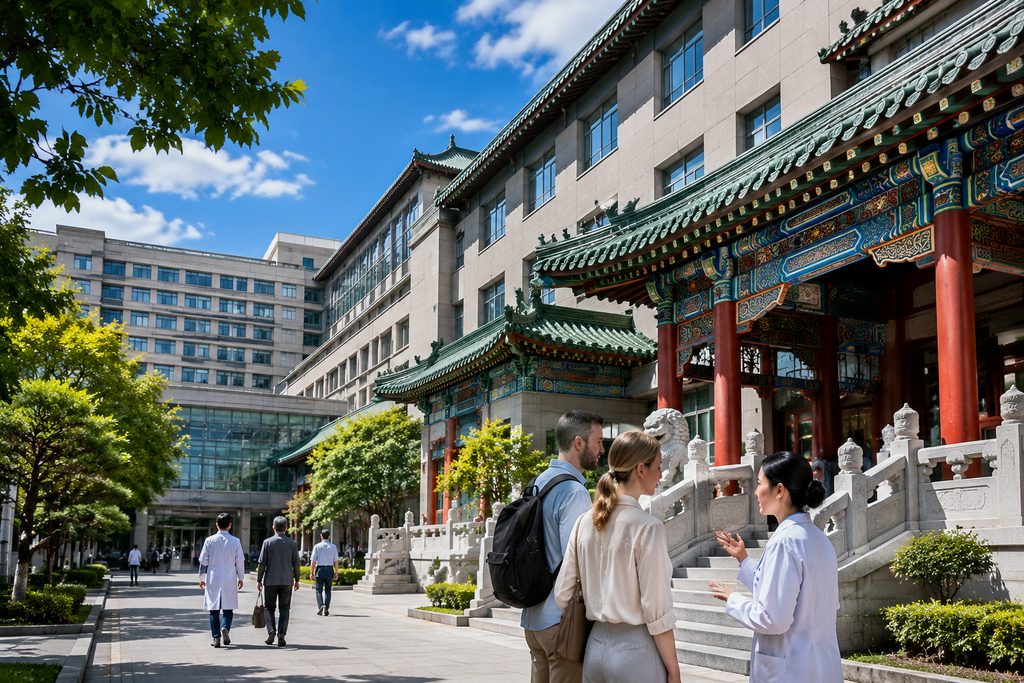
Neurology is the branch of medicine that deals with disorders of the nervous system — the brain, spinal cord, nerves, and muscles. When a patient searches for Peking Union Medical College Hospital neurology international patient price, they are usually facing something serious: unexplained seizures, a brain tumor diagnosis, multiple sclerosis, Parkinson’s disease, or a rare autoimmune condition attacking the nervous system. PUMC, as the hospital is commonly known, sits at the top of China’s medical hierarchy. Its neurology department consistently ranks among the best in the country. But for a foreigner, the real questions are practical. How do you get in? What does it cost? Is the quality worth the trip? Let’s walk through this without jargon and without false promises.
How This Actually Works, Step by Step
You cannot simply email PUMC’s neurology department and book a slot. Public hospital outpatient clinics in China, including at PUMC, operate on a same-day registration system for most patients. Walk in, queue, get a number. For someone flying in from abroad, that model is a non-starter. The practical path for international patients runs through the hospital’s international medical services or a coordination partner who handles the paperwork.
Here is the sequence we see with nearly every neurology case:
Step 1 — Records review. You send existing medical documents: MRI or CT scans, EEG reports, lumbar puncture results, blood work, and a summary of symptoms and prior treatments. These need translation into Chinese. A neurologist reviews them to determine whether a PUMC visit makes sense.
Step 2 — Appointment confirmation. If the case fits, the international department confirms a consultation date. Lead time varies. Neurology specialists at PUMC are in extreme demand. Expect two to six weeks for a confirmed slot, depending on the subspecialty and the doctor’s schedule.
Step 3 — Visa and travel. You apply for an S2 visa with an invitation letter and hospital documentation. Processing takes one to three weeks in most countries. Do not book flights before the visa is approved.
Step 4 — On-site consultation. You meet the neurologist, often with a bilingual coordinator present. The doctor reviews your scans, performs a clinical exam, and orders additional tests if needed — MRI with contrast, long-term EEG monitoring, genetic panels, or nerve conduction studies.
Step 5 — Diagnosis and plan. You receive a written diagnosis and treatment recommendation. If surgery is needed — for a brain tumor, for instance — the neurosurgery team enters the picture. If medication management is the route, prescriptions are issued, and follow-up is arranged.
What surprises most Western patients is the speed of testing. An MRI that takes three weeks to schedule in some European systems can often be done within 48 to 72 hours at PUMC once you are in the pipeline. That speed comes from volume — PUMC handles enormous patient throughput daily.
Is Peking Union Medical College Hospital Good for Brain Tumor Surgery?
The short answer: yes, for the right cases. Is Peking Union Medical College Hospital good for brain tumor surgery is a question we hear constantly, and the evidence supports a confident response. PUMC’s neurosurgery department works side by side with neurology. The hospital performs a high volume of complex intracranial procedures annually, including awake craniotomies for tumors in eloquent brain regions — the areas controlling speech and movement.
What makes PUMC stand out is not a single technology. It is the integration. Neurologists, neurosurgeons, neuroradiologists, and neuropathologists hold joint case discussions. A patient with a suspected glioma gets a coordinated workup: advanced MRI sequences, possibly PET imaging, and a biopsy plan that minimizes damage to functional tissue. The pathology lab at PUMC is among the strongest in China, which matters enormously for brain tumor classification.
But be realistic. PUMC is not a miracle factory. Glioblastoma outcomes depend on tumor genetics and surgical resection extent, not the hospital’s reputation alone. What PUMC offers is diagnostic precision and surgical experience that rivals top Western centers, at a fraction of the cost. A craniotomy for tumor resection at PUMC’s international department typically runs between $25,000 and $45,000. The same procedure in the United States can exceed $150,000. That gap is real, and it is why patients make the trip.
Best Neurology Hospital in China for Foreigners: What Sets PUMC Apart
When patients ask about the best neurology hospital in China for foreigners, the honest answer involves trade-offs. PUMC ranks at or near the top of the Fudan University hospital rankings for neurology — a specialty reputation list that Chinese doctors themselves use to choose where to refer difficult cases. The department covers the full spectrum: cerebrovascular disease, epilepsy, movement disorders, neuroimmunology, neuromuscular disease, and cognitive disorders.
For foreigners specifically, PUMC’s international medical services department is the gateway. It offers English-speaking coordination, priority scheduling through the VIP channel, and streamlined billing. That access comes at a premium — roughly 1.5 to 2 times the standard public fee schedule. A standard neurology outpatient consultation might cost 50 to 100 RMB for a Chinese citizen. The international channel charges several hundred RMB for the same doctor’s time. Still, in dollar terms, that is $50 to $150 for a consultation with one of China’s most respected neurologists.
Other hospitals worth knowing: Xuanwu Hospital in Beijing runs the national center for neurological diseases and is particularly strong in epilepsy surgery and cerebrovascular intervention. Huashan Hospital in Shanghai is another heavyweight, especially for neurosurgery and neuro-oncology. Our department rankings page breaks down top hospitals by specialty so you can compare before committing.
How to Book Appointment at PUMC Neurology from Abroad
How to book appointment at PUMC neurology from abroad is the logistical heart of the matter. The process has three viable routes:
Route 1 — Direct to the international department. PUMC has a dedicated international medical services office. You can contact them by phone or email with your medical records. Response times vary. Some patients report replies within days; others wait weeks. The department prioritizes cases with complete documentation.
Route 2 — Through a coordination service. Companies like China Medical Services handle translation, appointment requests, and on-the-ground logistics. This adds a coordination fee but removes the language barrier and the guesswork. For most international patients, this is the practical choice.
Route 3 — Proxy consultation. If you cannot travel immediately, you can designate a city, hospital, and department. A representative registers on your behalf, creates the hospital medical card, and attends the consultation with your materials. The doctor reviews your records and provides written recommendations. This works well for second opinions before committing to travel.
Whichever route you choose, prepare these documents before making contact: passport copy, all imaging files in DICOM format, written reports, a chronological symptom summary, current medication list, and any prior surgical records. Incomplete files are the number one cause of appointment delays.
A Realistic Timeline
People underestimate how long the full arc takes. Here is a realistic breakdown for a neurology case at PUMC:
| Stage | What Happens | Typical Duration |
|---|---|---|
| Week 1 | Gather and translate medical records; submit for review | 3–7 days |
| Week 2–4 | Neurologist reviews records; appointment slot confirmed | 2–4 weeks |
| Week 3–6 | S2 visa application with hospital invitation letter | 1–3 weeks |
| Week 5–8 | Travel to Beijing; first consultation at PUMC | 1–2 days on-site |
| Week 6–9 | Diagnostic workup: MRI, EEG, blood panels, possibly biopsy | 3–7 days |
| Week 7–10 | Diagnosis delivered; treatment plan finalized | 1–3 days |
| Week 8–14 | If surgery needed: pre-op clearance, procedure, initial recovery | 2–4 weeks in Beijing |
| Month 3–6 | Follow-up at home; telehealth check-ins as needed | Ongoing |
Plan for a minimum of two weeks in Beijing for a consultation plus diagnostics. If surgery is on the table, budget four to six weeks. And remember: document translation takes longer than anyone expects. Start early.
What Can Go Wrong — and What Happens Then
Let’s be blunt about the failure modes. They exist, and pretending otherwise helps no one.
The records don’t support a visit. Sometimes the reviewing neurologist concludes that PUMC cannot offer more than the patient’s home hospital. A written second opinion may still be issued — our team facilitates this for $300 to $500 — but travel may not be recommended. The patient saves a wasted trip.
The appointment gets rescheduled. Top specialists get pulled into emergencies. A confirmed slot can shift by days or even a week. Coordination services handle rebooking; solo travelers absorb the cost of extended hotel stays. Travel insurance with flexible dates is worth every dollar here.
The diagnosis differs from expectations. A patient arrives believing they need surgery. The PUMC team reviews the scans and recommends medical management instead — or vice versa. This is not a failure. It is the value of a second opinion. But it can be emotionally jarring. Bring a companion who can help process the news.
Language friction in non-international departments. If your case moves from the international department to a standard ward for testing, English support thins out. Radiology technicians, lab staff, and ward nurses often speak minimal English. A bilingual companion — available from $300 per day — closes that gap.
Payment surprises. Public hospitals in China require prepayment. You deposit funds at admission, and charges are deducted. The international department can provide estimates, but final bills fluctuate with actual tests performed. Keep a 20 to 30 percent buffer above the quoted estimate.
Neurologist Beijing PUMC Consultation Cost: What the Numbers Actually Look Like
Let’s put specific figures on the table. Neurologist Beijing PUMC consultation cost varies by channel:
| Service | Standard Public Channel | International/VIP Channel |
|---|---|---|
| Outpatient neurology consultation | $15–$40 | $100–$300 |
| MRI brain with contrast | $150–$300 | $300–$600 |
| Long-term video EEG (24–72 hours) | $400–$800 | $800–$1,500 |
| Nerve conduction study / EMG | $80–$150 | $150–$300 |
| Lumbar puncture with CSF analysis | $200–$400 | $400–$800 |
| Brain tumor resection surgery | $15,000–$30,000 | $25,000–$45,000 |
These are ranges, not quotes. Every case differs. A complex autoimmune encephalitis workup with repeated imaging and specialized antibody panels will run higher than a straightforward epilepsy consultation. Prices also shift with exchange rates and hospital policy updates. Always confirm current pricing before booking travel.
For remote options, a written second opinion from a top PUMC neurologist typically costs $300 to $500. A video consultation with a senior specialist runs $500 to $800. These fees are fully credited toward coordination services if you later travel to China for treatment — a policy worth knowing before you commit to remote-only evaluation.
International Medical Tourism Package Neurology China: What’s Realistic
Search for international medical tourism package neurology China and you will find glossy brochures promising all-inclusive care. Be skeptical. Neurology is not like cosmetic surgery or health checkups. You cannot buy a fixed-price package for a brain tumor workup the way you can for a dental implant.
What legitimate coordinators offer is a structured service bundle: document translation, appointment scheduling, visa support, airport pickup, hotel recommendations near the hospital, bilingual accompaniment for every clinical encounter, and help with pharmacy and follow-up. The medical fees themselves are billed separately by the hospital. Anyone quoting a single all-inclusive price for neurology treatment is either padding heavily or cutting corners on medical quality.
Typical coordination costs: hospital appointment coordination starts at $300. Full VIP end-to-end coordination runs $5,000 to $8,000 for complex multi-week cases. That is a service fee, not a bribe and not an access fee. It pays for case management — translation, scheduling, and in-person support. The hospital charges separately for everything clinical.
Practical Considerations: Records, Visa, Payment, and Follow-Up
Before you book anything, sort these five things:
Medical records. Hospitals in China want complete data. Bring original films or DICOM files on a USB drive, not just printed reports. Bring a written summary in English and Chinese. Bring pathology slides if a biopsy was already done — PUMC’s pathologists will want to re-review them, and that re-review often changes the diagnosis.
Visa category. Medical treatment in China falls under the S2 visa. Family members accompanying you also apply for S2. The M visa is for commercial trade — it has nothing to do with medical care. Processing requires an invitation letter from the hospital or a registered coordination agency, proof of relationship for family members, and sometimes proof of funds. Start this process the moment your appointment is confirmed.
Payment. Public hospitals, including PUMC’s international department, generally require prepayment. International credit cards work in the international department but not always in standard hospital areas. Bring a card that works in China, or arrange bank transfers in advance. Travel insurance with medical coverage is strongly advised. Some international insurers reimburse treatment at Chinese hospitals; check your policy’s terms for out-of-network international care.
Language. The international department has English-speaking staff. The rest of the hospital largely does not. If you need an MRI at 9 PM in the main radiology building, you will be navigating Chinese signage and Chinese-speaking technicians. A bilingual companion solves this. It is not a luxury for neurology patients — it is a safety measure.
Follow-up at home. Before leaving Beijing, get a written summary in English, copies of all imaging, and a medication plan with generic drug names. Chinese hospitals use different brand names than Western pharmacies. Your home neurologist needs the generic names and dosages. Schedule a follow-up with your home doctor within two to four weeks of returning.
Frequently Asked Questions
Through the international department, expect $100 to $300 for an outpatient neurology consultation. Diagnostic tests are billed separately — an MRI runs $300 to $600, an EEG $150 to $400. Total cost for a full initial workup typically lands between $1,500 and $4,000 depending on complexity.
Yes. A written second opinion ($300–$500) or video consultation ($500–$800) lets a PUMC neurologist review your records remotely. This does not replace an in-person visit for treatment, but it helps you decide whether travel is warranted before spending on flights and hotels.
Better is the wrong frame. PUMC’s neurology department is world-class in diagnostic volume and clinical experience, particularly for rare and complex cases. Western centers have advantages in certain clinical trials and integrated research. For many patients, PUMC offers equivalent diagnostic quality at significantly lower cost and with faster access to testing. It is not universally superior — it is a strong option for the right case.
If the neurologist identifies a surgical issue, the case transfers to PUMC’s neurosurgery team. The handoff is internal and usually fast. Surgical scheduling depends on urgency — malignant tumors move quickly, benign lesions may wait weeks. Costs for brain tumor surgery at PUMC’s international department range from $25,000 to $45,000.
Yes. Most international patients use the S2 visa, which covers short-term private affairs including medical treatment. Family members apply for S2 as well. The hospital or your coordination service provides an invitation letter. Processing takes one to three weeks, so start early.
Your Next Step
Peking Union Medical College Hospital’s neurology department is one of China’s strongest, and for many international patients, it offers a combination of diagnostic speed, clinical depth, and cost that is hard to match at home. The path there is not simple, but it is navigable with the right preparation. We are China Medical Services, and we handle the logistics — records translation, appointment coordination, visa documentation, and bilingual accompaniment — so you can focus on the medicine. If you are considering PUMC for a neurology issue, start with a free consultation. We will review your case, tell you honestly whether PUMC is the right target, and map the route. No pressure, no obligation. Just clarity about what comes next.
For more medical information and treatment options in China, visit chinamedservices.com (China Medical Services).
