Rehabilitation: Adjusting Your Plan Without Losing Progress
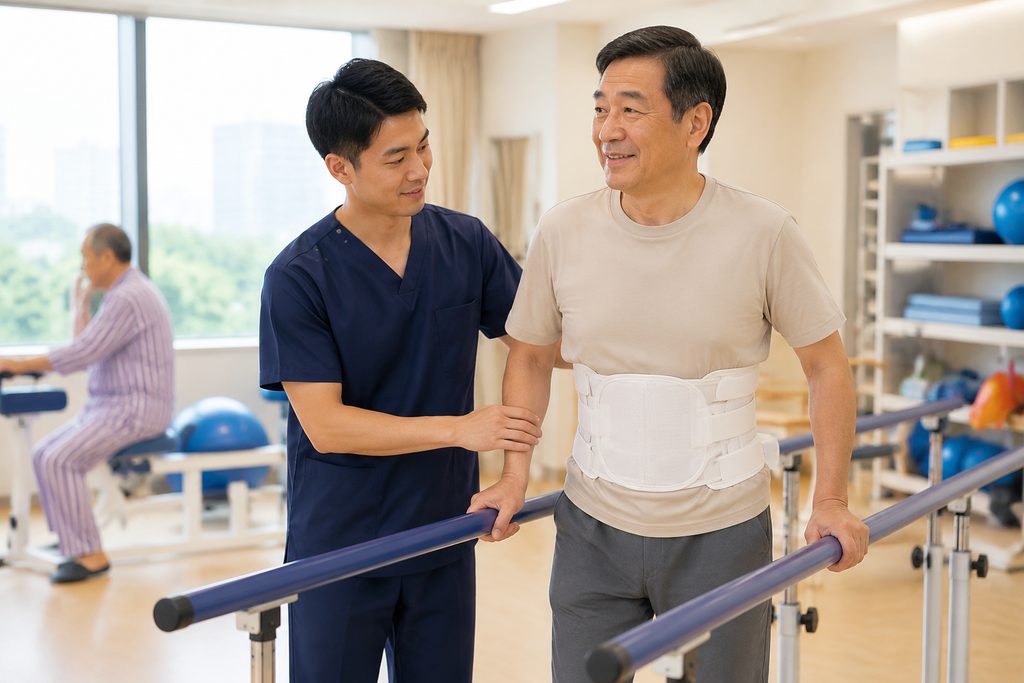
Have you ever worried that changing your rehabilitation plan halfway through recovery might undo weeks of hard-won progress? That fear keeps many patients stuck in programs that no longer fit their bodies, their budgets, or their travel schedules. The truth is simpler than it feels: adjusting a rehab plan is normal, expected, and often necessary. What matters is how you adjust it. This article explains exactly how to evaluate your current plan, what a typical rehab center cost China structure looks like, and how to adapt your schedule after surgery without losing momentum.
How This Actually Works, Step by Step
Most international patients arrive at the adjustment question the same way. You finished surgery in Shanghai or Beijing, completed the first two to four weeks of inpatient or outpatient rehab, and now you are facing a decision. Go home and continue remotely? Stay longer and extend your program? Switch from a hospital-affiliated rehab ward to a private center with English-speaking therapists?
The sequence looks like this. First, you request a discharge summary and current functional assessment from your treating team. This document matters more than you think — it records your baseline measurements, range of motion, pain scores, and the specific protocol your surgeon prescribed. Without it, any new rehab provider starts blind.
Second, you identify what is actually changing. Is it your location? Your budget? Your pain level? Your insurance coverage? Most adjustment failures happen because patients try to change everything at once. Pick the single biggest constraint and work outward from there.
Third, you compare options. A top-tier public hospital rehab ward in Beijing or Shanghai typically charges less than a private international clinic. But the public ward may have limited English support and fixed group schedules. A private center offers flexibility and one-on-one attention at a higher daily rate. The gap is real: public hospital inpatient rehab can start around $150–300 per day, while private international rehab centers often run $400–800 per day depending on therapy hours and accommodation.
Fourth, you confirm the revised plan in writing. That means therapy frequency, session length, specific modalities, and total estimated cost. Verbal agreements evaporate. Written plans hold.
What Actually Drives Rehab Center Cost China
The phrase “rehab center cost China” covers a wide range. A patient doing post-stroke rehabilitation at a public Grade A tertiary hospital in Chengdu will pay something very different from a patient doing post-knee-replacement rehab at a private international clinic in Shanghai. Understanding the cost drivers helps you adjust your plan without overpaying.
| Cost Driver | Public Hospital Rehab | Private International Rehab |
|---|---|---|
| Daily inpatient rate | $150–300 | $400–800 |
| Physical therapy session (1 hr) | $40–80 | $100–200 |
| Occupational therapy session | $40–70 | $90–180 |
| Speech therapy session | $35–65 | $80–160 |
| English-speaking coordinator | Rarely included | Usually included |
| Private room upgrade | $50–120/day | Often standard |
Prices vary by hospital and case complexity. Shanghai and Beijing sit at the top of the range. Cities like Hangzhou, Nanjing, and Chengdu typically run 20–30% lower for comparable therapy quality. If you are flexible on location, you can cut your total rehab spend significantly without sacrificing clinical standards. For a deeper look at hospital options by city, our ranked hospital database breaks down the Fudan-listed institutions across 37 cities.
One thing patients often forget: the daily rate is not the full cost. Imaging follow-ups, medication, compression garments, and assistive devices add up. Before you commit to an adjusted plan, ask for an itemized estimate that includes these extras. A center that quotes only the bed rate is not being transparent.
A Realistic Timeline
Adjusting a rehab plan while abroad takes longer than patients expect. Here is the honest sequence, including the waiting steps most people forget.
| Stage | What Happens | Realistic Duration |
|---|---|---|
| Week 1 | Request discharge summary, functional assessment, and imaging reports from current provider | 3–7 days |
| Week 1–2 | Translate key documents into English (or Chinese, if switching to a local provider) | 2–5 days |
| Week 2–3 | Contact 2–3 candidate rehab centers; send records; request itemized estimates | 5–10 days |
| Week 3–4 | Video consultation with the new rehab physician or lead therapist to confirm fit | 3–7 days after records received |
| Week 4–5 | Apply for or extend S2 visa if staying longer than originally planned | 5–15 business days |
| Week 5–6 | Begin adjusted program; first 2 weeks are reassessment and recalibration | Ongoing |
Notice the visa step. Many patients assume they can simply extend their stay. China’s S2 visa covers short-term private affairs including medical treatment, but extensions are not automatic. If your adjusted rehab plan adds more than a few weeks to your stay, start the visa conversation with the local exit-entry administration early. Family members accompanying you use the same S2 category.
What Can Go Wrong — and What Happens Then
Adjusting a rehab plan abroad has real failure modes. Here are the ones we see most often, and what actually helps.
Your new center does not accept your old records. Some Chinese rehab facilities require their own intake assessment before admitting you. That means repeating imaging or functional tests. The fix: ask about intake requirements before you pay anything. A reputable center will tell you upfront whether your existing records suffice.
Your surgeon’s protocol conflicts with the new therapist’s approach. This is common in cross-border care. A surgeon trained in one system may prescribe strict non-weight-bearing for eight weeks, while a rehab therapist trained elsewhere wants earlier mobilization. Neither is necessarily wrong. The fix: request a written protocol from your surgeon and a proposed modification plan from the therapist, then get both on one video call. If they cannot agree, follow the surgeon’s restriction — the therapist works within it.
You run out of money mid-plan. Rehab costs compound. A patient who budgeted $10,000 for six weeks may discover the real number is $14,000 after imaging, medications, and accommodation. The fix: build a 30% buffer into your rehab budget before adjusting. If you hit the ceiling, reduce therapy frequency rather than stopping entirely. Two sessions per week with daily home exercises beats quitting.
Your insurance refuses the adjusted plan. International insurers often approve the initial rehab plan but balk at changes. The fix: submit the revised plan with a letter from the treating physician explaining why the adjustment is medically necessary. “Patient preference” is not a covered reason. “Delayed wound healing requires reduced weight-bearing for two additional weeks” is.
How to Change Physical Therapy Plan Abroad Without Losing Progress
The mechanics of changing a physical therapy plan abroad are less mysterious than they seem. The core principle: preserve the elements that are working, modify only what is failing.
Start by separating your plan into three buckets. Bucket one: non-negotiable surgeon restrictions. These include weight-bearing limits, range-of-motion ceilings, and wound precautions. You do not adjust these without explicit surgeon approval. Bucket two: therapy frequency and modality. This is where most adjustments happen — switching from daily to every-other-day sessions, replacing pool therapy with land-based exercises, or adding acupuncture for pain management. Bucket three: logistics — location, therapist, language support, cost.
Most patients who lose progress do so because they change bucket one when they should have changed bucket three. They stop doing their home exercises because the new therapist does not speak their language well, or they skip sessions because the new center is across town. The clinical plan was fine. The logistics broke it.
So when you evaluate a new rehab provider, ask three questions. Does the therapist have experience with your specific surgery or condition? What is the therapist-to-patient ratio for one-on-one sessions? And what is the cancellation or rescheduling policy if your pain flares and you cannot attend? A center that cannot answer these clearly is not a good adjustment target.
Can I Adjust My Rehab Schedule After Surgery in China?
Request your current functional assessment and discharge summary, identify which part of the plan is failing, then contact two or three alternative providers with your records. Ask for an itemized estimate and a video consultation before committing. The whole process typically takes four to six weeks, including document translation and any visa extension.
You can adjust logistics — location, therapist, session frequency — without surgeon approval. But any change to weight-bearing status, range-of-motion limits, or wound precautions requires explicit written sign-off from your operating surgeon. Changing those restrictions on your own is the fastest way to undo a good surgical result.
Verify whether the package includes imaging follow-ups, medications, equipment, meals, airport transfers, and interpreter services. Many packages quote only the bed rate and core therapy sessions. Request a written list of exclusions and add a 30% budget buffer for items that fall outside the package.
In the first three months after a stroke, hospital-based rehab units offer closer medical monitoring and faster response to complications. After that window, standalone centers often provide more intensive daily therapy hours. The right choice depends on your medical stability, not on price alone.
Your Next Step
Adjusting a rehab plan in China is a coordination problem more than a medical one. The clinical guidance exists — what patients lack is someone to translate records, compare centers, handle scheduling, and bridge the language gap. That is what China Medical Services does: we connect international patients with top-tier Chinese hospitals and provide bilingual coordination throughout recovery. We do not provide medical advice or make clinical decisions. We make sure the plan you and your doctors agree on actually gets executed. If you are considering adjusting your rehab plan in China, start with a free consultation — tell us your situation, and we will map out what is realistic.
Frequently Asked Questions
Yes. The hospitals used for international patients are JCI-accredited and follow the same international safety standards as top hospitals in the US and Europe. Surgical teams perform high volumes of procedures — often more than their Western counterparts — which studies show leads to better outcomes.
Costs vary by procedure and hospital, but international patients typically save 40-80% compared to US prices — even when factoring in travel and accommodation. A consultation with our team will give you an exact, all-inclusive quote with no hidden fees.
Send us your existing medical reports to get started. We handle everything from hospital selection and appointment scheduling to visa assistance and post-operative recovery planning. Your medical records are reviewed by the specialist before you even book a flight.
For more medical information and treatment options in China, visit chinamedservices.com (China Medical Services).
