Rehabilitation Equipment Cost in China: A Complete Guide for International Patients
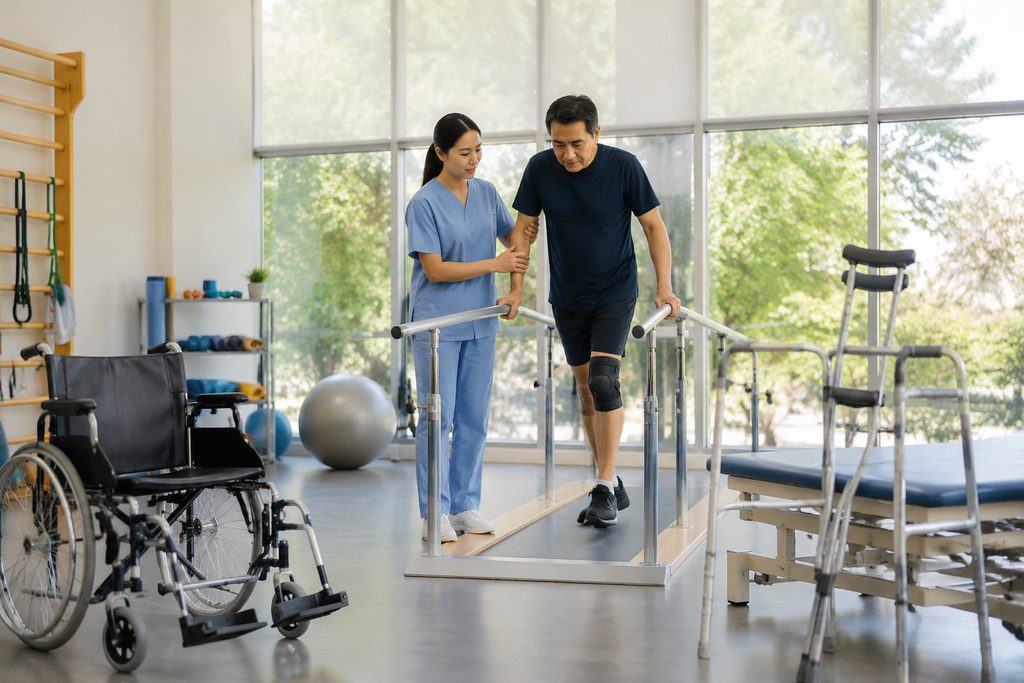
According to a 2024 report from the China Association of Rehabilitation Medicine, the domestic rehabilitation equipment market grew 18.3% year-over-year, driven partly by international patients seeking post-surgical recovery solutions. For a foreign patient, understanding the rehabilitation equipment cost China presents is less about finding a single price and more about navigating a system where hospital-grade devices, rental logistics, and insurance reimbursement rules differ sharply from Western models. The short version: expect to pay 40–70% less than US retail for equivalent equipment, with rental options in major cities starting around $8–15 per day for basic mobility aids.
Rehabilitation Equipment Cost China: The Short Answer
Most international patients budget $300–1,500 for outpatient rehabilitation equipment during a typical 2–6 week recovery stay in China. That covers rental or purchase of walkers, wheelchairs, hospital beds, CPAP machines, and basic physiotherapy tools. The figure varies enormously by city tier, hospital affiliation, and whether you rent through a hospital’s international department or buy from a commercial medical supplier. Beijing and Shanghai run 20–30% higher than Chengdu or Hangzhou.
But here is the complication most guides skip: the cheapest option is rarely the most practical. A $12 rented walker from a local supplier may lack English setup instructions, arrive without adjustable height confirmation, and come with no liability coverage. The real question is not “how much does a wheelchair cost in China” but “what is the total cost of getting safe, properly fitted equipment into your recovery room without wasting three days on logistics.”
Who This Is Right For — and Who It Isn’t
Renting or buying rehabilitation equipment in China makes sense for a specific profile of patient. You are likely a good candidate if you are already in China for surgery or treatment at a major hospital, your recovery period is at least two weeks, and you want to avoid the cost and hassle of shipping equipment from home. Patients recovering from orthopedic procedures, cardiac surgery, or stroke rehabilitation at hospitals like Fuwai Hospital or Peking Union Medical College Hospital frequently arrange equipment locally.
- Good candidates: post-operative patients staying in China for 3+ weeks; family members accompanying a patient who needs a hospital bed at a serviced apartment; patients whose home-country insurance requires itemized local receipts; anyone whose physician prescribes daily physiotherapy with equipment access.
- Poor candidates: patients with unstable medical conditions requiring continuous monitoring; those whose recovery plan is not yet confirmed by a Chinese physician; anyone expecting identical equipment brands to what they use at home; travelers staying less than 10 days where buying makes no sense and renting still involves setup time.
Do not pursue local equipment purchase if your surgeon has not cleared you for discharge or if your rehabilitation protocol requires proprietary devices calibrated to your home clinic. In those cases, remote consultation before travel is the safer first step.
The Options, Compared
Three realistic pathways exist for obtaining rehabilitation equipment in China as a foreign patient. Each suits a different budget, recovery duration, and tolerance for logistics.
| Pathway | Typical Cost (USD) | Setup Time | Best For |
|---|---|---|---|
| Hospital international department rental | $15–40/day per device | Same day, coordinated by hospital staff | Short stays, post-surgical needs, English documentation |
| Commercial medical equipment supplier (purchase) | $80–600 one-time per device | 1–3 days delivery in major cities | Stays over 4 weeks, items you will use daily |
| Peer-to-peer or expat community rental | $8–20/day | Variable, often same week | Budget-conscious patients with flexible timelines |
The hospital-affiliated route costs more but includes setup, adjustment, and a point of contact if something breaks. Commercial suppliers offer the widest selection — including imported brands like Drive Medical and Invacare — but require you to handle delivery coordination, often in Chinese. Expat community rentals work well in Shanghai and Beijing where turnover is high, but availability is unpredictable and quality control is your responsibility.
What “Rehabilitation Equipment” Actually Includes in Chinese Hospitals
Western patients often assume “rehabilitation equipment” means a walker and maybe a resistance band. In China’s top rehabilitation departments — many ranked among the country’s best in the Fudan specialty rankings — the category is broader and more clinically integrated. A standard post-stroke or post-orthopedic rehab plan at a hospital like West China Hospital in Chengdu typically includes access to:
- Mobility aids: walkers, canes, crutches, wheelchairs — both standard and lightweight models
- Positioning equipment: adjustable hospital beds, pressure-relief mattresses, transfer boards
- Therapeutic devices: CPM (continuous passive motion) machines for knee replacement recovery, TENS units for pain management, pneumatic compression sleeves for circulation
- Respiratory aids: incentive spirometers, CPAP/BiPAP machines for sleep apnea or post-thoracic surgery recovery
- Daily living aids: shower chairs, raised toilet seats, grab bars, reachers
What surprises many patients is that Chinese hospitals frequently bundle equipment access into inpatient rehabilitation packages. A two-week post-surgical rehab stay at a top-tier hospital’s rehabilitation department may include daily physiotherapy sessions, equipment use, and nursing support for a total package price of $3,000–8,000 depending on the hospital and room type. This compares favorably to standalone equipment rental plus outpatient therapy in the US, where equivalent packages often exceed $20,000.
For patients exploring specialty-ranked rehabilitation departments, the equipment question becomes secondary to the therapy protocol itself. The devices are tools; the clinical team directing their use matters more.
Best Physical Therapy Aids Shanghai: What to Expect in the City
Shanghai has the most developed commercial medical equipment market in mainland China. The best physical therapy aids Shanghai offers are concentrated around major hospital clusters — Xuhui District near Zhongshan Hospital, and the Pudong area near Shanghai East Hospital. Suppliers in these zones stock both domestic brands (Yuyue, Kangshen) and imported options, with English-speaking staff more common than in second-tier cities.
Rental prices for physical therapy aids in Shanghai run higher than the national average. A basic walker rents for $10–15 per day; a motorized CPM machine for knee rehabilitation costs $25–40 per day. Purchase prices for a quality adjustable walker start around $60, while a mid-range wheelchair runs $150–300. If you are staying in Shanghai for more than three weeks, buying and later reselling through an expat group often beats renting.
How Much Is Walking Aid Rental Beijing? A Price Reality Check
The question of how much is walking aid rental Beijing has no single answer, but the range is narrower than most patients expect. Standard walker rental in Beijing runs $8–15 per day through hospital-affiliated services, with a 7-day minimum at many suppliers. Crutches cost $3–6 per day. A transport wheelchair rents for $12–20 per day.
What drives the variance: whether you rent through a hospital’s international department (higher, but includes delivery and adjustment), a commercial supplier with English service (mid-range), or a local shop near the hospital (cheapest, Chinese-language only). Beijing’s medical equipment shops cluster around Dongcheng and Chaoyang districts, near Peking Union Medical College Hospital and China-Japan Friendship Hospital.
One practical note: Beijing suppliers often require a deposit equal to 50–100% of the device’s purchase price, refundable upon return. This is standard practice and not a scam — but it does mean you need access to cash or a Chinese payment method. International credit cards are not universally accepted at equipment rental counters.
Is Rehab Equipment Safe in China? What the Data Shows
The short answer to is rehab equipment safe in China is yes — with qualifications. China’s medical device regulatory framework, overseen by the National Medical Products Administration (NMPA), requires registration and quality testing for Class II and Class III devices, which includes most rehabilitation equipment. Domestic manufacturers like Yuyue Medical and Jiangsu Folee produce devices that meet ISO 13485 standards for medical device quality management.
But safety has two dimensions: the device itself and the fitting process. A walker that is safe for a 70 kg patient may be inappropriate for a 110 kg patient if the height adjustment is wrong or the weight rating is exceeded. This is where hospital-based rental has a real advantage — a physiotherapist or rehabilitation nurse typically confirms fit before you leave the department. With commercial suppliers, fit confirmation is your responsibility unless you pay extra for a home setup service.
For patients who want independent verification, ask the supplier for the device’s NMPA registration number. Legitimate Class II devices carry a registration certificate that can be verified online. Refusal to provide this information is a red flag.
Medical Tourism Rehab Packages China: What’s Actually Included
The phrase medical tourism rehab packages China gets used loosely by marketing materials, but genuine packages share a common structure. A legitimate rehabilitation package at a Chinese hospital typically includes: inpatient bed in a rehabilitation ward, daily physiotherapy sessions (30–60 minutes each), nursing care, equipment access during the stay, and a discharge summary with a home exercise plan. Some packages add traditional Chinese medicine adjuncts — acupuncture, tuina massage, or herbal steam therapy — particularly at hospitals with integrated TCM departments.
Package pricing varies by hospital tier and room type. At a top-ranked rehabilitation department in Beijing or Shanghai, expect $250–500 per day for a standard private room with therapy included. Second-tier cities like Chengdu, Hangzhou, or Xi’an run $150–300 per day for comparable care. These figures are for the rehabilitation stay itself, not the original surgery.
What is usually not included: the initial surgical procedure, medications, imaging studies beyond routine checks, and equipment you take home after discharge. Some hospitals offer take-home equipment rental as an add-on; others direct you to a preferred supplier. Always request an itemized package breakdown before committing.
How to Book Mobility Aids for Recovery China: A Practical Sequence
If you need to book mobility aids for recovery China before or shortly after arrival, the sequence matters. Booking too early means paying for days you do not use. Booking too late means waiting without a walker when you need one most.
The practical approach:
- Before travel: Ask your Chinese hospital’s international department whether they provide equipment during inpatient stay. Most do. If you are staying in a serviced apartment after discharge, ask the apartment operator for supplier recommendations — many have existing relationships.
- Day of discharge: Request a written list of recommended equipment from your physiotherapist, including weight ratings and adjustment specifications. This document is your shopping list and protects you from buying the wrong device.
- Within 48 hours of discharge: Contact the supplier or hospital rental desk. In Beijing and Shanghai, same-day or next-day delivery is standard for hospital-affiliated services.
- Before accepting delivery: Confirm the device is adjusted to your height and weight, test it in the presence of the delivery person, and photograph any pre-existing damage.
What It Costs: A Breakdown by Equipment Type
Concrete figures help planning. The following ranges reflect 2025 pricing in Beijing and Shanghai for rental through hospital international departments or English-speaking commercial suppliers. Prices are per day for rentals and one-time for purchases.
| Equipment | Rental (per day) | Purchase (one-time) | Notes |
|---|---|---|---|
| Standard walker | $8–15 | $60–120 | Adjustable height, foldable models common |
| Wheelchair (manual) | $12–20 | $150–300 | Lightweight models cost more |
| CPM machine (knee) | $25–40 | $800–1,500 | Rental strongly preferred for short recovery |
| Hospital bed (electric) | $20–35 | $500–1,200 | Delivery and setup usually included |
| CPAP machine | $15–25 | $400–900 | Mask and tubing sold separately |
| Shower chair / commode | $5–10 | $40–80 | Often bundled with other rentals |
What is not included in these figures: delivery fees ($10–25 in most cities), security deposits (50–100% of purchase price for rentals), and any damage charges assessed at return. Some suppliers offer weekly rental rates at 15–20% below the daily rate multiplied by seven — worth asking about if your stay exceeds two weeks.
Practical Considerations: Documentation, Payment, and Insurance
Three logistical realities shape the equipment experience for foreign patients in China. First, payment methods. Major hospital international departments accept international credit cards, but independent suppliers often require WeChat Pay, Alipay, or cash. If you have not set up a Chinese mobile payment account, plan for this before you need equipment urgently.
Second, documentation. For insurance reimbursement, request an official invoice (fapiao) rather than a simple receipt. The fapiao is the tax-valid document your insurer will accept. Hospital-affiliated rental desks issue these routinely; small local shops may resist. If reimbursement matters, rent through the hospital or a larger commercial supplier.
Third, language. English-speaking staff are common at hospital international departments and premium suppliers in Beijing, Shanghai, and Guangzhou. In Chengdu, Hangzhou, or Xi’an, expect to communicate in Chinese or bring a bilingual companion. This is not a criticism of the cities — it is a practical fact of the market. Our team regularly coordinates equipment delivery for patients in cities where supplier English is limited, and the coordination itself is often the difference between a smooth discharge and a frustrating afternoon.
Frequently Asked Questions
Yes, and for some devices this is the better choice. Small items like resistance bands, grip strengtheners, and TENS units travel easily and avoid compatibility questions. Larger items — walkers, wheelchairs, hospital beds — are rarely worth shipping internationally. Airline baggage fees, customs clearance, and potential damage during transit often erase any savings compared to renting locally. If you use a customized orthotic or prosthetic, bring that from home; it is not something to replace mid-recovery.
It depends entirely on your policy. Some international insurers reimburse durable medical equipment rentals with a physician’s prescription and itemized receipts. Others exclude equipment obtained outside your home country. Before you travel, ask your insurer three specific questions: does the policy cover equipment rental abroad, what documentation is required (usually a prescription plus fapiao invoice), and what is the reimbursement ceiling. Do not assume coverage — assuming is how patients end up with $800 in unreimbursed rental fees.
Hospital-affiliated rental desks typically replace broken equipment within 24 hours, often same-day in major cities. Commercial suppliers vary more. Before accepting a rental, ask about the replacement policy and get it in writing if possible. If a device fails and the supplier is unresponsive, your hospital’s international department can sometimes intervene — another reason the hospital route, despite higher prices, carries real value.
For basic mobility aids like walkers and wheelchairs, no prescription is required. For therapeutic devices like CPM machines or CPAP equipment, most hospital-affiliated suppliers will ask for a physician’s order before releasing the device. This is a safety measure, not bureaucratic friction. If your Chinese physician has prescribed a specific device, the prescription is usually integrated into your discharge paperwork.
Your Next Step
Rehabilitation equipment in China is affordable, generally safe, and logistically manageable — if you know which pathway fits your situation. The hospital-affiliated rental route costs more but
For more medical information and treatment options in China, visit chinamedservices.com (China Medical Services).
