Why a Remote Second Opinion Helps: Cost, Process, and Reliability in China
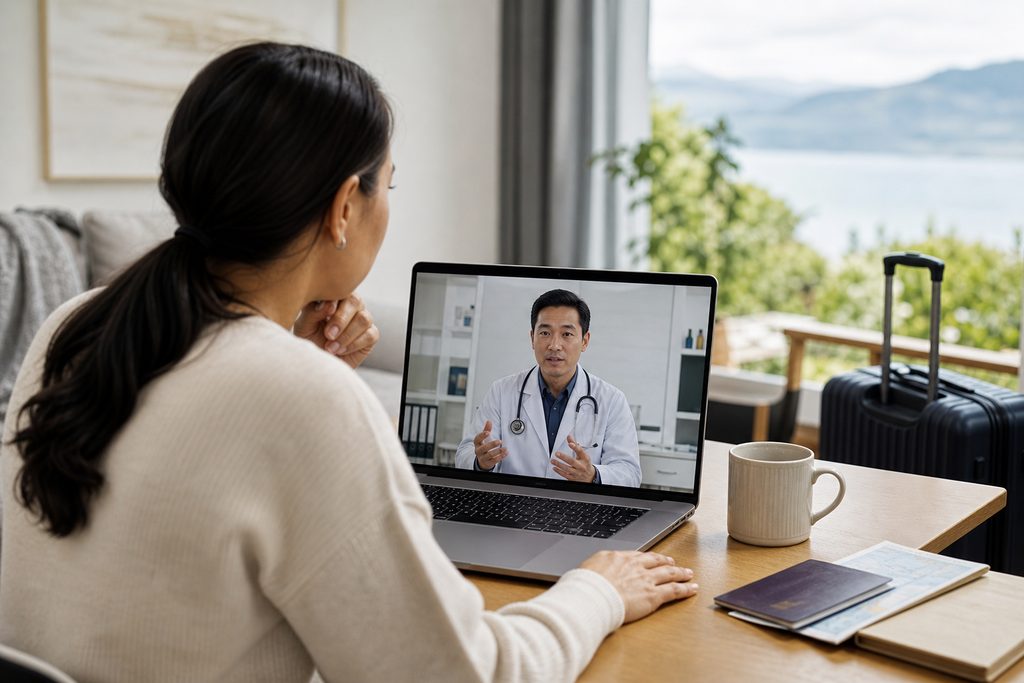
According to a 2023 Johns Hopkins Medicine study, approximately 1 in 5 patients who sought a second opinion at a major academic center received a materially different diagnosis. Another study published in the Journal of Evaluation in Clinical Practice found that up to 30% of pathology reviews result in a clinically significant reinterpretation. Those numbers are not small. They represent real people who avoided the wrong surgery, or finally got the right one. For international patients considering Chinese hospitals, the question is not whether a second opinion has value. The question is whether you can get one without buying a plane ticket. You can. And understanding the remote second opinion cost China hospitals charge is the first step.
How This Actually Works, Step by Step
You do not need to be in Shanghai to have a Fudan-ranked oncology team review your scans. The process is structured, document-based, and increasingly common. Here is the real sequence.
First, you gather everything: imaging files (DICOM format is best), pathology slides or reports, surgical notes, discharge summaries, current medication list, and a concise symptom timeline. If records are not in English, a certified medical translation is required. Chinese specialists generally work in Chinese; international departments bridge the language gap.
Second, you choose a service channel. Some patients contact a hospital’s international department directly. Others use a coordination service like China Medical Services to handle record transfer, specialist matching, and scheduling. Direct contact works if you know exactly which hospital and department you want. If you do not, a coordinator saves weeks of back-and-forth.
Third, the reviewing physician — usually a senior attending or department head in the relevant specialty — examines your file. They produce a written opinion: diagnosis confirmation or revision, treatment options, surgical candidacy, and what additional testing would be needed before any procedure in China.
Fourth, you receive the report. A written second opinion from a top-tier Chinese hospital typically costs between $300 and $500. A video consultation with the specialist costs more. Either way, the deliverable is a document you can take to your local physician.
Remote Second Opinion Cost China: What You Actually Pay
Let us be direct about money. The remote second opinion cost China providers quote varies by hospital tier, specialty, and format. A written review from a leading public hospital’s international department runs $300 to $500. A video consultation with a senior specialist at a top-ranked institution — think Peking Union Medical College Hospital or Fuwai Hospital for cardiac cases — ranges from $500 to $800. Multidisciplinary team reviews, where three or more specialists weigh in, cost $1,500 to $2,000.
What does that buy you? Hours of a senior physician’s time. A structured written report. Often, a follow-up call to clarify points. It does not buy a prescription, and it does not buy admission to a Chinese hospital. Those are separate steps, governed by separate rules.
Compare that to the cost of getting it wrong. A heart bypass in the United States averages over $120,000. In a top Chinese public hospital, the same procedure runs $12,000 to $20,000. Spending $500 to confirm you even need the surgery — or that a different procedure fits better — is a rounding error on the total bill. And if you later travel to China for treatment, many coordinators credit the consultation fee toward on-the-ground coordination services. That is a one-time credit, applied to coordination only, never to hospital charges.
| Service Type | Typical Cost (USD) | What You Receive |
|---|---|---|
| Written second opinion, top public hospital | $300–500 | Formal written review of records, diagnosis assessment, treatment direction |
| Video consultation, ordinary international department | $100–300 | Live discussion with a physician, general recommendations |
| Video consultation, top specialist | $500–800 | Live discussion with a senior attending or department lead |
| Multidisciplinary team (MDT) review | $1,500–2,000 | Coordinated opinion from 3+ specialists across relevant fields |
| Proxy in-person consultation (you send records, we attend) | from $300 | Registration, hospital card creation, in-person specialist visit using your materials |
All figures vary by hospital and case complexity.
Is Remote Diagnosis Reliable in China?
This is the question behind every other question. Can you trust a diagnosis made from documents alone? The honest answer: remote review has real limits, and real strengths.
What it does well: identifying whether your current diagnosis matches the evidence in your imaging and pathology. Recommending additional tests. Flagging when a proposed surgery is unnecessary or when a less invasive option exists. Chinese specialists at high-volume centers see caseloads that Western physicians rarely encounter. A cardiac surgeon at Fuwai Hospital participates in over 14,000 cardiac surgeries annually across the institution. That volume produces pattern recognition that a remote review can surface.
What it cannot do: replace a physical examination. Some findings require palpation, auscultation, or in-person functional assessment. A remote opinion is a decision-support tool, not a verdict. Any responsible Chinese specialist will state this in writing. They will tell you what they can conclude from records and what requires an in-person visit.
So — is remote diagnosis reliable in China? For record-based review, yes, within its scope. For conditions requiring hands-on evaluation, it is a preliminary step, not a final one. The key is matching the format to your question. If your question is “does my imaging support this surgical plan,” a written review works. If your question is “how does my joint actually move,” you need to be in the room.
A Realistic Timeline
People underestimate the waiting steps. Here is what actually happens, with realistic ranges.
| Stage | Duration | What Happens |
|---|---|---|
| Record gathering and translation | 3–10 days | Collecting DICOM files, pathology slides, reports; certified translation if needed |
| Specialist matching | 2–7 days | Identifying the right department and senior physician for your specific condition |
| Hospital review scheduling | 5–14 days | International department confirms the reviewing physician and time slot |
| Written report delivery | 3–7 days after review | Structured written opinion issued, usually in English |
| Video consultation (if chosen) | 7–21 days from request | Live session scheduled around the specialist’s clinical duties |
| Visa processing (if you then travel) | 2–6 weeks | S2 visa application with hospital invitation documents |
Total for a written second opinion: roughly two to four weeks from first contact to report in hand. Video consultations add one to two weeks. If you then decide to travel for treatment, factor in visa processing time — the S2 visa is the applicable short-stay category for medical treatment and private affairs in China, and processing times vary by embassy. Nobody can guarantee approval, and requirements shift. Start early.
What Can Go Wrong — and What Happens Then
Remote reviews fail in predictable ways. Knowing them in advance removes the shock.
Incomplete records are the most common failure. You send three CT images when the radiologist needs the full series. Or the pathology slides are not digitized. The reviewing physician cannot issue a meaningful opinion. What happens then: the hospital requests the missing materials. Your timeline resets by one to two weeks. The fix is preparation — send everything, in original DICOM format, before the review begins.
Language mismatch is another failure point. A written report in Chinese is useless to you unless translated. Reputable international departments issue reports in English. Confirm this before paying. If a coordinator is involved, they should verify the report language as part of the service.
Sometimes the reviewing physician says: “I cannot answer this without seeing the patient.” That is not a failure of the process. It is a correct medical judgment. What happens then: you receive a partial opinion — what can be assessed, what requires in-person evaluation, and what tests to bring. That partial opinion still has value. It tells you whether traveling is worth it.
And yes, occasionally the second opinion confirms the first. That is not a waste of $500. That is certainty, purchased cheaply.
How Does Online Medical Consultation Work in China — and How to Choose a Provider
Not all remote consultations are equal. Understanding how does online medical consultation work in China helps you evaluate what you are buying.
The mechanics: Chinese hospitals operate international departments that handle foreign patients. These departments employ English-speaking coordinators who receive your records, route them to the appropriate specialty, and schedule the review. The specialist reviews your file — often outside regular clinic hours — and either writes a report or conducts a video session. Payment is typically made in advance, by wire transfer or card. Public hospitals require prepayment; this is standard practice, not a red flag.
Choosing a provider comes down to three questions. First, who is actually reviewing your case? A named senior specialist at a Fudan-ranked hospital carries more weight than an unnamed physician. Ask for the reviewer’s name and department before paying. Second, what is the deliverable? A formal written report with the hospital’s letterhead is a document you can act on. A brief video chat with verbal recommendations is less useful. Third, what happens if the reviewer cannot help? A reputable coordinator will tell you this before charging you.
What to send: full imaging series in DICOM format, pathology reports with slide images if available, surgical notes, discharge summaries, current medications, and a one-page symptom timeline. More is better. Incomplete files are the number one reason reviews get delayed or declined.
Can I get a second opinion from China without traveling? Yes. That is the entire point of this model. You send records, a Chinese specialist reviews them, and you receive a written opinion or video consultation. No visa required for the review itself. Travel only becomes relevant if you decide to pursue treatment in China.
Practical Considerations: Records, Visas, Payment, and Follow-Up
Yes. The remote review model exists precisely for this purpose. You submit medical records electronically, a Chinese specialist reviews them, and you receive a written report or video consultation. No travel or visa is required for the review itself.
For record-based review — imaging interpretation, pathology assessment, treatment-plan evaluation — remote opinions from high-volume Chinese specialists are generally thorough and evidence-based. For conditions requiring physical examination, a remote review is a preliminary step, not a substitute for in-person evaluation. Responsible specialists state these limits clearly.
Disagreement is not failure. It is information. Take the written opinion to your local physician and discuss the divergence. Sometimes the difference is about treatment philosophy, not facts. Sometimes it reveals a genuine diagnostic error. Either way, you now have two expert perspectives to weigh.
International second opinion packages Shanghai hospitals offer generally include English-language coordination and an English report. Confirm this before paying. If you are using a coordinator, translation of your records into Chinese is typically part of the service. The deliverable report should be in English.
Your Next Step
A remote second opinion is not a luxury. It is a low-cost check on a high-stakes decision. Whether you are facing surgery, a complex diagnosis, or a treatment plan that does not feel right, a second set of eyes from a high-volume Chinese specialty center can confirm the path or change it.
China Medical Services connects international patients with 340+ top-ranked hospitals across 37 Chinese cities. We do not practice medicine and we do not promise outcomes. We handle records, translation, specialist matching, and scheduling — so you can get a clear answer without leaving home. If you want to understand what a Chinese specialist would say about your case, start with a conversation.
Get a second opinion before you commit to a treatment path. The cost is small. The clarity is worth it.
Frequently Asked Questions
Yes. The hospitals used for international patients are JCI-accredited and follow the same international safety standards as top hospitals in the US and Europe. Surgical teams perform high volumes of procedures — often more than their Western counterparts — which studies show leads to better outcomes.
Costs vary by procedure and hospital, but international patients typically save 40-80% compared to US prices — even when factoring in travel and accommodation. A consultation with our team will give you an exact, all-inclusive quote with no hidden fees.
Send us your existing medical reports to get started. We handle everything from hospital selection and appointment scheduling to visa assistance and post-operative recovery planning. Your medical records are reviewed by the specialist before you even book a flight.
For more medical information and treatment options in China, visit chinamedservices.com (China Medical Services).
