Remote Second Opinion: Who Reviews Your Case and What It Costs
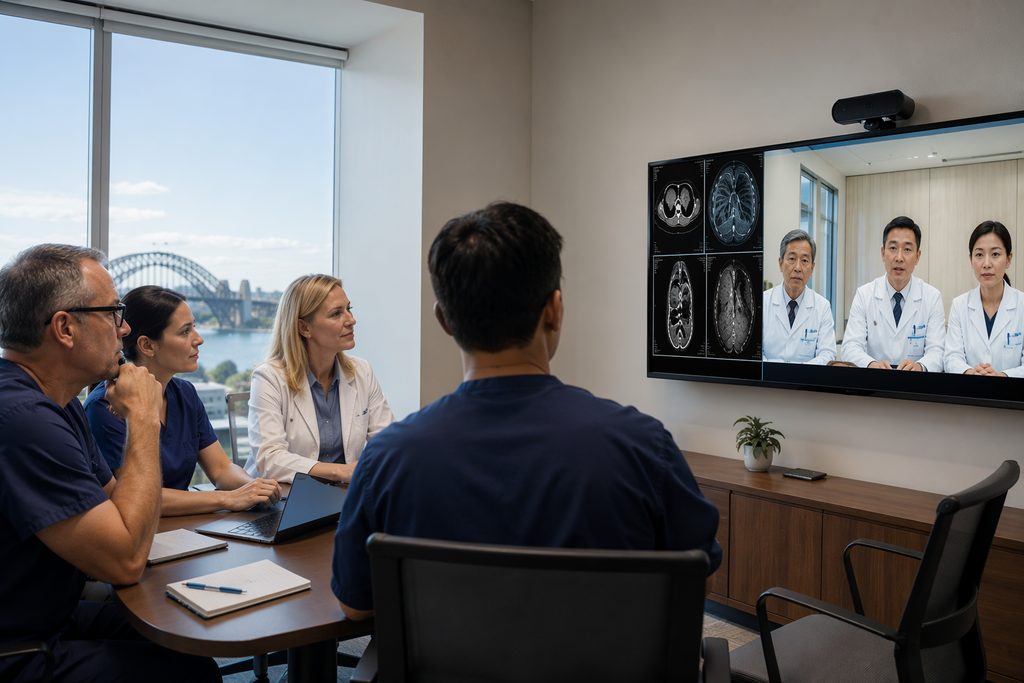
A remote second opinion means a specialist you have never met reviews your existing scans, lab results, and pathology reports, then writes a structured analysis of your diagnosis and treatment plan. You do not travel. You do not sit in a waiting room. You send documents. A senior physician studies them. You receive a written report or a video consultation that either confirms your current plan or suggests a different direction.
For international patients, the remote second opinion cost China typically ranges from $300 to $800 depending on the hospital tier and whether you choose a written review or a live video discussion. That is a fraction of what the same caliber of specialist review costs in the United States or Western Europe. But cost is only one part of the equation. The more important question is who actually reads your file — and whether their opinion carries weight.
Our team at China Medical Services coordinates these reviews daily. We know exactly where files go, how long they sit on desks, and what makes a review clinically useful versus merely reassuring. This article explains the process without glossing over the friction.
How This Actually Works, Step by Step
You start with a pile of documents. That pile needs to become a clean, translated, well-organized package before any Chinese specialist will look at it. Here is the real sequence.
Step 1 — You gather everything. Imaging reports (CT, MRI, PET), blood work, pathology slides if available, surgical notes, current medication list. Raw DICOM files are better than printed films. If you have a rare cancer, the pathology report matters more than anything else.
Step 2 — Translation. Chinese specialists at top-tier public hospitals generally read English, but their departments often require a Chinese summary attached to foreign records. A professional medical translator converts your documents. This takes one to three days. Skipping this step is the most common reason reviews stall.
Step 3 — Hospital and department selection. Not every hospital reviews every condition. A cardiac surgeon at Fuwai Hospital will not review a brain tumor case. We match your diagnosis to the right department at the right institution — often using the Fudan University hospital rankings as a starting point. You can browse specialty-specific top 10 hospital rankings to see where your condition is treated at the highest volume.
Step 4 — The review itself. A senior attending physician — not a resident, not a junior doctor — examines your file. In most cases, the reviewing doctor has treated hundreds or thousands of cases like yours. They compare your current plan against Chinese clinical guidelines and their own surgical or therapeutic experience.
Step 5 — The output. You receive a written report, typically 2 to 5 pages, covering: confirmation or revision of diagnosis, assessment of your current treatment plan, alternative options available in China, and a recommendation on whether traveling for treatment makes clinical sense. If you booked a video consultation, you also get 30 to 60 minutes to ask questions directly.
That last step is where the value concentrates. A written report you can hand to your local oncologist or cardiologist. A video call you can record and replay. Either way, you leave with something concrete.
Who Actually Reviews Your Case at a Chinese Hospital
Yes. You submit your medical records electronically, a specialist reviews them, and you receive either a written report or a video consultation. The process takes roughly three to four weeks from submission to delivery, though some private international hospitals complete reviews in under ten days.
Most physicians respond well when you present the review as additional information rather than a challenge to their judgment. The written report follows standard clinical documentation format and cites evidence. If your doctor dismisses it without reading it, that is a signal worth paying attention to.
No. The written report is for reference only. It provides a specialist’s analysis and recommendation, but it does not authorize prescriptions or procedures in your home country. Your local treating physician remains responsible for any treatment decisions.
Cold inquiries to public hospital email addresses frequently go unanswered. Working through a coordination service with established relationships to hospital international departments avoids this. If a review cannot be completed as specified, the coordination fee should be refunded — confirm this policy before paying.
Your Next Step
A remote second opinion is a low-cost way to pressure-test your diagnosis before committing to expensive or irreversible treatment. The key is routing your records to the right specialist
Frequently Asked Questions
Yes. The hospitals used for international patients are JCI-accredited and follow the same international safety standards as top hospitals in the US and Europe. Surgical teams perform high volumes of procedures — often more than their Western counterparts — which studies show leads to better outcomes.
Costs vary by procedure and hospital, but international patients typically save 40-80% compared to US prices — even when factoring in travel and accommodation. A consultation with our team will give you an exact, all-inclusive quote with no hidden fees.
Send us your existing medical reports to get started. We handle everything from hospital selection and appointment scheduling to visa assistance and post-operative recovery planning. Your medical records are reviewed by the specialist before you even book a flight.
For more medical information and treatment options in China, visit chinamedservices.com (China Medical Services).
