Remote Second Opinion Cost China: 2026 Price Guide for International Patients
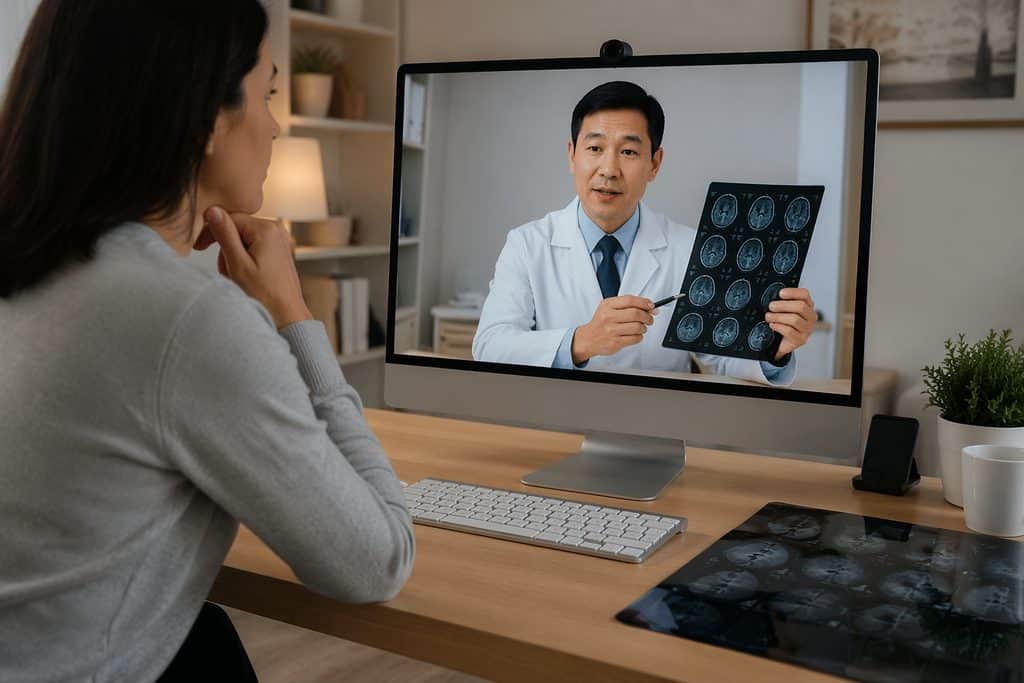
You have probably heard that getting a medical second opinion means flying to another country, paying for hotels, and losing weeks of work. That was true a decade ago. The remote second opinion cost China now makes that old model look wasteful. For between $100 and $2,000, a patient in London, Dubai, or Singapore can have a senior specialist at a Fudan-ranked hospital review their scans, pathology slides, and treatment plan without leaving home.
But what do those numbers actually buy? A written report? A live video call? A multidisciplinary team review? The price gap is enormous because the services are not the same thing. Patients who misunderstand this end up disappointed, or worse, make treatment decisions based on a document that was never meant to guide care.
Our team coordinates these reviews every week. We have seen what works, what wastes money, and where patients get confused. This article breaks down the real 2026 pricing, what each tier includes, and how to decide whether a remote second opinion from China is worth it for your specific situation.
Key Takeaways
- A written second opinion from a top-tier Chinese hospital specialist typically costs $300–500, while a video consultation ranges from $100–800 depending on the hospital’s tier.
- Any remote consultation fee is credited in full toward on-the-ground coordination if you later travel to China for treatment within 90 days.
- China’s top 5% of hospitals — 340+ institutions ranked by Fudan and JCI — handle patient volumes that Western specialists rarely see, particularly in oncology and cardiac surgery.
- A remote second opinion is a navigation tool, not a prescription. It clarifies direction but does not replace an in-person examination or your primary physician’s judgment.
The Problem: A Wrong Diagnosis Costs More Than Money
Medical misdiagnosis is not rare. A 2023 study published in BMJ Quality & Safety estimated that approximately 795,000 Americans die or are permanently disabled each year from diagnostic errors. The most commonly missed conditions? Vascular events, infections, and cancers. Those are exactly the cases where a second set of eyes changes the outcome.
Now consider the financial layer. A patient in the United States facing a complex oncology diagnosis might wait 3 to 6 weeks for a second opinion at another major center, then pay $700 to $1,500 for the consultation alone. If that review happens at a top-ranked institution, the wait can stretch longer. Meanwhile, the tumor is not waiting.
That is the real pain point. Not just the cost. The delay. The uncertainty. The nagging question: did anyone actually look carefully at my scans, or did they glance at the radiologist’s summary and move on?
Why a Remote Second Opinion Cost China Is Structured Differently
China’s top hospitals operate at a scale that changes the economics. A single oncology department at a major Shanghai or Beijing hospital may see more complex cases in one month than a regional Western hospital sees in a year. That volume translates into pattern recognition — and it also means the infrastructure for remote consultation already exists.
Clinical Volume Creates Diagnostic Depth
Fuwai Hospital in Beijing performs over 14,000 cardiac surgeries annually — the highest volume of any heart center globally. Zhongshan Hospital in Shanghai handles a similarly staggering load in liver and cardiovascular care. When a specialist has seen 5,000 cases of a particular tumor subtype, the subtle variations become obvious. That is not a marketing claim. It is arithmetic.
For a patient with a rare or aggressive diagnosis, that depth matters. A radiologist who reads 100 pancreatic scans a week sees patterns that a generalist reading 10 a month will miss. China’s top 5% of hospitals — 340+ institutions ranked by Fudan and JCI out of more than 35,000 nationwide — concentrate exactly that kind of caseload.
Technology Without the Waitlist
Chinese hospitals adopted digital imaging and telemedicine platforms aggressively during the 2020s. Most top-tier institutions now accept DICOM files, pathology slides, and full medical records through secure portals. The workflow is straightforward: you upload your existing scans and reports, the hospital’s international department assigns a relevant specialist, and you receive either a written analysis or a scheduled video session.
No flights. No visa. No hotel. The entire process from document submission to written report typically takes 5 to 10 business days, depending on the hospital and the complexity of the case.
Cost Advantage Without Quality Compromise
Let us address the obvious objection. Why is a remote second opinion cost China so much lower than a comparable review in the US or Europe? The answer is structural, not qualitative. Chinese physician salaries are lower. Hospital administrative overhead is lower. And the sheer patient volume means fixed costs are spread across far more consultations.
None of that reduces the quality of the medical analysis. The specialists reviewing your case at Peking Union Medical College Hospital or West China Hospital trained at the same international conferences, publish in the same journals, and follow the same clinical guidelines as their Western counterparts. The difference is what they charge — and how many similar cases they have seen.
How Much Does a Second Opinion Cost in Shanghai: Real 2026 Price Ranges
Shanghai is home to 18 of China’s Fudan Top 100 hospitals — the second-highest concentration after Beijing. That density affects pricing. More supply means more competitive rates, even at elite institutions.
Here is what patients should expect to pay for remote second opinions coordinated through official hospital international departments or their authorized service partners in 2026. All figures are in USD and vary by hospital and case complexity.
| Service Type | Price Range (USD) | What You Receive | Typical Turnaround |
|---|---|---|---|
| Written Second Opinion — Standard Tier | $100–300 | Review of existing records by a specialist at a public hospital international department or private international hospital; written analysis and treatment suggestions | 5–10 business days |
| Written Second Opinion — Top Specialist | $300–500 | Review by a senior specialist at a Fudan-ranked hospital; detailed written report with specific recommendations | 7–14 business days |
| Video Consultation — Standard Tier | $100–300 | Live online session with a specialist; opportunity to ask questions and clarify concerns | Scheduled within 1–2 weeks of document review |
| Video Consultation — Top Specialist | $500–800 | Live session with a senior expert at a top-ranked hospital; includes preliminary record review | Scheduled within 2–3 weeks |
| Multidisciplinary Team (MDT) Video Consultation | $1,500–2,000 | Coordinated review by 3+ specialists from relevant departments; integrated written and verbal recommendations | 2–4 weeks |
These figures reflect the official international department channels. Some patients try to arrange reviews directly through WeChat or personal connections, and prices in that informal market vary wildly. We do not recommend it. The formal route ensures your records are handled securely, the reviewing physician is genuinely qualified, and the written opinion carries weight if you later pursue treatment in China.
Online Medical Consultation Price Beijing: What the Capital Charges
Some international insurance plans cover second opinion services, including remote reviews. Check your policy’s terms before paying. You will need an itemized receipt and possibly the reviewing physician’s credentials. If your insurer requires pre-authorization, request it before the review begins.
That is the point of a second opinion. The written report will explain the disagreement and suggest alternatives. You then discuss those options with your primary physician. The remote review is advisory — it does not override your local doctor’s judgment or prescribe treatment directly.
No. A remote second opinion is for reference only. Chinese regulations require an in-person examination before any prescription is issued. The written report can guide your local physician’s prescribing decisions, but it does not function as a prescription itself.
Nothing. The fee covers the review you received. It is not refundable if you choose not to proceed with travel. However, if you do travel to China for treatment within 90 days, the full consultation fee is credited toward our coordination service — so the remote review effectively costs you nothing in that scenario.
Your Next Step
A remote second opinion is not a luxury. For patients facing complex diagnoses, it is a practical tool that can confirm a plan, catch an error, or open a door you did not know existed. The remote second opinion cost China offers is a fraction of what comparable reviews cost in Western systems, and the clinical volume behind those reviews is unmatched.
We are China Medical Services, a coordination team that connects international patients with 340+ top-ranked Chinese hospitals across 37 cities. We are not a hospital, and we do not provide diagnoses. What we do is handle the logistics — records translation, hospital matching, appointment coordination, and bilingual support — so you can focus on the medical decision itself.
If you are wondering whether a remote review makes sense for your case, start with a conversation. Tell
Frequently Asked Questions
Yes. The hospitals used for international patients are JCI-accredited and follow the same international safety standards as top hospitals in the US and Europe. Surgical teams perform high volumes of procedures — often more than their Western counterparts — which studies show leads to better outcomes.
Costs vary by procedure and hospital, but international patients typically save 40-80% compared to US prices — even when factoring in travel and accommodation. A consultation with our team will give you an exact, all-inclusive quote with no hidden fees.
Send us your existing medical reports to get started. We handle everything from hospital selection and appointment scheduling to visa assistance and post-operative recovery planning. Your medical records are reviewed by the specialist before you even book a flight.
For more medical information and treatment options in China, visit chinamedservices.com (China Medical Services).
