A Remote Second Opinion, Start to Finish: How It Works in China
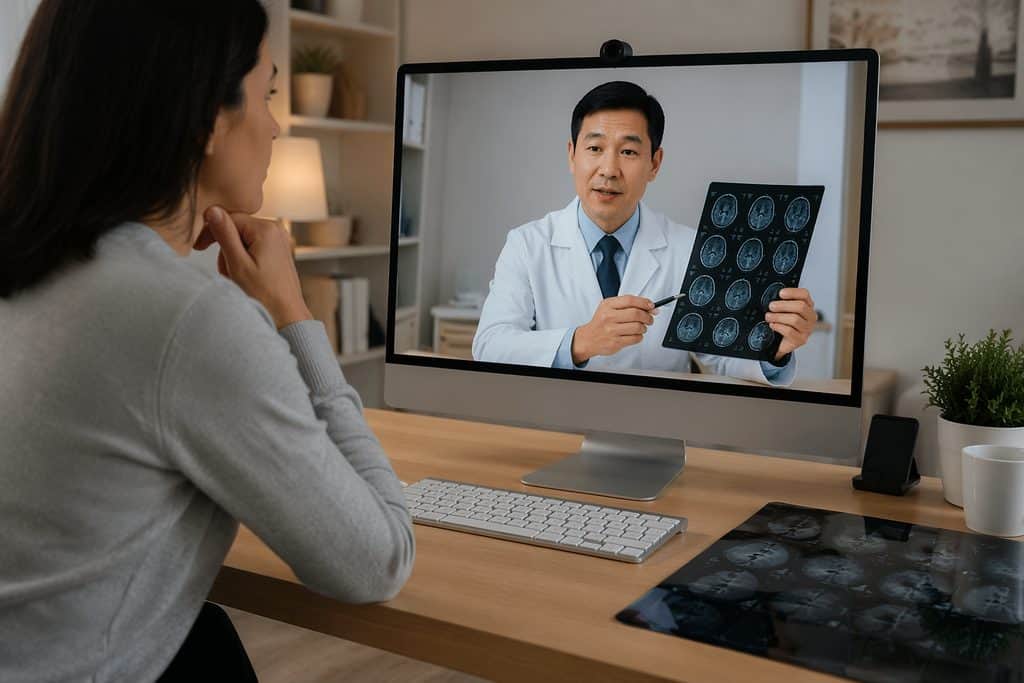
Have you ever sat in a specialist’s office, heard a diagnosis that upended your plans, and wondered whether a completely different team might see something else in your scans? That instinct is not paranoia. It is the reason remote second opinions exist. And for a growing number of international patients, the answer to that instinct now lies in a second opinion online China — a process that can be completed from your living room in under two weeks, often for less than the cost of a single specialist copay in the United States.
We coordinate these reviews every week for patients from London, Dubai, Toronto, and Sydney. The mechanics are straightforward. The emotional weight is not. This guide walks through the entire arc: what you need, what it costs, how long it takes, what the written report actually contains, and where the process can go wrong if you skip steps.
Key Takeaways
- A written second opinion from a top-ranked Chinese hospital specialist typically costs $300–$500, compared to $800–$2,500 for comparable reviews at major US academic centers.
- The full remote process — from document submission to written report — usually takes 5 to 10 business days, not months.
- China’s top hospitals operate at volumes Western centers rarely match: Fuwai Hospital alone performs over 14,000 cardiac surgeries annually, the highest volume of any cardiac center globally.
- A remote second opinion is a documented medical review, not a prescription. It clarifies direction; it does not replace in-person care or guarantee treatment access.
The Problem: When One Opinion Is Not Enough
Misdiagnosis rates in outpatient settings hover between 5% and 10% in developed healthcare systems, according to a 2014 study published in BMJ Quality & Safety. For complex conditions — rare cancers, autoimmune presentations, structural heart disease — the rate climbs higher. A 2017 study from the Mayo Clinic found that 21% of patients who sought a second opinion received a materially different diagnosis, and 66% had their treatment plan refined or changed.
Now layer on cost. An oncology second opinion at a major US cancer center runs $800 to $2,500 when paid out of pocket. Wait times for the top specialists stretch into weeks. For patients in systems with long public queues — the UK, Canada, parts of Europe — a private second opinion at home is expensive, and a cross-border in-person visit is logistically heavy.
That is the gap remote second opinions fill. And China has entered this space with a structural advantage most Western patients have not yet considered: clinical volume.
Why a Second Opinion Online China Delivers Results
Clinical Volume Drives Pattern Recognition
Chinese tertiary hospitals process patient volumes that border on industrial scale. A single top-tier oncology department in Shanghai may see more new cancer cases in a month than a regional US center sees in a year. That volume is not just a statistic. It translates into specialists who have managed rare presentations, treatment-resistant cases, and surgical complications at frequencies that build genuine pattern recognition.
Fuwai Hospital in Beijing performs over 14,000 cardiac surgeries per year — the highest of any cardiac center worldwide. Zhongshan Hospital in Shanghai handles some of the largest volumes of liver cancer resections globally. When a specialist has seen 3,000 cases of a condition that a Western colleague sees 300 times in a career, the depth of clinical judgment changes.
Technology and Efficiency at Scale
The infrastructure for remote review in China matured rapidly after 2020. Major hospitals now operate dedicated international departments with formal remote consultation workflows. That means your records are not emailed into a void. They are routed through a defined process: intake, translation, specialist assignment, review, report drafting, and quality check.
Imaging matters here. Chinese radiologists read CT and MRI scans at volumes that exceed most Western counterparts by an order of magnitude. For a second opinion on a lung nodule, a liver lesion, or a brain mass, that reading volume is directly relevant to diagnostic accuracy.
Cost Advantage Without Quality Compromise
Why does a top Chinese specialist review cost $300–$500 while a US equivalent charges three to five times more? Structural economics. Chinese hospital salaries are lower relative to US physician compensation. Hospital overhead is leaner. And the international second opinion pathway is designed for volume, not scarcity pricing.
None of that means lower quality. The hospitals in our network are drawn from the top 5% of China’s 35,000+ hospitals, ranked by the Fudan University hospital rankings and JCI accreditation standards. The specialists are the same doctors who lead departments and publish in international journals. The price difference reflects economics, not expertise.
How Does a Remote Second Opinion Work in China: The Step-by-Step Process
Let us walk through the actual sequence. This is the process we coordinate for patients, and it applies whether you work with us or navigate it yourself.
Step 1: Document collection. You gather everything relevant: pathology reports, imaging files (DICOM format preferred for CT/MRI), lab results, surgical notes, current medication list, and a summary of your treatment history. The more complete the file, the more useful the review.
Step 2: Translation and formatting. Chinese specialists review records in Chinese. Your materials must be professionally translated. This is not a Google Translate job — medical terminology requires precision. A mistranslated pathology term can change a clinical recommendation.
Step 3: Specialist assignment. Your case is matched to a specialist in the relevant department. For a lung cancer review, that means a thoracic oncologist — not a general oncologist. For a cardiac valve question, a cardiac surgeon who performs valve repairs regularly.
Step 4: The review itself. The specialist studies your translated records, examines your imaging, and drafts a written assessment. This typically includes: confirmation or revision of the diagnosis, evaluation of the current treatment plan, alternative options available in China, and specific recommendations for next steps.
Step 5: Report delivery and discussion. You receive the written report in English. Most hospitals also offer a follow-up video consultation to discuss findings directly with the specialist. That video session costs extra — typically $500–$800 for a top specialist — but it is often the most valuable part of the entire exercise.
The full timeline from document submission to written report: 5 to 10 business days. Video consultations add another 3 to 5 days for scheduling.
What a Written Second Opinion Can and Cannot Do
This is where patients get confused, and where honest guidance matters.
A written second opinion is a medical document. It contains the specialist’s assessment of your diagnosis, their evaluation of your current treatment plan, and their recommendations. It is signed by a licensed physician at a recognized Chinese hospital. It can be shared with your treating doctor at home. It can inform decisions about whether to pursue treatment in China, change your regimen, or stay the course.
It is not a prescription. The reviewing specialist cannot write you a medication order that a pharmacy in London or Toronto will fill. It is not a treatment guarantee. It does not admit you to a Chinese hospital or schedule surgery. Those steps require in-person evaluation under Chinese hospital rules.
Think of it as a compass, not a vehicle. It tells you which direction makes clinical sense. Getting there — whether that means treatment at home or travel to China — is a separate process.
International Patient Second Opinion Cost Beijing vs. Shanghai: What the Numbers Mean
Costs vary by hospital tier, specialist seniority, and case complexity. Here is what we see in practice across Beijing and Shanghai, the two cities most international patients consider first.
| Service Type | Beijing (Top Public Hospitals) | Shanghai (Top Public Hospitals) | What It Includes |
|---|---|---|---|
| Written second opinion | $300–$500 | $300–$500 | Record translation, specialist review, written report in English |
| Video consultation (standard specialist) | $100–$300 | $100–$300 | Online discussion with specialist, no written report |
| Video consultation (top specialist) | $500–$800 | $500–$800 | Online discussion with department head or named expert |
| Multidisciplinary team (MDT) review | $1,500–$2,000 | $1,500–$2,000 | Coordinated review by 2+ specialists across disciplines |
Prices listed are reference ranges. Final quotes depend on the specific hospital, the specialist’s seniority, and the complexity of your case. Anyone who quotes you a firm price before seeing your records is guessing.
One structural point worth understanding: Beijing hosts 21 of the Fudan-ranked Top 100 hospitals, Shanghai 18. The concentration of expertise in these two cities means most remote second opinion requests route through one of them. But for specific specialties, other cities dominate. West China Hospital in Chengdu leads in certain surgical fields. Guangzhou has deep strength in oncology. The right hospital depends on your condition, not on city preference.
Practical Considerations: Documents, Payment, and What Delays the Process
The remote second opinion process fails most often at the document stage. Not because hospitals are slow — because patients underestimate what “complete records” means.
Imaging files: Hospitals need DICOM files on a CD or via secure upload, not JPEG screenshots. A screenshot of a CT scan is clinically useless for a second opinion. Request the original DICOM data from your imaging center.
Pathology slides: For cancer cases, the reviewing oncologist may want to see actual pathology slides, not just the written report. This requires arranging slide release from your pathology lab — a process that can take a week on its own.
Translation quality: This is the hidden cost and the hidden delay. Professional medical translation runs $0.10–$0.25 per word, and a complex oncology file can run 5,000–10,000 words. Budget $500–$1,500 for translation alone if you are handling it independently. Our coordination service includes translation in the written second opinion fee.
Payment: Chinese hospitals accept international wire transfers and major credit cards through their international departments. Payment is required before the review begins. No payment, no review — this is standard practice, not a red flag.
Visa considerations: A remote second opinion requires no visa. If the review leads to a decision to pursue treatment in China, you will need an S2 visa for short-term medical treatment (under 180 days) or an S1 visa for longer stays. The M visa is for commercial and trade activities — it is not applicable to medical travel. Your hospital’s international department will provide the invitation documents required for the S2 application.
Frequently Asked Questions
Yes. The entire written review process — document submission, translation, specialist review, and report delivery — happens remotely. Many patients complete it without ever setting foot in China. Video consultations are also conducted online. Travel only becomes relevant if you decide to pursue in-person treatment after reviewing the written opinion.
Most will. The report comes from a licensed physician at a recognized institution, written in English, with the specialist’s assessment and recommendations clearly stated. Some Western doctors are unfamiliar with specific Chinese hospitals, but the Fudan University ranking is internationally recognized in medical circles. If your doctor has questions, most hospitals will arrange a brief follow-up call between the specialists.
Request the specialist’s name and credentials before you pay. Top Chinese hospitals list their senior physicians on their official websites, including education, publications, and clinical focus. You can verify the specialist’s position — department director, professor, attending physician — before committing. Any legitimate service will tell you who is reviewing your case. If they will not name the specialist, walk away.
That is the point of seeking one. The written report will state the disagreement clearly, explain the clinical reasoning, and recommend next steps. You then take that document back to your treating physician and make decisions together. A disagreement is not a verdict — it is information. The best outcomes come from treating physicians who are open to reconsidering their approach when new evidence arrives.
It can be the first step. If the written review identifies a treatment approach available in China that interests you, the next stage is an in-person consultation. Chinese public hospitals require face-to-face evaluation before scheduling surgery or admission. The remote opinion does not skip that step — but it tells you whether making the trip is clinically justified.
Your Next Step
A remote second opinion is the lowest-cost, lowest-risk way to test whether Chinese medical expertise has something to offer your specific case. It costs less than most specialist copays in the US, takes under two weeks, and produces a document you can act on — or file away. We are China Medical Services, a coordination team that connects international patients with top-ranked Chinese hospitals. We are not a hospital and we do not provide diagnoses. If you want to understand whether a remote second opinion from a Chinese hospital makes sense for your situation, start with a free consultation. We will review your case summary, recommend the right specialty, and give you an honest assessment of whether this path is worth pursuing. No pressure, no obligation — just a clear answer about your options.
For more medical information and treatment options in China, visit chinamedservices.com (China Medical Services).
