Robotic or Manual Knee Replacement: Which Is Better for You?
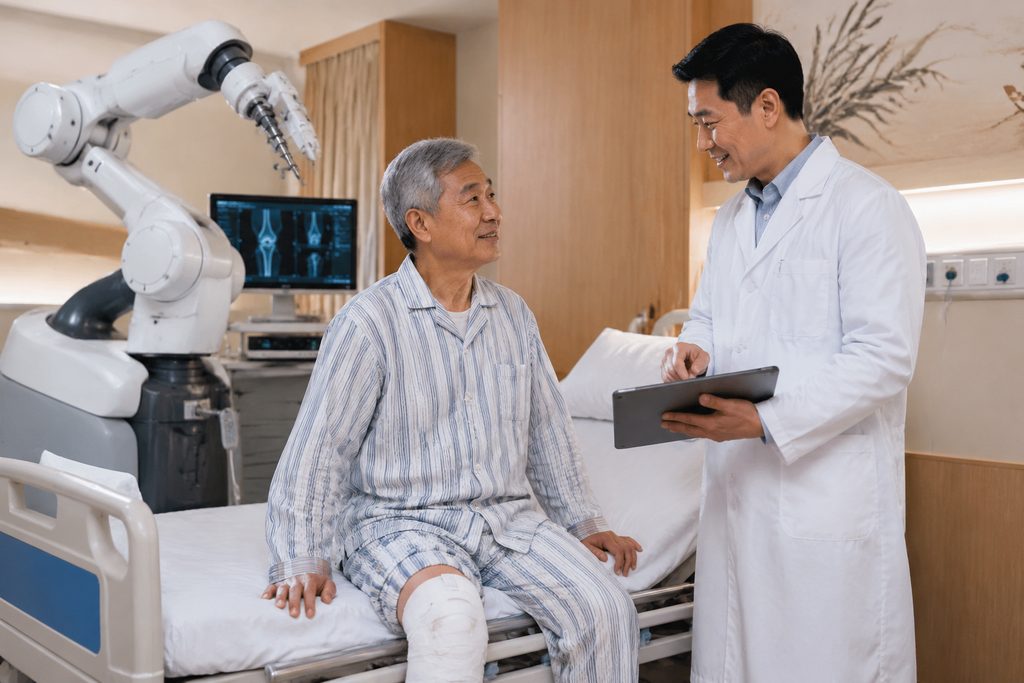
When 54-year-old Daniel from Manchester finally saw his orthopedic surgeon, he’d been limping for three years. The diagnosis was severe osteoarthritis in both knees. The surgeon recommended total knee replacement. Then came the question Daniel hadn’t prepared for: “Do you want robotic-assisted or traditional manual surgery?” He’d never heard of robotic knee replacement. Now he had to decide which approach would determine how he’d walk for the next twenty years.
That question is increasingly common. Robotic-assisted knee replacement has grown rapidly since the first FDA-approved system appeared in 2008. But does robotic actually mean better? A 2023 meta-analysis in The Journal of Arthroplasty reviewed 17 studies involving over 2,400 patients. The findings were nuanced: robotic systems showed slightly better implant alignment and marginally less soft-tissue damage. But long-term functional outcomes and revision rates at 5 and 10 years? Statistically indistinguishable from manual surgery in most cohorts. So the honest answer to “which is better” depends on who you are, who operates on you, and what you’re paying.
For international patients weighing treatment options, the question often becomes practical: where can I get excellent surgical care without a two-year wait or a $70,000 hospital bill? That’s where understanding both techniques—and the real numbers behind them—becomes essential. We work with patients navigating exactly this decision, and the robotic knee replacement cost China comparison is one of the most frequent searches we see.
How This Actually Works, Step by Step
If you’re considering knee replacement abroad, the sequence is more involved than booking a flight. Here’s what actually happens, based on how our team coordinates cases for patients at orthopedic centers across China.
First, you send your existing imaging and records. That means weight-bearing X-rays of both knees, any MRI reports, and a summary of your medical history including prior surgeries, blood-thinning medications, and cardiac status. A Chinese orthopedic team reviews these remotely. The written second opinion you receive costs between $300 and $500 and includes specific recommendations: whether you’re a candidate for robotic assistance, what implant type fits your bone geometry, and what rehabilitation protocol they’d suggest.
Next comes the decision point. If you proceed, the hospital’s international department schedules your outpatient consultation. Under Chinese public hospital rules, you cannot book surgery from overseas without first being seen in person. The outpatient visit confirms the surgical plan. Then a surgery date is set—usually within two to four weeks after that consultation, depending on the surgeon’s schedule and your pre-operative clearance.
You’ll need an S2 visa, which is the short-stay category used for medical treatment and private affairs in China. Your family members accompanying you apply under the same category. The hospital provides an invitation letter and treatment confirmation to support the application. Visa processing typically takes one to three weeks, so factor that into your timeline.
Once you land, the pre-operative workup happens over two to three days: blood tests, ECG, chest X-ray, and an anesthesia assessment. Surgery itself takes one to two hours. Hospital stay after knee replacement is usually four to seven days. Most international patients then stay in China for two to three weeks of early rehabilitation before flying home.
Robotic vs. Manual: What the Evidence Actually Shows
The core question—is robotic knee replacement better than manual—deserves a straight answer. For most patients, the differences are smaller than marketing suggests.
Robotic-assisted systems like Mako, ROSA, and CORI create a 3D model of your knee from a pre-operative CT scan. During surgery, the robot guides the surgeon’s cuts within a pre-planned boundary. The surgeon still does the cutting, the soft-tissue balancing, and the implant placement. The robot doesn’t operate autonomously. It’s a precision tool, not a replacement for surgical judgment.
Manual surgery relies entirely on the surgeon’s experience, intramedullary or extramedullary alignment guides, and intraoperative feel. A highly experienced manual surgeon can achieve excellent alignment. A less experienced one may not. Robotic systems reduce variability—they make a good surgeon more consistent and help a less experienced surgeon avoid major errors.
What do the numbers say? A 2022 systematic review in Bone & Joint Journal analyzed 26 comparative studies. Robotic-assisted cases showed a mean coronal alignment deviation of 1.2 degrees versus 2.1 degrees for manual cases. That’s statistically significant but clinically modest. Early functional scores at 6 weeks favored robotic cases slightly. By 12 months, the difference disappeared. Revision rates at 5 years were 2.1% for robotic versus 2.4% for manual—within the margin of error.
Key takeaway: Robotic assistance improves precision and consistency. But manual surgery performed by an experienced, high-volume surgeon produces equivalent long-term outcomes. The surgeon matters more than the machine.
Manual vs Robotic Knee Replacement Success Rates
Patients often ask us to compare manual vs robotic knee replacement success rates directly. The honest answer requires defining “success.”
If success means implant survival at 10 years, both techniques land between 94% and 96% in national joint registries. The Australian Orthopaedic Association National Joint Replacement Registry—one of the world’s largest—reported a 10-year revision rate of 4.1% for all primary total knee replacements regardless of technique. Robotic-specific long-term registry data is still maturing, since the technology only reached wide adoption after 2015.
If success means patient satisfaction at one year, the picture shifts slightly. A 2023 study in Knee Surgery, Sports Traumatology, Arthroscopy found 87% of robotic-assisted patients reported being “satisfied” or “very satisfied” at 12 months, versus 82% for manual patients. The difference was largest among patients under 65 and those with significant pre-operative deformity. For straightforward osteoarthritis in a 70-year-old with normal alignment, satisfaction rates were nearly identical.
What about complication rates? Deep infection occurs in roughly 0.5% to 1% of cases regardless of technique. Blood loss is marginally lower with robotic systems because the surgical approach can be less invasive. But the difference is small—typically 50 to 100 milliliters. Not clinically meaningful for most patients.
So when patients ask us which is better, our answer is: the technique matters less than the surgeon’s annual volume. A surgeon performing 300 knee replacements per year with manual technique will likely outperform a surgeon doing 30 per year with a robot. Volume and experience beat technology every time.
A Realistic Timeline
Planning for knee replacement in China takes longer than most patients expect. Here’s a realistic sequence, including the steps people forget.
| Stage | What Happens | Typical Duration |
|---|---|---|
| Day 1–7 | You gather imaging, records, and medical history; our team translates documents into Chinese | 1 week |
| Week 2–3 | Remote written second opinion from an orthopedic team; you decide whether to proceed | 1–2 weeks |
| Week 3–5 | S2 visa application with hospital invitation letter; embassy processing time varies by country | 1–3 weeks |
| Week 5–6 | Travel to China; outpatient consultation with the surgical team; pre-operative workup | 2–3 days |
| Week 6–8 | Surgery scheduling—typically within 2–4 weeks after the in-person consultation | 2–4 weeks |
| Week 8–9 | Surgery and hospital stay | 4–7 days |
| Week 9–12 | Early rehabilitation in China; wound check; initial physiotherapy | 2–3 weeks |
| Month 3–12 | Continued rehabilitation at home; remote follow-up with the Chinese team via video | Ongoing |
Total time from first contact to surgery: roughly six to eight weeks. That’s faster than many public systems in Canada or the UK, where wait times for elective knee replacement often exceed six months. But it’s not instant. The document translation, visa processing, and mandatory in-person consultation all add time.
What Can Go Wrong — and What Happens Then
We’d be doing you a disservice if we only described the smooth path. Here are the real failure modes and what recourse you have.
Visa rejection happens. The S2 visa requires a hospital invitation letter and proof of treatment purpose. If your application is denied, the hospital cannot override the embassy’s decision. In practice, rejections are uncommon when documentation is complete. But if it happens, you can reapply with additional supporting material. Our team helps patients prepare the correct paperwork the first time, which minimizes this risk.
Surgical cancellation occurs more often than patients expect. A pre-operative ECG might reveal an arrhythmia requiring cardiology clearance. A blood test might show elevated infection markers. The hospital will postpone surgery rather than proceed with elevated risk. You’ll need to extend your stay or return home and reschedule. Travel insurance that covers medical cancellation is worth the cost here.
Post-operative complications—infection, blood clots, stiffness—occur at low rates but they do occur. Chinese hospitals manage these according to international protocols. A deep infection requires surgical washout and intravenous antibiotics, extending your hospital stay by one to two weeks. Stiffness requiring manipulation under anesthesia happens in about 3% to 5% of cases. You’d need an additional procedure and extended physiotherapy.
Language barriers compound every problem. A nurse explaining discharge instructions in Mandarin when you speak only English creates real risks. That’s why a bilingual medical companion matters—not as a luxury, but as a safety measure. They ensure you understand medication schedules, wound care, and warning signs before you leave the hospital.
How to Choose: Robotic or Manual, and Where
The decision isn’t just robotic versus manual. It’s which hospital, which surgeon, and which approach fits your specific knee.
First, look at your own anatomy. Robotic assistance offers the greatest benefit for patients with significant deformity—severe varus or valgus alignment, post-traumatic arthritis, or prior hardware from fracture fixation. The 3D pre-planning handles complex geometry better than intraoperative judgment alone. If your knee is straightforward osteoarthritis with mild deformity, the robotic advantage shrinks considerably.
Second, evaluate the surgeon’s volume. Ask directly: “How many knee replacements do you perform annually?” A high-volume surgeon doing 200-plus cases per year with manual technique will likely match or exceed a low-volume robotic surgeon. The best hospitals for robotic knee surgery Shanghai—and in Beijing, Guangzhou, and Chengdu—are typically orthopedic centers at major public hospitals or JCI-accredited international hospitals. These institutions publish their surgical volumes and often participate in national joint registries.
Third, understand the cost structure. In China, robotic-assisted surgery carries a premium because the hospital pays for the robotic system’s disposable instruments and maintenance. The robotic knee replacement cost China typically runs 15% to 30% higher than manual surgery at the same hospital. At a top-tier public hospital’s international department, manual total knee replacement costs approximately $12,000 to $18,000. Robotic-assisted cases run $15,000 to $22,000. Compare that to the United States, where the same procedures cost $35,000 to $70,000, and the value proposition becomes clear.
Knee replacement surgery package price Beijing varies by hospital tier. Public hospital international departments charge less than private JCI hospitals like United Family or Jiahui, where packages range from $25,000 to $40,000. The private hospitals offer English-speaking staff and Western-style amenities. Public hospital international departments offer access to China’s highest-volume surgeons at lower cost, with bilingual coordination as an add-on service.
Practical Considerations: Records, Visa, Payment, and Recovery
Before you commit to surgery in China, organize these practical elements.
Medical records must be translated into Chinese. That includes all imaging reports, not just the images themselves. Our team handles certified translation as part of coordination. Incomplete records delay the remote review and may require additional imaging once you arrive.
Visa timing is the most common bottleneck. The S2 visa requires a hospital-issued confirmation letter. You cannot apply for the visa until the hospital has reviewed your records and agreed to schedule your consultation. That means the remote second opinion isn’t optional—it’s the trigger that unlocks the visa process. Plan for three to five weeks between your initial inquiry and your travel date.
Payment works differently than in Western systems. Public hospitals in China require pre-payment or deposit before surgery. International insurance is rarely accepted directly at public hospitals—you pay, then claim reimbursement. Private international hospitals accept direct billing from major insurers. Verify your coverage before traveling. The coordination services we provide (from $300 for appointment coordination to $5,000–8,000 for VIP end-to-end support) are separate from hospital charges and are never applied to treatment fees.
Recovery requires patience. How long does robotic knee replacement take to recover? Most patients walk with a walker within 24 hours, use a cane by week two, and return to desk work by week six. Full recovery—no swelling, normal gait, unrestricted activity—takes six to twelve months. Robotic and manual recoveries follow nearly identical timelines. The surgical approach, not the robot, determines early recovery speed.
Follow-up at home matters. Your Chinese surgical team will schedule video follow-ups at one month, three months, and one year. You’ll need X-rays at those intervals, which you can obtain locally and send electronically. The relationship doesn’t end when you board the flight home.
Frequently Asked Questions
For most patients, the long-term outcomes are equivalent. Robotic systems improve implant alignment precision and reduce early soft-tissue trauma slightly. But 5-year and 10-year revision rates, functional scores, and patient satisfaction converge between the two techniques when surgery is performed by experienced surgeons. The surgeon’s annual volume matters more than the technology.
The robotic knee replacement cost China typically ranges from $15,000 to $22,000 at top-tier public hospital international departments. Manual surgery at the same hospitals runs $12,000 to $18,000. Private JCI hospitals charge $25,000 to $40,000 for either technique. All figures vary by hospital, implant type, and case complexity.
No. Chinese public hospitals require an in-person outpatient consultation before scheduling surgery. You can complete a remote written second opinion and video consultation from home, which helps determine candidacy and plan. But the actual surgical booking happens only after you arrive and meet the surgical team face-to-face.
The S2 visa is the short-stay category used for medical treatment and private affairs. Your accompanying family members apply under the same category. The hospital provides an invitation letter confirming your treatment purpose. Processing takes one to three weeks depending on your home country’s embassy.
Chinese hospitals manage complications according to international protocols. Infection, blood clots, and stiffness occur at rates comparable to Western centers. You’ll need extended hospital stay and possibly additional procedures. Travel insurance with medical cancellation coverage is strongly recommended. A bilingual companion ensures you understand every instruction and warning sign.
Your Next Step
The robotic versus manual decision ultimately comes down to your anatomy, your surgeon’s experience, and your budget. Both approaches work well when performed at high-volume centers. The bigger question is whether traveling to China for surgery makes sense for you—and that depends on your specific imaging, medical history, and expectations.
We help international patients evaluate those questions with remote consultations and written second opinions from orthopedic teams at China’s top-ranked hospitals. We don’t perform surgery, and we don’t promise outcomes. We handle the logistics—records translation, hospital coordination, visa guidance, and bilingual support—so you can focus on recovery. If you’re weighing robotic or manual knee replacement and want a clear-eyed assessment of your options, request a free consultation and we’ll help you map the path forward.
Daniel from Manchester eventually chose manual surgery with a surgeon who had performed over 4,000 knee replacements. Eighteen months later, he walks without pain. The technique mattered less than the hands holding the instruments. That’s the real answer to the question.
For more medical information and treatment options in China, visit chinamedservices.com (China Medical Services).
