Robotic Prostate Surgery in China: Minimally Invasive, Safe, and Affordable for Gulf Patients
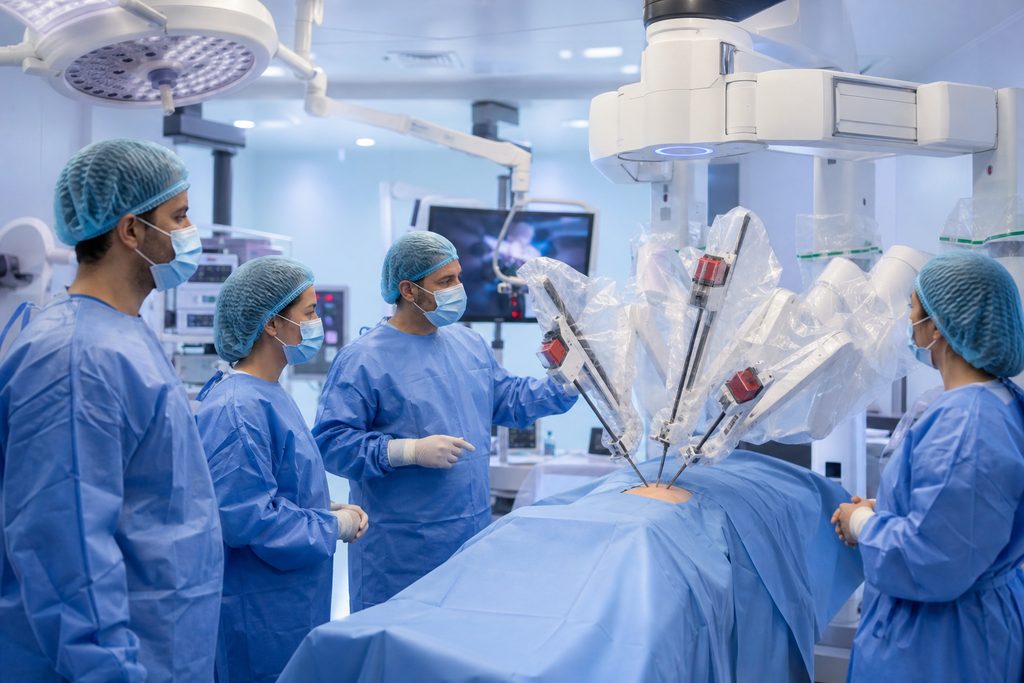
You have probably heard the warning: cheaper surgery means cutting corners. A hospital that quotes half the price must be using outdated equipment. The surgeon who operates for less cannot possibly be as skilled. When it comes to a cancer diagnosis, that fear is paralyzing. But what if the cost difference has nothing to do with quality — and everything to do with economics? For men across the Gulf region facing prostate cancer, the robotic prostate surgery cost China offers is not a discount for inferior care. It is a structural price advantage built on surgical volume that no Western hospital can match.
Prostate cancer is the second most common cancer in men worldwide. In the UAE alone, it accounts for roughly 12% of all male cancer diagnoses according to the Department of Health Abu Dhabi cancer registry. Saudi Arabia reports similar numbers. Patients in the Gulf often face two hard realities: limited access to the newest robotic platforms in public hospitals, and private-sector quotes that rival US pricing at $25,000 to $40,000. Waiting months for a da Vinci surgical slot is common. Flying to Germany or the UK pushes the bill even higher. Meanwhile, a top-tier Chinese university hospital performs the same nerve-sparing robotic prostatectomy for $15,000 to $22,000 — all-inclusive of hospital stay, surgeon fees, and consumables. Not because it is worse. Because the system runs on a different economic engine.
Key Takeaways
- Robotic prostatectomy at China’s top-ranked urology centers costs $15,000–$22,000 — a 40–60% reduction compared to private hospitals in the Gulf, UK, or US.
- Chinese surgeons at high-volume centers perform 300–500 robotic prostatectomies per year, far exceeding the typical Western surgeon’s annual caseload of 50–100.
- Language barriers and unfamiliar hospital workflows are the real challenge — not clinical quality. Professional coordination transforms the experience.
- The S2 visa is the correct short-stay category for medical treatment. Approval requires hospital documentation, not an agent’s promise.
The Problem: A Diagnosis, a Daunting Bill, and Limited Options
A prostate cancer diagnosis lands differently depending on where you live. In London, a robotic prostatectomy at a private hospital runs £18,000 to £25,000. In Dubai or Abu Dhabi, the same procedure at a JCI-accredited private facility costs AED 90,000 to 150,000 — roughly $24,500 to $40,800. In the United States, uninsured patients face bills exceeding $35,000. Even insured patients in the Gulf often discover that their policy caps international treatment or excludes robotic surgery as an “upgraded” procedure.
So the question becomes practical. Do you pay the premium and stay local? Do you travel to a Western center where the language and system are familiar but the cost is even higher? Or do you look at what the numbers actually say about robotic surgery in Asia?
Here is what the data shows. A 2016 study published in The Lancet analyzed outcomes from over 11,000 prostate cancer patients across 12 countries. Surgical volume — the number of procedures a surgeon performs each year — was the single strongest predictor of fewer complications and better functional recovery. Surgeons performing more than 100 radical prostatectomies annually had significantly lower rates of positive surgical margins. That finding changes the entire conversation. The metric that matters most is not the flag on the hospital. It is how many of these the team does every week.
Why China’s Robotic Prostate Program Delivers Results
Surgical Volume Drives Better Outcomes
A urologist at a major Shanghai teaching hospital performs between 300 and 500 robotic prostatectomies annually. That is not an estimate — it is the documented caseload at centers like Renji Hospital and Changhai Hospital, both ranked among China’s top 10 for urology by the Fudan University hospital rankings. Compare that to the average US urologist, who performs roughly 50 to 100 robotic prostatectomies per year according to a 2020 analysis in Urology Practice. The UK numbers are lower still.
Volume matters for one reason: the nerve-sparing technique that preserves erectile function and urinary continence is technically demanding. Every millimeter of dissection precision counts. Surgeons who do this procedure multiple times per week develop an intuitive feel for the tissue planes that no textbook can teach. The Chinese centers that Gulf patients access are not small clinics experimenting with new equipment. They are academic medical centers where robotic prostatectomy is a core, daily procedure — not an occasional one.
Technology Without the Markup
China is the largest market for the da Vinci Surgical System outside the United States. As of 2024, more than 370 da Vinci systems are installed across the country, with the highest concentration in Shanghai, Beijing, and Guangzhou. The newest da Vinci Xi and single-port SP platforms are available at major centers. The technology is identical to what you would find at Cleveland Clinic or King’s College Hospital.
The cost difference comes from structural economics. A Chinese surgeon’s professional fee is a fraction of what a US or Gulf private surgeon charges — not because of lower skill, but because the entire medical pricing system operates on a different baseline. Hospital overhead, nursing labor, and anesthesia costs all follow the same pattern. The consumables — the robotic instruments and drapes — cost roughly the same worldwide. But the human component, which makes up 60–70% of a Western hospital bill, is priced at Chinese market rates. That is the entire explanation. Same robot. Same instruments. Different labor economics.
How Much Does Robotic Prostate Surgery Cost Abroad — and Why China Wins the Math
Let us put the numbers side by side. The question “how much does robotic prostate surgery cost abroad” yields wildly different answers depending on which country you call. Here is what patients actually pay:
| Country | Robotic Prostatectomy Cost (USD) | Includes |
|---|---|---|
| United States | $35,000 – $55,000 | Hospital, surgeon, anesthesia, robot consumables |
| United Kingdom (private) | $23,000 – $32,000 | Hospital, surgeon, anesthesia |
| UAE (private, JCI-accredited) | $24,500 – $40,800 | Hospital, surgeon, anesthesia, robot consumables |
| Germany | $22,000 – $30,000 | Hospital, surgeon, anesthesia |
| China (top-tier urology center) | $15,000 – $22,000 | Hospital, surgeon, anesthesia, robot consumables, interpreter support |
These are not list prices pulled from a website. They reflect actual patient invoices reviewed by our coordination team across multiple cases. The China figure includes the robotic instrument tray — a $3,000–$4,500 line item that some hospitals elsewhere bill separately. It also includes a 5–7 day inpatient stay, which is standard for robotic prostatectomy in China. Western centers increasingly discharge patients on day one or two, which reduces the hospital’s cost but shifts recovery burden onto the patient.
Is Robotic Prostatectomy Safe in China? What the Evidence Shows
The question is fair. “Is robotic prostatectomy safe in China” is what any responsible patient should ask before booking an international flight for surgery. The answer requires looking past anecdotes and at published outcomes.
Chinese urology departments publish their surgical data. Renji Hospital’s Department of Urology, which performs over 800 robotic procedures annually across all urologic cancers, reported a positive surgical margin rate of 15–18% for organ-confined prostate cancer in a 2022 retrospective study. That figure aligns with international benchmarks from Memorial Sloan Kettering and Martini-Klinik. The 12-month continence recovery rate — the proportion of patients who regain urinary control within a year — sits at 85–92% at experienced centers, again matching Western outcomes.
Infection control is another concern patients raise. Chinese tertiary hospitals follow protocols that would be familiar to any JCI-accredited facility. Preoperative MRSA screening, perioperative antibiotic prophylaxis, and postoperative monitoring are standard. The deep surgical site infection rate for robotic prostatectomy in China is below 1%, consistent with global norms.
What about the robot itself? The da Vinci system requires annual maintenance contracts and regular software updates from Intuitive Surgical, the US-based manufacturer. There is no “Chinese version” of the robot that cuts corners. The hardware, the training pathway for console surgeons, and the proctoring requirements are internationally standardized. A da Vinci console surgeon in Shanghai completes the same simulation modules and supervised case progression as a surgeon in Houston.
Best Hospital for Robotic Prostate Surgery Shanghai: Where Gulf Patients Go
Shanghai is the natural entry point for Gulf patients. Direct flights from Dubai, Abu Dhabi, Riyadh, and Doha land at Pudong International Airport daily. The city has the highest concentration of top-tier urology centers in China, and its international medical infrastructure is the most developed outside of Beijing.
When Gulf families ask about the best hospital for robotic prostate surgery Shanghai, three names consistently appear:
Renji Hospital, affiliated with Shanghai Jiao Tong University School of Medicine, operates one of the largest urology departments in Asia. Its robotic surgery program started in 2014 and has since completed over 5,000 robotic urologic procedures. The department is ranked among China’s top 3 for urology in the Fudan specialty reputation rankings. The international medical center handles foreign patients directly, with English-speaking coordinators on staff.
Changhai Hospital, the First Affiliated Hospital of Naval Medical University, is another high-volume center. Its urology department pioneered several nerve-sparing technique refinements that are now used nationally. The hospital has a dedicated international patient ward with nursing staff trained in cross-cultural care.
Huashan Hospital, affiliated with Fudan University, rounds out the top tier. Its urology department is smaller than Renji’s or Changhai’s but maintains rigorous outcome tracking and is known for conservative patient selection — meaning they will tell you honestly if surgery is not the right option.
All three hospitals appear in our specialty-ranked hospital database, which draws directly from the Fudan University hospital rankings — the most authoritative medical institution evaluation system in China. The database covers 45 specialties across 340+ top-ranked hospitals in 37 cities.
What the “China Package” Actually Includes — and What It Does Not
You may have searched for a way to “book robotic prostate surgery China package.” That phrase suggests a product you can put in a shopping cart. The reality is more nuanced — and understanding the difference protects you.
A legitimate medical coordination service does not sell surgery. It facilitates access. Here is what the process actually looks like when you pursue robotic prostatectomy in China:
Step one: Remote evaluation. You send your existing medical records — PSA history, biopsy report with Gleason score, MRI images and radiology report, and any prior treatment notes. The Chinese urology team reviews these remotely. They issue a written second opinion that states whether you are a surgical candidate, what approach they recommend, and what the expected hospital stay and recovery timeline would be. This written second opinion typically costs $300–$500 and is for reference only — not a prescription or a binding treatment plan.
Step two: Video consultation. If the written opinion confirms candidacy, you speak directly with the surgical team via video. You ask about their complication rates. You ask how many of these they do each week. You ask about their continence recovery protocol. This consultation costs $500–$800 for a top-specialist session and is the single most important step before booking any travel.
Step three: Travel coordination. Once you and the surgeon agree on a plan, the logistics begin. Visa documentation, hospital registration, admission scheduling, and accommodation. The S2 visa is the correct short-stay category for medical treatment in China. Your application requires an invitation letter from the hospital and supporting medical documents. Processing typically takes 5–10 business days, though this varies by embassy. No one can guarantee visa approval — and any service that claims otherwise is being dishonest.
Step four: Admission and surgery. You arrive, complete pre-operative testing, undergo the procedure, and stay 5–7 days in the hospital. A bilingual medical companion handles registration, payment, pharmacy runs, and translation during every doctor interaction. This is not a luxury add-on. In a Chinese public hospital where most signage and verbal communication is in Mandarin, it is the difference between a smooth experience and a disorienting one.
The package, in other words, is not a fixed-price product. It is a sequence of coordinated services — each with its own cost and its own decision point. You are never locked into a full commitment before you have enough information to decide.
Practical Considerations: Visas, Payment, and What Happens After You Fly Home
The clinical decision is only half the equation. The logistics matter just as much. Here is what Gulf patients need to know before booking a flight.
Visa reality. Medical treatment in China requires an S2 visa, which covers short-term private affairs including medical visits. The accompanying family member — typically a wife or adult son — applies for the same S2 category. You will need a formal invitation letter from the admitting hospital, proof of accommodation, and a detailed treatment plan. The Chinese embassy in Abu Dhabi, Riyadh, or Doha processes these routinely when the documentation is complete. Do not apply for an M visa. M is for commercial and trade activities and will be rejected for medical travel.
Payment mechanics. Chinese public hospitals require upfront payment. You deposit an estimated amount at admission — typically $15,000 to $22,000 for robotic prostatectomy — and the hospital draws from that deposit as charges accrue. Any remainder is refunded at discharge. International credit cards are accepted at international medical centers, but daily transaction limits apply. WeChat Pay and Alipay are ubiquitous but require a Chinese bank account to set up fully. Most Gulf patients bring a combination of card and wire transfer. Cash in USD is accepted but impractical for large amounts.
Insurance and reimbursement. Chinese public hospitals do not bill international insurers directly. You pay the hospital and file for reimbursement with your insurer afterward. The hospital provides an itemized invoice and discharge summary in English upon request. If your Gulf-based policy covers treatment abroad, confirm in writing before traveling that robotic prostatectomy at a Chinese academic medical center falls within the policy scope. Some policies exclude specific countries or require pre-authorization. Get the pre-authorization. Do not rely on a verbal assurance from a call center agent.
Follow-up after returning home. Robotic prostatectomy requires PSA monitoring every 3–6 months for the first two years. The Chinese surgical team provides a detailed follow-up protocol that any urologist in Dubai, Abu Dhabi, or Doha can execute. You do not need to return to China for routine surveillance. The Chinese team is available for email or video consultation if PSA levels rise or new symptoms develop. Continuity of care across borders is imperfect — but it is manageable when both sides have clear expectations.
Frequently Asked Questions
The operating team manages all immediate post-operative complications within the same hospital. Chinese tertiary hospitals have ICU capabilities, interventional radiology suites, and 24-hour surgical backup — the same safety net you would expect at any major academic medical center. The question is what happens after you fly home. The discharge summary includes a direct contact line to the surgical department for urgent questions. For non-urgent issues, your local urologist handles management with remote guidance from the Chinese team if needed. This is not a perfect system. But it is the same arrangement that applies to any cross-border surgical travel, whether to Germany, South Korea, or the US.
Ask for their annual robotic case volume — not their career total. A surgeon who has done 1,000 cases over 20 years averages 50 per year. A surgeon who does 400 per year has likely done more cases in the last 24 months than the first surgeon did in a decade. The Fudan University specialty rankings, which rate urology departments nationally, are publicly available and based on peer-reviewed reputation surveys and research output. Surgeons at ranked departments are vetted by the system. You can also request outcome data during the video consultation. Any reputable surgeon will share their positive margin rate and continence recovery figures. A surgeon who deflects or gives vague answers is sending a signal you should not ignore.
Is the robotic prostate surgery cost China truly all-inclusive, or will I face surprise bills?
The quote you receive after the remote evaluation covers the hospital stay, surgeon fee, anesthesia, robotic instrument tray, and standard post-operative medications. It does not cover airfare, accommodation outside the hospital, meals for family members, or treatment for unrelated conditions discovered during pre-operative testing. Complications that extend the hospital stay beyond the standard 5–7 days will add daily room and care charges — typically $300–$500 per extra day. These are not “surprise” bills in the sense of hidden fees. They are contingencies that any honest coordinator will explain before you
For more medical information and treatment options in China, visit chinamedservices.com (China Medical Services).
