Root Canal in China: Cost and How to Book in 2026
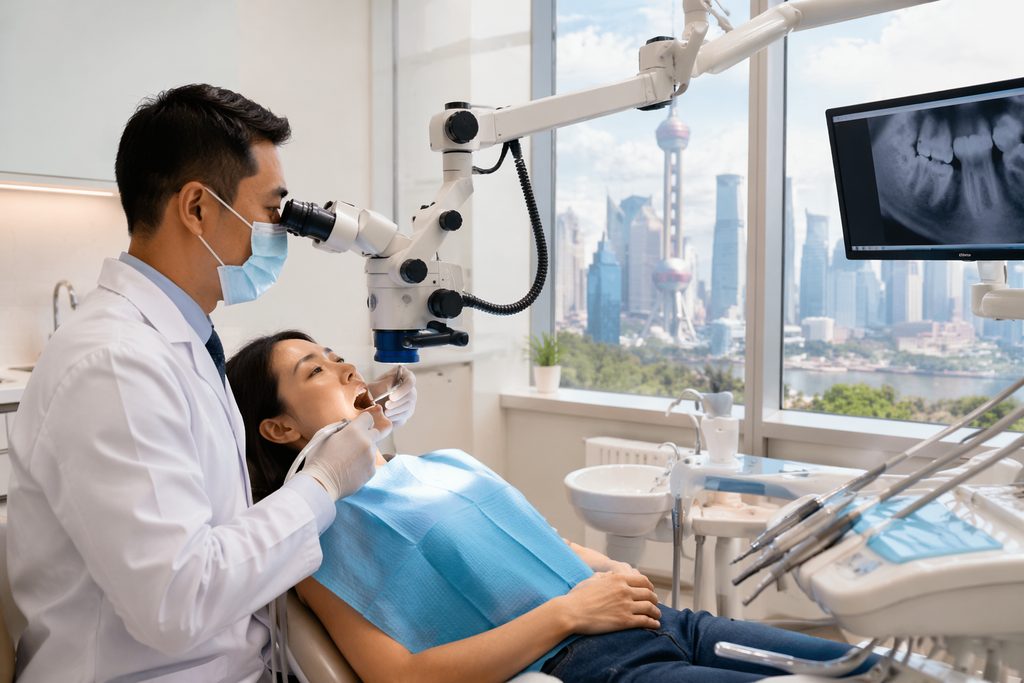
Root Canal in China: Cost and How to Book
What if the toothache that’s been keeping you up at night could be fixed for a fraction of the quote sitting in your inbox? For a growing number of international patients, the root canal cost China hospitals charge — often one-fifth of Western prices — turns a stressful dental emergency into a manageable decision. This guide walks through real price ranges, safety standards, and the exact booking steps, so you can decide with clear numbers instead of guesswork.
We are China Medical Services. Our team connects international patients with 340+ top-ranked hospitals across 37 cities, and we handle the logistics that make a dental trip actually work — records, appointments, translation, and a bilingual companion who sits beside you in the chair.
How This Actually Works, Step by Step
Here is the real sequence, from your first email to the moment you bite down on a repaired tooth.
1. You send your dental records. Panoramic X-ray, periapical films if you have them, and any notes from your dentist at home. A CBCT scan is ideal but not always required for a first assessment.
2. A Chinese endodontic specialist reviews the file. Not a salesperson — a clinician at a public tertiary hospital or an international dental clinic. They confirm whether the tooth is restorable, whether a root canal is even the right treatment, and roughly how many visits it will take.
3. You receive a written estimate and a proposed schedule. Single-visit versus two-visit treatment, whether a crown is needed afterward, and the price range for your specific case.
4. We coordinate the appointment. Public hospital dental departments generally do not allow foreigners to pre-book a specific slot from overseas. International departments and private clinics do. We work through the official international or VIP channel, and if we cannot secure the appointment we quoted, the coordination fee is refunded in full.
5. You arrive, get treated, and leave with records. A bilingual medical companion handles registration, payment, and translation. You fly home with imaging and a treatment summary your own dentist can read.
What a Root Canal Costs in China vs. the US and Europe
Dental pricing in China splits into three tiers, and the gap between them is wider than most patients expect.
| Treatment | China (public hospital) | China (private international clinic) | United States | Western Europe |
|---|---|---|---|---|
| Anterior root canal (front tooth) | $150–$300 | $400–$700 | $700–$1,100 | $500–$900 |
| Molar root canal | $300–$600 | $700–$1,200 | $1,000–$1,800 | $800–$1,400 |
| Retreatment (failed prior canal) | $400–$800 | $900–$1,600 | $1,200–$2,200 | $1,000–$1,800 |
| Zirconia crown | $200–$450 | $600–$1,200 | $1,000–$2,500 | $800–$1,800 |
| CBCT scan | $40–$100 | $100–$250 | $150–$400 | $120–$350 |
Prices vary by hospital, tooth position, and case complexity — a calcified canal or an active infection adds time and cost. These are reference ranges, not quotes. The root canal price Shanghai patients see at a top public stomatology hospital often lands at the lower end; Beijing is broadly similar, and second-tier cities can run 15–25% cheaper still.
So how much does a root canal cost in Beijing at a reputable public facility? Expect $300–$600 for a molar, plus $200–$450 for the crown. That is the number most patients are actually searching for, and it is roughly one-third of a typical US dental quote.
A Realistic Timeline
Dental treatment is faster than most surgical trips, but it is not instant. Here is what the calendar usually looks like.
| Stage | Typical duration | What happens |
|---|---|---|
| Send records + written assessment | 2–5 business days | X-rays reviewed, treatment plan and estimate returned |
| Appointment coordination | 3–10 business days | Slot secured through international or VIP channel |
| Visa (S2, medical purpose) | 1–3 weeks | Requires hospital invitation letter and supporting documents |
| Flight and hotel booking | 1–2 weeks | Best to allow a buffer around treatment days |
| Treatment visit(s) | 1–3 days on the ground | Single-visit canals possible; two-visit cases need 5–7 days apart |
| Crown fabrication and fitting | 3–7 days | Some clinics offer same-week crowns; others need a second trip |
| Follow-up at home | 2–4 weeks | Your local dentist checks the restoration |
The step people forget is the crown. If you are flying in for a single-visit root canal and a crown, budget 7–10 days in China. If your case needs a second visit for canal disinfection, add another week. Rushing this is how restorations fail.
What Can Go Wrong — and What Happens Then
Honest failure modes matter more than success stories. Here are the real ones.
The tooth turns out to be non-restorable. Sometimes the fracture runs below the gum line, or the root is cracked. No endodontist anywhere can save that tooth. The plan shifts to extraction and an implant or bridge — and you should know that before you fly, which is exactly why the written assessment comes first.
The canal is more complex than the X-ray suggested. Calcified canals, extra roots, or a previously failed root canal can push treatment from one visit to three. Costs rise accordingly. A good clinic tells you this mid-treatment, not after.
Communication breaks down. This is the most common practical problem, not a clinical one. Public hospital dental departments are busy, and English-speaking staff are not guaranteed. A bilingual companion solves it. Without one, patients routinely miscommunicate about pain levels, medication, and aftercare instructions.
The crown does not fit on the first try. It happens. Reputable clinics remake it at no extra charge, but that adds days to your stay. Build a buffer into your flight home.
Is Root Canal Safe in China? What the Standards Actually Look Like
This is the question that stops most patients from booking. The short answer: at accredited hospitals and international clinics, endodontic care in China follows the same principles as anywhere else — rubber dam isolation, rotary instrumentation, apex locators, and digital imaging.
What varies is the setting, not the science. China’s top stomatology hospitals sit inside the same academic medical system that produces the country’s leading cardiac and oncology centers, and several appear in the Fudan specialty rankings for dentistry and oral surgery. You can browse those rankings by specialty on our department directory, which lists the top-ranked hospitals for each of 45 clinical areas.
Private international clinics add a different layer: English-speaking dentists, JCI accreditation in many cases, direct insurance billing, and Western-style appointment scheduling. They cost more — often two to three times a public hospital — but the experience is closer to what a patient from London or Los Angeles expects.
What you should verify before committing to any clinic:
- Sterilization protocols — ask directly, and expect a clear answer about autoclave cycles
- Whether the dentist is a hospital-attached specialist or a general practitioner
- What imaging is included in the quoted price
- Whether a written treatment record and copies of X-rays are provided at discharge
- Crown material and its country of origin
None of this is exotic. It is the same due diligence you would apply to a dentist at home.
Practical Considerations: Records, Visa, Payment, and Follow-Up
Records. Bring digital copies, not printouts. Chinese clinics can read DICOM files and standard JPEG X-rays. If your home dentist can export a CBCT scan, that single file answers most diagnostic questions before you travel.
Visa. Medical travel to China uses the S2 visa, which covers short-stay private affairs including medical treatment. Accompanying family members apply under the same category. Note that the M visa is for commercial and trade activity only — it is not a medical visa, despite what some outdated blogs claim. Requirements change, so confirm current documentation with the nearest Chinese embassy or consulate, and expect to submit a hospital invitation letter.
Payment. Public hospitals require prepayment for most dental work, and international insurance is typically reimbursed after the fact. Private international clinics often bill insurers directly. Bring a card that works internationally, and confirm the payment method before your appointment.
Insurance. Most Western dental plans do not cover treatment abroad, though some reimburse a portion. Call your insurer before you book, and ask specifically about overseas emergency and elective dental coverage.
Follow-up. Your Chinese clinic should hand you a treatment summary, post-operative instructions, and imaging. Give these to your dentist at home within a month. A restoration that is never reviewed is a restoration that fails quietly.
For patients weighing a broader trip, our overview of medical treatment in China explains how hospital tiers, costs, and coordination fit together across specialties.
Frequently Asked Questions
A molar root canal at a Chinese public hospital typically runs $300–$600, versus $1,000–$1,800 in the United States. Private international clinics in Shanghai or Beijing charge $700–$1,200. Add a crown — $200–$450 at a public hospital — and the total is often one-third of a US quote. Final pricing depends on tooth position, infection severity, and whether retreatment is needed.
Not directly at most public hospitals, where dental appointments are issued on the day of visit. International departments and private clinics do accept advance bookings. Working through a coordination service is the practical route — we secure a slot via the official international channel, and if we cannot get the appointment we quoted, the coordination fee is refunded in full.
At accredited hospitals and JCI-certified international clinics, yes — the clinical protocols match international standards. The bigger risk is communication, not technique. A bilingual companion prevents misunderstandings about pain, medication, and aftercare. Choose a hospital with a clear sterilization policy and a specialist who provides written records at discharge.
Plan for 7–10 days if you need both a root canal and a crown. Single-visit canals exist, but complex or infected teeth often require a second appointment 5–7 days later. Crown fabrication adds another 3–7 days. Do not book a return flight for the day after treatment.
Often not. Many advertised packages quote only the canal, then add the crown, CBCT scan, and medications as separate line items. Always ask for a full written estimate covering diagnosis, canal treatment, restoration, and follow-up before you commit. A transparent clinic will itemize everything.
Your Next Step
The core message is simple: a root canal in China costs a fraction of Western prices, the clinical standards at accredited hospitals are sound, and the real work is in the logistics — records, appointment channels, visa timing, and having someone beside you who speaks both languages.
Our team does not practice dentistry and does not promise a specific outcome. What we do is review your records with the right specialist, coordinate the appointment through official hospital channels, and provide a bilingual companion on the day. If you would like a written assessment and a realistic cost range for your case, start with a free consultation. No pressure, no obligation — just clear numbers to help you decide.
This article is for general information only and is not medical advice. Treatment decisions should be made with a qualified dental professional who has reviewed your individual case.
For more medical information and treatment options in China, visit chinamedservices.com (China Medical Services).
