Same-Day Gastroscopy in China: Is It Possible for Foreigners?
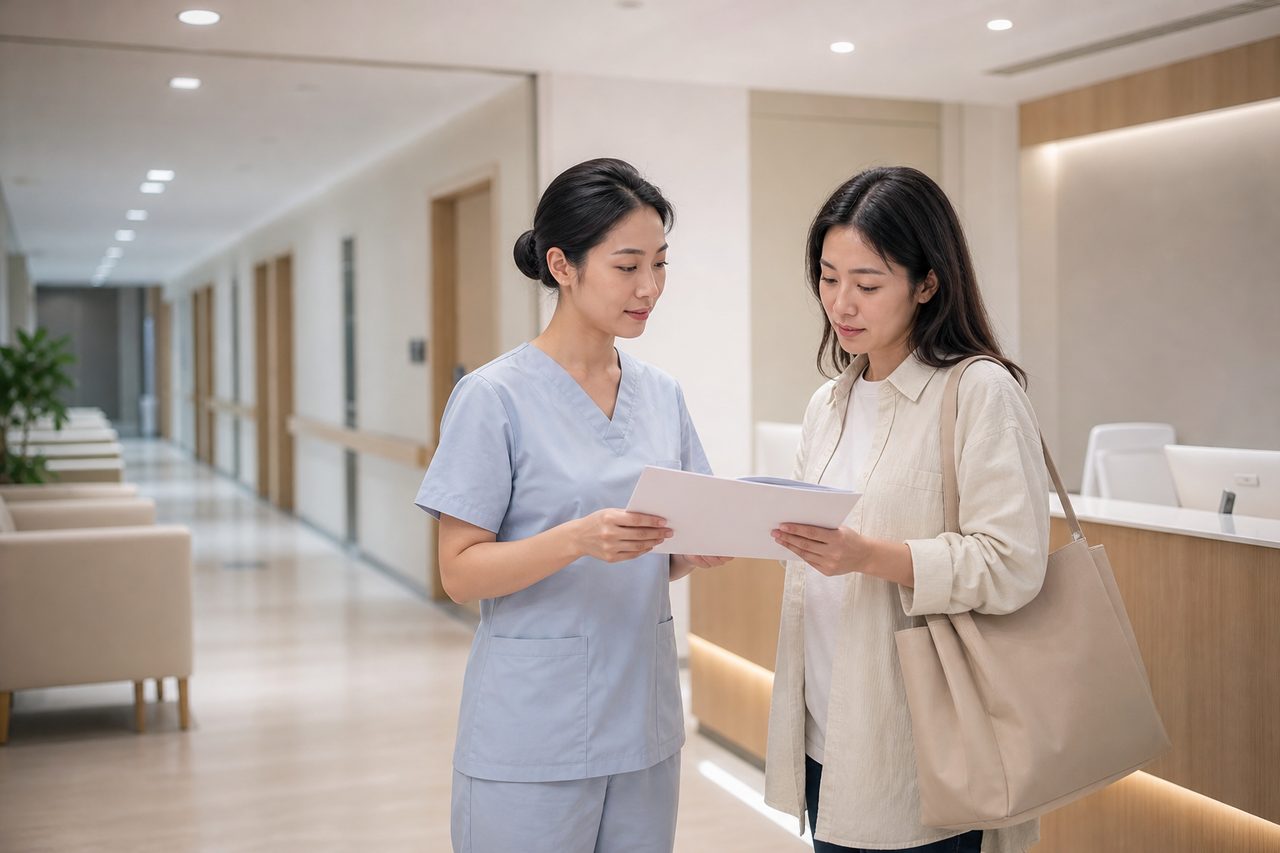
Same-Day Gastroscopy in China: Is It Possible for Foreigners?
A gastroscopy — also called an upper endoscopy — is a short procedure where a thin, flexible tube with a camera slides down your throat to inspect your esophagus, stomach, and the first part of your small intestine. It sounds unpleasant. In practice, it usually takes 10 to 20 minutes, and most patients choose light sedation and remember almost nothing afterward. Now the real question: can a visitor actually walk into a Chinese hospital and get one the same day? The short answer is yes, sometimes — and the same day gastroscopy cost China hospitals charge is often a fraction of what you would pay in the United States or Europe. But “possible” and “guaranteed” are two very different words, and the details matter enormously.
How This Actually Works, Step by Step
Here is the honest sequence, from the moment you decide you need this done to the moment you have a report in hand.
First, you need a hospital that accepts foreign patients and has a gastroenterology department equipped for endoscopy. China has more than 35,000 hospitals. The ones worth your time sit in the top 5% — the tier ranked by the Fudan University hospital index and accredited by JCI. Our database covers 340+ of these across 37 cities, and the Fudan-ranked top hospitals by city page is where most patients start narrowing down.
Second comes registration. This is the part that surprises Westerners. At most public hospitals, you cannot book a routine outpatient endoscopy slot from overseas weeks in advance. You register on the day — physically, at a counter, with your passport — and then wait in a queue. Large tertiary hospitals see tens of thousands of outpatients daily. Without Mandarin, navigating that queue is genuinely hard.
Third, a gastroenterologist reviews you briefly, confirms the indication, and writes the endoscopy order. You pay upfront at a cashier window. Public hospitals in China require prepayment; insurance is reimbursed afterward, not settled at the desk.
Fourth, the endoscopy itself happens — often within hours at a hospital with a dedicated endoscopy center, sometimes the next morning if the schedule is full. You receive a written report, usually with images, and often a preliminary pathology note if a biopsy was taken (full biopsy results take several days).
So: same-day is realistic at a well-run hospital with an endoscopy center that has open capacity. It is not something anyone can promise you in advance from another country.
Can You Really Get a Gastroscopy Same Day in Shanghai?
Shanghai is the city where this question comes up most, and for good reason. It has a dense concentration of top-tier hospitals — 18 Fudan Top 100 institutions, second only to Beijing — plus a mature private international hospital sector with English-speaking staff and direct insurance billing.
At a private international hospital in Shanghai, the answer is frequently yes. These facilities run appointment-based endoscopy and are built around foreign patients. You call, you get a slot, often within 24 to 72 hours, occasionally the same day if there is an opening. The trade-off is price: roughly 1.5 to 2 times what the public VIP channel charges.
At a top public hospital in Shanghai, same-day is possible but less predictable. The endoscopy center may have capacity, or it may be booked out for days. This is where the hospital’s international department or VIP channel changes the equation — you get a senior specialist, English-language support, and a coordinated slot rather than a walk-up gamble.
If your situation is urgent — persistent vomiting, difficulty swallowing, suspected bleeding — say so explicitly. Triage exists, and a genuine red flag moves you up. A vague preference for convenience does not.
A Realistic Timeline
Assume you are starting from your home country. Here is what the calendar usually looks like.
| Stage | Typical Duration | What Happens |
|---|---|---|
| Records review & hospital matching | 1–3 days | You send existing reports; we identify hospitals with suitable endoscopy capacity |
| Written second opinion (optional) | 3–7 days | A Chinese gastroenterology team reviews your records and advises whether endoscopy is indicated |
| Visa (S2, medical/private affairs) | 4–10 business days | Requires hospital invitation documents; processing time varies by consulate |
| Flights & arrival | 1–2 days | Booking, travel, jet lag |
| Hospital registration & specialist consult | Same day to 2 days | Passport registration, payment, brief clinical review |
| Endoscopy procedure | Same day to 3 days after consult | Depends on endoscopy center schedule |
| Report & biopsy results | Immediate report; 3–7 days for pathology | Written findings, images, histology if sampled |
Total, from decision to procedure: roughly one to three weeks if you need a visa. If you are already in China on a valid status, it can compress to two or three days.
What Can Go Wrong — and What Happens Then
Honesty earns more trust than optimism, so here are the real failure modes.
The endoscopy center is fully booked. This happens, especially at famous hospitals. Recourse: a different hospital in the same city, or the international/VIP channel, which often holds separate capacity. This is exactly why matching across multiple hospitals beats fixating on one name.
You are not clinically eligible for same-day sedation. If you have uncontrolled blood pressure, certain cardiac conditions, or you ate recently, the doctor may delay. Fasting is typically required for 6 to 8 hours beforehand. Recourse: reschedule, usually within a day or two.
You need a biopsy and the pathology takes a week. The visual report is immediate; the tissue diagnosis is not. If you are flying home, arrange for the report to be sent to you or your doctor. Recourse: request digital copies before you leave.
The visa does not arrive in time. S2 processing is subject to consulate timelines we do not control. No service can guarantee visa approval. Recourse: apply early, or if you are already in the region, consider whether your current status permits the visit.
Language breaks down at a critical moment. Consent forms, sedation instructions, and post-procedure advice are in Mandarin. Misunderstanding them is a genuine safety issue. Recourse: a bilingual medical companion in the room.
What the Numbers Actually Mean: Cost, Quality, and Choosing a Hospital
Let’s talk money, because that is often the deciding factor.
| Setting | Typical Gastroscopy Cost (USD) | Notes |
|---|---|---|
| Public tertiary hospital, standard channel | $80–$250 | Includes procedure; sedation and biopsy may add cost |
| Public hospital, international/VIP channel | $200–$500 | English support, senior specialist, coordinated scheduling |
| Private international hospital | $500–$1,500 | Direct insurance billing, Western-style service |
| United States (for comparison) | $1,500–$4,000+ | Facility fees vary widely |
Prices vary by hospital and case complexity, and sedation, biopsy, and pathology are often billed separately. Treat these as ranges, not quotes.
Quality matters more than price, though. The best endoscopy centers in China perform thousands of procedures annually, use high-definition scopes with narrow-band imaging for early cancer detection, and have low complication rates. Complication risk for diagnostic gastroscopy is genuinely small — perforation occurs in well under 1 in 1,000 cases — but it is not zero, and you want a center that handles problems well if they arise.
How do you evaluate a hospital you have never seen? Look at three things: whether the gastroenterology department appears on the Fudan specialty reputation rankings, whether the hospital has a dedicated endoscopy center rather than a shared procedure room, and whether it has an international department that routinely serves foreign patients. JCI accreditation is a useful additional signal, particularly at private hospitals.
Practical Considerations: Records, Visa, Payment, and Follow-Up
Bring your existing records. Prior endoscopy reports, imaging, medication lists, and relevant blood work all help the specialist decide quickly. If your documents are in English, that is usually fine at international departments; for standard public channels, translation helps.
The correct visa category for medical travel is S2, used for short-stay medical treatment and private affairs, with supporting hospital documents. Stays exceeding 180 days fall under S1. Accompanying family members apply under S2 as well. Note that the M visa is for commercial and trade activity — it is not a medical visa, and using it for treatment is a mistake. Requirements change, so confirm current rules with the relevant Chinese embassy or consulate.
Payment at public hospitals is upfront, in cash or by card or mobile payment; insurance reimbursement happens afterward in your home country, and not every insurer covers treatment abroad. Private international hospitals frequently bill insurers directly, which removes a real administrative headache.
Plan your follow-up before you fly. If a biopsy is taken, someone needs to receive and interpret the result. Ask for digital copies of everything — report, images, pathology — before you leave the hospital. Getting them later from abroad is possible but slow.
Frequently Asked Questions
Yes, at many hospitals with dedicated endoscopy centers and available capacity — particularly private international hospitals and public hospital VIP channels. It is not guaranteed, and no provider should promise a specific date in advance. Urgent clinical indications are triaged faster than convenience requests.
If you are already in China with valid status, two to three days is a realistic window at a well-matched hospital, sometimes faster. If you are starting from abroad and need an S2 visa, plan on one to three weeks end to end, with visa processing typically the longest single step.
At public tertiary hospitals, expect roughly $80 to $250 for the procedure itself, with sedation and biopsy billed separately. International or VIP channels run $200 to $500. Private international hospitals in Beijing typically charge $500 to $1,500. Final pricing varies by hospital and case complexity.
Yes. After sedation you should not drive, and you may be unsteady for several hours. You also need someone who understands the discharge instructions. A bilingual medical companion handles interpretation, paperwork, and logistics — typically from $300 per day.
You can, but it is difficult alone. Registration counters, consent forms, and discharge advice are in Mandarin at public hospitals. International departments and private hospitals offer English support; elsewhere, a bilingual companion is the practical solution.
Your Next Step
Same-day gastroscopy in China is achievable, especially in Shanghai and Beijing, but it depends on hospital capacity, your clinical situation, and how far in advance you can plan. The cost advantage is real — often a tenth of US pricing at public hospitals — and the quality at top centers is genuinely strong. What you cannot do is assume a specific date will be available.
China Medical Services helps international patients navigate this system: matching you with appropriate hospitals from our database of 340+ top-ranked institutions across 37 cities, coordinating appointments through official international departments, and providing bilingual support on the ground. We are a coordination service, not a medical provider — we do not diagnose, treat, or guarantee outcomes, and we never promise a specific specialist or procedure date. If you would like to talk through your situation, you can start with a free consultation and we will tell you honestly what is realistic.
For more medical information and treatment options in China, visit chinamedservices.com (China Medical Services).
