Radiation Sessions Explained: Planning Your Treatment Timeline and Costs
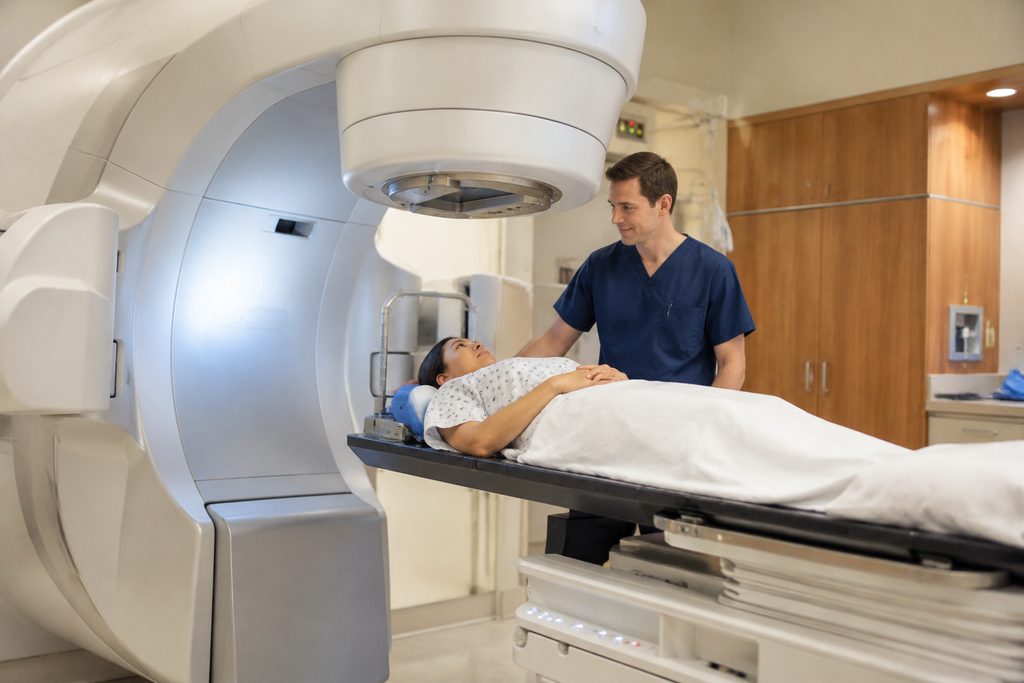
Have you ever sat in a doctor’s office, heard the word “radiation,” and felt your mind go blank except for one question: how many sessions will I actually need? It is the first thing almost every patient asks us. The honest answer is that the number varies dramatically—from a single session to more than forty—depending on your diagnosis, the technology available, and the clinical intent. For international patients weighing treatment options in China, understanding that range is the foundation for planning both your time and your budget.
Key Takeaways
- Most curative radiation plans fall between 20 and 35 sessions delivered over 4 to 7 weeks, while palliative or stereotactic approaches may need only 1 to 5 sessions.
- Radiation therapy cost China typically ranges from $8,000 to $25,000 for a full conventional course, compared to $50,000 to $100,000+ in the United States.
- China’s top cancer centers routinely operate the same linear accelerators and treatment planning systems used at leading Western institutions, but with far higher patient volumes.
- You cannot book radiotherapy from overseas without a prior clinical review; a written second opinion or video consultation is the realistic first step.
The Problem: Uncertainty About Session Counts Paralyzes Planning
Radiation oncology is not a one-size-fits-all field. According to the American Society for Radiation Oncology (ASTRO), approximately 60% of all cancer patients in the United States receive radiation therapy at some point in their treatment journey. Each year, that translates to over one million patients. Yet the number of sessions any single patient requires depends on tumor type, stage, location, and whether the goal is cure or symptom relief.
A woman with early-stage breast cancer might receive 15 to 20 sessions of whole-breast radiation after lumpectomy, or she might be a candidate for 5-session accelerated partial breast irradiation. A man with localized prostate cancer could undergo 28 sessions of conventional fractionation or 5 sessions of stereotactic body radiation therapy (SBRT). A patient with a brain metastasis might need just one session of stereotactic radiosurgery. Same technology, same department, wildly different schedules.
That variability creates a practical problem for anyone planning treatment. You need to know how long you will be in a foreign city. You need to know what the total cost will be. And you need to know whether a shorter, more expensive course is actually better than a longer, cheaper one. Without a structured clinical review of your imaging and pathology, no one can answer those questions accurately.
Why Treatment Planning in China Delivers Real Answers
A senior radiation oncologist at a major Chinese cancer center may review 30 to 50 treatment plans in a single week. That is not an exaggeration. Fudan University Shanghai Cancer Center, one of the busiest oncology hospitals in Asia, treats tens of thousands of radiation patients annually. The planning teams there see rare presentations and difficult anatomical cases on a routine basis. For a patient with an uncommon tumor or a challenging location near critical structures, that depth of experience translates directly into better contouring, safer dose delivery, and fewer unnecessary sessions.
The equipment gap that once separated Chinese hospitals from American or European centers has largely closed. Top-tier institutions in Beijing, Shanghai, and Guangzhou operate Varian TrueBeam, Elekta Versa HD, and CyberKnife systems—the same platforms used at MD Anderson, Memorial Sloan Kettering, and leading German university hospitals. Intensity-modulated radiation therapy (IMRT), volumetric modulated arc therapy (VMAT), image-guided radiation therapy (IGRT), and SBRT are all standard offerings. What differs is scheduling. In many Western systems, the wait from consultation to first radiation session can stretch to four or six weeks. In China’s high-volume centers, that window is often one to two weeks once a treatment plan is approved.
Let us address the obvious question directly. A full course of IMRT in the United States commonly costs between $50,000 and $100,000, with some complex head and neck cases exceeding $120,000. In China, the same course typically falls between $8,000 and $25,000 at a top public hospital’s international department, depending on the technique, number of fractions, and case complexity. That is a 70% to 85% reduction, and it reflects structural economics—lower physician and facility labor costs, higher patient throughput, and state-subsidized capital equipment—not a compromise in treatment quality. The IMRT price Shanghai patients pay at a leading cancer center is a fraction of the US equivalent, yet the planning software, physics review, and delivery hardware are the same generation.
How Many Radiation Sessions for Cancer: The Numbers by Diagnosis
This is the section you came for. The table below reflects typical fractionation schedules used at major cancer centers in China, the United States, and Europe. These are general ranges, not prescriptions. Your actual plan will depend on your staging, pathology, and the radiation oncologist’s judgment.
| Cancer Type | Common Session Range | Typical Technique | Estimated Total Cost in China (USD) |
|---|---|---|---|
| Early breast cancer (post-lumpectomy) | 15–20 sessions (conventional) or 5 sessions (APBI) | IMRT / 3D-CRT | $6,000–$12,000 |
| Localized prostate cancer | 28 sessions (conventional) or 5 sessions (SBRT) | IMRT / SBRT | $10,000–$22,000 |
| Head and neck cancer (definitive) | 30–35 sessions | IMRT / VMAT | $15,000–$25,000 |
| Lung cancer (early stage, SBRT) | 3–5 sessions | SBRT | $8,000–$15,000 |
| Brain metastasis | 1 session (SRS) or 5–10 sessions (fractionated SRS) | SRS / FSRT | $5,000–$12,000 |
| Cervical cancer (with brachytherapy) | 25 external + 3–5 brachytherapy sessions | IMRT + HDR brachytherapy | $12,000–$20,000 |
These figures come from a review of published price lists at international departments of major Chinese hospitals and patient-reported data collected by our coordination team. They vary by hospital tier and case complexity. A patient needing concurrent chemotherapy or adaptive replanning mid-course will see higher totals.
IMRT Price Shanghai and What Drives Session Count Up or Down
Shanghai has become a focal point for international patients seeking radiation oncology care. The city hosts several of China’s most advanced cancer facilities, and the IMRT price Shanghai hospitals quote is often the benchmark patients use to compare against other Asian destinations like Singapore or South Korea. But the number that matters most is not the per-session price. It is the total course cost, which depends on how many sessions your oncologist prescribes.
Several factors push session counts higher. Larger tumors require more total dose, which means more fractions when using conventional fractionation. Tumors adjacent to sensitive structures—the spinal cord, optic nerves, brainstem—often require smaller daily doses spread over more sessions to protect normal tissue. Post-operative radiation for certain sarcomas or rectal cancers can extend to 30 or more fractions. Conversely, SBRT and stereotactic radiosurgery compress treatment into 1 to 5 sessions by delivering much higher doses per fraction with extreme precision. Not every patient is eligible for those shorter courses, but when you are, the logistics change completely: what would have been a six-week stay becomes a one-week trip.
Is Radiation Therapy Safe in China? What International Patients Should Check
Safety in radiation oncology is a function of three things: equipment quality, physics oversight, and treatment planning rigor. At China’s top-tier centers, all three are present at levels comparable to Western academic hospitals. The linear accelerators are the same models used in the US and Europe. Medical physicists perform daily, monthly, and annual quality assurance checks according to protocols aligned with international standards. And treatment planning is done by dedicated dosimetrists and reviewed by attending radiation oncologists before any beam is turned on.
But the honest answer is that safety varies by institution. A patient walking into a small provincial hospital with older equipment and limited physics support faces different risks than a patient treated at a Fudan-ranked cancer center. That is why we tell every patient the same thing: choose your hospital first, then discuss your treatment plan. The department-level rankings of China’s top oncology programs are a useful starting point. For patients specifically considering treatment in Shanghai, the concentration of high-volume centers is a genuine advantage—more options, more experienced teams, and more second-opinion pathways if you want one.
Book Radiotherapy Session Beijing: The Realistic Process
Here is what actually happens when an international patient wants to book radiotherapy session Beijing or Shanghai. You cannot simply email a hospital and reserve a treatment slot. Chinese public hospitals require a clinical evaluation before scheduling radiation. That evaluation can happen through a written second opinion, where you send your existing imaging, pathology reports, and treatment history for review by a radiation oncology team. The team then issues a written assessment that includes a proposed fractionation schedule and a cost estimate. This service typically costs $300 to $500 at a top hospital’s international department.
If you want a live discussion before committing to travel, a video consultation with a radiation oncologist costs $500 to $800 for a top specialist. During that call, you can ask directly: how many sessions do you recommend for my case, and why? What technique would you use? What are the realistic side effects given my tumor location? That conversation is where the uncertainty about session counts finally resolves into a concrete plan.
Once a plan is agreed upon, the hospital’s international department coordinates your treatment schedule. You will need an S2 visa for medical treatment, supported by an invitation letter from the hospital. You will also need to arrange accommodation near the hospital for the duration of your course—a six-week IMRT course means a six-week stay, while a five-session SBRT course means you could be home in ten days. Our team handles the hospital communication and scheduling logistics, but the clinical decisions remain entirely between you and your treating physicians.
Radiation Oncology Packages Abroad: What to Compare and What to Avoid
The phrase “radiation oncology packages abroad” gets searched a lot, and for good reason. Patients want predictable pricing. Some international departments in China now offer bundled packages for common treatment courses—breast IMRT, prostate SBRT, cervical brachytherapy—that include simulation, planning, delivery, and routine follow-up imaging. These packages can simplify budgeting, but you should read the fine print carefully. Does the package include the initial consultation fee? What about replanning if your anatomy changes mid-treatment? Are anesthesia or pain management costs included for brachytherapy procedures? A package that seems cheap can become expensive if exclusions are buried in the terms.
Also be cautious about any provider that promises a specific session count before reviewing your records. No competent radiation oncologist will commit to a fractionation schedule sight unseen. If a sales representative tells you “you will need exactly 25 sessions” before any doctor has looked at your imaging, walk away. That is not how radiation oncology works.
Practical Considerations: Documentation, Visas, and Payment for Radiation Treatment in China
Before you can get a meaningful treatment plan from a Chinese hospital, you need to assemble your records. That means a complete set of imaging files on CD or via secure upload—CT, MRI, PET-CT if available—plus your pathology report, surgical notes if you have had surgery, and a summary of any prior chemotherapy or radiation. Incomplete records delay everything. If you had prior radiation, the old treatment plan and dose-volume histogram are critical; re-irradiation decisions depend on them.
For the visa, the S2 category is the one used for short-term medical treatment and private affairs. You will need a hospital invitation letter confirming your treatment arrangement. Processing times vary by embassy, but plan for two to four weeks. Do not book flights until your visa is approved. Our team provides guidance on the exact documentation each consulate requires, but we never guarantee approval—final decisions rest with the visa officer.
Payment at Chinese public hospitals is typically required in advance, either in full or in staged deposits. International departments accept wire transfers and major credit cards. Private international hospitals in Beijing and Shanghai sometimes offer direct insurance billing, but public hospital international departments generally do not. You pay first, then seek reimbursement from your insurer. Check with your insurance provider before committing—some policies exclude treatment abroad entirely, while others require pre-authorization.
Language is a real barrier at every step. Even in international departments, the nursing staff and technicians may speak limited English. A bilingual companion who can translate during simulation, treatment setup, and follow-up visits is not a luxury. It is the difference between knowing what is happening and guessing.
Frequently Asked Questions
How do I know if I am a candidate for fewer radiation sessions?
Eligibility for hypofractionated or stereotactic approaches depends on tumor size, location, and histology. Small, well-defined tumors away from critical structures are the best candidates. A radiation oncologist must review your imaging to make that determination. Ask specifically about SBRT or hypofractionation during your consultation.
What happens if I need to pause my radiation course midway?
Treatment breaks are sometimes medically necessary—severe skin reactions, low blood counts, or intercurrent illness. Your oncologist will adjust the remaining fractions or add a boost session to compensate. The total dose matters more than the exact day count. This is why staying near the hospital during treatment is important; you need rapid access to your care team if problems arise.
Can I combine radiation with surgery or chemotherapy in China?
Yes, and many patients do. Neoadjuvant radiation before surgery, adjuvant radiation after surgery, and concurrent chemoradiation are all standard protocols at Chinese cancer centers. Coordination between departments—radiation oncology, medical oncology, and surgical oncology—is typically handled within the same hospital, which simplifies scheduling and record-sharing.
Is the radiation equipment in China the same as what I would get at home?
At top-tier hospitals, yes. Varian and Elekta linear accelerators dominate the market, the same as in the US and Europe. The difference is not the machine. It is the experience of the team using it and the volume of patients they treat. High-volume centers see more unusual cases and refine their protocols faster.
What if the hospital’s proposed session count differs from my home oncologist’s recommendation?
Get the two plans side by side and ask both teams to explain the reasoning. Differences often reflect legitimate variations in clinical practice—some centers favor conventional fractionation, others hypofractionation. If the disagreement is substantial, a third opinion or an MDT video consultation ($1,500 to $2,000) can help resolve it. You should never proceed with a plan you do not understand.
Your Next Step
The number of radiation sessions you need is knowable, but only after a proper clinical review of your records. That review is the first step, not the last. Our team at China Medical Services helps international patients obtain written second opinions and video consultations from radiation oncology departments at China’s top-ranked cancer centers, then coordinates the logistics of treatment if you decide to proceed. We are not a hospital and we do not provide diagnoses or treatment recommendations—those come from your physicians. If you want clarity on your session count and a realistic cost estimate, start with a consultation.
Radiation therapy is a serious commitment of time, money, and physical resilience. Knowing your session count turns a frightening unknown into a plan you can actually execute. That clarity is worth pursuing, wherever you ultimately choose to be treated.
For more medical information and treatment options in China, visit chinamedservices.com (China Medical Services).
