Sedation Dentistry Cost China: Safe Options for Anxious Patients Explained
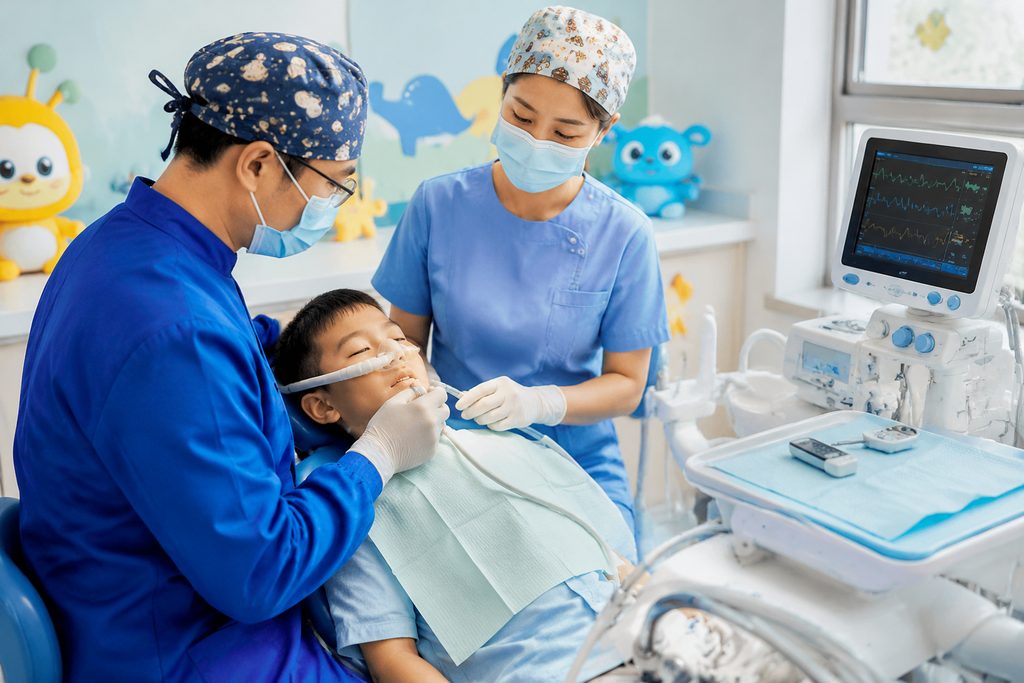
Sedation dentistry sounds complicated. In plain terms, it means using medication to keep you calm — or fully asleep — during dental work. You are not “knocked out” in the way general anesthesia for surgery works. You are simply relaxed enough that fear, pain, and the memory of the procedure fade. For someone who has avoided the dentist for years because of anxiety, this changes everything.
And yes, you can absolutely get sedation for dental work as an international patient. The question is not whether it exists. The question is where you get it, what it costs, and how you arrange it safely. The sedation dentistry cost China offers is typically 50–70% lower than comparable care in the United States or Western Europe — and that is before you factor in the quality of the facilities in cities like Shanghai and Beijing.
We have helped patients from the US, UK, Australia, and the Gulf states coordinate dental treatment under sedation at top-tier Chinese hospitals and private international clinics. The process is structured, the protocols are strict, and the pricing is transparent. Here is what you need to know.
How This Actually Works, Step by Step
You do not simply fly to China and walk into a dental chair. Sedation requires a medical evaluation first. The sequence looks like this:
First, you send us your dental records. X-rays, panoramic images, a treatment plan from your home dentist if you have one, and a list of medications you take. Our team translates these into Chinese and forwards them to the dental department of a hospital in our network — we work with 340+ top-ranked hospitals across 37 cities.
A Chinese dental specialist reviews your case. This is not a sales call. The doctor assesses whether sedation is medically appropriate for you, which type fits your procedure, and whether any underlying conditions need attention first. You get a written response, usually within 3–5 business days.
If sedation is approved, you receive a treatment plan with a cost estimate. The plan specifies the sedation method — oral sedative, intravenous (IV) sedation, or general anesthesia for complex full-mouth work — plus the dental procedures, the number of visits, and the total price range. Only after you approve this do we coordinate your appointment.
Then comes the practical part: you apply for an S2 visa, which is the correct category for short-term medical treatment and private affairs in China. We provide the supporting hospital documentation. You book flights and accommodation. We arrange a bilingual medical companion to meet you at the hospital, handle registration, translate every conversation, and stay with you through the sedation and recovery.
That last part matters more than most patients expect. You will be drowsy after sedation. You cannot navigate a Chinese hospital alone in that state. Having someone who speaks both languages and knows the hospital layout is not a luxury — it is the difference between a smooth visit and a stressful one.
Sedation Dentistry Cost China: What You Actually Pay
The numbers vary by city, hospital tier, and sedation method. But here is a realistic picture based on cases we have coordinated.
| Sedation Method | Typical Cost in China (USD) | Typical Cost in USA (USD) |
|---|---|---|
| Oral sedation (pill) | $80–150 per session | $300–600 per session |
| IV sedation (twilight) | $250–500 per hour | $600–1,200 per hour |
| General anesthesia (full sleep) | $800–1,500 per session | $2,500–5,000 per session |
| Full mouth restoration under anesthesia (package) | $12,000–25,000 total | $45,000–90,000 total |
These are reference ranges. The final price depends on the hospital, the complexity of your dental work, and how long the sedation runs. A 90-minute filling under IV sedation costs less than a six-hour full-arch reconstruction. But the pattern holds: you pay roughly one-third to one-half of US prices for equivalent care.
Dental sedation price Shanghai tends to sit at the higher end of the China range because Shanghai hosts several JCI-accredited private international hospitals. Beijing and Guangzhou are comparable. Cities like Chengdu or Hangzhou can be 10–20% lower while still offering excellent clinical standards.
One honest caveat: sedation itself is rarely covered by international health insurance. Dental tourism policies sometimes cover the dental procedure but exclude sedation fees. Check your policy before you commit. We can provide itemized invoices that separate sedation costs from surgical costs, which helps when you file a claim.
A Realistic Timeline
Patients underestimate how long the preparation takes. Here is a realistic schedule.
| Stage | What Happens | Duration |
|---|---|---|
| Week 1 | You send dental records and medical history; we translate and submit them | 3–5 business days |
| Week 2 | Chinese specialist reviews your case and issues a sedation eligibility assessment | 2–4 business days |
| Week 3 | You approve the treatment plan and cost estimate; we lock the appointment | 1–2 weeks (depends on hospital schedule) |
| Week 4–5 | S2 visa application with hospital support letter | 5–10 business days |
| Week 6 | Travel to China; pre-sedation physical exam at the hospital | 1–2 days |
| Week 6–8 | Dental procedure under sedation; recovery; follow-up visit | 3–14 days depending on complexity |
The step people forget is the pre-sedation physical. Chinese hospitals require a basic health check — blood pressure, ECG, sometimes blood work — before any sedation. This is not bureaucratic friction. It is patient safety. If you have untreated hypertension or an undiagnosed heart rhythm issue, sedation could be dangerous. The physical catches that.
Plan for at least six weeks from first contact to sitting in the dental chair. Rushing this process is how mistakes happen.
What Can Go Wrong — and What Happens Then
Sedation dentistry in China is safe when done properly. But “properly” depends on the facility. Not every clinic that advertises sedation has an anesthesiologist on staff. That is the single biggest risk factor.
In a top-tier Chinese hospital — the kind we work with — sedation is administered by a licensed anesthesiologist, not the dentist. Vital signs are monitored continuously. Emergency resuscitation equipment is in the room. This is the standard you want. A clinic where the dentist administers the sedation and monitors you at the same time is a red flag. That model is legal in some countries. It is not what you should accept.
What if something goes wrong during sedation? Adverse reactions to sedative drugs are rare but real. Nausea, vomiting, a drop in blood pressure, or an allergic response can happen. In a hospital setting, the anesthesiologist responds immediately. In a poorly equipped clinic, the response is slower. This is why we only coordinate sedation dentistry at hospitals with dedicated anesthesia departments — never standalone dental chains.
Another failure mode: language breakdown. You wake up groggy, the dentist explains post-operative care in Mandarin, and you nod without understanding. Then you go home and do the wrong thing — eat hard food, skip medication, ignore swelling. A bilingual companion prevents this. They translate the aftercare instructions, write them down for you, and check in with you the next day.
And the visa risk. If you apply for the wrong visa category — say, an M visa for commercial trade — you may be denied entry for medical purposes. The correct category is S2 for short-term private affairs including medical treatment. We prepare the hospital invitation letter and guide you through the application. We cannot guarantee approval. We can guarantee that you submit the right documents the first time.
Is Sedation Dentistry Safe in China? Evaluating a Provider
This is the question every patient asks, and the honest answer is: it depends on the provider. China has both world-class dental hospitals and mediocre clinics. The gap between them is wide.
Here is how to evaluate a provider before you book dental treatment with sedation China.
First, check the anesthesiology arrangement. Ask directly: “Will a licensed anesthesiologist administer the sedation and monitor me throughout?” If the answer is anything other than an unqualified yes, walk away.
Second, look at hospital accreditation. JCI (Joint Commission International) accreditation means the facility meets international patient safety standards. Several private international hospitals in Shanghai, Beijing, and Guangzhou hold this. Public top-tier hospitals — the ones on the Fudan ranking — are not always JCI-accredited, but their anesthesia departments are typically excellent because they handle high surgical volumes daily. We work with both types. You can browse our top-ranked hospital database to see which institutions meet the bar.
Third, confirm the sedation protocol. A responsible provider will require a pre-sedation physical, a fasting period before the procedure, and a monitored recovery period afterward. They will also require you to have someone with you — you cannot leave the hospital alone after IV sedation or general anesthesia. If a provider says you can walk out by yourself after full sedation, that is a warning sign.
Fourth, understand the sedation type. Oral sedation is the lightest — you take a pill an hour before treatment, you stay awake but relaxed. IV sedation is deeper — you are in a “twilight” state, responsive but unlikely to remember much. General anesthesia means you are fully unconscious, which is reserved for extensive procedures like full mouth restoration under anesthesia China package deals. Each has different risk profiles and recovery times. The dentist should explain why a specific method fits your case.
Fifth, ask about the dental materials and lab work. If you are getting crowns, implants, or veneers under sedation, the quality of the dental lab matters as much as the dentist’s skill. Top Chinese hospitals use CAD/CAM technology and high-quality zirconia or porcelain. Cheaper clinics may outsource to low-cost labs. The price difference is not just profit margin — it reflects materials.
Can I be sedated for dental work abroad if I have a medical condition? Sometimes. Conditions like controlled hypertension, well-managed diabetes, or mild asthma usually do not disqualify you. But uncontrolled high blood pressure, severe sleep apnea, or significant heart disease may require a cardiology clearance first. The Chinese anesthesiologist will review your history and decide. That review is part of the written assessment we arrange before you travel.
Practical Considerations: Records, Visa, Payment, and Follow-Up
Bring every dental record you have. Panoramic X-rays, bitewing images, previous treatment notes, a list of current medications, and any allergies. The more complete your file, the more accurate the remote assessment. Incomplete records mean the Chinese dentist may discover issues only after you arrive — which can change the sedation plan and the cost.
Visa timing matters. The S2 visa typically allows stays of up to 180 days, but for a dental trip you will usually request a shorter duration. Processing takes 5–10 business days at most Chinese embassies and consulates, but during peak seasons it can stretch longer. Apply early. We cannot guarantee approval, but we provide the hospital support letter that makes the application credible.
Payment is upfront. Chinese public hospitals require prepayment before treatment — this is standard practice, not a scam. Private international hospitals may accept direct billing from some insurers, but most international patients pay out of pocket and claim reimbursement later. Budget for the full treatment cost plus accommodation and local transport. A two-week stay in Shanghai for dental work under sedation, including a mid-range hotel, typically adds $1,500–3,000 to your total.
Follow-up at home is your responsibility. The Chinese dentist will give you a written aftercare plan — translated into English by our team. You take that to your home dentist for ongoing monitoring. For most sedation dentistry cases, no return trip to China is needed. But if you get full-arch implants, the dentist may want a review at 3–6 months. That can often be done via video consultation rather than another flight. We can arrange a follow-up video call for $100–300 if needed.
Language is the hidden cost. Every step — registration, payment, pharmacy, recovery — happens in Chinese at a public hospital. At private international hospitals, English-speaking staff handle most interactions. But even there, nuances get lost. A bilingual medical companion costs from $300 per day and is worth it for the day of sedation and the first follow-up visit. They handle the queueing, the forms, the pharmacy pickup, and the translation. You focus on recovering.
If you are exploring broader treatment options in China, our specialty department rankings can help you understand which hospitals lead in dental and maxillofacial care. And for a general overview of how international patients navigate Chinese healthcare, start with our guide to medical treatment in China.
Frequently Asked Questions
Sedation dentistry cost China runs roughly 50–70% lower than US prices. IV sedation averages $250–500 per hour in China versus $600–1,200 in the US. Full mouth restoration under anesthesia can total $12,000–25,000 in China compared to $45,000–90,000 in America. Actual prices vary by hospital and case complexity.
Yes. Dental anxiety alone is a valid reason for sedation. Chinese anesthesiologists routinely sedate patients who are otherwise healthy but cannot tolerate dental work awake. You still need the pre-sedation physical — that is non-negotiable — but anxiety does not disqualify you.
Age alone is not a barrier. Patients in their 60s and 70s receive sedation dentistry in China regularly. The deciding factors are cardiovascular health, respiratory function, and medication interactions. The anesthesiologist reviews these before approving sedation. If the risk is elevated, they may recommend oral sedation instead of IV or general anesthesia.
These packages typically include the sedation or general anesthesia, all extractions, bone grafting if needed, implant placement or full-arch prosthetics, temporary teeth, and the final restoration. Some packages include hotel accommodation and airport transfer. Read the itemized breakdown carefully — packages vary significantly between hospitals.
Most standard travel insurance policies exclude elective dental treatment, including sedation. Some specialized medical tourism policies cover complications but not the procedure itself. Your regular dental or health insurance may reimburse part of the cost if the treatment is medically necessary. Request an itemized invoice that separates sedation fees from surgical fees — it makes the claim process cleaner.
Your Next Step
Sedation dentistry in China is a real, safe, and affordable option — if you choose the right provider and plan the logistics properly. The savings are substantial, but they only matter if the clinical quality and safety protocols are solid.
We are China Medical Services. We help international patients coordinate dental treatment under sedation at top-tier Chinese hospitals and JCI-accredited private clinics. We do not perform dentistry, and we do not promise outcomes. What we do is handle the practical coordination — hospital matching, record translation, appointment scheduling, visa documentation, and bilingual support on the ground.
If you are considering sedation for dental work and want to understand your options without committing to anything, request a free consultation. Tell us what you need done. We will tell you honestly whether China makes sense for you, what it would cost, and how long it would take. No pressure. Just clear information.
For more medical information and treatment options in China, visit chinamedservices.com (China Medical Services).
