Complex Spine Tumor Surgery China: Inside Shanghai Huashan Hospital’s Spinal Oncology Program
Key Takeaways
- Shanghai Huashan Hospital’s Department of Neurosurgery performs over 17,000 neurosurgical procedures annually, placing it among the highest-volume centers globally for complex spinal tumor cases.
- The complex spine tumor surgery cost at Shanghai Huashan Hospital typically ranges from $25,000 to $45,000 USD for international patients—a fraction of comparable US costs which often exceed $150,000.
- Accessing Huashan’s spinal oncology program requires navigating China’s hospital system through official international patient channels; walk-in appointments for complex surgical scheduling are not available to overseas visitors.
- Surgical outcomes at Huashan for spinal tumor resection align with international benchmarks, with published five-year survival rates for certain intradural tumors comparable to major Western centers.
The Problem: When a Spinal Tumor Diagnosis Leaves You With Few Options
A spinal tumor diagnosis arrives like an uninvited guest. Primary spinal cord tumors affect approximately 1 in 100,000 people each year, and when the tumor is complex—intramedullary, recurrent, or involving critical vertebral segments—the stakes rise fast. You need a surgical team with deep experience. You need it soon. And you need a cost that does not bankrupt your family.
For many Western patients, the math does not add up. A complex intradural tumor resection in the United States can cost $150,000 to $250,000. Insurance may cover much of it—or it may not. Wait times for a surgeon who handles 50 such cases a year can stretch into months. Meanwhile, the tumor is still there. Growing. Pressing on the cord.
Some patients start looking abroad. They find themselves reading about a neurosurgical department in Shanghai that completes more spinal tumor surgeries in a month than many Western hospitals do in a year. The question shifts from “Can I afford this?” to “Is this real?”
Who We Are
We are not a hospital. We do not perform surgery, diagnose conditions, or offer medical opinions. Our team at China Medical Services functions as your logistical architects—we connect international patients with China’s top-tier medical institutions and handle everything that stands between you and the operating room. That means hospital matching based on your specific spinal tumor pathology, appointment coordination through official international patient channels, bilingual medical companions who physically accompany you through every consultation, and visa guidance for the S2 medical treatment visa. We built our network across 340+ top-ranked hospitals in 37 cities. We know which neurosurgeon at Huashan specializes in intramedullary ependymomas versus complex schwannomas. We know the documentation required before a surgical consultation. We exist so you do not arrive alone with a stack of radiology reports and no Mandarin.
Why Shanghai Huashan Hospital’s Spinal Oncology Program Delivers Results
Clinical Volume That Shapes Surgical Judgment
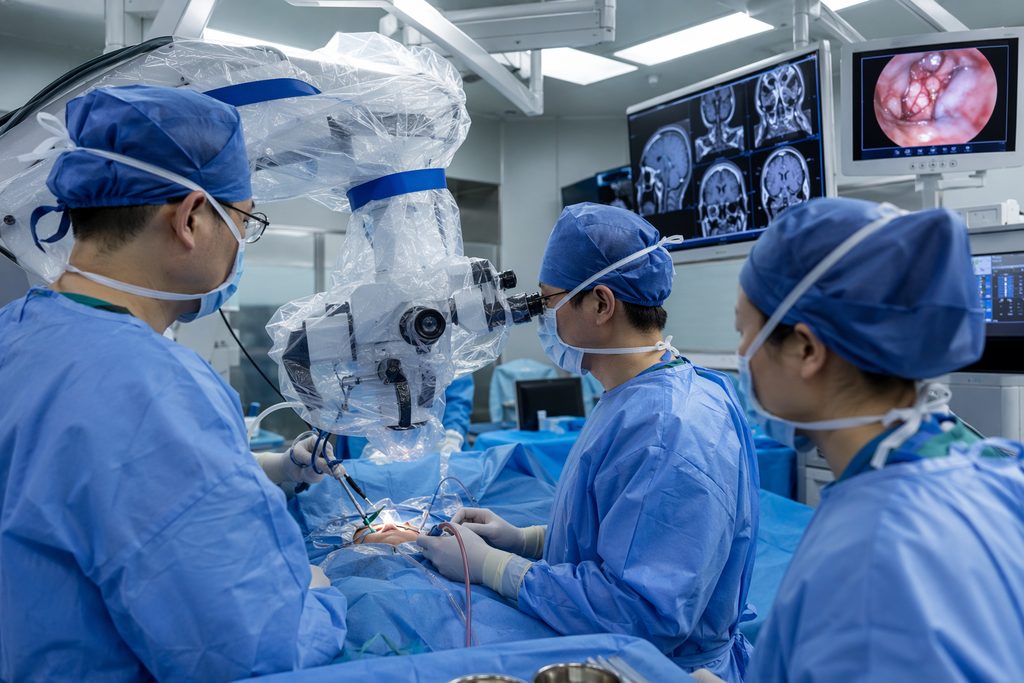
Huashan Hospital’s Department of Neurosurgery is not simply large. It is a reference center. The department handles over 17,000 neurosurgical cases annually. Within that, the spinal oncology subgroup operates on hundreds of spinal tumors each year—intradural, extradural, intramedullary, metastatic lesions requiring complex stabilization. A surgeon here sees more unusual tumor presentations in a quarter than most spinal neurosurgeons encounter in several years.
Volume matters because spinal tumor surgery is not a single procedure. A cervical intramedullary ependymoma resection is fundamentally different from a thoracic meningioma removal with dural reconstruction. Intraoperative neuromonitoring thresholds shift. The decision to use ultrasonic aspiration versus laser ablation depends on tumor consistency and cord adherence. These are judgment calls shaped by repetition. When a surgeon has performed a specific resection 300 times, the intraoperative decisions become faster and more precise.
Published data from Huashan’s neurosurgery service reports gross total resection rates for spinal meningiomas exceeding 90%, with neurological preservation outcomes consistent with major Western series. The department is ranked among China’s top neurosurgery programs by the Fudan University Hospital Ranking—a classification that places Huashan’s neurosurgery in the highest tier nationally.
Technology Infrastructure Built for Complex Resections
The spinal oncology program operates with intraoperative MRI, CT-guided neuronavigation, and continuous multimodal neuromonitoring—motor evoked potentials, somatosensory evoked potentials, and triggered EMG. These are not optional extras. For an intramedullary tumor, the surgeon needs real-time feedback on dorsal column function while working millimeters from the corticospinal tracts. Huashan has that capability in the operating suite.
What does this mean practically? A patient with a recurrent cervical cord astrocytoma arrives for re-resection. Scar tissue obscures the tumor-cord interface. The surgeon uses intraoperative ultrasound to differentiate tumor from myelomalacia, then activates motor mapping to identify the safe entry zone. The entire case proceeds with continuous electrophysiological surveillance. If evoked potentials drop, the surgeon pauses immediately. This is the standard of care at Huashan—not a special request.
Complex Spine Tumor Surgery Cost Shanghai Huashan Hospital: The Economics Explained
Let us address the question directly. The complex spine tumor surgery cost at Shanghai Huashan Hospital for international patients typically falls between $25,000 and $45,000 USD. This includes the surgical procedure, anesthesia, intraoperative neuromonitoring, hospital stay of 7-14 days, and basic post-operative imaging. Complex instrumentation cases—those requiring multi-level pedicle screw fixation or vertebral body replacement—may push toward the upper end of that range or slightly beyond.
Compare this to the United States, where the same procedure billed to an international self-pay patient commonly ranges from $150,000 to $250,000. Even insured US patients can face out-of-pocket costs exceeding $30,000 after deductibles and coinsurance—sometimes for a surgeon with less spinal tumor-specific volume than the Huashan team.
The cost difference is structural, not qualitative. Chinese hospital charges reflect different labor economics, higher patient throughput, and a system where top neurosurgeons are salaried public hospital employees rather than private-practice billers. The implants, microscopes, and neuromonitoring equipment are the same international brands used in Boston or Munich. The lower price does not signal lower quality. It signals a different economic model.
| Procedure Type | Huashan Hospital (International Patient) | US Hospital (Self-Pay Estimate) |
|---|---|---|
| Intradural tumor resection (no instrumentation) | $25,000 – $35,000 | $120,000 – $180,000 |
| Intramedullary tumor resection with monitoring | $30,000 – $45,000 | $160,000 – $250,000 |
| Spinal tumor with stabilization/fusion | $35,000 – $55,000 | $180,000 – $300,000+ |
Note: Ranges are estimates for international patients and vary by hospital and case complexity. Final quotes come after imaging review and surgical consultation.
How Safe Is Spinal Tumor Surgery in China? Addressing the Core Concern
This question sits at the center of every international patient conversation we have ever had. It is the right question. The answer requires nuance.
At a top-tier center like Huashan Hospital, spinal tumor surgery safety protocols mirror international standards. The hospital maintains JCI-equivalent quality systems. Infection control practices, surgical time-out procedures, and adverse event reporting are institutionalized. The neurosurgery department publishes its complication rates in peer-reviewed journals. For spinal tumor resections, published series from Huashan report permanent neurological deterioration rates in the 2-5% range for intramedullary tumors—consistent with benchmarks from major North American and European centers.
But safety is not just about the operating room. It is about the system around it. Post-operative care quality varies significantly between hospitals in China. At Huashan, neurosurgical ICU staffing ratios and rehabilitation protocols are robust. At a lower-tier hospital, they may not be. This is why hospital selection matters enormously. The question is not “how safe is spinal tumor surgery in China?” but rather “how safe is it at this specific hospital, with this specific surgeon, for this specific tumor?”
We direct patients to hospitals where published outcomes data exist. We do not recommend centers that cannot demonstrate their surgical volume and complication rates. The best hospital for spinal oncology medical tourism China is not a single institution—it is the hospital whose documented experience matches your specific pathology. For many complex intradural tumors, that hospital is Huashan.
What Is the Success Rate of Complex Spine Tumor Removal Abroad?
“Success” in spinal tumor surgery is measured along two axes: extent of resection and neurological outcome. A gross total resection with preserved or improved neurological function is the goal. A subtotal resection with cord function intact may be the right call for a diffusely infiltrative astrocytoma. Success depends on tumor biology as much as surgical skill.
For well-circumscribed tumors—meningiomas, schwannomas, ependymomas—published gross total resection rates at experienced centers like Huashan exceed 90%. Neurological preservation or improvement rates for these tumor types are similarly high, with most patients returning to baseline function within weeks to months. For infiltrative intramedullary tumors like high-grade astrocytomas, the surgical goal shifts toward safe debulking and histological diagnosis rather than cure. Success rates in these cases reflect the biology of the disease.
What patients should ask is not “what is the overall success rate?” but “what outcomes has this surgeon published for tumors like mine?” The answer to that question is far more useful than any aggregate statistic.
What You Need to Know Before Going Alone
Navigating China’s hospital system independently is possible. It is also exhausting, time-consuming, and carries real risk of miscommunication that affects surgical planning. Here are the barriers you will encounter:
- Visa Requirements: Medical treatment in China requires an S2 visa with specific documentation—a formal invitation letter from the hospital, confirmed appointment details, and proof of financial means. The hospital issues the invitation only after a consultation is scheduled. You cannot obtain the visa without the hospital letter, and you cannot schedule surgery without the visa. This circular dependency frustrates many solo travelers.
- Registration and Payment Systems: Chinese public hospitals operate on prepaid account systems. You deposit funds at registration, and services deduct from that balance. International credit cards are not accepted. Hospital apps and registration kiosks operate in Mandarin. Without local payment infrastructure and language support, even arriving at the right department on the right day becomes an ordeal.
- Medical Documentation and Imaging Standards: Huashan’s neurosurgeons will want to review your original DICOM-format imaging, not just radiology reports. They may require repeat imaging on their own scanners for surgical planning. Coordinating this transfer, ensuring compatible formats, and understanding what additional scans are needed requires technical fluency in both medical terminology and hospital workflow.
How We Help You Navigate This
These barriers exist for structural reasons, not malice. Chinese public hospitals were built to serve a domestic population of 1.4 billion. International patient services are an adaptation, not the default. Our role is to bridge that gap.
Before you travel, we collect your complete medical records—imaging, pathology reports, operative notes from prior surgeries—and present them to the appropriate spinal oncology specialist at Huashan. We confirm that your case is within their scope and that they are willing to offer a surgical consultation. We coordinate the hospital invitation letter for your S2 visa application and advise on document preparation.
During your stay, a bilingual medical companion meets you at the hospital. They handle registration, payment deposits, queue management, and real-time interpretation during consultations. When the neurosurgeon explains the surgical approach—the planned osteotomy, the dural opening, the resection strategy, the closure—you hear it in English. You ask questions. You get answers. No nodding through a Mandarin monologue hoping you understood the critical parts.
After surgery, we coordinate follow-up imaging reviews, rehabilitation referrals if needed, and discharge documentation translated into English for your home physicians. If a video consultation with the Huashan team is required six months post-op, we arrange it. You are not abandoned after the stitches come out.
Frequently Asked Questions
No. Huashan Hospital, like all Chinese public hospitals, requires an in-person surgical consultation before any operation is scheduled. The surgeon must examine you, review your imaging personally, and determine the surgical plan before booking an operating room. What you can arrange from overseas is the consultation appointment itself—and we handle that coordination through Huashan’s international patient channel. The consultation is the gateway. Surgery follows from it.
The Huashan Hospital spinal oncology program price for international patients typically falls between $25,000 and $55,000 USD depending on tumor complexity, instrumentation requirements, and length of stay. Variation comes from several factors: whether the tumor requires simple resection versus complex stabilization, how many vertebral levels are involved, whether intraoperative MRI is needed, and the duration of ICU monitoring post-operatively. A straightforward intradural meningioma resection costs less than a multi-level metastatic tumor requiring corpectomy and cage reconstruction. We provide a detailed quote only after the surgeon reviews your imaging and defines the surgical plan.
Huashan Hospital’s neurosurgical department manages complications within its own system. The neurosurgical ICU is staffed by neurointensivists. If a post-operative hematoma requires evacuation, the same surgical team handles it. If neurological deterioration occurs, rehabilitation medicine consults begin immediately. The hospital does not transfer complex neurosurgical complications elsewhere—they are managed in-house. For international patients, this means your post-operative care continues under the team that knows your case. We remain involved throughout, ensuring communication between the medical team and your family continues in English.
Plan for a minimum of two to three weeks post-discharge in Shanghai. The hospital stay itself is typically 7-14 days. After discharge, your surgeon will want to see you for at least one follow-up visit to assess wound healing and neurological status before clearing you for long-haul air travel. Flying too soon after spinal surgery carries risks—cabin pressure changes, prolonged sitting, and limited medical access at altitude. Your surgeon will determine the safe travel window based on your specific procedure and recovery trajectory.
Your Next Step
A spinal tumor diagnosis narrows your world. Every decision feels weighted. The choice to travel across the world for surgery adds another layer of complexity to an already difficult situation. But for patients facing prohibitive costs or long waits at home, Shanghai Huashan Hospital’s spinal oncology program offers a genuine alternative—high surgical volume, published outcomes data, and a cost structure that makes treatment accessible without financial ruin.
We do not tell you where to go. We show you what is available, what it costs, and what the evidence says. Then we handle the logistics so you can focus on the one thing that matters: getting through surgery and recovering well. If you want to understand whether Huashan’s program fits your specific case, start with a free consultation. No commitment. Just information.
For more medical information and treatment options in China, visit chinamedservices.com (China Medical Services).
