Shanghai Ninth Hospital Craniofacial Surgery: Cost, Safety, and How to Book
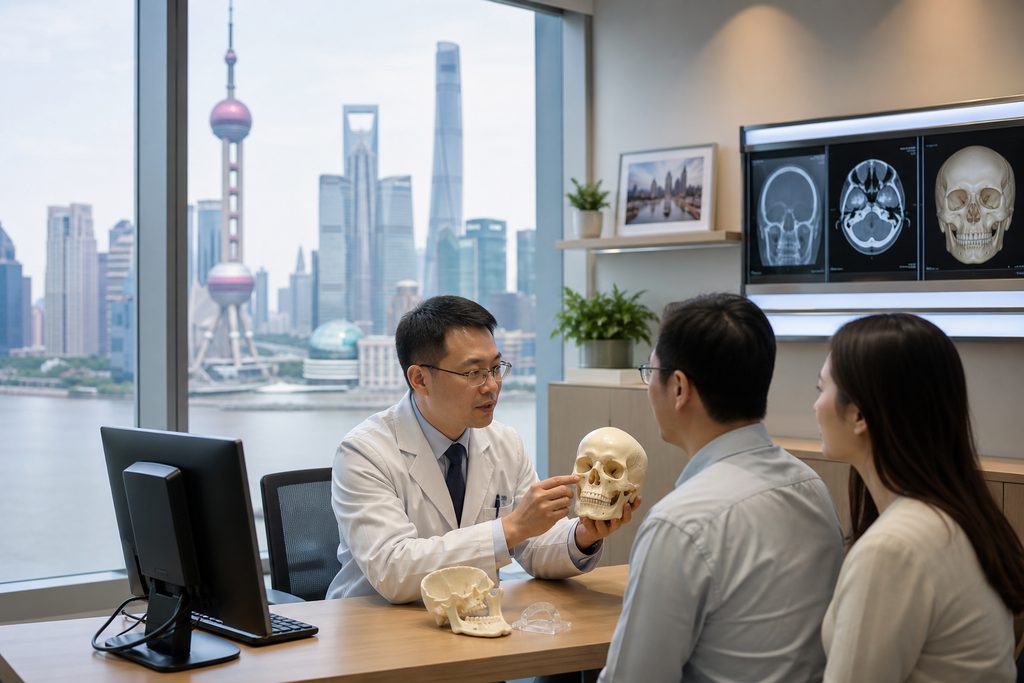
You’ve probably assumed that traveling to China for complex craniofacial surgery means accepting a lower standard of care. A leap into the unknown. The data tells a different story. Shanghai Ninth People’s Hospital, affiliated with Shanghai Jiao Tong University School of Medicine, performs a volume of craniofacial procedures that few centers in North America or Europe can match. Volume drives precision. Precision drives outcomes. For patients facing conditions like Crouzon syndrome, hemifacial microsomia, or post-traumatic orbital reconstruction, the question is not whether the expertise exists. The question is whether you understand the cost, the safety record, and the actual mechanics of getting there.
How This Actually Works, Step by Step
You do not simply buy a plane ticket and walk into a clinic. The sequence matters. Here is the real path from where you are now to a completed surgery.
First, you gather every existing record. CT scans in DICOM format. Clinical photographs. Genetic testing results if relevant. Operative notes from any prior surgeries. A written summary from your current specialist explaining the diagnosis and what has been tried. This packet is the foundation of everything that follows.
Second, you send those records to a review team. At Shanghai Ninth, the craniofacial department receives international inquiries through its official channels. Our role is to ensure your files are complete, translated into Chinese where necessary, and placed in front of the right subspecialist. A surgeon reviews the case and provides a written opinion: whether surgery is indicated, what approach they would take, and what the realistic outcome looks like.
Third, you have a video consultation. This is where you speak directly with the surgical team. You ask about their experience with your specific condition. You ask about complication rates. You ask about the recovery arc. If the surgeon says surgery is not advisable, you stop there. No travel. No wasted expense.
Fourth, if you decide to proceed, we coordinate the arrival. This includes the S2 visa documentation, hospital registration, preoperative testing, and scheduling. You arrive in Shanghai, complete face-to-face evaluation, and then surgery is scheduled. This is not a same-week guarantee. The hospital requires in-person assessment before any operating room time is confirmed.
Shanghai Ninth Hospital Craniofacial Surgery Cost: Breaking Down the Numbers
The phrase “Shanghai Ninth Hospital craniofacial surgery cost” gets searched thousands of times monthly. People want a number. The honest answer is a range, because craniofacial surgery is not one procedure. It is a category spanning everything from single-stage orbital fracture repair to multi-stage distraction osteogenesis for syndromic midface hypoplasia.
For a complex monobloc advancement or Le Fort III osteotomy with distraction, the surgical fee at Shanghai Ninth typically falls between $25,000 and $45,000 USD. That includes the surgeon’s fee, operating room time, anesthesia, and standard hospital stay. Compare that to the United States, where the same procedure often exceeds $150,000 before insurance negotiation. Even with travel and accommodation, the arithmetic favors Shanghai for many patients.
But the surgical fee is not the whole cost. You must budget for preoperative imaging (a full craniofacial CT protocol runs $500–1,000), orthodontic preparation if needed ($3,000–8,000 over 12–18 months), and the distraction devices themselves, which vary by manufacturer. Postoperative hospital stay at Shanghai Ninth averages 7–14 days depending on the procedure. Add $200–400 per night for a family member’s accommodation nearby.
| Procedure Type | Shanghai Ninth (USD) | United States (USD) | United Kingdom (USD) |
|---|---|---|---|
| Orbital fracture reconstruction | $8,000–15,000 | $40,000–70,000 | $35,000–60,000 |
| Le Fort I osteotomy | $12,000–20,000 | $60,000–100,000 | $50,000–85,000 |
| Monobloc / Le Fort III with distraction | $25,000–45,000 | $150,000–250,000 | $120,000–200,000 |
| Hemifacial microsomia reconstruction | $18,000–30,000 | $80,000–140,000 | $70,000–120,000 |
These figures vary by hospital and case complexity. A patient with prior failed surgeries, airway involvement, or syndromic comorbidities will land at the upper end. A straightforward single-stage procedure lands lower. Anyone quoting you a fixed price before reviewing your scans is guessing.
A Realistic Timeline
Patients underestimate the calendar. Here is what the sequence actually looks like for international patients seeking care at Shanghai Ninth.
| Stage | Typical Duration | What Happens |
|---|---|---|
| Record collection and translation | 1–2 weeks | Gather DICOM files, photos, medical summaries. Translate non-English documents into Chinese. |
| Written second opinion | 1–3 weeks | Surgeon reviews your case and provides a written assessment with treatment direction. |
| Video consultation scheduling | 1–2 weeks | Coordinate a time across time zones. The surgeon’s availability dictates this. |
| S2 visa processing | 2–4 weeks | Submit hospital invitation letter and supporting documents to the Chinese embassy or consulate. |
| Arrival and in-person evaluation | 3–7 days | Face-to-face consultation, additional imaging if needed, preoperative clearance. |
| Surgery scheduling after evaluation | 2–6 weeks | The hospital assigns an operating room slot based on urgency and surgeon schedule. |
| Postoperative recovery in Shanghai | 2–6 weeks | Initial hospital stay, then outpatient follow-up before clearance to fly home. |
The step people forget is the gap between arrival and surgery. You cannot fly to Shanghai on Monday and expect an operation on Wednesday. The hospital’s protocol requires in-person assessment, and the surgical calendar is booked weeks out. Plan for at least one month in Shanghai total for a major craniofacial procedure.
What Can Go Wrong — and What Happens Then
We tell every patient the same thing: complications happen. The question is how the system handles them.
The most common issue in craniofacial surgery is infection, particularly when distraction devices or titanium plates are involved. Rates at high-volume centers run 5–10% depending on the procedure. At Shanghai Ninth, the protocol includes aggressive perioperative antibiotics and close monitoring. If infection develops, the device may need removal or replacement. That means additional surgery, additional cost, and extended stay. You should ask about this before committing.
Another failure mode is under-correction or over-correction of the skeletal deformity. Craniofacial surgery is part art, part engineering. Soft tissue response is unpredictable. Some patients require a second procedure 6–12 months later. The hospital’s position is that revision surgery for a suboptimal result is discussed case by case — not automatically free, not automatically charged. Get this in writing before you travel.
Logistical failures matter too. Visa delays happen. A surgeon gets called to an emergency. Your interpreter misses a nuance. The difference between a frustrating week and a catastrophic one is having someone on the ground who can rebook, renegotiate, and translate under pressure. That is not marketing language. That is the actual job of a medical companion.
Is Craniofacial Surgery in China Safe? Evaluating the Evidence
The question “is craniofacial surgery in China safe” deserves a direct answer. Yes, at top-tier centers. No, at unvetted ones. The distinction matters more than the country.
Shanghai Ninth People’s Hospital is one of the highest-volume craniofacial centers in the world. Its department of oral and maxillofacial surgery handles over 10,000 inpatient procedures annually. The craniofacial team operates on complex syndromic cases referred from across Asia and beyond. That referral pattern is itself evidence. Other hospitals send their hardest cases here.
Safety in surgery correlates with repetition. A surgeon who performs 200 Le Fort III osteotomies per year has seen the anatomical variations, the bleeding patterns, the airway complications. A surgeon who performs 20 has not. When you evaluate “best craniofacial surgeon in China,” you are really evaluating case volume, complication tracking, and institutional support. Ask for numbers. Ask for their infection rate. Ask how many of your specific procedure they did last year. A confident surgeon answers directly.
But safety is also systemic. Chinese public hospitals are crowded. Nurses manage high patient loads. Family members often provide basic bedside care that Western patients expect from hospital staff. If you arrive expecting a private room with a dedicated nurse, you will be disappointed. The international VIP wards at Shanghai Ninth offer more privacy and English-speaking coordination, at roughly 1.5 to 2 times the standard rate. For many international patients, that premium is worth it.
How to Book Craniofacial Surgery at Shanghai Ninth Hospital: The Practical Route
You cannot book craniofacial surgery at Shanghai Ninth Hospital by emailing the general hospital address and asking for a slot. The public registration system is designed for domestic patients who appear in person. For international patients, the route is different.
The standard outpatient clinic does not accept overseas pre-booking. You either fly to Shanghai and queue for a face-to-face registration, or you go through the hospital’s international department or a coordination service that has an established relationship with that department. The international route means your records are reviewed before you travel, your appointment is scheduled in advance, and you are not standing in a hallway at 6 a.m. hoping for a ticket.
This is where the S2 visa becomes relevant. The S2 visa is the short-stay category used for private affairs, including medical treatment. You will need a formal invitation letter from the hospital confirming your appointment. The hospital issues this after your records are reviewed and a preliminary treatment plan is established. Processing time at your local Chinese embassy or consulate typically runs 2–4 weeks. Your accompanying family member applies for the same S2 category.
Payment works on a prepaid model. The hospital requires a deposit before admission, typically 50–80% of the estimated surgical fee. You settle the balance at discharge. Most international patients pay by wire transfer or international credit card. Insurance reimbursement is handled after the fact — Chinese public hospitals do not bill Western insurers directly. The private international hospitals in Shanghai do offer direct billing, but they do not perform complex craniofacial reconstruction at the same volume as Shanghai Ninth.
Practical Considerations: Records, Language, and Follow-Up
Craniofacial surgery generates a lot of imaging. Bring everything. DICOM files on a USB drive are better than printed films. Clinical photos from multiple angles help the surgeon assess soft tissue contours. If you have had prior orthodontic work, bring your models and treatment summaries. Missing records mean delayed decisions.
Language is a real barrier. The surgeons at Shanghai Ninth are highly skilled, but not all speak fluent English. The international department provides interpretation for consultations, but once you are on the ward, communication with nursing staff can be challenging. A bilingual medical companion who stays with you through admission, surgery, and early recovery is not a luxury. It is the difference between knowing what is happening and guessing.
Follow-up after you return home is the overlooked phase. Craniofacial surgery requires monitoring at 1 month, 3 months, 6 months, and 12 months. Distraction devices need activation and eventual removal. You need a local provider who can take the required imaging and send it back to Shanghai for review. The surgical team will provide a written protocol. Your home provider must be willing to follow it. Confirm this before you travel.
Frequently Asked Questions
For major procedures at Shanghai Ninth, expect $25,000–45,000 USD for complex osteotomies with distraction. Simpler procedures like orbital fracture repair run $8,000–15,000. The final figure depends on your specific condition, the number of stages required, and whether you use the standard or international ward.
At high-volume centers like Shanghai Ninth, yes. The surgical team performs thousands of procedures annually with complication rates comparable to major Western centers. The key is verifying that the specific surgeon has substantial experience with your exact condition. Ask directly about case numbers and infection rates.
You cannot book surgery directly through the public outpatient system from abroad. You need to go through the hospital’s international department or a coordination service that arranges record review, video consultation, and in-person evaluation before a surgical date is confirmed.
You need an S2 visa, which covers short-term private affairs including medical treatment. The hospital provides an invitation letter after reviewing your records. Your accompanying family members also apply for S2 visas. Do not apply for an M visa — that is for commercial activity only.
Plan for at least 4–6 weeks. That includes the in-person evaluation, the wait for a surgical slot, the hospital stay, and early postoperative follow-up. Some patients stay longer if distraction devices require adjustment before flying home.
Your Next Step
Choosing a hospital for craniofacial surgery is a decision with permanent consequences. The right choice is not the cheapest or the closest — it is the one with the highest volume of your specific procedure and a team you can actually communicate with. We help international patients navigate that decision. We translate records, arrange video consultations with the craniofacial team at Shanghai Ninth, coordinate the S2 visa paperwork, and provide bilingual support on the ground. We do not perform surgery, and we do not guarantee outcomes. What we do is remove the friction between you and the medical expertise you need. If you are considering this path, start with a conversation. Send us your records, and we will tell you honestly whether Shanghai Ninth is the right fit.
For more medical information and treatment options in China, visit chinamedservices.com (China Medical Services).
