Soft Tissue MRI in China: How to Book It Fast and Safely
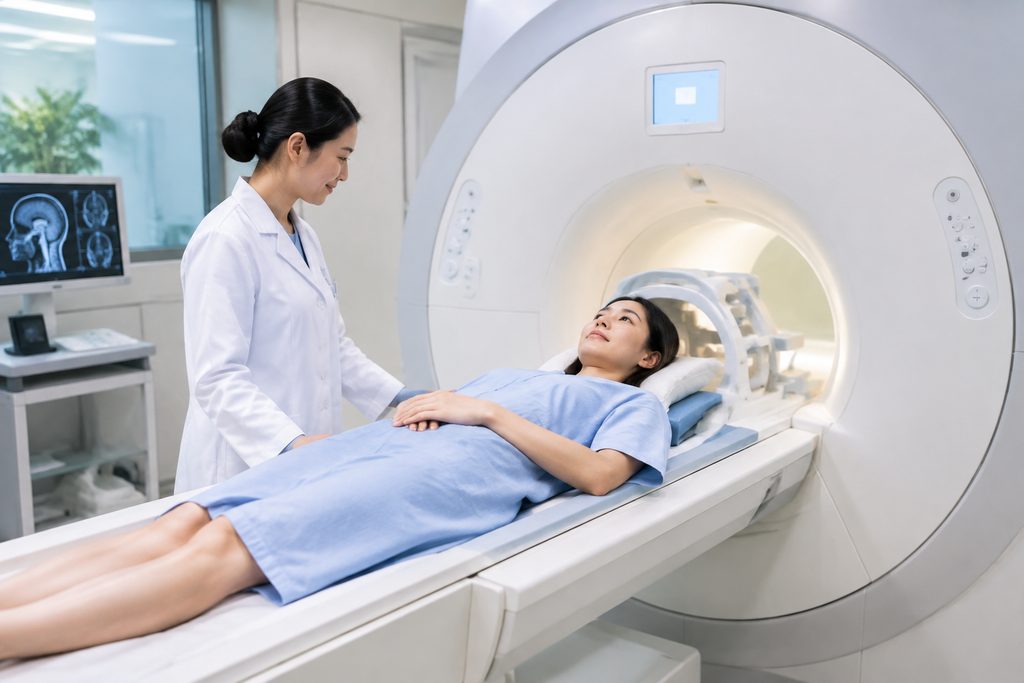
When 42-year-old Michael felt a sharp tear in his right shoulder during a weekend soccer match in Seattle, his orthopedic doctor ordered an MRI. The clinic quoted him $2,400 out of pocket, and the earliest appointment was 19 days away. Michael had a business trip to Shanghai in three weeks. He started searching for soft tissue MRI cost China options, half expecting the numbers to be too good to be true. They weren’t. He booked a scan at a top-tier Shanghai hospital for a fraction of the U.S. price, walked in with his referral letter, and had clear images of a partial rotator cuff tear in his inbox within 48 hours.
That story is common. Soft tissue MRI in China — the imaging used for muscles, tendons, ligaments, cartilage, and joint capsules — is fast, widely available, and dramatically cheaper than in the United States or Western Europe. The catch is that the booking process is not built for foreigners. This guide explains exactly how it works, what it costs, and where the friction points are.
Soft Tissue MRI in China: The Short Answer
A soft tissue MRI in China typically costs between $80 and $500 depending on the hospital tier, the body part, and whether contrast dye is used. A standard non-contrast shoulder or knee scan at a major public hospital usually lands between $120 and $250. The same scan at a private international hospital runs $400 to $900. In the U.S., that same study averages $1,200 to $3,500.
Booking is the harder part. Most public hospitals do not accept overseas self-referrals through their standard outpatient system. You either use the hospital’s international department, work through a coordination service, or arrive in person and queue. The scan itself is quick — 20 to 45 minutes for most soft tissue studies.
Key takeaway: The imaging is excellent and the price is low. The bottleneck is access and language, not technology.
Who This Is Right For — and Who It Isn’t
Medical tourism MRI China fast track works well for a specific type of patient. It is not for everyone.
Good candidates:
- You have a referral or prior imaging and need a follow-up scan, a second read, or a higher-resolution study.
- You are already traveling to China for work, family, or another medical appointment.
- You need a scan that would cost thousands at home and you can wait a few days for scheduling.
- You want a scan read by radiologists at a hospital ranked among China’s top facilities, then reviewed by your own doctor back home.
Poor candidates:
- You have an acute injury with suspected fracture, dislocation, or nerve compression. Go to an emergency room where you are, now.
- You need an urgent diagnosis within 24 hours and cannot tolerate any scheduling delay.
- You have a pacemaker, certain implanted devices, or metal fragments near the scan area. MRI safety screening is strict everywhere, and you must disclose these before booking.
- You are looking for a scan to self-diagnose without any physician involvement. Imaging without clinical context often creates more anxiety than answers.
The Options, Compared
Here is how the realistic paths stack up. Prices are in USD and reflect 2026 ranges; they vary by hospital and case complexity.
| Option | Typical Cost (Soft Tissue MRI) | Wait Time | English Support | Best For |
|---|---|---|---|---|
| U.S. hospital outpatient | $1,200–$3,500 | 1–4 weeks | Yes | Patients with full insurance coverage |
| China public hospital, standard track | $80–$200 | Same day to 5 days | Limited | Locals and Mandarin speakers |
| China public hospital, international department | $200–$500 | 1–5 days | Yes | International patients wanting top-tier care |
| China private international hospital | $400–$900 | 1–3 days | Yes, full service | Insurance direct billing, comfort, speed |
| Coordination service + public hospital | $80–$250 scan + service fee | 2–7 days | Yes, via companion | First-time visitors who need hand-holding |
If you have good travel insurance or international coverage, the private hospital column is often the simplest. If you are paying cash and want the best radiologists, the international department of a top public hospital is the sweet spot. The coordination service column exists because the gap between “cheap scan” and “actually getting it done as a foreigner” is real.
Best Hospitals in Beijing for Soft Tissue MRI — and Other Cities
Beijing has 21 hospitals in the Fudan Top 100 ranking, more than any other Chinese city. For musculoskeletal and soft tissue imaging, the strongest options cluster around orthopedic and sports medicine departments. Peking Union Medical College Hospital is the most recognized name for complex diagnostics. Beijing Jishuitan Hospital is widely regarded for orthopedics. Both have international patient offices, though responsiveness varies.
Shanghai is the second-strongest city with 18 Fudan-ranked hospitals. Zhongshan Hospital and Ruijin Hospital both run international departments with English-speaking staff familiar with foreign patients. For sports injuries and joint imaging, Shanghai’s sports medicine centers are excellent.
Guangzhou, Chengdu, and Hangzhou round out the top five cities for international medical access. If you are already in Shenzhen or Nanjing, you do not need to travel to Beijing for a routine soft tissue scan — local top-tier hospitals handle these daily. Our Fudan-ranked hospital directory by city lets you filter by location and specialty.
One practical note: hospital reputation matters less for a standard shoulder MRI than for, say, a complex tumor workup. Any top-100 hospital with a modern 3T MRI scanner will produce diagnostic-quality soft tissue images. What matters more is whether the radiology report is written in English or can be translated, and whether your ordering physician can communicate with the radiologist.
What It Costs: The Real Numbers
How much does an MRI scan cost in Shanghai? At a public tertiary hospital, a single-region non-contrast soft tissue MRI runs roughly $100 to $250. Contrast-enhanced studies add $50 to $150 for the contrast agent and additional sequences. A private international hospital in Shanghai charges $450 to $900 for the same study.
Beijing pricing is similar. Guangzhou and Chengdu tend to be 10 to 20 percent cheaper than Beijing and Shanghai for the same scan.
What drives the variance:
- Scanner strength. A 3T MRI produces sharper soft tissue detail than a 1.5T machine. Not every hospital has 3T availability for all body parts.
- Number of sequences. A knee protocol with cartilage-sensitive sequences takes longer and costs more than a basic study.
- Contrast use. Needed for some soft tissue tumors and inflammation assessments, not for most ligament tears.
- Report turnaround. Standard reports take 24 to 72 hours. Same-day rush reads may carry a premium at private facilities.
- Translation. An English-language radiology report is not standard at public hospitals. Translation adds cost and time.
Tip: Ask upfront whether the price includes the radiologist’s written report and whether an English version is available. Some quotes cover only the scan itself.
Is Soft Tissue MRI Safe in China?
Yes. MRI safety standards at China’s top-ranked hospitals follow international protocols. The equipment is manufactured by the same global vendors — Siemens, GE, Philips, United Imaging — used in the U.S. and Europe. Radiologists at Fudan Top 100 hospitals train to international standards, and many have published in English-language journals.
What you should verify before booking:
- The hospital screens for implanted devices, metal fragments, and pregnancy before every scan. Bring documentation of any implant you have.
- Contrast agents used in China are the same gadolinium-based compounds used worldwide. If you have known kidney issues, disclose them — contrast clearance depends on renal function.
- Claustrophobia is a real issue. Most Chinese hospitals do not routinely offer open MRI. If you cannot tolerate a closed bore, say so during booking.
Safety is not the concern. Access and communication are.
Practical Considerations: Records, Visas, and Payment
Records. Bring your referral letter, prior imaging on CD or DICOM files, and any relevant lab results. Chinese radiologists read prior studies if you provide them. Without prior imaging, the report may be less useful to your doctor back home.
Visa. If you are entering China specifically for medical evaluation or treatment, the S2 visa is the applicable short-stay category for medical treatment and private affairs. It requires supporting documents from the receiving hospital. Family members accompanying you also apply under S2. Requirements change, so confirm current rules with the nearest Chinese embassy or consulate. The M visa is for commercial and trade activities and is not the correct category for medical travel.
Payment. Public hospitals require prepayment. International credit cards work at international departments and private hospitals; standard public hospital counters may only accept local payment methods. Private international hospitals often bill international insurance directly. Public hospitals generally require you to pay upfront and seek reimbursement from your insurer afterward.
Language. This is where most foreign patients hit a wall. A top Chinese hospital can see 10,000 or more outpatients in a single day. Signage, registration systems, and staff communication are overwhelmingly in Chinese. Even a simple MRI appointment involves registration, payment, queueing at the imaging department, and collecting the report — each a separate step at a separate window.
Follow-up. Once you return home, your treating physician will want the images and report. Request DICOM files on a disc or USB drive before you leave the hospital. Reports in Chinese will need translation; ask whether the hospital provides this or plan for it.
If you want to understand the full pathway from initial inquiry to walking into the imaging department, our patient consultation page outlines how coordination works step by step.
Frequently Asked Questions
At private international hospitals, yes — often with a deposit and a confirmed time slot. At public hospitals, standard outpatient imaging cannot be pre-booked from overseas. You either go through the hospital’s international department, which may accept advance scheduling for foreign patients, or use a coordination service that handles registration on your behalf. Same-day walk-in imaging is sometimes possible but not guaranteed.
Sometimes. International health policies vary widely. Most private international hospitals in China can bill major international insurers directly. Public hospitals almost never do — you pay out of pocket and submit a claim afterward. Call your insurer before booking and ask specifically about China, outpatient imaging, and whether pre-authorization is required. Keep every receipt and the itemized bill.
Standard radiology reports at public hospitals take 24 to 72 hours. Private hospitals frequently deliver reports within 24 hours, sometimes same day. If you need an English report, add one to three business days for translation unless the hospital’s international department produces English reports as standard.
The radiologist reports findings, and a clinician interprets them in context. If the scan reveals a tumor, infection, or significant structural damage, you will need a follow-up consultation with a specialist — often the same day or next day at the same hospital. This is where having a bilingual companion or coordination support becomes genuinely valuable. No imaging center, in China or anywhere else, provides a diagnosis on its own.
At Fudan Top 100 hospitals and JCI-accredited private facilities, yes. These hospitals operate the same 1.5T and 3T scanners used in Western centers, maintained to manufacturer specifications. Smaller regional hospitals may have older equipment. If image quality is critical for a complex case, confirm the scanner model and field strength before booking.
Your Next Step
Soft tissue MRI in China offers a genuine combination of speed, quality, and price that is hard to match elsewhere. The imaging itself is rarely the problem. The challenge is navigating a system designed for local patients, in a language you probably do not speak, at hospitals that see more patients before lunch than most Western clinics see in a month.
China Medical Services is not a hospital and we do not provide diagnoses or medical advice. We connect international patients with 340+ top-ranked hospitals across 37 cities, coordinate appointments through official international departments, and provide bilingual companions who handle registration, payment, queueing, and translation on the day. If you want to understand your options before committing to travel, start with a free consultation — no pressure, no obligation, just a clear picture of what is possible.
This article is for informational purposes only and does not constitute medical advice. Always consult a qualified physician regarding your specific condition. Prices and wait times vary by hospital and case complexity and are subject to change.
For more medical information and treatment options in China, visit chinamedservices.com (China Medical Services).
