Spinal Cord Stimulator Implant Cost China: Full Journey Pricing & Safety Guide
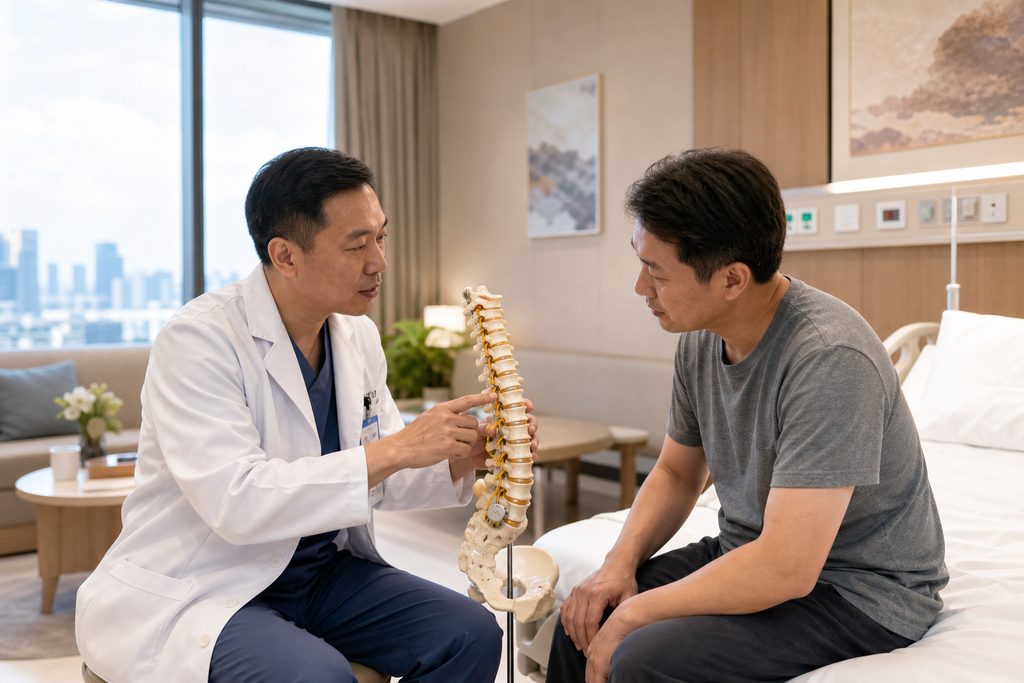
A spinal cord stimulator isn’t a first resort. It’s what you turn to when physical therapy, injections, and medications stop working. The device itself is straightforward: a small pacemaker-like generator sits under your skin, sending mild electrical pulses to your spinal cord. Those pulses interrupt pain signals before they reach your brain. You don’t feel the electricity. You feel less pain. The technology has been around for decades, but the modern high-frequency and burst-waveform devices are far more sophisticated than their predecessors. They’re also expensive. In the United States, a full system implant can run between $35,000 and $50,000 for the surgical hardware and facility fees alone. That’s before the trial period. That number pushes many chronic pain patients to look elsewhere. When they search for the spinal cord stimulator implant cost China, they’re usually after a specific number. We’ll give you the real range. But the price tag only makes sense when you understand the full journey — from the trial procedure to the implant surgery and the follow-up programming.
How This Actually Works, Step by Step
The process isn’t a single surgery. It’s a staged commitment. You don’t wake up one morning and get a permanent implant. You test it first. Here’s the real sequence.
First, you need a candidacy evaluation. Not everyone is a fit. The ideal candidate has chronic neuropathic pain — think failed back surgery syndrome, complex regional pain syndrome, or diabetic neuropathy. The pain should be mapped to a specific nerve distribution. A spine surgeon or pain specialist reviews your imaging and history. If you’re outside China, this means sending your medical records to a hospital’s international department for a remote review. Our team handles the translation and submission. The evaluation typically takes 3 to 5 business days.
Second comes the trial. This is a 5-to-7-day test. A physician places thin electrode leads into the epidural space near your spinal cord. The leads connect to an external pulse generator you wear on a belt. The insertion is minimally invasive — usually done under local anesthesia with fluoroscopic guidance. You go back to your accommodation and live with the device. You track your pain levels. The goal is at least 50% pain reduction. If the trial fails, the leads come out. No permanent implant. No major recovery.
Third, if the trial succeeds, you schedule the permanent implant surgery. The surgeon creates a small pocket — usually in the upper buttock or abdomen — for the internal pulse generator. The trial leads are replaced with permanent leads, tunneled under the skin, and connected to the generator. This is a more involved procedure, often requiring sedation. Recovery takes a few weeks, with strict activity restrictions to let the leads scar into place.
Fourth is programming and follow-up. A representative from the device manufacturer or your pain specialist adjusts the stimulation parameters. You’ll have a handheld controller. You can toggle between programs, adjust intensity within safe limits, and turn the device off. Follow-up visits happen at 2 weeks, 6 weeks, 3 months, and then annually. Battery life varies — non-rechargeable generators last 5 to 7 years. Rechargeable models can last 10 years or more.
What You’ll Actually Pay: Spinal Cord Stimulator Implant Cost China Breakdown
Let’s get to the number most readers want. The spinal cord stimulator implant cost China for international patients falls into a predictable range, but it’s not a single line item. You’re paying for the device, the hospital stay, the surgeon’s fee, anesthesia, and the trial procedure. Here’s a realistic breakdown based on top-tier public hospital international departments in Shanghai and Beijing.
| Cost Component | Estimated Range (USD) | Notes |
|---|---|---|
| Pre-implant evaluation (remote records review) | $300 – $500 | Written second opinion; credited toward surgery coordination if you proceed within 90 days |
| Trial procedure (5-7 days) | $3,500 – $6,000 | Includes lead placement, facility fees, and external pulse generator rental |
| Permanent implant surgery | $22,000 – $34,000 | Includes permanent leads, IPG device, OR fees, 2-3 day hospital stay, anesthesia |
| Surgeon & anesthesiologist professional fees | Included above | Typically bundled in international department packages |
| Device cost (IPG + leads) | $15,000 – $24,000 | Varies by brand (Medtronic, Abbott, Boston Scientific) and rechargeable vs. non-rechargeable |
| Post-operative programming (3 sessions) | $600 – $1,200 | Some hospitals include the first session in the surgery package |
| Total Estimated Journey Cost | $26,000 – $40,000 | Excluding international travel and accommodation |
These numbers are not the sticker price for Chinese citizens. Public hospital ordinary-department pricing is lower. International patients access care through VIP or international medical departments. That channel offers English-speaking coordination, expedited appointment scheduling, and private inpatient rooms. The premium over domestic pricing is real — roughly 1.5 to 2 times — but the total remains a fraction of what you’d pay in the US or UK for the same device.
What is the cost of spinal cord stimulator surgery in China compared to elsewhere? A self-pay patient in the United States can expect a total bill exceeding $50,000. In the UK, private implant costs run £25,000 to £35,000. In Australia, the range is AUD $40,000 to $60,000. China’s $26,000 to $40,000 range, including the trial, is a meaningful gap. The savings are driven by lower hospital facility fees and professional charges — not by cheaper devices. The pulse generator itself is the same Medtronic, Abbott, or Boston Scientific hardware used globally.
The spinal cord stimulator trial procedure price Shanghai tends to sit at the lower end of the trial range — closer to $3,500 — while Beijing international departments may quote closer to $5,500 or $6,000 for the same trial. The variance comes from hospital pricing tiers. A Fudan-ranked top-tier hospital commands a higher facility fee than a strong but less prominent institution. We help patients understand these trade-offs before committing.
A Realistic Timeline
Medical tourism timelines look clean on a brochure. In practice, you’re waiting on document translation, hospital review cycles, and visa processing. Here’s what the calendar actually looks like.
| Stage | Duration | What Happens |
|---|---|---|
| Remote candidacy review | 1 – 2 weeks | You send MRI reports, pain history, prior treatments. We translate and submit. The hospital’s pain management team reviews and confirms whether you’re a candidate. |
| Visa processing (S2) | 2 – 4 weeks | Once you have a hospital invitation letter and treatment plan, you apply for an S2 visa at your local Chinese embassy or consulate. Processing times vary by country. |
| Travel to China + trial procedure | 1 week | You arrive, complete any pre-procedure labs, and undergo the 5-to-7-day trial. You stay in a hotel or serviced apartment near the hospital. |
| Decision + implant scheduling gap | 1 – 3 weeks | If the trial succeeds, the permanent implant is scheduled. This isn’t next-day. The surgeon’s OR block, device ordering, and your recovery from the trial all need time. |
| Permanent implant + hospital stay | 2 – 4 days | Surgery, overnight observation, initial programming, discharge. |
| Local recovery before flying home | 1 – 2 weeks | Surgeons want you nearby for wound checks and lead migration monitoring. You’ll have at least one follow-up visit before clearance to fly. |
| Total time in China | 4 – 8 weeks | This is the realistic range. Anyone promising a 2-week turnaround is skipping the trial or rushing the recovery window. |
The longest wait is usually the visa. Some nationalities get S2 visas in under two weeks. Others wait a month. We can’t control embassy processing times. What we can do is make sure your hospital documentation is complete and correctly formatted the first time — incomplete paperwork is the most common delay.
What Can Go Wrong — and What Happens Then
Spinal cord stimulation is generally safe. But it’s surgery. Things don’t always go perfectly. Being honest about the failure modes matters more than a smooth sales pitch.
The trial fails. About 20 to 30 percent of patients don’t get sufficient pain relief during the trial. The leads come out. You go home. The trial cost is not refundable — you paid for the procedure, the facility time, and the clinician’s expertise. But you haven’t committed to a $30,000 implant. That’s the point of the trial. A failed trial is disappointing, not catastrophic.
Lead migration happens. The leads shift slightly in the epidural space, and the stimulation pattern changes. You might feel stimulation in the wrong area or lose coverage entirely. This occurs in roughly 10 to 15 percent of cases. Minor migration can sometimes be corrected with reprogramming. Significant migration requires a revision surgery to reposition the leads. Revision costs vary but are typically lower than the initial implant since the generator pocket is already created.
Infection is rare but serious. The rate is around 2 to 4 percent. A superficial wound infection might resolve with antibiotics. A deep pocket infection around the generator usually means explanting the entire system, treating the infection, and re-implanting months later. This is a worst-case scenario. Top Chinese hospitals have infection control protocols comparable to any Western academic medical center. The risk is not higher in China than elsewhere.
Device malfunction is uncommon. Modern IPGs are reliable. But if a component fails, the manufacturer’s warranty applies. The device companies — Medtronic, Abbott, Boston Scientific — have local offices in Shanghai and Beijing that handle replacements. The hospital coordinates with them. You’re not left with a dead device and no recourse.
The question “is spinal cord stimulation safe in Chinese hospitals” deserves a direct answer. The procedure is the same. The devices are the same. The fluoroscopy-guided lead placement technique is the same. What differs is the institutional volume. The best pain management clinics Beijing spinal stimulator specialists work in are high-volume centers. A physician who implants 100 stimulators a year has a lower complication rate than one who does 20. We connect patients with hospitals that have dedicated neuromodulation programs, not general orthopedics departments that occasionally place a stimulator.
Choosing the Right Hospital: Not All Pain Centers Are Equal
A hospital can be excellent at cardiac surgery and mediocre at pain management. Reputation doesn’t transfer across departments. When you’re evaluating where to book spinal cord stimulator implant medical tourism China, you need to look at the pain management department specifically.
The top centers cluster in Beijing, Shanghai, and Guangzhou. Xuanwu Hospital in Beijing runs one of China’s largest functional neurosurgery and pain management programs. Their neuromodulation volume is among the highest in Asia. Huashan Hospital in Shanghai has a dedicated pain management department with published outcomes in spinal cord stimulation for failed back surgery syndrome. Peking Union Medical College Hospital brings its diagnostic rigor to complex pain cases — their strength is in the workup, making sure you’re actually a good candidate before anyone touches your spine.
What should you look for? Ask how many spinal cord stimulator implants the department performs annually. A number above 50 is reassuring. Above 100 is a high-volume center. Ask which device brands they work with. A center that offers Medtronic, Abbott, and Boston Scientific systems can match the device to your specific pain pattern rather than fitting you into the one brand they know. Ask about their trial-to-permanent conversion rate. A rate around 70 to 80 percent is normal. A center claiming 100 percent is either cherry-picking candidates or not being honest.
The international department matters too. You need a liaison who speaks fluent English, understands the S2 visa process, and can coordinate your trial, implant, and follow-up without communication breakdowns. This is where our role becomes practical. We’ve already vetted which international departments have dedicated pain management coordinators. We know which hospitals require you to physically appear for registration before any appointment is scheduled — a common friction point in Chinese public hospitals — and which ones allow remote registration through their international channel.
Don’t choose a hospital based on a city you want to visit. Choose based on the department’s neuromodulation volume and the international department’s responsiveness. Beijing and Shanghai have the highest concentration of top programs. But a strong program in Guangzhou or Chengdu may offer shorter wait times and lower facility fees for comparable clinical quality.
Practical Considerations: Records, Visa, Payment, and Follow-Up Care
Your medical records make or break the remote evaluation. A one-paragraph email saying “I have back pain” gets you nowhere. You need a complete packet: MRI images on CD or cloud link, the radiology report, a summary of prior treatments including injections and surgeries, current medications, and a pain diagram showing where you hurt. If your records aren’t in English, we translate them. The hospital’s pain specialist reads the translated summary alongside your original imaging.
The visa is an S2. Not an M. Not an L. The S2 is for private affairs, including medical treatment. You need an invitation letter from the hospital. The letter states your diagnosis, the planned treatment, and the expected duration of stay. The Chinese embassy in your country processes the application. Processing times vary — plan for 2 to 4 weeks. Your accompanying family member also applies for an S2. The hospital’s international department issues invitation letters for both the patient and one companion.
Payment is upfront. Chinese public hospitals, including their international departments, require a deposit before admission. The deposit is typically the estimated full cost of the procedure. You pay via wire transfer or credit card. The hospital issues a detailed invoice at discharge. If the actual cost is lower than the deposit, you get a refund. If it’s higher — for example, if a complication extends your stay — you settle the balance before leaving. International health insurance sometimes covers spinal cord stimulation in China, but you need to confirm with your insurer before traveling. Most patients pay out of pocket and seek reimbursement afterward.
Language is a real barrier. Outside the international department office, the hospital runs in Mandarin. Nurses on the ward may not speak English. The device programmer who adjusts your stimulation settings may not speak English. A bilingual medical companion bridges this gap. Our companions handle registration queues, translate during consultations, explain discharge instructions, and stay with you during the trial period when you’re navigating a foreign city with wires in your back. It’s not a luxury add-on. It’s the difference between a stressful experience and a manageable one.
Follow-up at home requires planning. You need a pain specialist or neurosurgeon locally who is willing to manage a spinal cord stimulator implanted abroad. Some physicians refuse — they don’t want the liability of managing another surgeon’s implant. Find this person before you travel. Ask if they’ll see you for programming adjustments and annual checks. Get a yes in writing. The device manufacturer can often recommend local physicians familiar with their systems. We help patients compile a shortlist of potential home-country follow-up providers during the planning phase.
Frequently Asked Questions
The combined trial and permanent implant journey ranges from $26,000 to $40,000. This includes the trial procedure, the permanent device and leads, surgeon and anesthesia fees, a short hospital stay, and initial programming. It excludes international flights, accommodation, and visa fees. The final number depends on the hospital’s pricing tier and the specific device model chosen.
The spinal cord stimulator trial procedure price Shanghai typically falls between $3,500 and $5,500. This covers lead placement under fluoroscopy, the external pulse generator rental for 5 to 7 days, and the removal of the leads at the end of the trial period. If you proceed to the permanent implant at the same hospital, some centers apply a portion of the trial fee toward the surgery package.
Is spinal cord stimulation safe in Chinese hospitals compared to Western centers?
The safety profile is comparable. The implant technique, sterilization protocols, and device hardware are identical to what you’d find in a US or European pain center. Infection rates run 2 to 4 percent. Lead migration occurs in 10 to 15 percent of cases. The key variable is the implanting physician’s annual volume. High-volume neuromodulation centers in Beijing and Shanghai report outcomes consistent with
For more medical information and treatment options in China, visit chinamedservices.com (China Medical Services).
