Spine Surgery in China: How It Works, What It Costs, and Is It Right for You?
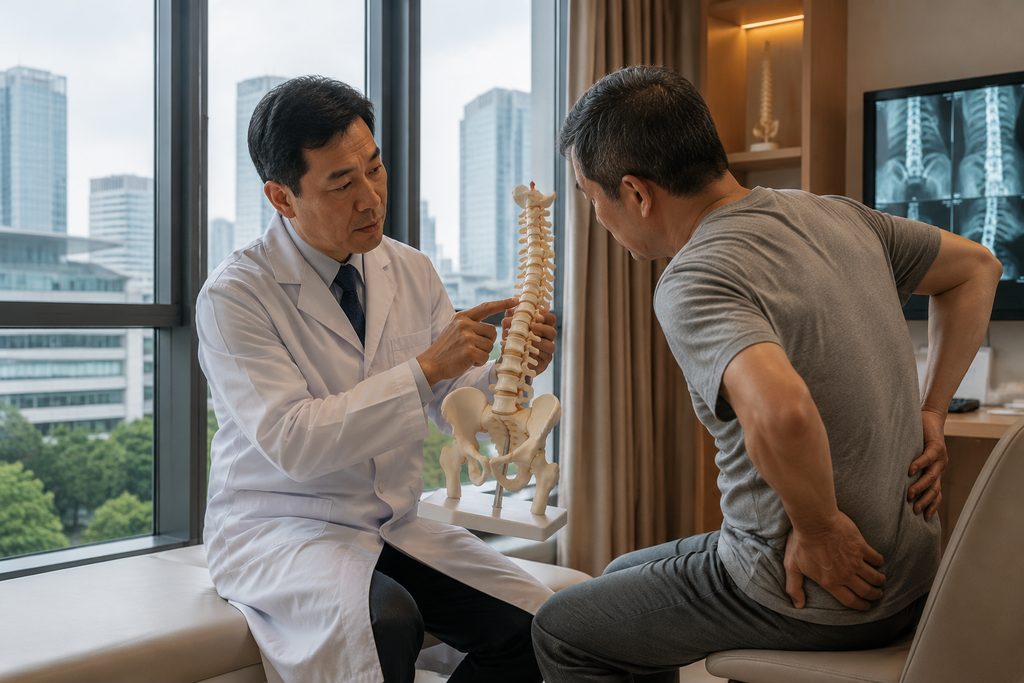
Spine Surgery in China: The Short Answer
Spine surgery in China works through a structured, hospital-based pathway that begins with diagnostic imaging and a formal surgical indication, not a direct booking. For international patients, the process typically starts with remote evaluation of your existing MRI or CT scans, followed by a treatment plan and cost estimate from a top-tier orthopedic or neurosurgery department. The spine surgery cost China patients actually pay ranges from roughly $12,000 to $45,000 for major procedures like lumbar fusion or disc replacement, depending on the hospital tier, implant brand, and surgical technique.
That price range covers the hospital charges, surgeon fees, standard implants, and a typical 5 to 10 day inpatient stay. It does not include your flights, visa, accommodation for family, or post-discharge rehabilitation. And the pathway is not as simple as emailing a hospital and reserving a date. Public hospitals in China generally require an in-person consultation before scheduling surgery. So the real question is not just what it costs, but how you navigate the system safely.
Who This Is Right For — and Who It Isn’t
Spine surgery in China makes sense for a specific profile of patient. You are likely a good candidate if you have a confirmed diagnosis from imaging you already possess — herniated disc, spinal stenosis, spondylolisthesis, or degenerative disc disease — and conservative treatment at home has failed. You should also be medically stable enough for international travel and a 2 to 4 week stay abroad.
Who should not pursue this path:
- Patients without recent MRI or CT imaging. No reputable Chinese hospital will schedule surgery based on symptoms alone.
- Patients with unstable cardiac or pulmonary conditions that make long-haul flights risky.
- Patients seeking emergency spinal cord decompression. If you have acute cauda equina syndrome or rapidly progressive neurological deficit, you need surgery now, not a flight to Shanghai.
- Patients expecting a guaranteed surgery date before any doctor has reviewed their films. That is not how the system works.
If you have a clear surgical indication and time to plan, the value proposition is real. But you need to be honest about your own clinical stability first.
The Options, Compared
Not all spine surgery in China is the same. The hospital tier you choose changes the cost, the language support, and the booking pathway. Here is how the main options compare for a single-level lumbar fusion.
| Option | Typical Cost (USD) | Booking Pathway | Language Support | Best For |
|---|---|---|---|---|
| Public Grade A tertiary hospital, standard ward | $12,000–$18,000 | In-person consultation required; no remote booking | Minimal English; bring your own interpreter | Cost-sensitive patients who already have a local contact |
| Public hospital international/VIP department | $20,000–$35,000 | Remote evaluation possible; coordinator-assisted scheduling | English-speaking coordinators; some bilingual physicians | International patients who want senior surgeons and fewer logistical headaches |
| Private international hospital (JCI-accredited) | $30,000–$45,000 | Direct scheduling; insurance pre-authorization possible | Full English environment; Western-style care | Patients with international insurance or who prioritize familiarity over cost |
The public standard ward is the cheapest, but it is also the most difficult for a foreigner to navigate alone. The international department of a top public hospital sits in the middle: you get access to the same senior surgeons who operate on thousands of cases a year, with coordinators who handle registration, payment, and translation. Private international hospitals are the smoothest experience but often use the same senior public-hospital surgeons on a visiting basis, which means you pay more for the environment, not necessarily the hands.
What “Spine Surgery” Actually Means Here: The Procedure Pathway
Most international patients arrive with one of three surgical needs: microdiscectomy, lumbar decompression (laminectomy), or instrumented fusion. A microdiscectomy for a herniated disc is the least invasive and costs the least — typically $8,000 to $15,000 in a public hospital international department. A single-level fusion with titanium or PEEK implants runs $20,000 to $35,000. Multi-level fusions or complex deformity corrections can exceed $45,000.
The pathway in a top-tier hospital looks like this:
- Remote review: You send MRI/CT images and reports. A spine surgeon reviews them and confirms whether surgery is indicated. This often costs $300–$500 as a written second opinion.
- In-person consultation: You fly to China. The surgeon examines you, orders fresh imaging if needed, and finalizes the surgical plan.
- Pre-operative workup: Blood tests, ECG, chest X-ray, anesthesia clearance. Usually 1 to 2 days.
- Surgery: Most single-level procedures take 1 to 3 hours.
- Inpatient recovery: 3 to 7 days for microdiscectomy; 5 to 10 days for fusion.
- Discharge and local follow-up: Staple or suture removal at 10 to 14 days, then you fly home with a written discharge summary and imaging on a USB drive.
This is not a package tour. It is a clinical process with fixed steps. Anyone who promises you a surgery date before a surgeon has seen your films is not operating inside a legitimate hospital system.
Is Spine Surgery Safe in China? What the Data Shows
The safety question is fair. China’s top orthopedic and neurosurgery departments are high-volume centers. Some of the largest spine centers perform over 3,000 spinal procedures annually. Volume matters in spine surgery — complication rates for routine lumbar procedures correlate inversely with surgeon and center experience.
But you need to choose the right hospital. The gap between China’s best and worst hospitals is enormous. The country has 35,000+ hospitals, and quality is concentrated in the top tier. The Fudan University hospital rankings identify roughly 100 hospitals that meet international standards for complex care. That is the pool you should be looking at. For spine specifically, the departments with the strongest reputations are concentrated in Beijing, Shanghai, Guangzhou, and Chengdu. Our specialty rankings for orthopedics and neurosurgery break down which hospitals lead in spine care.
Infection rates, implant failure rates, and revision rates at top Chinese centers are broadly comparable to Western academic hospitals. The difference is that you cannot rely on the hospital’s average. You need to know which department, which surgeon, and which implant system you are getting.
Minimally Invasive Spine Surgery China Price: What You’re Paying For
Minimally invasive techniques — tubular microdiscectomy, endoscopic discectomy, and percutaneous pedicle screw fixation — are widely available in top Chinese centers. The minimally invasive spine surgery China price is generally 15% to 30% higher than open surgery at the same hospital. That premium buys you less muscle damage, shorter hospital stay, and faster return to activity.
For a tubular microdiscectomy, expect $10,000 to $18,000 in a public hospital international department. An endoscopic discectomy — very popular among international patients because of the tiny incision — runs $12,000 to $20,000. A minimally invasive TLIF (transforaminal lumbar interbody fusion) typically lands between $25,000 and $38,000.
What drives the variance:
- Implant brand: DePuy Synthes, Medtronic, and Stryker implants cost more than domestic Chinese brands. Some patients opt for domestic implants, which are significantly cheaper and have improving clinical data.
- Surgeon seniority: Chief and deputy chief surgeons command higher fees in the international department.
- Hospital tier: A Fudan-ranked top-10 orthopedics department costs more than a solid but unranked provincial hospital.
- Length of stay: Every extra inpatient day adds roughly $100 to $300 depending on the ward class.
Practical Considerations: Records, Visa, Payment, and Follow-Up
You cannot start this process without imaging. A recent MRI (within 6 months) is the minimum for any meaningful remote review. Bring the DICOM files, not just the radiology report. Surgeons need to see the actual images.
For the visa, international patients traveling for medical treatment in China use the S2 visa, which covers short-term private affairs including medical treatment. Your accompanying family member applies for the same S2 category. The hospital or a medical coordination service provides an invitation letter and treatment confirmation to support the application. The S2 visa is typically issued for 30 to 90 days, which covers most spine surgery recovery timelines. If you need to stay beyond 180 days for complex multi-stage treatment, the S1 visa applies. The M visa is for commercial trade and has nothing to do with medical travel.
Payment is another reality to plan for. Public hospitals in China require upfront deposit payments before admission, not after discharge. International departments accept wire transfers and major credit cards. Private international hospitals can often bill your insurer directly. If you have international health insurance, check whether spine surgery in China is covered and whether the hospital is in-network. Some insurers reimburse after the fact; others require pre-authorization.
Follow-up after you fly home is a genuine limitation. Your Chinese surgeon will not be managing your 6-month post-op X-ray. You need a spine specialist at home who is willing to take over postoperative care. Discuss this before you book anything. Some patients arrange a video follow-up with their Chinese surgeon at 3 months, which works well for reviewing imaging and answering questions.
Frequently Asked Questions
The surgery itself is the same as anywhere. The challenge is everything around it: registration, payment, pre-op testing, ward communication, and discharge paperwork. In a public hospital standard ward, you will struggle without Chinese. In an international department or private international hospital, English-speaking coordinators handle the logistics. A bilingual medical companion can also bridge the gap in standard wards, handling queues, payments, and translation during consultations.
No legitimate top-tier public hospital will confirm a surgery date before a surgeon has reviewed your imaging and examined you in person. What you can do is book a remote consultation, get a written surgical recommendation, and then schedule your in-person visit with the understanding that surgery follows shortly after if the surgeon confirms the plan. Be wary of any service that promises a locked surgery date sight unseen.
Top Chinese hospitals have complication management protocols comparable to Western centers. The issue for international patients is that you will likely fly home before the full recovery period is complete. You need a plan for local follow-up care before you travel. If a complication arises while you are still in China, the hospital manages it as part of your treatment. If it arises after you return home, your local spine specialist takes over. This handoff is the weakest link in the entire process — plan for it explicitly.
Shanghai has several hospitals with strong spine surgery departments, including Zhongshan Hospital Fudan University, Huashan Hospital, and Changzheng Hospital. The Shanghai hospital directory lists the top-ranked institutions. The specific surgeon matters more than the hospital name. Senior surgeons at these centers often perform hundreds of spinal procedures per year. Ask for the surgeon’s annual case volume for your specific procedure, not just their title.
For comparable hospital tiers, yes, roughly. A single-level lumbar fusion that costs $100,000 to $150,000 in a US hospital often runs $20,000 to $35,000 in a top Chinese public hospital’s international department. The gap narrows if you choose a private international hospital in China, where prices are closer to $40,000 to $50,000. You save the most by going to a top public hospital’s international department, not by choosing the cheapest hospital you can find.
Your Next Step
Spine surgery in China is a legitimate, cost-effective option for patients with a clear diagnosis and the stability to travel. The key is entering the system through the right door: a remote review of your imaging by a senior spine surgeon, followed by an in-person consultation at a top-ranked hospital. That sequence protects you from wasted flights and unnecessary procedures.
We are China Medical Services, a coordination team that connects international patients with top-ranked Chinese hospitals. We are not a hospital, we do not employ doctors, and we do not diagnose or treat anything. What we do is handle the logistics — hospital matching, appointment coordination, bilingual accompaniment, and visa documentation — so you can focus on the surgery and recovery. If you want to understand whether your case is suitable for treatment in China, start with a free consultation about your imaging and goals. No pressure, no obligation. Just an honest read on whether this path makes sense for you.
For more medical information and treatment options in China, visit chinamedservices.com (China Medical Services).
