Sports Injury Treatment in China: What to Prepare Before You Go
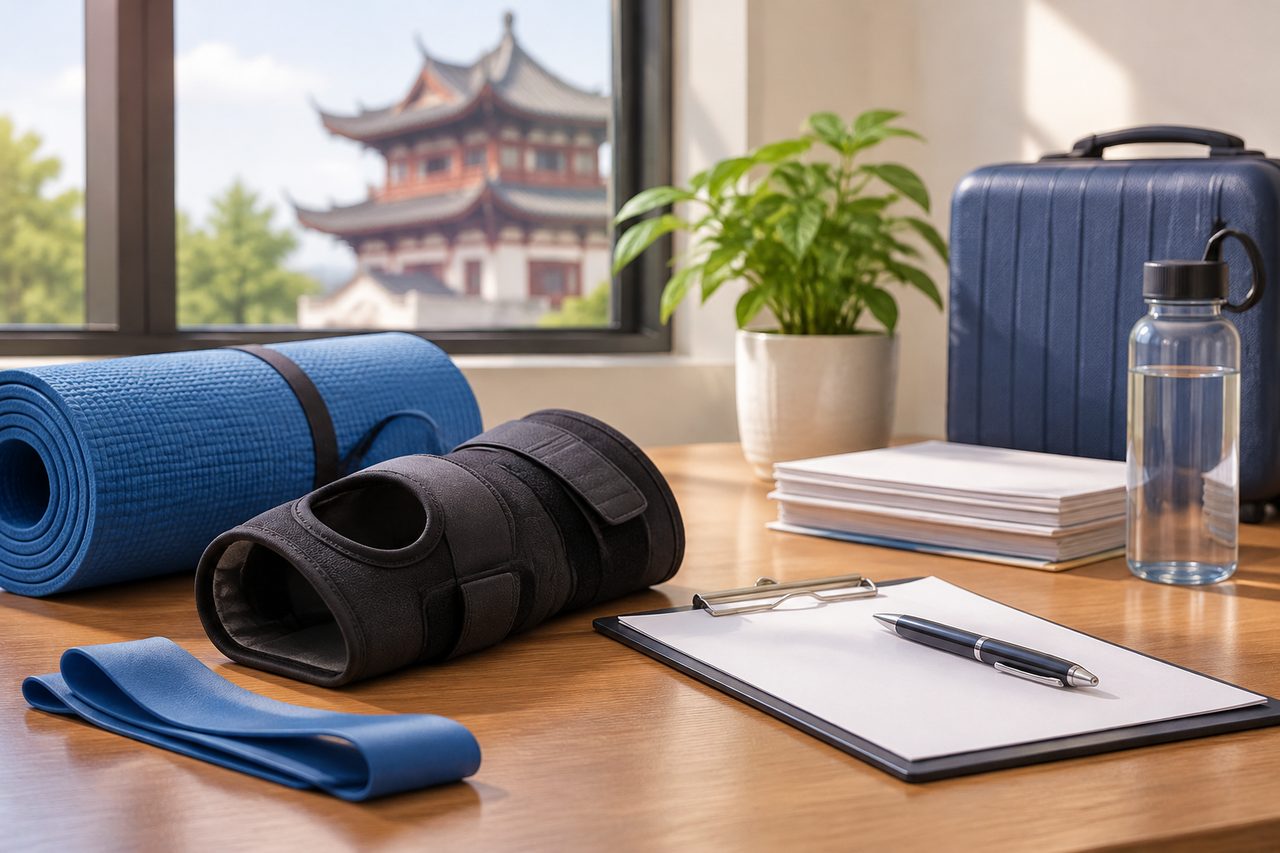
Sports Injury Treatment in China: What to Prepare
If you are considering sports injury treatment in China, the single most useful thing to prepare is a complete, organized imaging and records file — original MRI or CT images on disc, not just the written report — plus a clear written history of how the injury happened and what has already been tried. Everything else (appointment, visa, budget, interpreter) follows from that file. Without it, no Chinese specialist can give you a meaningful opinion, and you risk traveling for an appointment that ends in “we need better imaging.”
The caveat is that China’s public hospital system does not work like a Western referral pipeline. You generally cannot book a specialist outpatient slot from abroad in the ordinary queue, and surgery is arranged only after an in-person consultation. Understanding that sequence before you book flights is the difference between a smooth episode of care and an expensive detour.
Who This Is Right For — and Who It Isn’t
Sports injury treatment in China is a reasonable path for a specific kind of patient, and a poor one for another. Being honest about the split matters more than a sales pitch.
Typically a good fit:
- You have a diagnosed or strongly suspected structural injury — ACL or meniscus tear, rotator cuff tear, Achilles rupture, cartilage or labral damage — with imaging already done.
- You are uninsured or underinsured at home, or facing a long surgical wait, and can travel for two to four weeks.
- You want a second opinion on a proposed operation before committing to it.
- You can bring a companion or budget for language support, because top public hospitals are large and predominantly Chinese-speaking.
Probably not the right fit:
- Acute trauma with suspected fracture, dislocation, or neurovascular compromise — go to the nearest emergency department wherever you are.
- An undiagnosed problem with no imaging. You would be paying for a workup you could have done at home.
- Injuries where the main treatment is months of supervised physiotherapy. Rehabilitation is continuity-dependent; interrupting it to travel rarely helps.
- Anyone who cannot tolerate heat, crowds, queueing, or a hospital environment without English signage at every step.
The Options, Compared
Most international patients weigh three routes: staying home in a Western system, treatment at a Chinese public tertiary hospital, or treatment at a private international hospital in China. They differ in ways that matter more than headline price.
| Factor | Home country (US/EU typical) | China public tertiary hospital | China private international hospital |
|---|---|---|---|
| Booking from abroad | Referral, often weeks to months | Ordinary outpatient generally not bookable remotely; international/VIP channel can be arranged | Usually bookable directly by email or phone |
| Language | Native | Predominantly Chinese; interpreter needed | English-speaking staff common |
| Payment | Insurance, then deductible | Prepayment required; insurance reimbursed afterward | Often direct billing with international insurers |
| Relative cost level | Highest | Lowest; international/VIP channel roughly 1.5–2× the ordinary channel | Mid-to-high; closer to Western pricing |
| Volume and subspecialty depth | Varies | Very high surgical volume at top orthopedic centers | Smaller teams, more concierge-style |
| Best for | Insured patients wanting continuity | Cost-sensitive, imaging-ready, mobile patients | Patients prioritizing comfort and English service |
Read the table by column, not by row. If your priority is a familiar, English-language, insurance-billed experience, the private column is the honest answer. If your priority is access to high-volume orthopedic surgery at a fraction of Western cost and you are willing to accept a large, busy public hospital, the middle column is where the value sits. The public route is not “worse care” — it is a different service model with different friction.
The Records File: What a Chinese Orthopedic Surgeon Actually Needs
This is the section that decides whether your trip is productive. Chinese sports medicine and orthopedic departments at top hospitals see enormous volumes, which means they read fast and they read images, not prose. Prepare the following before any remote review.
- Original imaging files. DICOM data on a USB drive or disc for every MRI, CT, and X-ray — including the ones that were reported as normal. Reports alone are insufficient; the surgeon needs to scroll the slices.
- A dated timeline. One page: date of injury, mechanism, initial treatment, response, current symptoms, and what aggravates them.
- Operative notes if you have had prior surgery on the same joint, plus the hardware details if any implant is in place.
- Translated summaries. A professional English-to-Chinese summary of the key documents helps; the imaging itself does not need translation.
- Your goal in plain terms. “Return to competitive football within nine months” and “walk without pain” lead to different recommendations. Say which one you mean.
What It Costs and How Long It Takes
Costs vary by hospital, city, injury complexity, and whether you use the ordinary or international channel, so treat any figure as a planning range rather than a quote. What can be said with confidence is the structure of the bill: imaging and consultation, then the procedure itself, then implants if required, then inpatient days, then rehabilitation. Implants — plates, screws, anchors, grafts — are frequently the largest single line item in orthopedic surgery and are priced separately from the surgeon’s fee.
On the service side, our own published ranges are transparent: a written second opinion from a top-hospital specialist is from $300–500, a video consultation with a specialty team runs $100–300 (top-specialist video consultations $500–800), hospital appointment coordination starts from $300, and a bilingual medical companion is from $300 per day. These are case-management and coordination fees, billed separately from hospital medical charges, and they are not credited against later treatment costs.
Timing is the part patients underestimate. A realistic sequence looks like this: week one, gather and translate records; week two, remote written or video review; weeks three to five, appointment coordination and visa application; then travel, in-person consultation, and — only after that consultation — scheduling of any procedure. Add recovery and a follow-up visit before flying home. For most surgical sports injuries, plan on two to four weeks in China, and longer if you intend to start rehabilitation locally.
Practical Considerations: Visas, Payment, and Follow-Up
Visa category. For medical treatment, the applicable short-stay category is the S2 visa, annotated for medical treatment purposes; stays beyond 180 days use S1. Accompanying family members apply under the same S2 route. The M visa is a commercial and trade visa and is not the correct category for medical travel. Requirements and supporting documents are set by the relevant Chinese embassy or consulate and change, so confirm the current checklist with them and with the hospital’s international department before applying. No one can guarantee approval.
Payment. Public hospitals require prepayment; international insurance is typically reimbursed afterward rather than billed directly. Private international hospitals more often bill insurers directly. Bring a payment method that works in China and confirm the hospital’s accepted methods in advance.
Language and navigation. A top public hospital may see thousands of outpatients in a day. Registration, payment, imaging, and pharmacy are in different buildings, and signage is largely in Chinese. This is a logistical fact, not a judgment — many patients manage with a Chinese-speaking friend, and others prefer a professional companion.
Follow-up after you return home. Agree before surgery on who will do your follow-up: your surgeon in China via remote review, or a clinician at home who receives the operative note and imaging. Rehabilitation protocols need a named owner. Get the operative report and imaging in hand before you leave.
If you are still choosing where to go, our directory of top-ranked hospitals by city and the specialty rankings for orthopedics are useful starting points for shortlisting centers in Beijing, Shanghai, or Guangzhou.
Frequently Asked Questions
Generally no. At public hospitals, surgery is scheduled only after an in-person consultation and examination by the operating surgeon. What can be arranged in advance is the consultation itself through the hospital’s international or VIP channel, which is why the records file matters so much — it makes that first visit decisive rather than exploratory.
It depends entirely on your policy. Many international plans reimburse treatment abroad but require pre-authorization and pay after you submit itemized bills and medical records. Public hospitals usually expect payment upfront, so plan to fund the episode yourself and seek reimbursement afterward. Confirm pre-authorization requirements in writing before traveling.
Complications such as infection, stiffness, or graft failure can occur after any orthopedic operation, anywhere. The realistic safeguard is preparation: choose a hospital with a functioning international department, obtain your complete operative report and imaging before departure, and identify a local clinician who will accept follow-up responsibility. Remote review with the Chinese team can supplement but not replace in-person assessment at home.
Your Next Step
The core message is simple: with organized imaging, a clear statement of your goal, and a realistic timeline, sports injury treatment in China is a manageable and often cost-effective path — and without those three things, it is not. China Medical Services is a coordination service, not a hospital; we do not diagnose, treat, or promise outcomes. We help you assemble records for a written second opinion, arrange consultations and appointments through hospital international departments, and provide bilingual support on the ground. If you would like to talk through your situation before committing to anything, start with a free consultation — no pressure, and no obligation to travel.
For more medical information and treatment options in China, visit chinamedservices.com (China Medical Services).
