How We Verify Medical Device Approvals in China: Our Safety Check
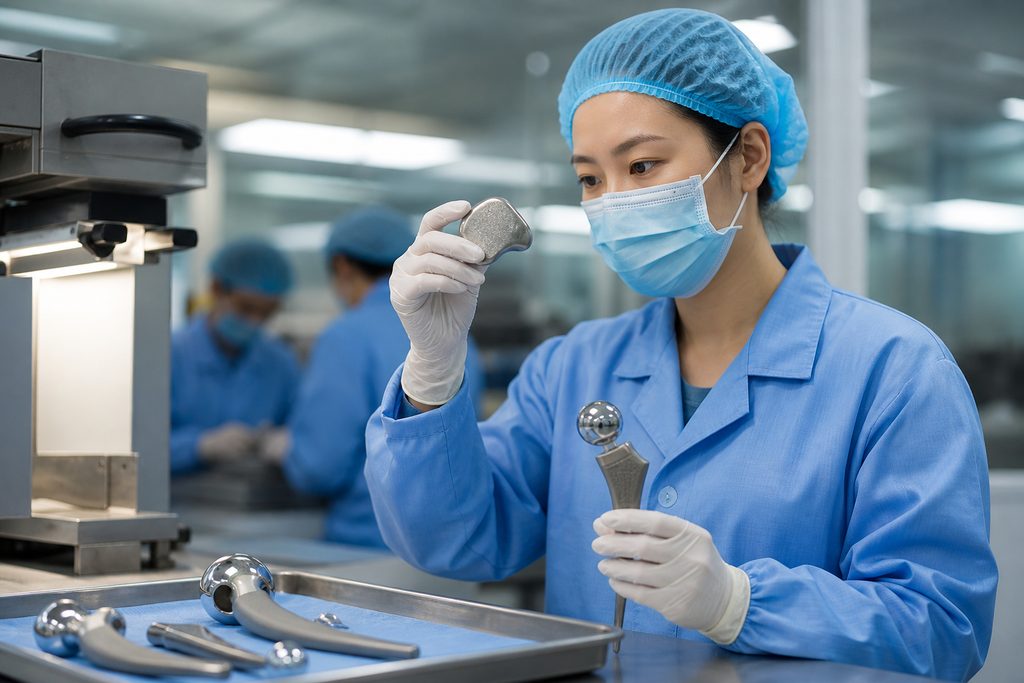
How We Verify Medical Device Approvals in China: Our Safety Check for Foreign Patients
While patients in the United States can access an FDA-cleared cardiac stent within days of its market authorization, a patient in Germany might wait 18 months for the same device to pass the European MDR transition backlog. In China, the National Medical Products Administration (NMPA) cleared 2,879 Class III medical devices in 2023 alone — the highest-risk category that includes implants, pacemakers, and artificial joints. That volume creates a verification challenge. For a foreigner considering surgery in Shanghai or Beijing, the question is not whether Chinese hospitals use advanced devices. The question is how you confirm the specific implant going into your body is approved, authentic, and appropriate for your case. Our team handles this check on every case we coordinate. Here is exactly how we do it — and how you can verify it yourself.
Medical device approval China for foreigners is a layered process. It is not a single stamp on a box. It involves the NMPA registration certificate, the hospital’s procurement records, the surgeon’s implant log, and the post-market surveillance data. We check all four. This article explains the process in plain English, so you know what to ask for and what red flags look like.
How This Actually Works, Step by Step
You send us your existing imaging, diagnosis, and the name of the procedure your home doctor recommends. Our clinical team reviews those records with the relevant specialty department at one of our partner hospitals — typically a top-ranked public hospital or a JCI-accredited private facility. The Chinese team confirms whether the procedure is indicated, which specific devices they would use, and the manufacturer and model number.
Then we run the verification. We pull the NMPA registration certificate for that exact device model. We confirm the certificate is active, not expired or suspended. We cross-check the manufacturer name and the product specifications against the hospital’s procurement system. If the device is imported — say a Stryker hip implant or a Medtronic pacemaker — we confirm it entered China through authorized distribution channels with a valid import license.
What comes back to you is a written summary: device name, manufacturer, NMPA registration number, approval date, and whether the same model is also FDA-cleared or CE-marked. You get this before you commit to travel. No abstractions. No vague assurances.
What “NMPA Approved” Actually Means
The NMPA — China’s equivalent of the FDA — classifies medical devices into three tiers. Class I devices are low-risk, like bandages and examination gloves. Class II devices carry moderate risk, like CT scanners and infusion pumps. Class III devices are the ones that matter most for surgical patients: orthopedic implants, cardiac stents, pacemakers, artificial heart valves, intraocular lenses, and neurovascular coils. Every Class III device sold in China must carry an NMPA registration certificate with a unique number that starts with the prefix “国械注准” for domestic devices or “国械注进” for imported ones.
But here is what most foreigners miss: NMPA approval is not a one-time event. Certificates expire after five years. Manufacturers must submit renewal applications and post-market safety reports. A device that was approved in 2019 might have a suspended certificate in 2025 due to adverse event reporting failures. We check the current status, not just the existence of a certificate.
Is it safe to get medical implants in China? The short answer is yes — when the implant is NMPA-registered, sourced through authorized channels, and implanted by a surgeon who performs that procedure at high volume. The longer answer requires checking the numbers. China’s top cardiac center, Fuwai Hospital, performs over 14,000 cardiac surgeries annually — the highest single-center volume in the world. That volume drives protocol discipline. But volume alone does not guarantee device authenticity. Verification does.
A Realistic Timeline
| Stage | What Happens | Typical Duration |
|---|---|---|
| Day 1–3 | You send medical records and imaging. We translate and format for Chinese review. | 2–3 days |
| Day 4–10 | Chinese specialty team reviews your case and confirms surgical indication and device selection. | 5–7 days |
| Day 11–14 | We pull NMPA registration certificates, verify active status, and cross-check hospital procurement records. | 3–4 days |
| Day 15–21 | Written verification summary delivered to you. You review with your home doctor if needed. | 5–7 days |
| Week 4–6 | S2 visa application with hospital invitation letter. Embassy processing times vary by country. | 2–4 weeks |
| Week 6–8 | Arrival, in-person consultation, pre-operative testing, and surgery scheduling. | 1–2 weeks |
People forget the document translation step. It adds three to five days. People also forget that the Chinese surgeon will want their own imaging, not just your home MRI on a disc. Budget for a repeat CT or MRI in China. That adds another two to three days before the final surgical plan is locked.
What Can Go Wrong — and What Happens Then
The most common failure is a device mismatch. Your home doctor recommends a specific implant — say, a particular total knee system. The Chinese hospital uses a different but equivalent system from a different manufacturer. This is not unsafe. But it surprises patients who expected the exact same hardware. Our response: we flag the difference before you travel, explain the equivalence, and give you the NMPA certificate for the actual device the surgeon will use. You decide with full information.
The second failure mode is certificate status. A device might have an expired certificate because the manufacturer is mid-renewal. In China, hospitals cannot legally purchase or implant a device with an expired NMPA certificate. If we find this, we stop the process and ask the hospital for written confirmation of renewal status or an alternative device. We have never had a hospital refuse to provide this. But if one did, we would walk away from that case.
The third failure mode is counterfeit devices. China has cracked down hard on counterfeit medical devices over the past decade. The NMPA runs a public database where every registration certificate can be verified by number. Counterfeits are rare in top-tier public hospitals and JCI-accredited private facilities. They are more common in small, unaccredited clinics that market to unsuspecting foreigners. That is exactly why we only coordinate with hospitals in our verified database — 340+ top-ranked institutions across 37 cities.
How to Check if a Hospital in Shanghai Uses FDA Approved Devices
This is one of the most common questions we get from American and European patients. The assumption is that FDA approval is the gold standard, and if a Shanghai hospital uses FDA-cleared devices, everything is fine. The reality is more nuanced.
Most imported devices used in Chinese hospitals do carry FDA clearance or CE marking — because the manufacturers are the same global companies: Medtronic, Boston Scientific, Zimmer Biomet, Stryker, Abbott, Johnson & Johnson. But the Chinese approval is the NMPA certificate. That is the legal authorization to sell and implant the device in China. An FDA approval alone does not allow a device to be used in China. So the right question is not “is this device FDA approved?” but “is this device NMPA registered, and is it the same model that is FDA approved in the US?”
How to check if a hospital in Shanghai uses FDA approved devices: ask for the device name, manufacturer, and model number. Then verify two things. First, look up the NMPA registration number in the public database. Second, check the FDA’s 510(k) or PMA database for the same model. If both checks pass, you have a device that is legally approved in both systems. Our team does this for every case. You can also do it yourself — the databases are public and free.
Best hospitals in China with international device safety standards are concentrated in Beijing, Shanghai, and Guangzhou. Shanghai’s Zhongshan Hospital, affiliated with Fudan University, is one example. Its cardiac surgery department uses the same imported valve and stent systems you would find at Cleveland Clinic or Charité Berlin. The difference is the price — and the verification process you need to run before you commit.
Practical Considerations: Records, Visa, Payment, and Follow-Up
You cannot eliminate the risk entirely, but you can reduce it to near zero. Request the device’s unique serial number and verify it with the manufacturer’s local office in China. Top-tier public hospitals and JCI-accredited private facilities source directly from authorized distributors. Counterfeits are extremely rare in these settings. The risk concentrates in small, unaccredited clinics — which is why we only coordinate with verified institutions.
China has a growing domestic medical device industry. Some Chinese-made implants — particularly orthopedic and cardiovascular devices — are excellent and backed by solid clinical data. But if you are not comfortable, you can ask for an imported alternative. Top hospitals usually offer both. The decision is yours. We provide the verification data for both options and let you choose.
Yes. Private international hospitals like United Family, Jiahui, and Parkway follow the same NMPA registration requirements as public hospitals. The difference is that private hospitals are more likely to carry imported devices exclusively, because their patient base expects Western brands. JCI accreditation adds another layer of procurement and safety auditing. But the NMPA certificate remains the legal foundation.
The NMPA issues recall notices that hospitals must act on. If your implant is recalled, the hospital is legally obligated to notify you and provide a management plan — which may include monitoring, medication, or revision surgery. This is rare but it happens. We keep our patients informed of any recall affecting their device, even after they return home.
Your Next Step
Verifying medical device approvals in China is not complicated once you know what to look for. The NMPA certificate, the hospital procurement record, the surgeon’s implant log, and the manufacturer serial number — four checks that tell you whether the device going into your body is legal, authentic, and appropriate. Our team runs these checks on every case we coordinate. We are not doctors and we do not give medical advice. We are the bridge between you and China’s top-ranked hospitals — the team that translates your records, verifies the devices, and walks you through the process from first inquiry to discharge. If you are considering surgery in China and want the device verification done properly, start with a free consultation. We will tell you honestly whether this path makes sense for your case.
Your safety check starts before you book a flight. That is the whole point.
Frequently Asked Questions
Yes. The hospitals used for international patients are JCI-accredited and follow the same international safety standards as top hospitals in the US and Europe. Surgical teams perform high volumes of procedures — often more than their Western counterparts — which studies show leads to better outcomes.
Costs vary by procedure and hospital, but international patients typically save 40-80% compared to US prices — even when factoring in travel and accommodation. A consultation with our team will give you an exact, all-inclusive quote with no hidden fees.
Send us your existing medical reports to get started. We handle everything from hospital selection and appointment scheduling to visa assistance and post-operative recovery planning. Your medical records are reviewed by the specialist before you even book a flight.
For more medical information and treatment options in China, visit chinamedservices.com (China Medical Services).
