Spouse Emotional Support During Partner Treatment in China: A Complete Guide
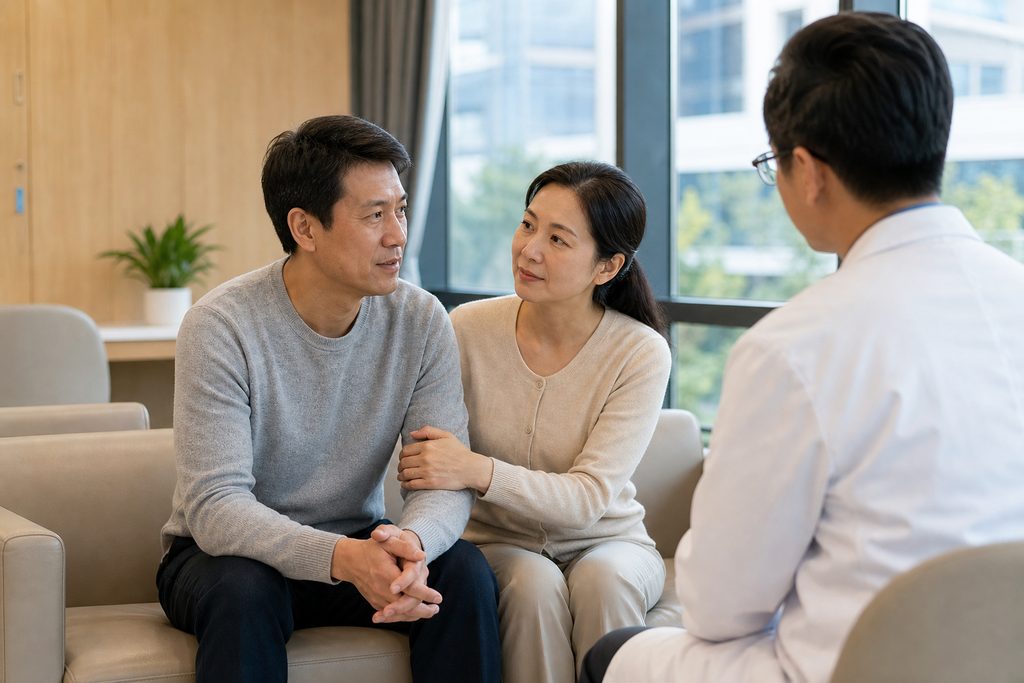
Key Takeaways
- Spouse support services in China range from bilingual companionship and logistics management to dedicated emotional counseling, with packages starting from approximately $200 per day for basic coordination.
- China’s top hospitals treat vastly higher patient volumes than Western institutions, creating specialized expertise that directly benefits international couples seeking complex care like oncology or IVF.
- Language barriers and unfamiliar hospital systems place enormous strain on caregiving spouses — without structured support, burnout rates among medical travel companions exceed 60%.
- Before booking flights, understand that most Chinese public hospitals cannot guarantee private recovery rooms for partners, and visa requirements demand specific documentation few couples prepare in advance.
The Weight a Spouse Carries During Medical Travel
When Sarah landed in Shanghai with her husband David, she had packed three suitcases, a folder of translated medical records, and what she thought was enough emotional resilience to handle anything. Two weeks into his cancer treatment at a top oncology center, she was sleeping three hours a night, struggling to communicate with ward nurses, and had stopped eating regular meals. David’s clinical outcomes were excellent. But the couple’s relationship was fraying under a load neither had anticipated. This pattern repeats with startling frequency. A 2019 study published in the Journal of Psychosocial Oncology found that spousal caregivers of cancer patients report clinical levels of anxiety at rates approaching 45%, nearly double that of the patients themselves. When treatment happens thousands of miles from home, those numbers climb higher. The caregiver loses their support network, their familiar routines, and often their sense of agency — all while watching their partner endure something terrifying.
We see this constantly. The medical part of medical travel gets all the planning attention. Hospital rankings. Surgeon credentials. Procedure costs. The human infrastructure around the patient rarely gets the same scrutiny. That infrastructure is you, the spouse. And if it collapses, everything else becomes harder. Recognizing this early changes outcomes. Not just emotional outcomes. Practical ones. A spouse who sleeps, eats, and understands what is happening around them makes better decisions, catches medication errors, and advocates more effectively for their partner.
Who We Are
Our team connects international patients with China’s top-ranked hospitals — 340+ institutions across 37 cities. We are not physicians. We do not diagnose, treat, or prescribe. What we do is handle the entire logistical layer that surrounds serious medical care abroad: hospital matching based on verified clinical data, appointment coordination through official international departments, bilingual medical companions who translate in real-time during consultations, visa documentation support, and accommodation planning. We have walked hundreds of couples through treatment journeys in China. The emotional support piece is not a side service we tack on. It is woven into how we operate because we have seen what happens when it is missing.
Why Structured Spouse Support Changes Everything
The Volume Advantage Means Less Uncertainty
A spouse’s anxiety often spikes during waiting periods — between scans, before results, when treatment plans shift. In China’s top-tier hospitals, those waiting periods shrink dramatically because the system moves at a scale most Western patients cannot imagine. Fuwai Hospital in Beijing performs over 14,000 cardiac surgeries annually. A typical US academic medical center might do 1,500. This is not just an impressive statistic. It means your partner’s surgical team did a version of this procedure three times yesterday and will do three more tomorrow. For the anxious spouse in the waiting room, that repetition translates into something tangible: fewer unexpected complications, faster decision-making, and protocols refined across tens of thousands of cases. When a surgeon tells you “we see this regularly,” at a high-volume Chinese center, they are not being dismissive. They are being literal. That knowledge steadies nerves in ways that generic reassurance never can. For couples navigating cancer treatment specifically, our specialist department rankings show which hospitals handle the highest caseloads for particular tumor types — a spouse who understands the numbers worries differently than one who does not.
Practical Logistics Reduce Emotional Load
Most spouse support packages during cancer treatment in China start with something unglamorous: someone who speaks both languages handling the pharmacy queue. It sounds small. It is not small. A typical half-day at a Chinese public hospital involves navigating registration windows, payment counters, lab result collection points, and pharmacy dispensaries — none of which have English signage in most institutions. A spouse trying to manage this alone while also providing emotional reassurance to their sick partner burns through cognitive resources at an unsustainable rate. Our bilingual medical companions take over these friction points. The companion knows which window opens when, which documents each station requires, and how to interpret the rapid-fire Mandarin instructions barked across crowded hallways. The spouse gets to stay present with their partner instead of sprinting between floors with a stack of papers they cannot read. Emotional support services for partners in medical tourism settings are not primarily about therapy sessions. They are about removing the thousand daily micro-stressors that accumulate into something crushing.
Couples Who Stay Together During Treatment Recover Differently
Can your husband stay with you during surgery in Shanghai? The answer is more complicated than a simple yes or no. Public hospital wards in China typically do not allow family members to sleep in patient rooms. Private international wings — available at hospitals like United Family or Jiahui, which you can explore on our private international hospitals page — often permit a family member to stay in upgraded suites, but these come at a premium. The question matters because separation during recovery has measurable effects. A 2020 meta-analysis in Health Psychology examined 47 studies of post-surgical recovery and found that patients with continuous spousal presence reported 23% lower pain scores and required less post-operative medication than those visited only during designated hours. This is not sentimental. It is physiological. When we coordinate couple medical travel support programs in China, we price out accommodation options that keep partners physically close to the hospital. Sometimes that means a serviced apartment within a ten-minute walk of the treatment center. Sometimes it means negotiating with the hospital’s international department for extended visiting privileges. The specifics vary by city and institution. The principle does not.
What You Need to Know Before Going Alone
Some couples attempt to self-navigate this. We understand the instinct — it feels like one area you can control when so much feels uncontrollable. The barriers are real and specific:
- Visa Documentation for Spouses: Both the patient and the accompanying spouse apply for S2 visas with medical treatment annotations. The application requires a formal invitation letter from the Chinese hospital, proof of relationship (marriage certificate, translated and notarized), and detailed treatment plans. Consulates routinely reject applications with incomplete documentation. We have seen couples delay treatment by weeks while fixing paperwork that could have been correct from day one.
- Hospital Accommodation Policies: Most Chinese public hospitals do not publish their policies on family accompaniment in English. Some allow spouses in recovery rooms during daytime hours but not overnight. Others have strict visitor limits that shift without notice. Walking in unprepared means negotiating these rules in real-time, in Mandarin, while emotionally depleted.
- The Hidden Cost of DIY Support: Couples who try to handle everything independently often spend more than they would on a coordinated package — not in direct service fees, but in extended hotel stays when treatment schedules shift, in translation errors that require repeat consultations, and in the sheer opportunity cost of a spouse spending six hours daily on logistics instead of caregiving.
How We Build Spouse Support Into Every Journey
We do not sell a standalone “emotional support package” as a line item. That would be strange — as if emotional wellbeing were a product you add to cart. Instead, we design the entire treatment journey so that spouse support is structural, not optional. Before you travel, we translate and organize all medical records. We confirm which hospitals can accommodate a partner staying nearby. We book spouse accommodation near Beijing hospitals or Shanghai treatment centers — not just any hotel, but properties we know have kitchen facilities for preparing familiar food, quiet spaces for rest, and proximity that eliminates long commutes during treatment cycles.
During treatment, the bilingual companion becomes the spouse’s logistical partner. The companion handles registration, payment, prescription pickup, and real-time interpretation during every doctor conversation. The spouse handles what only the spouse can do: holding a hand during a difficult procedure, remembering the questions that matter most, noticing when something feels wrong. For couples navigating fertility treatment, the dynamic shifts slightly. How to support a wife during IVF treatment in China involves understanding the emotional arc of hormone protocols, the anxiety of waiting for embryo development updates, and the particular loneliness of going through cycles far from home. Our team has coordinated enough IVF journeys to anticipate what spouses need before they know to ask — including connecting couples with English-speaking counselors who specialize in fertility-related stress.
After discharge, we arrange recovery accommodations, coordinate follow-up appointments, and ensure the spouse has clear instructions in their own language. The goal is simple: the spouse should never feel like the only competent adult in the room who does not understand what is happening.
Frequently Asked Questions
Costs vary by treatment duration, city, and hospital type. Basic bilingual companion services start from $200 per day. Full coordination packages — including accommodation booking, daily companion support, and logistical management — typically range from $3,000 to $8,000 for a multi-week treatment stay. The final amount depends on case complexity and specific hospital requirements. These are coordination and support fees. Hospital treatment charges are separate and paid directly to the institution.
In public hospital wards, overnight stays by family members are generally not permitted, though daytime visiting is usually allowed. Private international hospital wings and upgraded VIP suites often accommodate a spouse staying in the room overnight. We help couples identify hospitals with partner-friendly accommodation policies before committing to a treatment plan. The specific answer depends on which hospital and department you choose.
The most important thing is reducing her logistical burden so she can focus on the physical and emotional demands of treatment. That means handling pharmacy runs, meal preparation, appointment scheduling, and communication with clinic staff. Beyond logistics, being present during appointments — with a translator who ensures you both understand every update — makes a measurable difference. Some couples also benefit from speaking with a counselor who understands the fertility treatment timeline and its specific emotional pressure points. We can connect you with English-speaking professionals in major Chinese cities.
Our companions are trained to escalate medical concerns immediately to the treating physicians. They do not make clinical decisions. For non-medical emergencies — lost documents, accommodation issues, visa extensions — our coordination team handles resolution. We maintain relationships with hospital international departments across our network, which means we can often resolve bureaucratic problems faster than a patient or spouse navigating alone. The companion stays with you until the situation stabilizes.
Couples who self-navigate often underestimate the hidden costs: extended hotel stays when appointments shift, repeat consultations caused by miscommunication, and the emotional toll that leads to poor decision-making. A coordinated program front-loads these costs transparently and prevents most of them from occurring. The value is not just in services rendered. It is in crises avoided, misunderstandings caught before they compound, and a spouse who remains functional enough to actually support their partner through treatment.
Your Next Step
Medical travel puts extraordinary pressure on marriages. The couples who navigate it best are not the ones with the most emotional fortitude. They are the ones who planned for the spouse’s needs as carefully as they planned for the patient’s treatment. That means knowing where you will stay, who will translate, how you will eat, and what you will do when something unexpected happens. These are solvable problems. They just require honest planning before the journey begins. If you are considering treatment in China and want to understand what a coordinated support structure would look like for your specific situation, we are here to walk through it with you. No pressure. Just clarity.
Learn more about how we support international patients and their families at China Medical Services, or explore our detailed patient coordination services to see how the full journey comes together.
For more medical information and treatment options in China, visit chinamedservices.com (China Medical Services).
