When Should I Start Cancer Screening: A Practical Guide for 2026
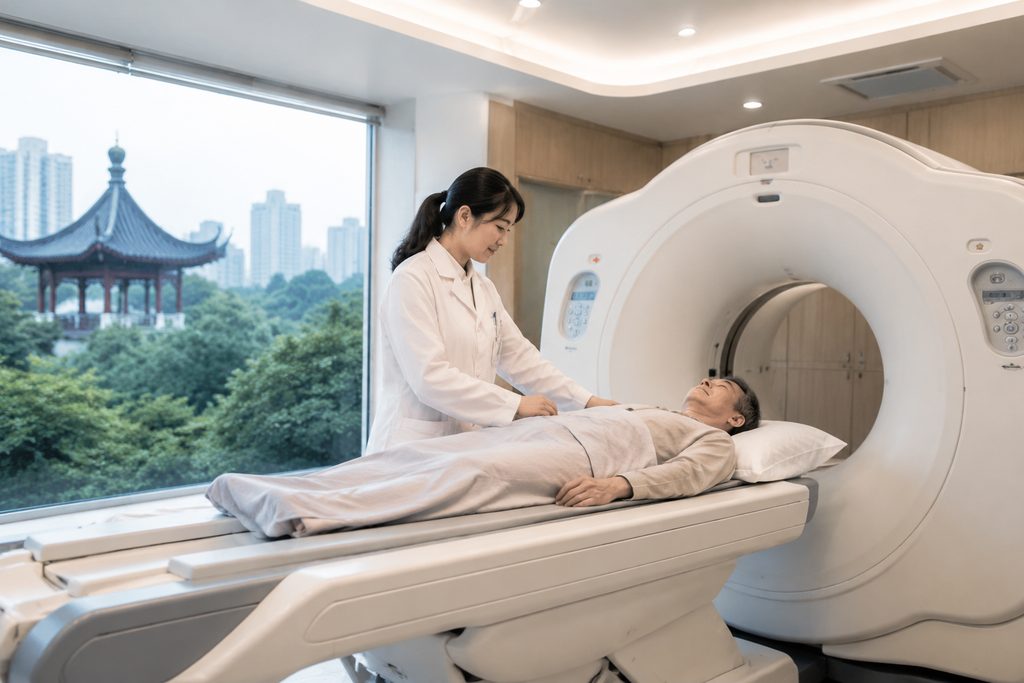
You have probably been told that cancer screening is something to postpone until your 50s. The reality for several major cancers is more urgent than that. Breast cancer screening for average-risk women now often begins at 40. Colorectal screening for many adults starts at 45. Cervical screening begins in the mid-20s. And if you carry a specific genetic mutation or have a strong family history, the clock starts even earlier. The question is not merely “when,” but “when for me” — and that answer depends on your age, sex, family history, and where you can actually access reliable testing. For international patients weighing options, China Medical Services regularly fields questions about screening timelines, test quality, and how cancer screening cost China stacks up against Western price tags.
How This Actually Works, Step by Step
The path from “I should probably get screened” to holding a written radiology report is more concrete than most people expect. Here is the sequence we walk patients through.
First, you establish your baseline risk profile. That means collecting three pieces of information: your age, your biological sex, and a family cancer history covering first-degree relatives (parents, siblings, children). If two or more relatives on the same side had breast, ovarian, pancreatic, or aggressive prostate cancer, you are not average-risk. You are elevated-risk. That distinction changes everything downstream.
Second, you choose the appropriate test for your risk tier. Average-risk colorectal screening is a colonoscopy every 10 years, or a high-sensitivity FIT test annually. Elevated-risk screening may start at 40, or 10 years before the youngest affected relative’s diagnosis. Breast screening for average-risk women is typically mammography every 1–2 years from age 40–45. Elevated-risk women add breast MRI. Lung screening with low-dose CT applies to current or former heavy smokers aged 50–80.
Third, you schedule the test. In most Western systems, that means a referral, insurance pre-authorization, and a wait measured in weeks or months. In China, the logistics differ. Public hospital imaging departments are high-volume and fast. But they are also Chinese-language-first. That is where a bilingual coordinator changes the experience from overwhelming to manageable.
Fourth, you receive results and act. A suspicious finding triggers a diagnostic follow-up, not a conclusion. Screening finds abnormalities; diagnosis confirms or excludes cancer. That distinction matters more than most patients realize.
When to Start Cancer Screening Guidelines: What the Major Bodies Actually Recommend
Screening guidelines are not one-size-fits-all. They differ by cancer type, risk tier, and the organization issuing them. The US Preventive Services Task Force, the American Cancer Society, and the National Comprehensive Cancer Network do not always agree. Here is a practical summary for the cancers where screening has proven mortality benefit.
| Cancer Type | Average-Risk Start Age | Recommended Test | Frequency |
|---|---|---|---|
| Breast (women) | 40–45 | Mammography (add MRI if high-risk) | Every 1–2 years |
| Colorectal | 45 | Colonoscopy or FIT | 10 years / annual |
| Cervical | 25 | HPV primary testing or Pap+HPV co-test | Every 3–5 years |
| Lung (smokers) | 50 | Low-dose CT | Annual |
| Prostate | 45–50 (shared decision) | PSA blood test | Every 2 years |
These are starting points, not deadlines. A 38-year-old woman whose mother was diagnosed with breast cancer at 42 should begin screening around age 32, not 40. A 48-year-old man with a father and uncle who had colon cancer before 55 needs a colonoscopy now, not at 45. The guidelines assume average risk. Your family history may override them.
How Early Can I Get Cancer Screening in Shanghai
Shanghai is one of the most logistically accessible cities in China for international patients seeking early cancer detection. The city hosts several Fudan-ranked hospitals with dedicated international medical departments, including Zhongshan Hospital Fudan University and Ruijin Hospital. These centers operate full imaging suites — 3T MRI, low-dose CT, digital mammography, endoscopy units — and they process high patient volumes daily.
What does “how early” mean in practice? If you are 35 and want a baseline whole-body MRI, no guideline recommends it for average-risk individuals. But private international hospitals in Shanghai, such as Jiahui and United Family, do offer executive health screening packages that include imaging, tumor marker panels, and specialist consultations. A 35-year-old can book one of these packages within days. The question is whether the package is clinically appropriate, not whether it is available.
Here is the honest tension. Chinese hospitals are excellent at performing tests quickly. They are less proactive about telling you which tests you do not need. A high-end screening package may include tumor markers like CA-125 or CA-19-9 that are not recommended for average-risk screening due to high false-positive rates. A good international coordinator will help you distinguish evidence-based screening from add-on testing that adds cost without adding clarity.
A Realistic Timeline
Planning a screening trip to China involves more than booking a flight. Here is what the actual sequence looks like for an international patient.
| Stage | What Happens | Typical Duration |
|---|---|---|
| Week 1 | You submit age, sex, family history, and any prior imaging reports. We translate and forward to the relevant department. | 2–3 days |
| Week 2 | Hospital confirms which tests are appropriate and provides a cost estimate. You decide on scope. | 3–5 days |
| Week 3 | Visa application (S2 for short-stay medical treatment or private affairs). Supporting documents from the hospital help. | 5–10 business days |
| Week 4–5 | Travel to China. Screening performed — typically 1–2 days for imaging and blood work. Colonoscopy adds a prep day and procedure day. | 2–3 days in-country |
| Week 6 | Written report issued. If a finding requires follow-up, the hospital schedules it before you leave or coordinates with your home physician. | 2–5 days |
The waiting steps people forget: document translation, appointment lead time, and visa processing. None is complicated, but each adds days. Planning six to eight weeks ahead is comfortable. Planning two weeks ahead is stressful.
What Can Go Wrong — and What Happens Then
Screening is not risk-free. False positives happen. A lung nodule on CT, a breast density flag on mammography, an elevated PSA — these findings trigger anxiety and additional testing. Most resolve as benign. Some do not. You should know the failure modes before you book.
False positive: the test flags something that is not cancer. This occurs frequently with tumor markers and occasionally with imaging. The recourse is a diagnostic follow-up — a targeted ultrasound, a repeat scan in 3–6 months, or a biopsy. In China, these follow-ups can often be arranged within days, not weeks. That speed is a genuine advantage.
False negative: the test misses a cancer that is present. No screening test is perfect. A colonoscopy can miss flat lesions. Mammography is less sensitive in dense breast tissue. The recourse is choosing the right test for your risk profile in the first place. That is why elevated-risk patients need MRI or endoscopy, not just standard imaging.
Language failure: you arrive at a public hospital imaging department and cannot read the signage, fill the intake form, or understand the technician’s instructions. This is the most common failure mode for solo international patients. The fix is simple — bring a bilingual medical companion. It costs from $300 per day and prevents hours of confusion.
Is Cancer Screening in China Reliable
This is the question behind every other question. And the answer is yes, with qualifications.
The equipment at Fudan-ranked hospitals is current-generation. Siemens and GE MRI and CT machines, Olympus endoscopy systems, Hologic mammography units. The radiologists reading your scans at hospitals like Peking Union Medical College Hospital or West China Hospital review thousands of cases annually. Volume builds competence. A thoracic radiologist at a top Chinese center may read more lung CTs in a month than a Western counterpart reads in a quarter.
The qualification is process. Reliability depends on which hospital you choose and whether you have someone translating both language and clinical context. A top-tier public hospital is reliable. A small private clinic with marketing-heavy “cancer screening packages” and no affiliation to a Fudan-ranked institution may be less so. Our top-ranked hospital database covers 340+ institutions across 37 cities, filtered by Fudan ranking and JCI accreditation. That is the filter that matters.
Also worth noting: best cancer screening packages abroad are not defined by the number of tests included. They are defined by whether the tests match your risk profile and whether the interpreting physicians are experienced. A 12-marker tumor panel sounds impressive. It may also generate three false positives that lead to unnecessary biopsies. The best package is the one a thoughtful clinician would order for you, not the one with the longest brochure.
Practical Considerations: Records, Visa, Payment, and Follow-Up
Bring your prior imaging. If you had a mammogram, chest X-ray, or abdominal ultrasound in the past two years, bring the images and the written reports. Not just the conclusions — the actual DICOM files on a CD or USB drive. Chinese radiologists prefer to compare current findings against prior scans. Without priors, a stable nodule looks like a new nodule, and you get an unnecessary workup.
Visa category matters. For medical screening and short-term treatment, the applicable category is the S2 visa, issued for private affairs including medical treatment. Processing typically takes 5–10 business days. Your hospital appointment confirmation letter serves as supporting documentation. We do not guarantee visa approval — that decision rests with the embassy or consulate — but a clear hospital itinerary strengthens the application.
Payment is straightforward. Public hospital international departments require pre-payment for imaging and procedures. Private international hospitals may accept direct insurance billing. The cancer screening cost China varies by hospital tier and test scope. A comprehensive imaging-based screening at a top public hospital international department typically runs from $800 to $2,500. The same package at a private international hospital runs $1,500 to $4,000. For comparison, equivalent executive screening in the US often exceeds $5,000, and in some European private clinics it approaches $7,000. These are ranges, not quotes — final pricing depends on hospital, tests ordered, and case complexity.
Follow-up at home is the step most patients under-plan. If your screening finds something requiring surveillance — a 6-month repeat CT, an annual colonoscopy — decide in advance who will manage that. If you plan to return to China for the follow-up, book the next appointment before you leave. If you will follow up at home, request the full written report in English. Chinese hospitals issue reports in Chinese by default. English translation is usually available at international departments, but you must ask.
Frequently Asked Questions
For average-risk individuals, start with cervical screening at 25, colorectal screening at 45, breast screening at 40–45 for women, and lung screening at 50 if you have a significant smoking history. Prostate screening is a shared decision starting around 45–50. These are population-level guidelines. Your personal risk may justify starting earlier.
Yes. Private international hospitals and the international departments of public hospitals in cities like Shanghai and Beijing offer self-referred executive screening packages. You do not need a referral from a home-country physician. However, we strongly recommend a pre-screening consultation to determine which tests are appropriate. Booking a full body cancer screening China package without clinical guidance often means paying for tests you do not need.
Most imaging-based screening packages in China cost 50–70% less than equivalent packages in the US. A comprehensive CT, MRI, ultrasound, and blood panel that costs $2,000–2,500 at a top Chinese public hospital international department may cost $5,000–7,000 at a US executive health program. The gap narrows at private international hospitals in China, where pricing is closer to Western private clinic levels.
The hospital will recommend a diagnostic follow-up. That may be a targeted biopsy, a contrast-enhanced scan, or a short-interval repeat imaging study. At top Chinese hospitals, these follow-ups can often be scheduled within days. If the finding is benign, you receive documentation and return to routine screening. If it is malignant, the same hospital can coordinate treatment — but that is a separate decision, made with the oncology team, not the screening department.
Yes, most foreign nationals require a visa. The applicable category for short-term medical treatment and private affairs is the S2 visa. Processing time varies by embassy but typically takes 5–10 business days. Your hospital appointment confirmation and a letter explaining the purpose of travel serve as supporting documents.
Your Next Step
Screening works when it is matched to your actual risk, performed on reliable equipment, and interpreted by experienced clinicians. The start age matters less than the match between your profile and the tests you receive. That is where a knowledgeable coordinator earns their place.
We help international patients navigate Chinese hospital systems — matching you with appropriate departments, coordinating appointments, providing bilingual medical companions, and supporting visa and travel logistics. We do not provide medical advice, and we do not promise outcomes. What we offer is a clearer path through a complex system. If you are considering screening in China, start with a conversation. Tell us your age, family history, and what you are hoping to accomplish, and we will help you figure out whether this makes sense for you.
For more medical information and treatment options in China, visit chinamedservices.com (China Medical Services).
