When Should I Start Mammograms: A Guide to Screening Age, Cost in China, and Safety
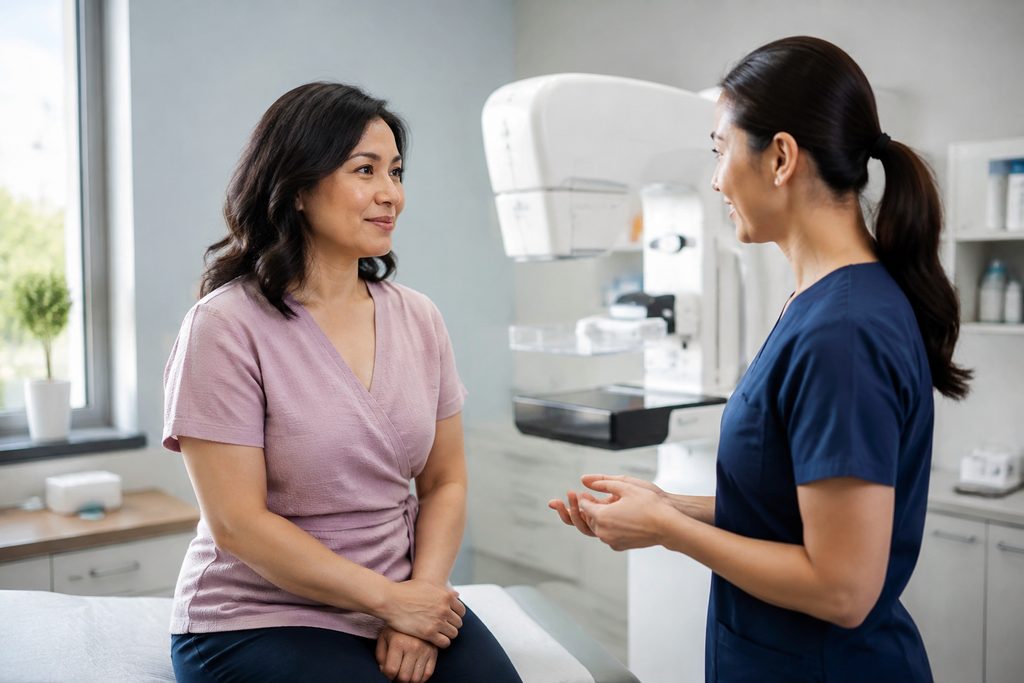
You’ve probably heard that getting a mammogram in a foreign country means navigating confusing rules, long waits, and questionable equipment. The reality in China’s top-tier hospitals is exactly the opposite—if you know where to look and what to expect. The question isn’t just *when* to start screening. It’s also *where* you can get it done safely, affordably, and without the language barrier turning a 20-minute exam into a full-day ordeal.
When Should I Start Mammograms: The Short Answer
For most women at average risk, the answer is age 40. That’s the threshold recommended by the American College of Radiology, the Society of Breast Imaging, and a growing number of Chinese oncology guidelines. Some organizations—like the U.S. Preventive Services Task Force—say 50 is fine if you’re willing to accept a slightly higher risk of missed early cancers. The American Cancer Society splits the difference: start at 40 if you want to, start by 45 no matter what, and switch to every-other-year screening at 55.
But age is only half the equation. Your family history, breast density, prior biopsies, and genetic markers can pull that starting line years earlier. A woman whose mother had breast cancer at 45 should typically begin screening at 35. A BRCA1 carrier may need annual MRIs starting at 25. The “right” age is a negotiation between your personal risk profile and your tolerance for false alarms.
Who This Is Right For — and Who It Isn’t
Mammography is a screening tool for asymptomatic women. It works best when there’s no lump, no pain, no nipple discharge—just a routine check to catch cancer before it can be felt.
Good candidates for starting mammograms now:
– Women aged 40 and older with no breast symptoms
– Women 30–39 with a first-degree relative (mother, sister, daughter) diagnosed with breast cancer
– Women with known BRCA1/BRCA2 mutations or other high-risk genetic profiles
– Women with extremely dense breast tissue who want a baseline image
– Women who’ve had prior chest radiation (e.g., for lymphoma) between ages 10 and 30
Who should NOT start routine mammograms yet:
– Women under 30 with no family history and no symptoms—breast tissue is too dense for reliable imaging, and radiation exposure adds up
– Pregnant women—mammography is generally avoided unless there’s a palpable mass requiring urgent evaluation
– Women with an active breast infection or recent breast surgery—imaging should wait until healing is complete
– Women who’ve had a mammogram within the last 11 months at average risk—annual means annual, not every 9 months
And a hard truth: if you feel a lump, do not wait for a screening appointment. A diagnostic mammogram with ultrasound is a different pathway entirely—and it should happen within days, not months.
The Options, Compared
When international patients consider breast cancer screening, the choice isn’t just “mammogram or no mammogram.” It’s *where* to get it, *what technology* to use, and *how much* to pay. Here’s how the main options stack up.
| Option | Typical Cost (USD) | Technology | Wait Time | English Support |
|---|---|---|---|---|
| Public hospital, standard outpatient | $80–150 | 2D digital mammography | Same-day queue, 1–4 hours | Limited; bring a companion |
| Public hospital, international/VIP department | $200–400 | 2D or 3D tomosynthesis | Pre-booked, 30–60 min | Usually available |
| Private international hospital (e.g., United Family, Jiahui) | $300–600 | 3D tomosynthesis, often with ultrasound add-on | Same-week booking | Fully English-speaking |
| United States, insured | $0–250 copay | 3D tomosynthesis | 1–3 weeks | Native |
| United States, uninsured | $400–800 | 3D tomosynthesis | 1–3 weeks | Native |
Which column fits you? If you’re already in China and comfortable navigating a public hospital with a bilingual companion, the $80–150 option is unbeatable value. If you’re flying in specifically for screening and want zero friction, the private international hospitals deliver Western-style care at roughly half the U.S. uninsured price. The public hospital international department sits in between—good technology, pre-booked slots, and a price that won’t make you wince.
Mammogram Cost China: What Actually Drives the Price
The mammogram cost China patients actually pay depends on three variables: hospital tier, imaging technology, and whether ultrasound gets bundled in. A basic 2D mammogram at a public hospital in Beijing or Shanghai runs $80–150. Step up to 3D tomosynthesis at an international department and you’re looking at $200–400. Add a breast ultrasound—which many Chinese radiologists recommend for dense breast tissue common in Asian women—and the total lands around $250–500.
That’s the range. No hidden facility fees, no separate “radiologist reading” charge, no surprise billing months later. Chinese hospitals quote a package price and that’s what you pay.
Compare that to the United States, where an uninsured screening mammogram averages $400–800 and a diagnostic workup can exceed $1,500. Even insured patients face deductibles, and a “free” screening mammogram often becomes a $300 bill once the radiologist recommends additional views.
What’s *not* included in the China price: interpretation by a Western-trained breast specialist, a written English report suitable for your home doctor, and any follow-up biopsy or MRI. Budget separately for those if your screening flags something.
Best Hospital Breast Cancer Screening Shanghai: Where the Equipment Actually Is
Shanghai has the highest concentration of 3D tomosynthesis units in mainland China. The best hospital breast cancer screening Shanghai options cluster in two groups: the public giants with dedicated breast centers, and the JCI-accredited private hospitals.
Fudan University Shanghai Cancer Center runs one of the busiest breast imaging departments in Asia. Their radiologists read over 20,000 mammograms annually. That volume matters—breast imaging is a pattern-recognition skill, and nobody gets good at it seeing 50 cases a year. Ruijin Hospital and Zhongshan Hospital also operate dedicated breast centers with tomosynthesis, automated breast ultrasound, and same-day biopsy capability if needed.
On the private side, Jiahui International Hospital and United Family Shanghai offer English-speaking radiologists, same-week appointments, and direct insurance billing. You’ll pay $300–600 instead of $80–150, but you’ll walk out with a report your home doctor can actually read.
For Beijing, the mammography price Beijing patients encounter follows the same pattern. Peking Union Medical College Hospital and Beijing Cancer Hospital lead the public sector. Their international departments quote $200–350 for a screening mammogram with ultrasound. Private options like Beijing United Family and Raffles Medical run $350–600.
Is Mammogram Safe in China: Radiation, Standards, and What to Check
Short answer: yes, at accredited hospitals. A screening mammogram delivers about 0.4 mSv of radiation—roughly seven weeks of background radiation from simply living on Earth. That’s the same dose whether the machine is in Boston or Beijing.
The real safety question isn’t radiation. It’s *quality control*. Chinese hospitals vary enormously in how well they maintain equipment and train technologists. The top 5% of hospitals—the ones on the Fudan ranking or holding JCI accreditation—meet international standards for positioning, compression, and image quality. A poorly positioned mammogram misses cancers at the edge of the film. A well-positioned one catches a 3mm calcification cluster.
What to check before booking: does the hospital use digital mammography (not film)? Does the radiologist read at least 5,000 mammograms per year? Is there a same-day ultrasound option if your breasts are dense? And will you receive a written report in English, or just a verbal summary in Mandarin?
The hospitals in our top-ranked hospital database all meet these criteria. We’ve verified the equipment, the volume, and the English-language reporting before adding any facility to the list.
Book Mammogram Screening China: The Practical Path for Foreigners
So you’ve decided to book mammogram screening China-side. Here’s what the process actually looks like.
Step 1: Decide your hospital tier. Public standard outpatient costs least but requires Chinese-language navigation. International departments cost more but offer pre-booking and English support. Private international hospitals cost most but are fully Westernized.
Step 2: Gather your records. Bring any prior mammograms on CD or film, a list of medications, your family history summary, and your passport. If you’ve had breast surgery, bring the operative report.
Step 3: Book the appointment. Public hospital standard outpatient departments generally do not accept overseas pre-booking—you show up, queue, and take the next available slot. International departments and private hospitals accept advance bookings by phone or through a coordinator. Expect same-week availability at private facilities, 1–2 weeks at international departments.
Step 4: The exam itself. A screening mammogram takes 15–20 minutes. Two views per breast, firm compression, done. If the radiologist wants additional views or an ultrasound, plan an extra 30–45 minutes.
Step 5: Results. Standard outpatient: results in 1–3 days, often in Chinese. International department: same-day or next-day, with English summary. Private hospital: same-day, full English report.
Visa note: For medical travel to China, the applicable short-stay category is the S2 visa, documented for medical treatment purposes. Bring your hospital appointment confirmation and a letter from the facility. Requirements vary by consulate, so verify current rules before applying.
Frequently Asked Questions
Start 10 years before your mother’s age at diagnosis. If she was diagnosed at 45, begin screening at 35. If she was diagnosed at 60, start at 50. Add annual breast MRI if you also carry a BRCA mutation or have a lifetime risk above 20% by standard risk models.
At top-tier hospitals, yes. The equipment is the same—GE, Siemens, Hologic tomosynthesis units—and the radiologists at major cancer centers read volumes that exceed most Western peers. The gap is at lower-tier hospitals, where older equipment and lower reading volumes produce more false negatives. Choose a Fudan-ranked or JCI-accredited facility and the accuracy is comparable.
You’ll be referred for diagnostic imaging—usually targeted ultrasound, sometimes contrast-enhanced MRI. If a biopsy is recommended, core needle biopsy is available at the same hospital, typically within 1–3 days. Results take 3–7 days for pathology. You are never obligated to continue treatment at the same hospital. You can take the images and pathology slides back to your home country for a second opinion.
At public hospitals, you generally need to see a breast surgeon or gynecologist first, who then orders the mammogram. At private international hospitals, you can often book screening directly through the imaging department. Either way, a doctor reviews your results before you leave.
The quoted price covers the imaging procedure and the radiologist’s interpretation. It does not include the initial consultation fee (if required), any additional views, ultrasound add-ons, biopsy, or pathology. Always ask for a written breakdown before paying. At public hospitals, payment is upfront by cash, WeChat Pay, Alipay, or international credit card at larger facilities.
Your Next Step
The short version: start screening at 40, earlier if your family history demands it, and don’t let geography stop you from getting a quality exam. China’s top hospitals offer the same tomosynthesis technology you’d find in Boston or Berlin, at a fraction of the uninsured U.S. price, with wait times measured in days rather than weeks.
We are China Medical Services—a coordination team, not a hospital. We don’t diagnose, and we don’t read your films. What we do is connect international patients with verified breast imaging departments, handle appointment booking, arrange bilingual companions for the hospital visit, and make sure your report comes back in English. If you’re considering screening in Shanghai, Beijing, or any of the 37 cities we cover, explore our bilingual medical companion service or browse our oncology department rankings to see which hospitals lead in breast imaging. One email starts the conversation. No pressure, no obligation—just a clear answer on where you stand and what comes next.
For more medical information and treatment options in China, visit chinamedservices.com (China Medical Services).
