Tangdu Hospital: How We Help You Access Xi’an’s Top Care
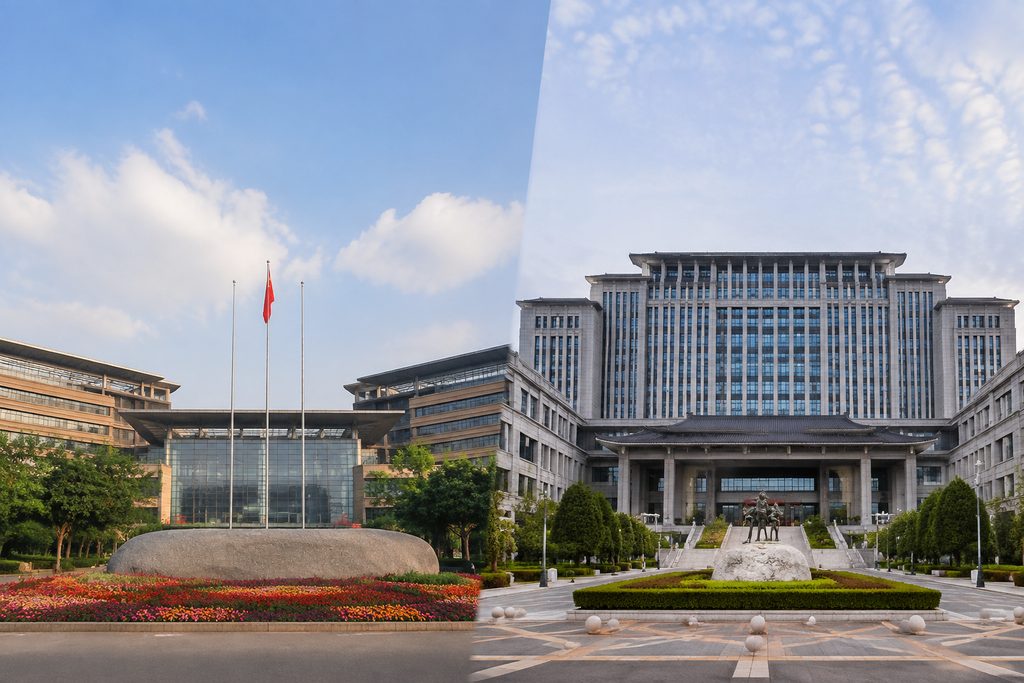
According to China’s National Health Commission, more than 350,000 international patient visits were recorded at major Chinese hospitals in recent years, and a growing share of those patients are choosing second-tier research hubs over Beijing and Shanghai. Xi’an is one of them. For Tangdu Hospital international patients, the appeal is straightforward: a large academic medical center attached to the Air Force Medical University, with strong programs in digestive surgery, orthopedics, and cardiovascular care, sitting in a city where the cost of living is a fraction of Beijing’s.
But wanting care at a specific hospital and actually getting it are two different problems. That gap is where our team works.
Key Takeaways
- Tangdu Hospital is a large tertiary academic hospital in Xi’an with recognized strength in hepatobiliary and gastrointestinal surgery, orthopedics, and cardiology — not a small private clinic.
- Public hospital outpatient registration in China generally cannot be locked in from overseas in advance; surgery follows an in-person consultation, not a remote booking.
- Costs for major surgery at top Chinese public hospitals often run one-fifth to one-tenth of US list prices, but final figures depend on the hospital, the department, and case complexity.
- Language is the single biggest practical barrier. A 10,000-visit-per-day outpatient building is not navigable without Chinese, and that is the honest reason most foreign patients bring a bilingual companion.
The Problem: You Found the Right Hospital, Then Hit a Wall
Here is what typically happens. A patient in California or Dubai reads about a Chinese hospital with a strong reputation in their condition. They find the English-language website. They send an email. Nothing comes back for two weeks, and when it does, the reply asks them to “register on arrival.”
That is not a failure of the hospital. It is how the system is built. Chinese public hospitals operate on same-day or short-window registration for standard outpatient slots, and surgical scheduling requires the treating physician to examine you first. You cannot buy a surgery date from abroad the way you might book a hotel.
So the foreign patient faces three problems stacked on top of each other. They cannot reserve the appointment they need. They cannot read the forms, the signage, or the consent documents. And they have no way to judge whether the department they picked is actually the right one for their specific diagnosis. Add a 12-hour flight and a language they do not speak, and most people give up before they start.
Why Working With a Coordinator Changes the Outcome
We are not a hospital. We do not diagnose, we do not treat, and we do not promise surgical outcomes. What we do is remove the friction between a patient abroad and a Chinese specialty department. Here is what that looks like in practice.
Records First, Travel Second
The single most useful thing a foreign patient can do is avoid flying to China before anyone has looked at their file. Our written second opinion service sends your existing imaging, pathology reports, and lab work to the relevant Chinese specialty for review. You get written analysis and a direction — whether the case is operable, what workup is still missing, which department should handle it. Cost runs $300–500. If the answer is “this is not a surgical problem,” you have saved a $4,000 trip and three weeks of your life.
Video Consultation Before Commitment
Sometimes a written opinion is not enough and you want to hear the reasoning directly. A video consultation with the Chinese specialty team runs $100–300 at a standard international department, or $500–800 with a top specialist. You explain your symptoms and goals; they explain what they would do and why. No commitment to travel.
One detail worth knowing: any consultation fee is credited in full toward on-the-ground coordination if you decide to come within 90 days. It is a one-time credit against the coordination fee only — it never applies to hospital treatment charges.
Appointment Coordination Through Official Channels
This is where the practical work happens. Our hospital appointment coordination starts at $300 and covers registration, medical card creation, and scheduling through the hospital’s official international or VIP department. If we cannot secure the appointment described in your order, you get a full refund. We do not claim to jump queues or guarantee a specific named surgeon on a specific date — anyone who promises that is not being straight with you.
Bilingual Companionship on the Ground
A bilingual medical companion runs from $300 per day, covering half-day (4 hours) or full-day (8 hours) support: registration, queuing, payment windows, wayfinding, and live interpretation. Tangdu’s outpatient volume is measured in thousands per day. Without Chinese, you will lose hours to simple navigation. With a companion, a morning of tests that would otherwise take two days can finish before lunch.
How Much Does Cancer Treatment Cost in China?
This is the question we get more than any other, and it deserves a straight answer with real numbers. The figures below are ranges for major public tertiary hospitals, and they vary by hospital, city, and case complexity. They are not quotes.
| Treatment | Typical China Range (USD) | US Comparison |
|---|---|---|
| Comprehensive cancer workup (imaging, pathology, staging) | $1,500 – $4,000 | $10,000 – $25,000 |
| Standard chemotherapy cycle | $800 – $2,500 | $10,000 – $30,000 |
| Targeted therapy, per month | $1,500 – $5,000 | $8,000 – $20,000 |
| Major oncologic surgery | $8,000 – $20,000 | $60,000 – $150,000 |
| Coronary bypass (for cost context) | $12,000 – $20,000 | $120,000+ |
Two structural reasons explain the gap. First, physician and nursing salaries in China are a fraction of US levels, and drug procurement is centrally negotiated, which compresses pharmaceutical pricing dramatically. Second, volume. A high-volume Chinese surgical department may perform several times the annual case count of a comparable US center, which spreads fixed costs across far more patients.
Lower price does not automatically mean lower quality — but it also does not automatically mean equivalent quality for your specific case. That is exactly what the second-opinion step is for.
Is It Safe to Have Surgery in China as a Foreigner?
Safety is a fair worry, and the answer is not a slogan. China’s top-tier public hospitals are accredited, audited, and held to national clinical standards, and many international departments carry JCI accreditation. The real risks for foreign patients are mostly logistical rather than clinical.
Consider what actually goes wrong. A patient arrives without translated records, so the surgeon works from an incomplete history. A patient signs a consent form they cannot read. A patient runs out of a medication because they did not arrange a local equivalent. A patient has no plan for follow-up after flying home. None of these are surgical failures. All of them are avoidable.
What we can control is the coordination layer: getting your records translated and in front of the right department, making sure you understand what you are signing, and building a follow-up plan before you leave. What we cannot control is the medicine itself. No coordinator can. Anyone who tells you otherwise is selling something.
What to Prepare Before You Fly
Visa first. Foreign patients coming to China for medical treatment use the S2 visa, with a notation for medical treatment purposes. Stays beyond 180 days require the S1 category. Accompanying family members also apply under S2. The M visa is for commercial and trade activity and has nothing to do with medical care — if a service tells you to apply for an M visa for treatment, that is a red flag. Requirements shift, so confirm current documentation with the nearest Chinese embassy or consulate and bring the hospital’s supporting letter.
Records second. Bring original imaging on disc, not just printed reports. Bring pathology slides if you have them. Bring a medication list with generic names. Have everything translated into Chinese by a qualified translator — machine translation of a pathology report is not adequate.
Money third. Public hospitals require prepayment; you settle the bill and seek reimbursement from your insurer afterward. Private international hospitals more often bill insurance directly. International credit cards are widely accepted at hospital cashier desks, but daily transaction limits on foreign cards can be an issue for large prepayments — plan for a wire transfer or multiple transactions. Keep every receipt and itemized invoice; most insurers require them.
For a broader view of how hospital selection works across the country, our directory of Fudan-ranked hospitals by city groups the top 100 institutions by location and tier, and the specialty rankings list the top ten hospitals for each of 45 departments, which is useful when your diagnosis points to a narrow subspecialty.
Frequently Asked Questions
Standard public outpatient registration generally cannot be reserved in advance from abroad — it is typically same-day. What can be arranged in advance is access through the hospital’s international or VIP department, which comes at roughly 1.5 to 2 times the standard channel price but includes English-speaking staff and coordinated scheduling. Surgery itself still requires an in-person consultation first.
For most major oncologic treatment, expect roughly one-fifth to one-tenth of US list prices. A comprehensive workup might run $1,500–4,000 versus $10,000–25,000 in the US. These are ranges, not quotes, and final figures depend on the hospital, the regimen, and how complex your case turns out to be.
Top Chinese public hospitals have established emergency and complication-management protocols, and international departments are staffed to handle foreign patients. We stay involved in communication and logistics, but we are not clinicians and cannot direct care. Before committing, ask the treating department directly about complication rates for your specific procedure — a good department will answer.
At international departments, some English is spoken. In the main outpatient buildings — where labs, imaging, and pharmacy windows are located — it is effectively absent. Most foreign patients who try to manage alone lose one to two extra days to navigation errors. A bilingual companion is the practical fix.
Your Next Step
The takeaway is simple: the medicine at a place like Tangdu is not the hard part — the logistics are, and they are solvable. We are a coordination service, not a hospital and not a provider of diagnoses. We handle records, appointment coordination through official hospital channels, bilingual accompaniment, and visa guidance so you can focus on the clinical decision. If you want to know whether your case fits, start with a written second opinion or a video consultation and decide from there. You can begin with a free consultation whenever you are ready.
This article is for general information only and does not constitute medical advice. Treatment decisions should be made with a qualified physician who has reviewed your individual case. Costs and visa rules are subject to change.
For more medical information and treatment options in China, visit chinamedservices.com (China Medical Services).
