TCM During Hospital Stay China: How Integrated Care Works in Practice
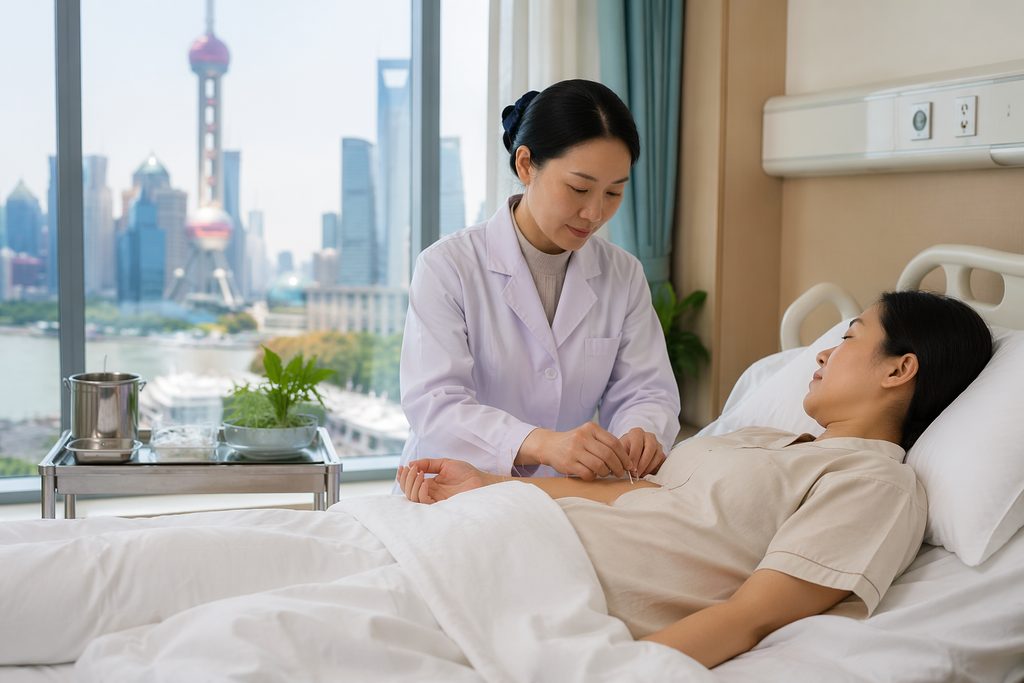
You’ve probably heard that a hospital stay in China means choosing between modern Western medicine and traditional herbal remedies. The reality is more practical—and more interesting. In many of China’s top-tier hospitals, you don’t choose. You get both, woven into a single treatment plan. For an international patient, this can be disorienting. You might picture a stark ward and then suddenly a doctor is discussing your qi. Our team has walked hundreds of patients through this exact experience. We know the questions that keep you up at night: Will the herbs interfere with my surgery? Is the acupuncture safe? And what does a tcm hospital stay cost China actually look like on the bill? Let’s break down how integration really works, without the mystique.
Key Takeaways
- Integration in top Chinese hospitals is protocol-driven: a surgeon orders acupuncture, not a separate “wellness” add-on you arrange yourself.
- A combined TCM-Western recovery plan can reduce post-operative ileus and pain scores, with acupuncture often starting 24 hours after surgery.
- Inpatient TCM services like daily acupuncture typically add $40–$80 USD per day to your hospital bill—a fraction of the cost of a standalone TCM medical tourism package.
- You must verify that the herbal formulas prescribed do not interact with your surgical anticoagulants or anesthesia; this requires a bilingual case manager, not just a translator.
The Problem: Post-Surgical Recovery That Drags On
Recovering from a major surgery is hard enough. But for many patients, the real frustration begins after the operation. Ileus—a temporary paralysis of the bowel—affects up to 25% of patients after abdominal surgery. Opioid painkillers bring their own baggage: constipation, nausea, and dependency. A 2023 study in the Journal of Gastrointestinal Surgery found that enhanced recovery protocols still leave a significant number of patients struggling with fatigue and pain for weeks. You leave the hospital, but you don’t feel healed. You feel stuck.
Western medicine is brilliant at the acute fix. It removes the tumor, replaces the joint, bypasses the blockage. But the aftermath—the inflammation, the sluggish digestion, the disrupted sleep—that’s where the system often shrugs. You get a prescription and a follow-up appointment. In China, the approach is structurally different. The hospital stay itself is designed to actively manage that aftermath. And it does so by pulling a second lever: Traditional Chinese Medicine.
Why China’s Integrated Hospital Model Delivers a Different Recovery
Integration here is not a spa service. It is a hospital discipline. In a facility like Shanghai’s Shuguang Hospital, affiliated with Shanghai University of Traditional Chinese Medicine, the TCM department is not in a separate building. Specialists round with the surgical teams. This is the model you’ll find in many of the top-ranked hospitals in our network.
Clinical Volume Drives Protocol Precision
When a hospital performs thousands of integrated recoveries each year, the care becomes algorithmic. A surgeon at a high-volume center like Huashan Hospital in Shanghai doesn’t wonder if acupuncture might help your post-operative nausea. They have a protocol. For a standard knee replacement, the order set might include: day 1 post-op, acupuncture at specific points (ST36, SP6) for pain and ileus prevention. The acupuncturist arrives at the bedside. It’s not a conversation about your life balance; it’s a 20-minute targeted intervention. This volume—hundreds of such cases a month—means the teams have seen what works and what doesn’t. They’ve refined the herbal formulas to avoid the ones that increase bleeding risk. They know the exact timing to introduce moxibustion for urinary retention.
How Is Traditional Chinese Medicine Integrated During Surgery Recovery in China
The phrase “integrated” gets thrown around loosely. Here’s the concrete sequence. You are admitted under a surgical team. Your primary attending is a Western-trained surgeon. After your procedure, the surgeon writes a consultation order for the hospital’s TCM department. This is not an optional extra you book through a concierge; it is an in-house referral. A TCM physician reviews your surgical notes, checks your tongue and pulse, and then orders a specific regimen. This might include a custom herbal decoction delivered to your room twice a day, and a course of acupuncture timed around your physical therapy sessions. The TCM doctor notes their findings in the same electronic medical record your surgeon uses. Both teams see the full picture. This is the standard at hospitals that top the Fudan rankings for integrated medicine.
For someone searching for the best hospital combining Chinese medicine and Western medicine Shanghai, the answer often points to Longhua Hospital or Shuguang Hospital. These are not small, niche clinics. Longhua has over 1,200 beds. Its oncology department routinely combines chemotherapy with herbal formulas to reduce side effects like peripheral neuropathy. The integration is baked into the clinical pathways. You’re not seeing a “TCM practitioner” in a strip mall. You’re seeing a board-certified physician who has completed a full residency in integrated Chinese and Western medicine.
Cost Structure: Why the Math Works
Let’s address the direct question: what does a tcm hospital stay cost China actually entail? The base cost of your hospitalization—the room, the surgery, the nursing care—remains the primary expense. TCM services are billed as additional line items, and they are remarkably transparent. A session of acupuncture while you are an inpatient typically ranges from $25 to $50 USD. A daily herbal decoction might cost $10 to $20 USD. So, adding a full daily TCM protocol—acupuncture plus herbs—often adds only $40 to $80 USD to your daily bill. Over a 10-day stay, that’s a few hundred dollars. Compare this to seeking standalone TCM treatment in a private clinic in the West, where a single acupuncture session can run $100 to $150. The hospital model makes integration financially trivial relative to the total cost of the procedure.
Can I Get Acupuncture While Hospitalized in Beijing? The Practical Answer
Yes. And it’s easier than you think, provided you are in the right hospital. If you are admitted to a public hospital with a strong TCM department—like the China-Japan Friendship Hospital in Beijing, which has a national-level integrated medicine center—the service is available on an inpatient basis. The key question is not whether you can get it, but how the order is placed. In a private international hospital like Beijing United Family, the process is even more streamlined. You simply ask your attending physician. They will place a referral to the in-house TCM team. The acupuncturist will come to your room.
But here is the friction point for foreigners. In a busy public hospital, the TCM team may not speak English. The acupuncture itself is safe—practitioners use single-use, sterile needles, a standard you should verify. The challenge is communication. You need to explain your pain levels, your sensations, and your concerns. Without a bilingual medical companion, you might nod along and miss a crucial instruction, like avoiding certain foods per TCM dietary therapy. This is where our bilingual case management becomes essential, not just for translation, but for ensuring the TCM plan aligns with your surgical team’s orders.
Medical Tourism Packages with TCM China: What’s Real and What’s Fluff
A search for medical tourism packages with TCM China will bring up a lot of glossy retreats. You’ll see pictures of tai chi at sunrise and promises of complete transformation. Be skeptical. Many of these packages are wellness tourism, not clinical care. They are run by hotels or standalone wellness centers, not by tertiary hospitals. The massages and herbal baths are pleasant, but they won’t fix your herniated disc. A genuine clinical package is built around a specific medical goal—recovery from a stroke, management of chronic pain, post-chemotherapy rehabilitation—and is supervised by a hospital department.
The real value in a hospital-based package is the diagnostic rigor. A legitimate program at a hospital like the First Teaching Hospital of Tianjin University of TCM will start with a full workup: MRI, blood panels, and a dual assessment by a neurologist and a TCM specialist. The package price, which can range from $3,000 to $8,000 for a two-week inpatient program, includes all the therapies, medications, and daily physician rounds. It’s a medical admission, not a holiday. When you book hospital with Chinese herbal medicine abroad, you need to confirm one thing: does the hospital have an inpatient TCM pharmacy that dispenses individualized decoctions, or are they giving everyone the same pre-made pills? The former is clinical care; the latter is a supplement shop.
Practical Considerations: Documentation, Payment, and Drug Interactions
Walking into an integrated Chinese hospital requires more paperwork than a standard admission. You need your complete surgical records, a detailed medication list, and ideally a letter from your home physician. The TCM team will want to know every drug you’re on. St. John’s Wort, a common herbal supplement in the West, interacts dangerously with many drugs. Chinese herbal formulas are far more complex. A formula for post-surgical pain might contain Yan Hu Suo (Corydalis), which has mild antiplatelet effects. If you’re already on blood thinners, this needs to be adjusted. Our team always recommends a remote video consultation with the TCM department before you travel. For a fee starting around $300, a specialist can review your case and flag any potential interactions before you even book a flight.
Payment is straightforward. In a public hospital, you deposit a lump sum upfront and the TCM charges are deducted daily. In a private international hospital, they may bill your insurance directly. Always confirm that the TCM services are covered. Some international insurers classify acupuncture as experimental. We advise patients to get a pre-authorization letter specifically naming “inpatient acupuncture for post-operative ileus prevention,” which has a strong evidence base and is harder to deny.
| Cost Item | Public Hospital (USD) | Private International Hospital (USD) |
|---|---|---|
| Inpatient Acupuncture (per session) | $25 – $50 | $80 – $120 |
| Custom Herbal Decoction (daily) | $10 – $20 | $25 – $40 |
| TCM Physician Consultation (initial) | $30 – $60 | $100 – $200 |
| Two-Week Inpatient TCM Rehab Package | $3,000 – $5,000 | $6,000 – $8,000 |
Frequently Asked Questions
No. The needles are hair-thin, single-use, and sterile. The practitioner will select points far from your incision site—often on the hands, feet, or ears—to achieve systemic effects like pain relief and reduced inflammation. They are trained to work around surgical dressings and drains.
Hospitals at the top of the Fudan rankings source herbs through GMP-certified pharmacies. You can request a certificate of analysis for heavy metals and pesticide residues. This is a standard document in any reputable hospital’s pharmacy department. If they hesitate, that’s a red flag.
You don’t need to debate the philosophy. Show them the evidence for specific interventions. Point to the 2017 JAMA Surgery meta-analysis showing acupuncture reduces post-operative pain and opioid use. Show them the Cochrane review on acupuncture for nausea. Frame it as an adjunctive therapy with measurable outcomes, not as an alternative medical system.
Yes, but with caution. The hospital can dispense a 30-day supply of granule-form herbs that you mix with hot water. You must declare them at customs. A letter from the prescribing TCM physician, translated into English, listing every ingredient and its Latin botanical name, will smooth the process. We coordinate this letter as part of our discharge support.
Your Next Step
Integrated TCM during a hospital stay in China is not a mystery. It is a structured, evidence-informed layer of care that can make a difficult recovery measurably smoother. The real work is in selecting a hospital where the integration is clinical, not cosmetic, and in ensuring that every herb and needle is accounted for in your overall safety plan. Our team at China Medical Services does not provide medical advice, but we do provide the clarity to navigate this system. If you want to understand exactly which hospitals can offer this for your specific condition, reach out for a free consultation. We’ll help you map the options without the guesswork.
For more medical information and treatment options in China, visit chinamedservices.com (China Medical Services).
