Teeth Whitening Cost in China: 2026 Clinic Prices and What to Expect
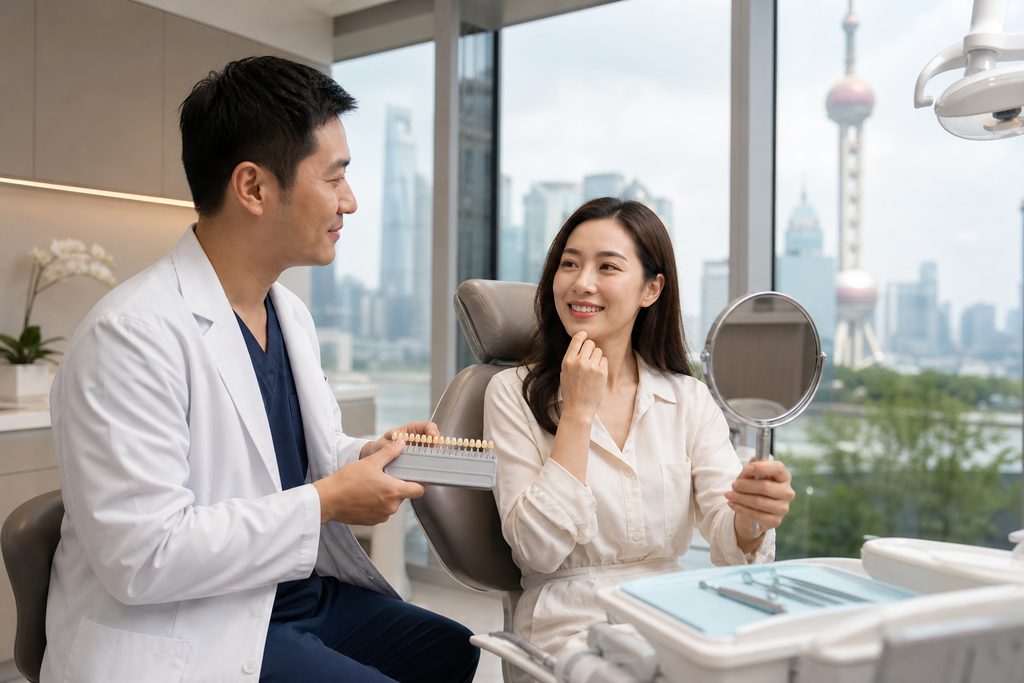
Teeth Whitening Cost in China: Real 2026 Prices from Public and Private Clinics
Teeth whitening sounds like a simple cosmetic fix — and in many ways, it is. A dentist applies a bleaching agent to your enamel, usually hydrogen peroxide or carbamide peroxide, and the oxidation reaction breaks down stain molecules. That’s the science. The practical question for international patients is different: what does teeth whitening cost China actually charge, and is the savings worth the trip?
Here’s the short answer. In-office whitening at a mid-tier private dental clinic in Shanghai or Beijing runs between $150 and $350 per session. Laser-assisted whitening at premium international clinics costs $400 to $600. Take-home custom tray kits from a dentist range from $200 to $400. Compare that to the United States, where the same procedures cost $500 to $1,500 in-office and $300 to $800 for take-home trays. The price gap is real. But price is only one part of the equation — clinic quality, safety protocols, and follow-up care matter just as much.
Key Takeaways
- In-office teeth whitening in China costs $150–$600 per session, roughly 40–60% less than typical US pricing.
- Laser whitening at JCI-accredited international clinics in Shanghai and Beijing delivers the most predictable results for foreign patients.
- Dental tourism in China requires careful clinic vetting — not every low-cost provider follows the same safety standards.
- Tooth sensitivity is the most common side effect, affecting roughly 30–50% of patients for 24–72 hours after treatment.
The Problem: Dental Costs Are Driving Patients to Delay Treatment
Dental care in Western countries has become a luxury expense. The American Dental Association’s 2023 survey found that 39% of US adults skipped or delayed dental care due to cost. Cosmetic procedures like whitening are rarely covered by insurance, which means patients pay entirely out of pocket. In the UK, NHS dental access has collapsed in many regions — a 2024 British Dental Association report found that 97% of dental practices were not accepting new adult NHS patients in some areas. Patients are left with private fees that climb every year.
That financial pressure pushes people to make compromises. Some use over-the-counter strips that deliver uneven results. Others try unregulated home remedies — baking soda abrasives, lemon juice acid washes — that damage enamel permanently. The search for affordable professional care is not vanity. It’s a rational response to a broken pricing model.
China has emerged as a serious option for dental tourism. Not because it’s the cheapest destination in Asia — Thailand and Vietnam often undercut it — but because China combines modern equipment, high patient volume, and internationally trained dentists at prices Western patients find genuinely attractive. The question is whether the quality justifies the travel.
Why Chinese Dental Clinics Deliver Comparable Results at Lower Prices
Clinical Volume Creates Efficiency
A busy dental clinic in Shanghai might perform 10 to 20 whitening procedures per week. That repetition builds operational efficiency. Staff know exactly how to prep, apply, and monitor each session. Equipment is used constantly, which spreads capital costs across more patients. The same dynamic applies to other cosmetic procedures — Chinese dentists perform more veneers, crowns, and whitening treatments per practitioner than most Western counterparts simply because the patient base is larger and treatment is more affordable.
Volume also drives supply chain advantages. Bleaching agents, curing lights, and laser systems are purchased in bulk. Clinics negotiate better rates with suppliers. Those savings flow to patients. It’s the same structural advantage Chinese hospitals leverage for cardiac surgery and orthopedics — scale reduces unit cost without reducing clinical rigor.
Technology Parity at International Clinics
The top-tier private dental clinics in Shanghai, Beijing, and Shenzhen use the same equipment you’ll find in Los Angeles or London. Brands like Beyond Polus, Philips Zoom, and LaserSmile are standard. JCI-accredited facilities — the same international accreditation used by hospitals like Bumrungrad in Bangkok — follow strict sterilization and safety protocols. Digital shade matching, intraoral cameras, and desensitizing protocols are routine.
What does that mean in practice? A foreign patient walking into a United Family or Raffles dental clinic in Shanghai will see equipment and procedures that feel familiar. The main difference is the price on the invoice.
Labor Economics Explain the Price Gap
A dentist in Shanghai earns a fraction of what a dentist in San Francisco or London earns. That’s not a reflection of skill — it’s a function of local labor markets. Chinese dental schools produce thousands of graduates annually, and competition for positions at top private clinics is intense. The result: highly trained dentists working at salaries that keep procedure prices low by Western standards.
Malpractice insurance, facility rent, and administrative overhead are all lower in China too. None of these factors reduce clinical quality. They simply change the cost structure. Patients should not confuse lower prices with lower standards — at accredited clinics, the opposite is often true.
What a Teeth Whitening Session in China Actually Looks Like
If you’re coming from abroad, understanding the process helps you evaluate clinics and avoid surprises. Here’s what a typical in-office whitening visit involves.
Step 1: Pre-treatment assessment. The dentist examines your teeth and gums for decay, cracks, or gum disease. Whitening is not recommended if you have untreated cavities or active gum infection. Some clinics offer a cleaning first — plaque and tartar block the bleaching agent from contacting enamel evenly.
Step 2: Shade matching. The dentist records your current tooth shade using a standardized shade guide. This gives you a baseline to compare results after treatment.
Step 3: Protection. Your gums, lips, and cheeks are covered with a protective barrier or rubber dam. This prevents chemical burns from the bleaching gel.
Step 4: Application. The bleaching agent is applied to your teeth. For laser or light-accelerated whitening, a specialized lamp or laser activates the gel. Sessions typically last 30 to 60 minutes, sometimes with multiple gel applications in one visit.
Step 5: Post-treatment care. The dentist removes the gel, rinses, and may apply a desensitizing agent. You’ll receive instructions: avoid coffee, tea, red wine, and dark sauces for 48 hours. Your teeth may feel sensitive for a day or two.
Results vary. In-office whitening typically lightens teeth by 3 to 8 shades in a single session. Stubborn stains — from tetracycline antibiotics or fluorosis — may require multiple sessions or alternative treatments like veneers.
Comparing Your Options: In-Office, Laser, and Take-Home Whitening in China
Not all whitening is the same. The right choice depends on your budget, timeline, and how much sensitivity you’re willing to tolerate. Here’s a breakdown of what you can expect at Chinese clinics in 2026.
| Method | Typical Cost in China | US Comparison | Session Time | Results Duration |
|---|---|---|---|---|
| In-office chemical whitening | $150–$350 | $500–$900 | 60–90 min | 6–18 months |
| Laser / light-accelerated whitening | $400–$600 | $800–$1,500 | 45–60 min | 12–24 months |
| Custom take-home trays (dentist-made) | $200–$400 | $300–$800 | 2 weeks nightly | 6–12 months |
| Combination (in-office + take-home maintenance) | $500–$900 | $1,000–$2,000 | 1 visit + home care | 18–36 months |
These figures come from published price lists at private dental clinics in Shanghai, Beijing, and Shenzhen, cross-referenced with patient-reported costs on dental tourism forums. Prices vary by clinic tier, dentist seniority, and case complexity. A JCI-accredited international clinic will charge more than a local mid-tier practice — but the difference buys English-speaking staff, familiar sterilization protocols, and a more comfortable experience for foreign patients.
If you’re researching laser teeth whitening China price list data, expect premium clinics to quote $500–$600 per session as a baseline. Some bundle a cleaning and take-home maintenance kit into a package, which improves value but raises the upfront cost.
Is Teeth Whitening in China Safe? What the Evidence Shows
The short answer: yes, at accredited clinics. The longer answer requires nuance.
Teeth whitening has been studied extensively worldwide. A 2023 systematic review in the Journal of Evidence-Based Dental Practice concluded that professional whitening with hydrogen peroxide concentrations up to 40% is safe for enamel when administered by trained professionals. The main risks — gum irritation, tooth sensitivity, and temporary enamel demineralization — are well documented and manageable.
In China, safety depends heavily on where you go. The country’s dental market is enormous and uneven. Top-tier private clinics in major cities meet international standards. But there are also small, unregulated operations that use high-concentration bleaching agents without proper gum protection or post-treatment care. The Chinese government has tightened regulations on dental clinic licensing in recent years, but enforcement varies by region.
So is teeth whitening in China safe? At a JCI-accredited or internationally branded clinic, yes — the protocols mirror what you’d receive in the US or Europe. At an unvetted local clinic, the risk profile changes. That’s why clinic selection matters more than the procedure itself.
Red flags to watch for: clinics that quote prices dramatically below market rates, facilities that seem rushed or understaffed, and providers who skip the pre-treatment dental exam. A proper whitening session always starts with an assessment of your oral health. If a clinic offers to whiten your teeth without looking at your gums or checking for decay first, walk away.
Practical Considerations: Planning a Dental Trip to China
Whitening is a relatively quick procedure, but planning a trip around it still requires attention to logistics. Here’s what you need to know.
Visa. Foreign nationals traveling to China for medical treatment — including dental care — typically apply for an S2 visa, which covers short-term private affairs and medical visits. You’ll need supporting documents from the clinic, including an appointment confirmation and treatment plan. Processing times vary by embassy, so apply at least 3 to 4 weeks before your planned travel date. The S2 visa is not the same as an M visa, which is for commercial and trade activities only.
Payment. Most private dental clinics in China accept international credit cards, but some smaller practices prefer WeChat Pay, Alipay, or cash. Public hospital dental departments generally require prepayment and may not accept foreign cards. Clarify payment methods before you commit to a clinic. If you’re using insurance, note that cosmetic whitening is almost never covered — this is an out-of-pocket expense regardless of where you receive treatment.
Language. At international clinics like United Family or Jiahui, English-speaking staff are standard. At local Chinese clinics, English proficiency varies widely. If you don’t speak Mandarin, a bilingual medical companion can handle registration, payment, and translation during your visit. This is one of the services our team coordinates for international patients — but you can also arrange your own interpreter if you prefer.
Follow-up. Whitening results are not permanent. Most patients need touch-up treatments every 12 to 24 months, depending on diet and habits. If you’re traveling back to China regularly, scheduling touch-ups during future trips is straightforward. If not, ask your dentist for a take-home maintenance kit before you leave — most Chinese clinics offer these for an additional $100 to $200.
For patients considering a broader dental trip, Shanghai and Beijing have the highest concentration of internationally accredited clinics. Our Shanghai clinic directory and Beijing hospital listings include dental facilities with English-speaking staff and JCI accreditation. If you’re weighing whitening alongside other cosmetic procedures, check our private dental clinic comparisons for a fuller picture of options and pricing.
Frequently Asked Questions
In-office whitening in China costs $150 to $600 per session, depending on the clinic tier and method. The same procedure in the US typically runs $500 to $1,500. You’ll save 40 to 60 percent at comparable quality levels — but factor in travel costs and the value of your time.
Public hospital dental departments in major Chinese cities are generally safe and well-regulated. The main challenges are language barriers, longer wait times, and less personalized service. For foreign patients, private international clinics offer the best balance of safety, communication, and convenience — at a higher price point than public options but still below US rates.
Expect 6 to 24 months of visible results, depending on the method and your habits. Laser whitening lasts longest, typically 12 to 24 months. Coffee, tea, red wine, and smoking will shorten the duration. Most dentists recommend a take-home maintenance kit or periodic touch-up sessions every 12 to 18 months.
Mild sensitivity for 24 to 72 hours is normal and affects roughly 30 to 50 percent of patients. Severe or prolonged sensitivity is rare but possible. Before you leave the clinic, ask for a desensitizing gel or fluoride varnish. If sensitivity persists beyond a week, contact the clinic — most reputable Chinese dental practices offer follow-up consultations for recent patients, and many will provide remote guidance for international patients.
Yes. Most international clinics accept advance bookings for whitening packages, often bundling a consultation, cleaning, whitening session, and take-home kit. You’ll typically need to pay a deposit to secure your appointment. Confirm the cancellation policy before paying — some clinics offer full refunds with 48 hours’ notice, while others charge a cancellation fee. If you’re working with a medical coordinator, they can handle the booking and confirm the clinic’s English-language support before you commit.
Your Next Step
Teeth whitening in China offers real savings without sacrificing quality — if you choose the right clinic. The key is doing your homework before you book: verify accreditation, confirm pricing in writing, and understand what the quoted fee includes.
At China Medical Services, we help international patients identify reputable dental clinics, coordinate appointments, and arrange bilingual support during treatment. We are not a hospital and we do not provide medical advice — we’re the team that handles the logistics so you can focus on your care. If you’re considering dental treatment in China, start with a free consultation to discuss your needs and get matched with clinics that fit your budget and expectations.
Whatever you decide, don’t let cost alone drive the decision. A cheap whitening session at an unvetted clinic can cost far more in the long run. Choose quality, verify safety, and the savings will take care of themselves.
For more medical information and treatment options in China, visit chinamedservices.com (China Medical Services).
