Thyroid Disorder Treatment in China: Costs, Safety, and How to Start
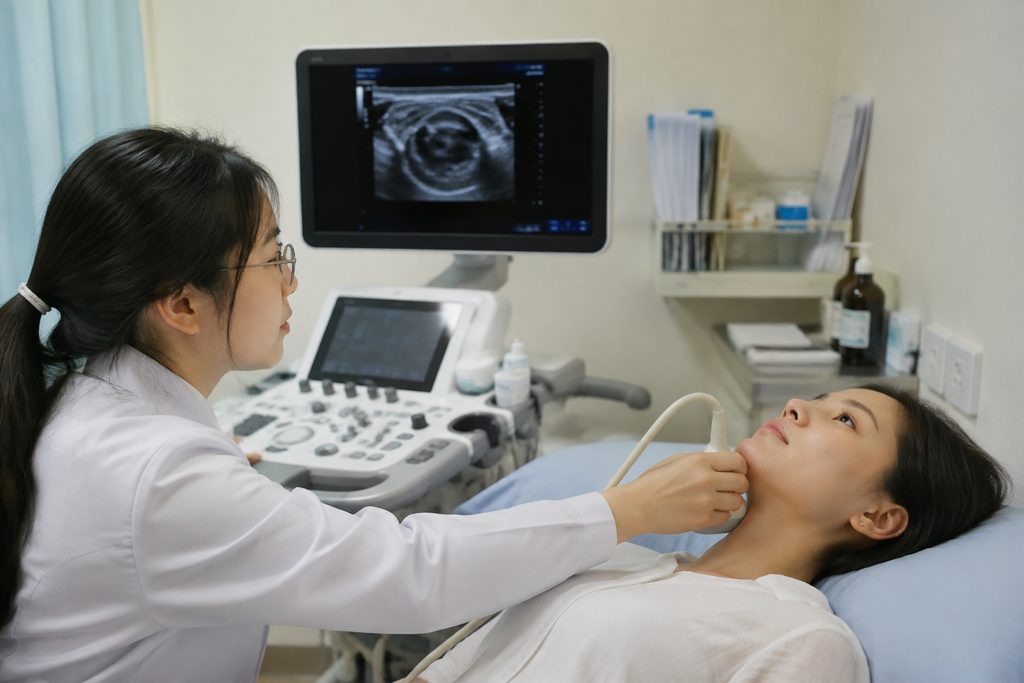
Can You Get Thyroid Disorder Treatment in China? Yes — Here Is What That Actually Looks Like
A thyroid disorder diagnosis can feel overwhelming, but it rarely means you are out of options. In simple terms, thyroid disorders are conditions where your thyroid gland — a butterfly-shaped organ at the base of your neck — produces too much or too little hormone, or develops nodules that may require removal. Treatment ranges from daily medication to radioactive iodine therapy to partial or total thyroidectomy. For many international patients, the question is not whether treatment exists, but where they can access it quickly, safely, and at a cost that does not devastate their finances. The thyroidectomy cost China typically runs between $4,000 and $8,000 at top-tier public hospitals, compared to $25,000 to $45,000 in the United States. That gap is real, and it is driving more patients to explore Chinese hospitals.
We have spent years helping international patients navigate the Chinese healthcare system. This article explains what thyroid treatment in China actually involves — the hospitals, the specialists, the prices, the risks, and the recovery timeline. No hype. No vague promises. Just the facts you need to make an informed decision.
Key Takeaways
- Thyroid surgery in China costs roughly one-fifth to one-sixth of US prices, with comparable clinical outcomes at top-ranked hospitals.
- China’s leading endocrinology and thyroid surgery departments handle thousands of cases annually, giving surgeons deep procedural experience.
- Language barriers and hospital navigation are real challenges — but structured support services exist and are not prohibitively expensive.
- You cannot simply “book a surgery” from abroad. The process requires remote evaluation, then in-person consultation before any operation is scheduled.
The Problem: Thyroid Care in Western Countries Is Expensive and Slow
Thyroid disease is remarkably common. The American Thyroid Association estimates that approximately 20 million Americans have some form of thyroid disorder, and up to 60% are unaware of their condition. For those who do receive a diagnosis, the path to treatment is often frustrating. In Canada and the United Kingdom, wait times for a first endocrinology consultation can stretch to 6 to 12 months in non-urgent cases. In the United States, the problem is cost. Even with insurance, a thyroidectomy can leave a patient with $5,000 to $10,000 in out-of-pocket expenses. Without insurance, the bill is often catastrophic.
Now consider the patient with a suspicious thyroid nodule. A biopsy comes back inconclusive. The endocrinologist recommends surgery. The patient calls three hospitals. One has a 4-month wait for a surgical consult. Another quotes $38,000 for the procedure. A third accepts the insurance but the surgeon performs only 30 thyroidectomies per year. None of these scenarios feel good when you are worried about cancer.
That is the reality for many patients. And that is why some start searching for alternatives.
Why China Delivers Results for Thyroid Patients
Clinical Volume That Builds Surgical Expertise
Chinese top-tier hospitals operate at a scale that most Western institutions cannot match. A thyroid surgeon at a major hospital in Shanghai or Beijing may perform 300 to 500 thyroidectomies per year. In the US, the average general surgeon performs fewer than 20. Even endocrine-focused surgeons in American academic centers typically complete 50 to 100 annually. Volume matters. Multiple studies, including research published in The Lancet and Annals of Surgery, have demonstrated a clear inverse relationship between surgeon volume and complication rates for thyroid surgery. The more thyroidectomies a surgeon performs, the lower the risk of recurrent laryngeal nerve injury and hypoparathyroidism.
China’s leading hospitals publish their surgical volumes openly. For example, the thyroid surgery department at a top Shanghai hospital may handle over 2,000 thyroid procedures in a single year. That is more than many entire US states. This experience translates into refined surgical technique, shorter operating times, and better management of complex cases — including large goiters, substernal thyroid masses, and revision surgeries.
Technology and Efficiency at Scale
Chinese hospitals have invested heavily in surgical technology. Nerve monitoring systems, which reduce the risk of vocal cord damage during thyroidectomy, are standard equipment in top thyroid surgery centers. Many hospitals also offer endoscopic and robotic thyroidectomy approaches that leave no visible neck scar — a significant consideration for younger patients and anyone concerned about aesthetics. The da Vinci robotic system is available at multiple hospitals in Shanghai, Beijing, and Guangzhou.
The efficiency is structural. Chinese public hospitals are designed for high throughput. That means diagnostic workups — ultrasound, fine-needle aspiration biopsy, CT scans, thyroid function panels — can often be completed in 1 to 3 days, not spread across weeks of separate appointments. For an international patient traveling for care, this compressed timeline is valuable. You arrive, complete your evaluation, meet your surgeon, and have a clear treatment plan within days.
Cost Advantage Without Quality Compromise
The thyroidectomy cost China is lower because the underlying economics differ — not because the quality is worse. Chinese surgeon salaries are a fraction of US salaries, but the training pipeline is rigorous and competitive. Hospital infrastructure is modern, especially at the 340+ top-ranked hospitals we work with. Malpractice insurance costs are lower. Administrative overhead is leaner. None of these factors reduce clinical quality. They reduce the price.
| Procedure / Service | China (Top Public Hospital) | United States (Average) |
|---|---|---|
| Thyroidectomy (partial or total) | $4,000 – $8,000 | $25,000 – $45,000 |
| Thyroid ultrasound | $30 – $80 | $200 – $500 |
| Fine-needle aspiration biopsy | $100 – $300 | $800 – $2,500 |
| Endocrinologist consultation | $50 – $150 | $200 – $400 |
| Thyroid function panel (T3, T4, TSH) | $20 – $60 | $150 – $350 |
Prices vary by hospital and case complexity. International department rates run higher than standard public rates — typically 1.5 to 2 times — but even then, the total cost remains far below Western benchmarks.
How Thyroid Treatment in China Actually Works: A Step-by-Step Timeline
You cannot email a Chinese hospital and book a thyroidectomy. The system does not work that way. Here is the real process, based on how we guide patients through it.
Step 1: Remote Evaluation (Weeks 1–3). You send your existing medical records — ultrasound reports, biopsy results, thyroid function labs, any CT or MRI imaging. A Chinese thyroid specialist reviews them. For a written second opinion, expect to pay $300 to $500. For a video consultation with a top specialist, $500 to $800. This step determines whether traveling to China is even necessary. Sometimes the specialist will tell you that surgery is not indicated, or that your condition can be managed with medication. That alone is worth the consultation fee.
Step 2: Visa and Travel Arrangements (Weeks 2–4). Medical treatment in China falls under the S2 visa category, which covers short-term private affairs including medical care. You will need an invitation letter or supporting documentation from the hospital. Your accompanying family members also apply for S2 visas. Processing typically takes 1 to 3 weeks depending on your home country’s Chinese embassy or consulate.
Step 3: In-Person Consultation (Days 1–3 in China). You arrive, visit the hospital, and meet the specialist face-to-face. This is mandatory. No reputable Chinese hospital will schedule surgery without an in-person evaluation. The specialist will review your imaging, possibly order additional tests, and confirm the surgical plan. This is also when you discuss surgical approach — conventional open surgery, endoscopic, or robotic — and the expected extent of resection.
Step 4: Surgery and Hospital Stay (Days 4–7). Most thyroidectomies require a 2 to 4 day hospital stay. The surgery itself takes 1 to 3 hours depending on complexity. You will have a drain in your neck for the first day or two. Voice changes are common immediately after surgery but usually resolve within weeks.
Step 5: Recovery and Follow-Up (Weeks 1–4 after surgery). Most patients can fly home 7 to 10 days after surgery, once the drain is removed and the incision is healing well. You will need thyroid hormone replacement medication if you had a total thyroidectomy — this is lifelong but inexpensive and well-tolerated. A follow-up video consultation with your Chinese surgeon at the 4-week mark is standard.
Is Thyroid Surgery Safe in China? What the Data Shows
This is the question every patient asks, and it deserves a direct answer. The short version: yes, thyroid surgery is safe in China — when performed at a top-ranked hospital by an experienced thyroid surgeon. The longer version requires nuance.
China’s top hospitals report complication rates for thyroidectomy that are comparable to international benchmarks. The two complications that matter most are recurrent laryngeal nerve injury (which causes hoarseness or breathing difficulty) and hypoparathyroidism (which causes low calcium levels). In experienced hands, permanent nerve injury occurs in less than 1-2% of cases. Permanent hypoparathyroidism is similarly rare at 1-3%. These figures align with outcomes reported in major US and European surgical registries.
But the honest caveat: China has over 35,000 hospitals. Not all of them are equal. The safety data from a top-tier hospital in Shanghai does not apply to a small county hospital in a rural province. This is why hospital selection matters enormously. We focus exclusively on hospitals ranked among the top 5% nationally — those on the Fudan University hospital rankings, which evaluate clinical reputation, research output, and specialty excellence. For thyroid surgery specifically, the endocrinology and general surgery specialty rankings identify the departments with the strongest track records.
One more honest point: the language barrier is real. If you do not speak Chinese, navigating a public Chinese hospital alone is extremely difficult — even at top institutions. Registration desks, nurses’ stations, and pharmacy counters rarely have English-speaking staff. This is not a quality problem. It is an access problem. And it is solvable with a bilingual medical companion, which costs from $300 per day and handles registration, translation, and navigation while you focus on your health.
Finding the Best Endocrinologist in Shanghai and Thyroid Care in Beijing
China’s thyroid expertise concentrates in a handful of cities. Shanghai and Beijing dominate, followed by Guangzhou, Chengdu, and Hangzhou. If you are searching for the best endocrinologist Shanghai has to offer, you will find them at hospitals like Zhongshan Hospital Fudan University and Ruijin Hospital. Ruijin’s endocrinology department is widely regarded as one of the strongest in the country, with a national reputation for thyroid disease management. Zhongshan Hospital’s general surgery department performs high volumes of thyroidectomies with strong outcomes data.
In Beijing, Peking Union Medical College Hospital (PUMCH) is the reference institution. Its endocrinology department has been a national leader for decades. For surgical cases, the general surgery and head-and-neck surgery departments at PUMCH and Beijing Friendship Hospital are excellent choices. The thyroid nodule removal price Beijing patients typically encounter ranges from $4,500 to $8,000 at these top institutions, depending on whether the procedure is a lobectomy or total thyroidectomy and whether it is performed through the standard public channel or the international department.
Practical tip: If you have a complex case — a large goiter, a substernal thyroid, a revision surgery after a failed first operation, or suspected malignancy — prioritize a hospital with a dedicated thyroid surgery team and high annual volume. Ask directly: “How many thyroidectomies does this surgeon perform per year?” A good answer is 100 or more.
For patients who prefer a Western-style experience with English-speaking staff and direct insurance billing, China’s private international hospitals offer an alternative. United Family Healthcare and Jiahui International Hospital in Shanghai both have endocrinology and general surgery departments capable of thyroid procedures. The cost is higher than public hospitals — typically $12,000 to $20,000 for a thyroidectomy — but still below US prices, and the experience is closer to what Western patients expect.
Recovery After Thyroidectomy Abroad: What to Expect Week by Week
If you are asking how long is recovery after thyroidectomy abroad, the honest answer is: the surgery recovery is the same regardless of country. What differs is the logistics of recovering away from home. Here is a realistic timeline.
Week 1: You are still in China. The incision is healing. You may have mild neck stiffness, some discomfort when swallowing, and possibly a hoarse voice. The drain comes out on day 2 or 3. Most patients are discharged on day 3 or 4 and stay in a nearby hotel until their follow-up appointment. You should not fly until cleared by your surgeon — typically day 7 to 10.
Week 2: You are home. The incision is closed but still visible. You can do light activities. Voice should be improving. If you had a total thyroidectomy, you started thyroid hormone replacement before leaving China. Blood calcium levels are the main thing to monitor if your parathyroid glands were affected during surgery.
Weeks 3–4: Most patients return to work and normal activities. The incision fades from red to pink. Voice is typically back to normal or close to it. You will have a video follow-up with your Chinese surgeon to review pathology results (if any tissue was sent for analysis) and adjust medication dosage.
Months 2–3: The scar continues to mature. If you are concerned about scarring, silicone gel sheets and sun protection help. Thyroid hormone levels are checked by your local doctor, who can coordinate with your Chinese team if dosage adjustments are needed.
Important: Do not plan a tight itinerary. Give yourself 10 to 14 days in China for a thyroidectomy, not 5 or 6. Complications are rare, but if one occurs — a hematoma, a calcium crash, a wound infection — you want to be near your surgical team, not on a 12-hour flight home.
Practical Considerations: Documentation, Visas, and Payment
Before you go anywhere, gather your records. You will need: all thyroid ultrasound reports with images, fine-needle aspiration biopsy pathology reports, thyroid function lab results (TSH, free T3, free T4, antibodies), any CT or MRI scans of the neck, and a summary letter from your current endocrinologist. Send digital copies for the remote evaluation. Bring physical copies to China.
Visas require care. The S2 visa is the correct category for short-term medical treatment. You will need supporting documents from the Chinese hospital — typically an invitation letter or a treatment confirmation letter. Processing times vary by country, so start early. Do not book flights until your visa is approved.
Payment works differently in China. Public hospitals require prepayment — you deposit funds at admission, and the hospital deducts from that deposit as services are rendered. International credit cards are accepted at international departments but not always at standard public counters. Bring a card that works in China, or arrange a wire transfer in advance. Private international hospitals are more flexible and often bill insurance directly.
Insurance reimbursement is your responsibility. Chinese public hospitals do not bill Western insurers directly. You pay upfront, receive itemized receipts and medical records, and submit a claim to your insurer. Some international insurance plans have direct billing arrangements with private hospitals like United Family. Check with your insurer before committing.
Frequently Asked Questions
Can I book a thyroid treatment package in China before I travel?
Partially. You can arrange a remote consultation package — records review, written second opinion, and video consultation — before traveling. But surgery cannot be booked remotely. Chinese hospitals require an in-person consultation before scheduling any operation. Anyone who promises to “book
For more medical information and treatment options in China, visit chinamedservices.com (China Medical Services).
