Is the Lab That Ran Your Test Genuine? How to Verify a Medical Diagnostic Facility
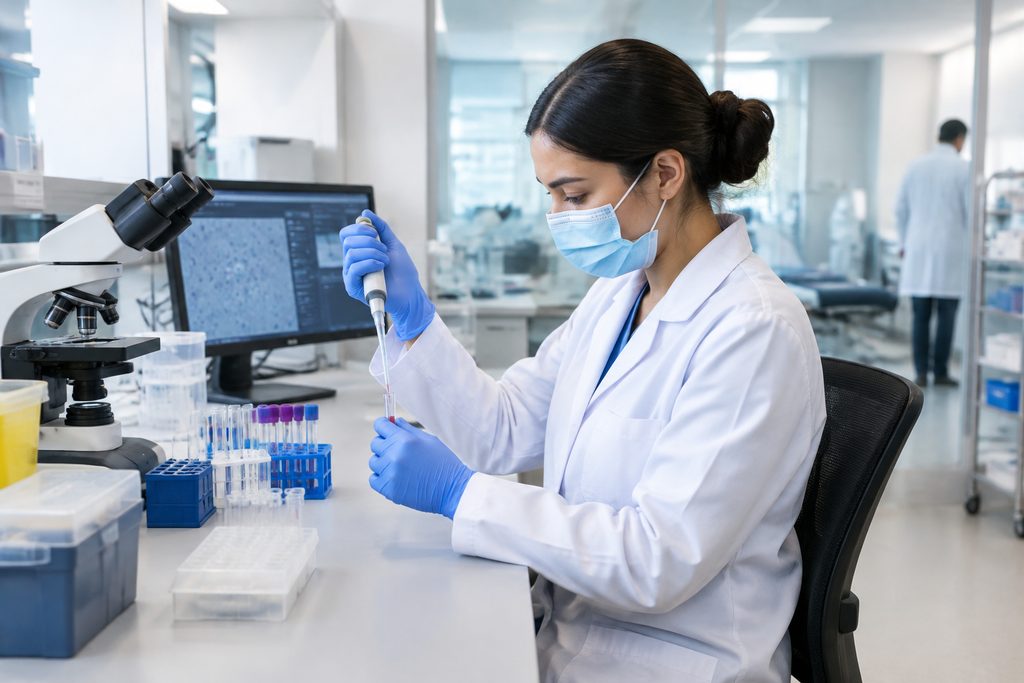
When 54-year-old Daniel received his bloodwork results from a clinic in Southeast Asia, the numbers looked alarming. His liver enzymes were elevated. His cholesterol panel suggested immediate intervention. But something felt off. The report header listed a laboratory name he could not find in any registry. The phone number rang to a disconnected line. Daniel had just spent $400 on tests that may never have been performed by a real diagnostic facility. He is not alone. A 2023 report from the World Health Organization estimated that up to 40% of medical devices and diagnostic equipment in low- and middle-income countries are unregulated or counterfeit. The question every patient should ask before trusting a result: is the lab that ran your test genuine?
Key Takeaways
- Accreditation is the single strongest signal of lab legitimacy — look for ISO 15189, CAP, or JCI certification.
- China’s top-tier hospital labs process enormous daily volumes, which drives both technical proficiency and strict external oversight.
- Fraudulent labs often use fabricated names, missing license numbers, and unrealistically fast turnaround times.
- You can verify a lab’s credentials through public databases before accepting any result as valid.
The Problem: Diagnostic Fraud Is More Common Than Patients Realize
Approximately 1 in 6 medical tests ordered worldwide produce results that are either inaccurate, unverifiable, or generated by facilities with no legitimate accreditation, according to a 2022 analysis published in The Lancet Global Health. The consequences are not abstract. A wrong lab result leads to wrong treatment. Sometimes that means unnecessary medication. Other times it means a missed diagnosis that could have been caught early.
Diagnostic fraud takes several forms. Some operations are entirely fake — they collect samples and simply fabricate numbers. Others are real but unaccredited labs operating without proper quality control, using expired reagents, or employing untrained technicians. Still others are legitimate labs that subcontract work to cheaper, unregulated facilities without telling the patient. Daniel’s case fit the first category. His “lab” was a rented room with a centrifuge and a printer.
Why Accreditation Matters More Than the Lab’s Name
A genuine diagnostic laboratory is not defined by how professional its website looks. It is defined by whether an independent body has verified its technical competence. Accreditation is the difference between a lab that follows international standards and one that merely claims to.
ISO 15189: The Global Gold Standard for Medical Labs
ISO 15189 is the international standard specifically for medical laboratories. It covers everything from sample handling to staff qualifications to result reporting. A lab with ISO 15189 accreditation has been audited by an external body and found compliant. China’s National Accreditation Service for Conformity Assessment (CNAS) operates one of the largest ISO 15189 accreditation programs in the world. Top-tier Chinese hospital labs — including those at Peking Union Medical College Hospital and Ruijin Hospital — hold this accreditation and undergo regular re-assessment.
CAP and JCI: Additional Layers of Verification
The College of American Pathologists (CAP) accreditation is widely recognized in North America and increasingly in Asia. JCI (Joint Commission International) accredits entire hospitals, including their laboratory services. When you see CAP or JCI accreditation, you are looking at a facility that has passed rigorous external review. Our database of 340+ top-ranked hospitals includes institutions whose labs meet these standards.
Volume and Oversight: Why China’s Top Hospital Labs Are Different
There is a structural reason why large Chinese hospital laboratories maintain high standards. Fuwai Hospital in Beijing performs over 14,000 cardiac surgeries annually, and its laboratory processes tens of thousands of samples every day. That volume creates two things. First, technicians see rare and complex cases regularly, which sharpens diagnostic accuracy. Second, regulatory scrutiny intensifies — a lab handling that many samples cannot afford systematic errors without attracting attention from health authorities. Smaller, unaccredited labs face no such pressure and no such oversight.
How to Verify Whether the Lab That Ran Your Test Is Genuine
This is the section Daniel needed before he handed over his credit card. Verification is not complicated, but it requires a few deliberate steps. None of them take more than thirty minutes.
Step 1: Check the Accreditation Registry
Every legitimate accredited lab appears in a public database. For ISO 15189, search the CNAS directory or the accrediting body in the lab’s home country. For CAP, use the CAP online directory. For JCI, use the JCI accredited organizations search. If the lab’s name does not appear, that is a red flag. Not every good lab is accredited — some smaller facilities operate legitimately without formal certification — but the absence of any registry entry warrants caution.
Step 2: Verify the License Number
Most countries require clinical laboratories to hold a government-issued operating license. In China, that is the Medical Institution Practice License. In the United States, it is the CLIA certificate. The license number should appear on the lab’s report or website. Cross-check that number against the relevant government database. A missing or unverifiable license number is a serious warning sign.
Step 3: Look at Turnaround Time Claims
Real diagnostic testing takes time. A comprehensive metabolic panel typically requires 4 to 24 hours. Genetic sequencing can take days. If a lab promises full genomic analysis in two hours, something is wrong. Fraudulent operations often advertise impossibly fast results because they never actually run the tests.
Step 4: Confirm Physical Address and Contact
Call the lab. Visit the address on Google Maps. A genuine lab has a physical location with functioning phone lines. Daniel’s lab had neither. If the only contact is a WhatsApp number and a PO box, walk away.
What Happens When the Lab Is Not Genuine: Real Costs, Real Risks
The financial cost of a fraudulent lab is the smallest part of the damage. Daniel lost $400. Other patients lose far more. A 2021 study in BMJ Quality & Safety found that diagnostic errors — including those caused by unreliable lab results — affect approximately 12 million Americans annually. Some of those errors lead to irreversible harm.
Consider the patient who receives a false negative on a cancer screening. The test says no malignancy. The patient skips follow-up imaging. Eighteen months later, the cancer is stage IV. That is the cost of an unverified lab. Or consider the patient who receives a false positive for a cardiac marker, undergoes an unnecessary invasive procedure, and suffers complications. The lab was fake. The procedure was real.
For international patients, the risk compounds. You may be dealing with a healthcare system you do not understand, in a language you do not speak. Verifying a lab’s credentials from abroad is harder. That is why many patients choose to work with established hospital systems rather than standalone clinics of unknown provenance. The specialty departments at China’s top hospitals operate integrated laboratories under the same accreditation umbrella as the hospital itself.
Practical Considerations: Verifying a Lab Before You Travel for Treatment
If you are considering medical treatment abroad — including in China — lab verification should happen before you book a flight. Here is what that looks like in practice.
First, request the lab’s accreditation certificate and license number in writing. A legitimate facility will provide these without hesitation. If they hesitate, that is information.
Second, understand the visa requirements. For medical treatment in China, foreign nationals generally use an S2 visa, which covers short-term private affairs including medical treatment. Family members accompanying a patient also apply for S2. The hospital or coordinating service will provide supporting documentation, but approval is never guaranteed. Plan for processing time.
Third, consider payment methods. Public hospitals in China typically require prepayment for tests and procedures. International credit cards are accepted at many top-tier facilities, but transaction limits vary. Some hospitals require a deposit before testing begins. Private international hospitals often offer direct insurance billing, while public hospitals generally require you to pay first and seek reimbursement from your insurer afterward.
Fourth, language matters. A top Chinese hospital laboratory may process 10,000 samples daily, but the technicians and phlebotomists may not speak English. That is not a quality issue — it is a logistics issue. A bilingual medical companion can bridge that gap, ensuring your samples are labeled correctly and your questions are answered. Our bilingual medical companion service exists precisely for this scenario.
Quick check: Before accepting any lab result, search the lab’s name plus the word “accreditation” or “license” in the lab’s home country language. A genuine facility leaves a public paper trail.
Frequently Asked Questions
Fabricated reports often contain internal inconsistencies — reference ranges that do not match the units, test names that do not exist in standard lab catalogs, or formatting that looks copied from a template. Cross-check the lab’s name against accreditation registries. If nothing matches, do not trust the numbers.
Recovery is difficult but not impossible. If you paid by credit card, contact your issuer and dispute the charge as fraud. If you paid by wire transfer, recovery is unlikely. This is why verification before payment is the only reliable protection. Some patients also report fraudulent facilities to local health authorities, which can prevent others from being victimized.
Not always, but usually. Hospital-affiliated labs — especially those at accredited teaching hospitals — face institutional oversight, peer review, and regular external audits. Independent labs can be excellent if they hold ISO 15189 or CAP accreditation. The key variable is accreditation, not affiliation. An unaccredited hospital lab is just as risky as an unaccredited independent lab.
Your Next Step
Verifying a lab before trusting its results is not paranoia. It is basic due diligence. The question “is the lab that ran your test genuine?” should be answerable with evidence, not hope. If you are considering diagnostic testing or treatment in China, our team at China Medical Services can help you identify accredited facilities and coordinate the logistics. We are not a hospital and we do not provide diagnoses — we connect you with verified medical institutions and help you navigate the process. Request a free consultation to discuss your situation.
The core message is simple: a lab result is only as trustworthy as the facility that produced it. Verify first. Treat second. That order saves lives.
For more medical information and treatment options in China, visit chinamedservices.com (China Medical Services).
