When Does TMJ Need Surgery? Recognizing Severe Cases & Costs in China
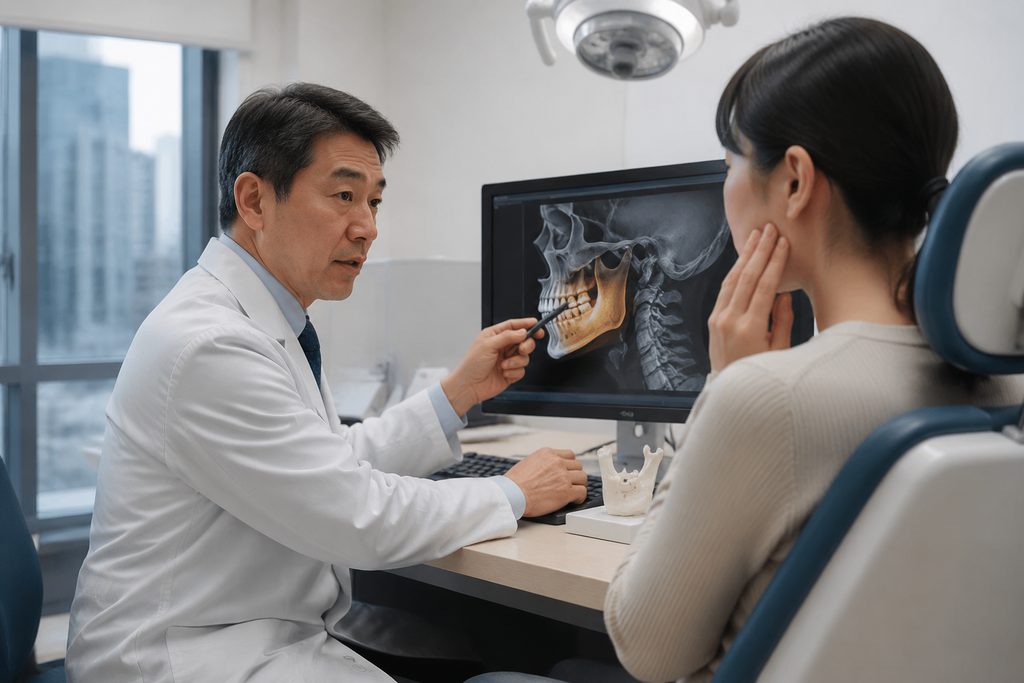
When 42-year-old Michael first heard the diagnosis, he had no idea where to start looking for treatment. His jaw locked shut during a business lunch in Frankfurt. Three months of night guards and physiotherapy later, he still couldn’t chew solid food without sharp pain radiating up to his temple. His German oral surgeon mentioned arthroscopy. The quote made him sit down. That’s when he started searching for TMJ surgery cost China — and found a different conversation entirely: not just what it costs, but when surgery is actually the right call.
Most temporomandibular joint disorders never reach an operating room. Studies suggest fewer than 5% of patients with TMD require surgical intervention. Conservative treatment — splints, physical therapy, medication, behavioral changes — resolves the majority of cases within three to six months. But for a small subset, the joint itself is structurally damaged. That’s when surgery shifts from an option to a necessity.
This article walks through the clinical thresholds, the surgical options, realistic timelines, and what international patients should know about pursuing treatment in China. We coordinate care for patients like Michael every week at China Medical Services, and the first question is rarely about price. It’s about certainty: how do I know if I need TMJ surgery?
How This Actually Works, Step by Step
The path from chronic jaw pain to a surgical decision follows a fairly predictable sequence. Understanding it helps you avoid unnecessary procedures — or unnecessary delay.
Step one: you send existing records. That means panoramic X-rays, MRI of the TMJ if available, a summary of conservative treatments already tried, and a description of your symptoms. A Chinese maxillofacial or oral surgery department reviews these. Step two: a written assessment comes back. It will tell you whether your case looks surgical or whether more conservative care is warranted first. Step three: if surgery looks plausible, a video consultation lets the surgical team see your jaw movement, hear your pain history directly, and explain what they’d recommend. Step four: you decide whether to travel for in-person evaluation and treatment.
That last step matters more in TMJ surgery than in many other procedures. No responsible surgeon will book an operation off imaging alone. The in-person exam — palpating the joint, measuring mouth opening, assessing occlusion — changes surgical plans in a meaningful percentage of cases.
When Does TMJ Surgery Actually Become Necessary?
The honest answer: when the joint is structurally broken and conservative care has failed. Not before.
Specific indicators that push a case toward surgery include documented disc displacement without reduction that hasn’t responded to six months of splint therapy and physical therapy. That’s a common one. Another is degenerative joint disease visible on MRI — condylar flattening, osteophyte formation, or bone-on-bone contact. You’ll also see surgical referral when there’s a confirmed tumor or cyst in the joint space, or when ankylosis — fusion of the joint — restricts mouth opening to under 20 millimeters. Trauma that fractured the condyle and left the bite misaligned is another clear indication.
But here’s what many patients don’t hear clearly enough: pain alone is not a surgical indication. Chronic myofascial pain, even severe pain, often improves with a combination of splint therapy, trigger point work, and medication. Surgery for pain without structural findings tends to disappoint. The best Chinese maxillofacial departments will tell you this directly. That candor is worth seeking out.
TMJ Surgery Options and What They Cost in China
TMJ surgery cost China varies widely by procedure type and hospital tier. The numbers below reflect 2025-2026 ranges at top-tier public hospitals and their international departments. They are reference points, not quotes — final pricing depends on case complexity and hospital.
| Procedure | China (USD) | United States (USD) | Notes |
|---|---|---|---|
| TMJ arthrocentesis (needle lavage) | $1,500 – $3,500 | $4,000 – $8,000 | Minimally invasive; often done under local anesthesia or sedation |
| TMJ arthroscopy | $4,000 – $8,000 | $15,000 – $30,000 | Requires specialized equipment and surgeon training |
| Open arthroplasty (disc repositioning/repair) | $6,000 – $12,000 | $25,000 – $50,000 | More invasive; longer recovery |
| Total TMJ replacement (prosthetic joint) | $18,000 – $35,000 | $60,000 – $120,000+ | Rare; reserved for end-stage disease or ankylosis |
TMJ arthroscopy price China sits at the lower end because several high-volume maxillofacial centers in Shanghai and Beijing perform these procedures regularly. Volume drives both proficiency and cost efficiency. The same logic applies to arthrocentesis — a procedure that takes under 30 minutes in experienced hands.
But price should not lead the decision. The question is TMJ surgery safe abroad deserves a careful answer. China’s top oral and maxillofacial surgery departments — particularly those ranked in the Fudan specialist reputation lists — operate at international standards. Many are JCI-accredited or follow equivalent protocols. The risk profile depends far more on surgeon experience and hospital infrastructure than on geography. A high-volume arthroscopy center in Shanghai is not inherently riskier than a low-volume community hospital in Ohio. It may be safer.
A Realistic Timeline
If you’re considering TMJ surgery in China, here’s what the calendar actually looks like. People forget the waiting steps.
| Stage | Duration | What Happens |
|---|---|---|
| Records review and written assessment | 5–10 business days | You send imaging and history; the surgical team reviews and responds |
| Video consultation scheduling | 1–3 weeks | Depends on specialist availability; top surgeons book out |
| Visa processing (S2) | 1–4 weeks | Varies by embassy; hospital invitation letter helps |
| Travel and in-person evaluation | 3–5 days | New imaging may be ordered; surgical plan confirmed or adjusted |
| Surgery scheduling | 1–4 weeks after evaluation | Depends on operating room availability and surgeon schedule |
| Post-operative follow-up in China | 1–3 weeks | Varies by procedure; arthrocentesis is days, open surgery is weeks |
| Recovery at home | 6 weeks – 6 months | Full recovery depends on procedure and adherence to physiotherapy |
Total realistic timeline from first contact to surgery: six to twelve weeks. Faster if imaging is current and the visa process moves quickly. Slower if you need new MRI scans or the specialist’s schedule is tight.
What Can Go Wrong — and What Happens Then
TMJ surgery carries real risks. Pretending otherwise helps no one.
Infection is rare but possible, particularly with open procedures. Standard treatment is antibiotics, occasionally a second washout procedure. Nerve injury — usually temporary numbness in the lower lip or cheek — occurs in a small percentage of open arthroplasty cases. Most resolve within months; a small fraction are permanent. Scar tissue can re-restrict jaw movement, which is why post-operative physiotherapy is non-negotiable. And some patients simply don’t improve as much as they hoped. The honest literature on TMJ surgery shows meaningful improvement in 70–85% of carefully selected patients. That leaves a real minority who regret the decision.
What’s the recourse? In China, high-volume centers typically include post-operative follow-up in the surgical package for a defined window. If complications arise after you return home, video follow-up is standard. Your local dentist or oral surgeon handles the day-to-day management. The key is choosing a center that doesn’t disappear after the operation. Ask about follow-up protocols before you commit.
Choosing the Right Hospital: Shanghai, Beijing, and Beyond
If you’re searching for the best hospital for TMJ surgery Shanghai, you’ll find strong options. Shanghai Ninth People’s Hospital, affiliated with Shanghai Jiao Tong University, runs one of China’s largest oral and maxillofacial surgery departments. It handles a high volume of TMJ cases annually, including arthroscopy and complex open procedures. Beijing has comparable centers — Peking University School of Stomatology and the maxillofacial department at Peking Union Medical College Hospital both carry strong reputations.
Our specialist department rankings page breaks down China’s top 10 hospitals for oral and maxillofacial surgery based on the Fudan specialist reputation list. That’s a useful starting point. But rankings tell you about reputation, not fit. A hospital that excels at oncology reconstruction may not be your best choice for a straightforward arthroscopy. The surgeon’s specific TMJ experience matters more than the institution’s overall rank.
To book TMJ surgery in Beijing, you’ll need to go through the international department or VIP channel. Standard public outpatient clinics cannot be pre-booked from overseas — you’d show up, queue, and hope for a specialist appointment. The international pathway costs more (typically 1.5–2 times standard pricing) but allows advance scheduling, English-speaking coordination, and a defined surgical timeline. That’s the tradeoff.
Practical Considerations: Records, Visa, Payment, and Follow-Up
Records first. You need current imaging — ideally within six months. MRI is the gold standard for disc position and joint effusion. Panoramic X-ray shows bony changes. Bring everything: surgical history, medications, prior splint records, physiotherapy notes. Incomplete records delay assessment.
Visa: the S2 visa covers short-term medical treatment and private affairs. Your hospital issues an invitation letter documenting the treatment purpose. Processing time varies by country — plan for two to four weeks. Family members accompanying you also apply for S2. The M visa is for commercial trade and has nothing to do with medical travel.
Payment: public hospital international departments require pre-payment for scheduled surgery. Most international insurers reimburse after the fact; direct billing is rare in public hospitals and more common in private international facilities. If you’re looking at a private option like Jiahui or United Family, direct billing may be available. Our private international hospitals guide explains the difference.
Language: even in international departments, the surgical team may speak limited English. A bilingual medical companion handles registration, payment, pre-op instructions, and post-op discharge coordination. It’s not a luxury — it’s the difference between a smooth process and a stressful one.
Follow-up at home: your local dentist or oral surgeon should be briefed before you travel. Chinese hospitals provide discharge summaries in English on request. Physiotherapy protocols for TMJ surgery are straightforward — most patients can follow them at home with periodic video check-ins.
Frequently Asked Questions
You need a structural diagnosis — disc displacement without reduction, degenerative joint disease, ankylosis, tumor, or trauma-related deformity — plus documented failure of conservative treatment for at least three to six months. Pain alone is not enough. Get imaging and a surgical consultation before deciding.
At high-volume centers with experienced maxillofacial surgeons, the risk profile is comparable to any developed country. The key variables are surgeon case volume and hospital infrastructure, not geography. Ask directly how many TMJ arthroscopies the surgeon performs annually. A number under 20 per year is a red flag.
Two or three small incisions in front of the ear. A camera enters the joint space. The surgeon can lavage inflammatory debris, release adhesions, or reposition a displaced disc. It’s typically outpatient or one-night observation. Recovery is measured in weeks, not months.
Most international insurers treat TMJ surgery as medically necessary when structural indications are documented. You’ll likely pay upfront and submit for reimbursement. Confirm coverage before booking — some policies exclude TMJ procedures entirely or require pre-authorization.
No responsible surgeon will operate without an in-person evaluation. You can complete the records review and video consultation remotely, but you’ll need to travel for examination and imaging before a surgical date is confirmed. That’s standard practice, not a bureaucratic hurdle.
Your Next Step
TMJ surgery is a serious decision that should follow a serious evaluation. If your jaw pain has resisted conservative treatment and imaging shows structural damage, the surgical path may be right for you. China offers high-volume surgical expertise at a fraction of Western prices — but only if you choose carefully.
Our team at China Medical Services coordinates the full process: records review with top maxillofacial departments, video consultations, visa guidance, and on-the-ground support in Beijing, Shanghai, and 35 other cities. We don’t perform surgery and we don’t make medical decisions. We make the system navigable. If you want to understand whether your case warrants surgical evaluation, start with a free consultation at our patient services page. Send your imaging. Get an honest answer. Then decide.
The right surgery at the right time can give you your jaw back. The wrong surgery — or the right surgery at the wrong time — can make things worse. The difference is evaluation. Start there.
For more medical information and treatment options in China, visit chinamedservices.com (China Medical Services).
