Tongji Hospital Wuhan: How We Arrange Your Full-Service Care for International Patients
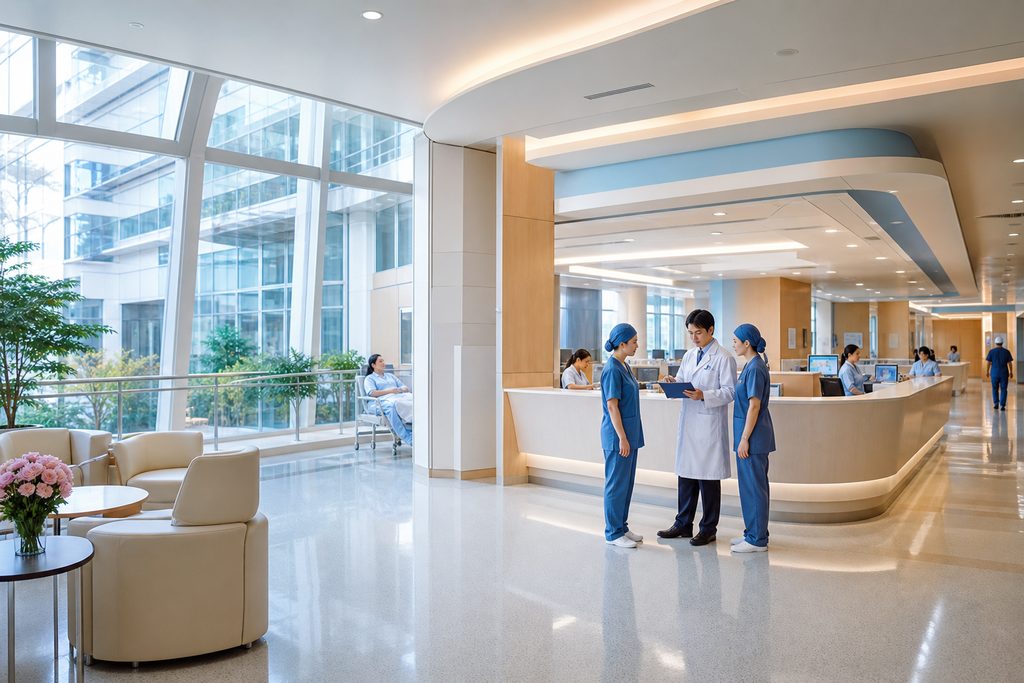
When 54-year-old Ahmed from Dubai received his cardiac diagnosis, his local cardiologist mentioned a hospital in Wuhan with outcomes that rivaled the best centers in the United States. Ahmed had never heard of Tongji Hospital. He couldn’t find a clear international patient pathway on their website. The language barrier felt insurmountable. His family wanted to know one thing: could they actually make this work, and what would the total Tongji hospital Wuhan international patient package cost look like from start to finish?
That question sits at the center of almost every inquiry our team receives. Patients find Tongji Hospital on international rankings, see the research output, read about surgical volumes that dwarf most Western institutions — and then hit a wall. No English-language admissions office. No clear pricing sheet. No obvious way to book a comprehensive health checkup at a Wuhan hospital from overseas.
The gap between Tongji’s clinical reputation and its accessibility to foreigners is exactly where we operate. This guide walks through the entire arrangement process, the real costs, the timeline you should expect, and the pitfalls that catch unprepared patients.
How This Actually Works, Step by Step
The process for arranging care at Tongji Hospital doesn’t start with booking a flight. It starts with documents. Specifically, your existing medical records.
Our team requests everything you have: imaging reports, pathology slides, blood work, surgical notes, current medication lists, and your treating physician’s summary. We translate these into Chinese — not machine translation, but medical-grade translation handled by bilingual staff who understand clinical terminology. A poorly translated oncology report can misstate tumor staging. That error cascades through every subsequent recommendation.
Once your records are prepared, we submit them through Tongji Hospital’s International Medical Center. This is the dedicated gateway for foreign patients. The center reviews your case and determines which department or specialist is appropriate. For complex cases involving multiple conditions — say, a patient with both cardiac and renal issues — the review may involve two or three department heads before a preliminary opinion is issued.
That preliminary opinion arrives as a written assessment. It typically covers whether Tongji can treat your condition, what the recommended approach would be, and whether you need to travel for an in-person evaluation before any surgical scheduling can occur. Some patients receive a clear “yes, we can treat this, here’s the plan.” Others get a more cautious “we need to see you in clinic first.”
This step is where many patients misunderstand the system. Tongji Hospital, like all Chinese public hospitals, cannot guarantee a surgery date or hospital bed based solely on remote review. The in-person consultation remains mandatory for any procedure requiring admission. What the preliminary opinion does is confirm that traveling to Wuhan is worthwhile — that the hospital has the capability and willingness to treat your specific condition.
After you arrive, our bilingual medical companion meets you at the hospital entrance. They handle registration, queue management, payment deposits, and translation during every doctor interaction. A single day at Tongji can involve visits to three different floors for blood draws, imaging, and specialist consultations. Without someone who knows the layout and speaks the language, a 3-hour visit easily becomes an 8-hour ordeal.
Understanding the Real Tongji Hospital Wuhan International Patient Package Cost
Let’s address the financial question directly. The Tongji hospital Wuhan international patient package cost varies dramatically based on what you need. A comprehensive executive health screening runs between $800 and $2,500 depending on the depth of testing. A complex cardiac surgery through the international department typically falls between $18,000 and $35,000. These figures include hospital fees, surgeon charges, standard ward accommodation, and basic medications.
Compare that to U.S. pricing. Coronary artery bypass grafting at a major American hospital averages $120,000 to $180,000. At Tongji, the same procedure through the international wing costs roughly one-fifth of that. Orthopedic surgeries show similar ratios. A total hip replacement that runs $40,000 to $60,000 in the United States costs $8,000 to $15,000 at Tongji.
But the surgical fee is only part of the picture. Patients must also account for pre-operative testing, which is billed separately. Post-operative rehabilitation, if needed, adds another layer. Extended hospital stays beyond the standard recovery period incur daily room charges. And none of this includes our coordination fees.
Our service pricing follows a transparent structure. Bilingual medical companion services start from $300 per day. Hospital appointment coordination starts from $300. For patients wanting a written second opinion from a Tongji specialist before committing to travel, that costs between $300 and $500. A video consultation with a top specialist ranges from $500 to $800.
There’s a mechanism that makes this more palatable. Any consultation fee you pay — whether for a written second opinion or a video consultation — is credited in full toward our on-the-ground coordination service if you proceed with treatment within 90 days. It’s a one-time credit applied to coordination fees only, never to hospital treatment charges. This means your initial investment in evaluating Tongji as an option isn’t lost if you decide to move forward.
A Realistic Timeline
Timelines matter. Patients often underestimate how long each phase takes and then scramble when their visa window tightens. Here is what a typical journey looks like, from first inquiry to walking through Tongji’s doors.
| Phase | What Happens | Typical Duration |
|---|---|---|
| Week 1–2 | Document collection and medical translation | 7–14 days |
| Week 3–5 | Case submission to Tongji International Medical Center; specialist review | 10–21 days |
| Week 5–6 | Receive preliminary opinion; patient decides whether to proceed | 3–7 days |
| Week 6–10 | S2 visa application (varies by embassy) | 2–4 weeks |
| Week 10–11 | Travel to Wuhan; in-person consultation and pre-operative testing | 3–5 days |
| Week 11 onward | Surgery scheduling and admission (depends on bed availability and surgeon schedule) | 1–3 weeks from consultation |
The waiting periods that surprise most patients: specialist review time and the gap between in-person consultation and actual surgery. Tongji’s top surgeons operate on packed schedules. A department head might only perform certain complex procedures on two days per week. If your consultation falls on a Wednesday and the next available surgical slot is 12 days later, that’s just how the calendar works. No amount of coordination can manufacture an operating room slot that doesn’t exist.
Visa processing adds another variable. The S2 visa — the correct category for short-term medical treatment in China — requires an invitation letter from the hospital, proof of accommodation, and a detailed treatment plan. Embassy processing times range from four days in some countries to four weeks in others. We provide the documentation package, but we cannot control how quickly a consulate processes it.
What Can Go Wrong — and What Happens Then
Honesty about failure modes is where trust gets built or broken. Here are the real things that derail Tongji Hospital arrangements.
The preliminary opinion comes back negative. Sometimes the specialist review determines that your condition isn’t suitable for treatment at Tongji, or that the expected outcome doesn’t justify international travel. This happens in roughly 10 to 15 percent of cases we submit. When it does, we have two paths. First, we can submit your case to an alternative hospital in our network — perhaps West China Hospital in Chengdu or Ruijin Hospital in Shanghai, depending on your condition. Second, if no Chinese hospital is appropriate, we tell you directly and refund any coordination fees paid for services not yet rendered. We don’t push patients toward treatment that doesn’t make clinical sense.
Your condition changes between submission and travel. A patient with a stable cardiac condition might experience progression during the 8-week waiting period. If new symptoms or test results emerge, we pause the process and resubmit updated records. This resets the review timeline. It’s frustrating, but proceeding with outdated clinical information is dangerous.
The in-person evaluation reveals complications not visible in your overseas records. Imaging quality varies enormously between countries. A CT scan performed on older equipment in one country might miss small lesions that Tongji’s newer machines detect. When this happens, the treatment plan changes — sometimes modestly, sometimes significantly. The surgeon might recommend a different approach, additional pre-operative preparation, or even a staged procedure instead of a single surgery. We’ve seen patients arrive expecting a 5-day hospital stay and learn they need a 14-day admission with more extensive intervention.
Bed unavailability delays admission. Tongji Hospital runs at extremely high occupancy. The international wing has dedicated beds, but they’re finite. During peak periods — particularly the weeks surrounding Chinese national holidays — bed availability tightens. We can’t guarantee a specific admission date. We can tell you the current situation and work with the international center to secure the earliest possible slot.
Is Tongji Hospital Good for Complex Surgery? Evaluating the Evidence
Patients researching whether they should trust a hospital on the other side of the world with a major procedure often ask a version of the same question: is Tongji hospital good for complex surgery, really?
The evidence says yes, with specifics that matter.
Tongji Hospital, affiliated with Huazhong University of Science and Technology, consistently ranks among China’s top-tier hospitals in the Fudan University hospital rankings. It sits in the A++++ tier — the highest classification for general hospital excellence. In multiple specialty rankings, its departments appear among China’s top 10, including cardiac surgery, neurosurgery, and organ transplantation.
Volume drives competence in surgery. Tongji performs over 7,000 cardiac surgeries annually. Its neurosurgeons complete more than 5,000 procedures each year. These numbers exceed what most Western hospitals achieve. A surgeon who performs 300 mitral valve repairs annually simply has different muscle memory than one who performs 30.
The hospital houses 5,000 inpatient beds and treats over 6 million outpatient visits per year. That scale creates clinical exposure that’s hard to replicate elsewhere. Rare presentations become familiar. Unusual complications get encountered often enough that protocols exist.
For international patients specifically, Tongji’s International Medical Center provides a parallel infrastructure. It’s not just a translation desk. It’s a separate registration system, dedicated consultation rooms, priority scheduling for imaging and lab work, and English-speaking nursing staff on designated floors. The international pathway costs more — typically 1.5 to 2 times the standard public rate — but it removes the chaos that defines the general outpatient experience at any Chinese mega-hospital.
That chaos is real and worth acknowledging. The standard public outpatient halls at Tongji see thousands of patients daily. Queues form before dawn. Signs are in Chinese. Directions are shouted across crowded corridors. A foreign patient attempting to navigate this alone would find it nearly impossible. The international center exists precisely because the hospital recognizes that overseas patients need a different entry point.
Practical Considerations: Records, Visa, Payment, and Follow-Up
Medical records require attention before submission. Tongji’s specialists need original imaging data, not just written reports. If your MRI was performed in Germany, they want the DICOM files on a CD or USB drive. If your pathology was read in Saudi Arabia, they want the slides available for re-examination. Chinese specialists frequently re-read imaging themselves rather than relying on outside interpretations. This isn’t distrust — it’s standard practice at top-tier hospitals worldwide. Bring everything.
The S2 visa is the correct category for medical treatment stays under 180 days. Your accompanying family member also applies for an S2. The hospital provides an official invitation letter and treatment confirmation that serve as supporting documents. We guide you through the application package, but the visa decision rests entirely with the Chinese embassy or consulate in your country. Approval rates for well-documented medical visa applications are high, but not 100 percent.
Payment at Tongji’s international center works on a deposit system. You pay an initial deposit upon registration — typically $3,000 to $5,000 for outpatient evaluation, $10,000 to $20,000 for surgical admission. Additional deposits may be requested as treatment progresses. The hospital provides itemized billing. Most international patients pay out of pocket and seek reimbursement from their home-country insurance afterward. Tongji does not direct-bill foreign insurance companies. If your insurer requires pre-authorization, secure it before traveling.
Language barriers persist even within the international center. Doctors in the international wing generally speak functional medical English. Nurses have variable English proficiency. Administrative staff may have limited English. Our bilingual companion fills these gaps — translating during rounds, explaining medication instructions, and handling billing conversations. Patients who arrive without language support consistently report higher stress and more misunderstandings about their care.
Follow-up after returning home presents a challenge. Tongji’s specialists can provide written discharge summaries and recommendations for your local physician. Video follow-up consultations can be arranged. But if a surgical complication emerges months later, you’re relying on your home-country medical system to manage it. This isn’t unique to Tongji or China — it’s the inherent limitation of any cross-border medical care. Choose procedures with well-established post-operative courses and low long-term complication rates if you’re traveling internationally for surgery.
Frequently Asked Questions
What does the Tongji hospital Wuhan international patient package cost include, and what’s excluded?
The hospital charges cover your surgical procedure, standard ward accommodation, routine medications during admission, and basic nursing care. Excluded items include pre-operative outpatient testing, upgraded private rooms, specialized medications sourced from outside the hospital formulary, post-discharge rehabilitation, and any complication management requiring extended stay. Our coordination fees are separate and cover document translation, case submission, appointment scheduling, bilingual companion services, and logistical support. A typical all-inclusive budget for a major surgery runs $25,000 to $45,000.
How does Tongji hospital arrange medical treatment for foreigners who don’t speak Chinese?
Tongji’s International Medical Center is the designated entry point. Foreign patients register there, not at the general outpatient hall. The center assigns English-capable coordinators and schedules consultations with specialists who have international experience. Nursing staff on international floors receive additional language training. However, the hospital does not provide full-time interpreters for individual patients. Our bilingual companions fill this role, staying with you throughout consultations, procedures, and recovery to ensure nothing gets lost in translation.
Can I book a comprehensive health checkup at a Wuhan hospital before committing to surgery?
Yes, and many patients do exactly this. Tongji’s International Medical Center offers executive health screening packages ranging from basic ($800) to comprehensive ($2,500). These include blood panels, cardiac testing, abdominal ultrasound, chest imaging, and specialist consultations based on findings. A health checkup serves double duty: it provides baseline data for surgical planning and gives you firsthand experience with the hospital before committing to a procedure. You meet the staff, see the facilities, and assess your comfort level.
Why should I consider Tongji when Beijing and Shanghai have more internationally known hospitals?
Tongji offers clinical outcomes equivalent to top Beijing and Shanghai institutions at costs that are typically 15 to 25 percent lower. Wuhan’s cost of living is significantly below China’s Tier 1 cities, which translates to lower hospital fees and cheaper accommodation for accompanying family. For patients from the Middle East, Southeast Asia, and South Asia, Wuhan’s central location also means shorter flight times than Beijing. The trade-off is that Wuhan has fewer English-speaking amenities outside the hospital. Restaurants, hotels, and transportation require more navigation support.
What happens if I need emergency care after returning to my home country?
This is the hardest question in cross-border medicine. Tongji’s surgeons can provide your local physician with detailed operative notes and recommendations. Video consultations can be arranged for non-urgent questions. But for an acute post-operative emergency — a surgical site infection, a sudden complication — you will depend entirely on your local healthcare system. There is no mechanism for Tongji to intervene remotely in an emergency. This is why we emphasize that international surgical travel works best for elective procedures with predictable recovery courses, not for conditions requiring intensive long-term monitoring.
Your Next Step
Arranging care at Tongji Hospital Wuhan is entirely possible. Thousands of international patients do it annually. But the pathway requires preparation, realistic expectations about timelines, and acceptance that some variables — surgical scheduling, bed availability, visa processing — remain outside anyone’s control.
Our team at China Medical Services handles the coordination burden. We translate records, submit cases through the correct channels, arrange bilingual companions, and guide you through visa documentation. We do not practice medicine, we do not guarantee clinical outcomes, and we do not promise admission dates that the hospital hasn’t confirmed.
If you’re considering Tongji Hospital for your care, start with a conversation. Tell us about your diagnosis, send your records, and let us determine whether a preliminary review makes sense. There’s no cost for the initial consultation, and no obligation to proceed. You’ll come away with clarity about whether this path fits your situation — and if it does, we’ll handle the rest.
Schedule a free consultation to discuss your case and learn whether Tongji Hospital is the right option for your treatment.
For more medical information and treatment options in China, visit chinamedservices.com (China Medical Services).
