Tonsil Removal Cost for Adults in China: Real Prices, Top Hospitals
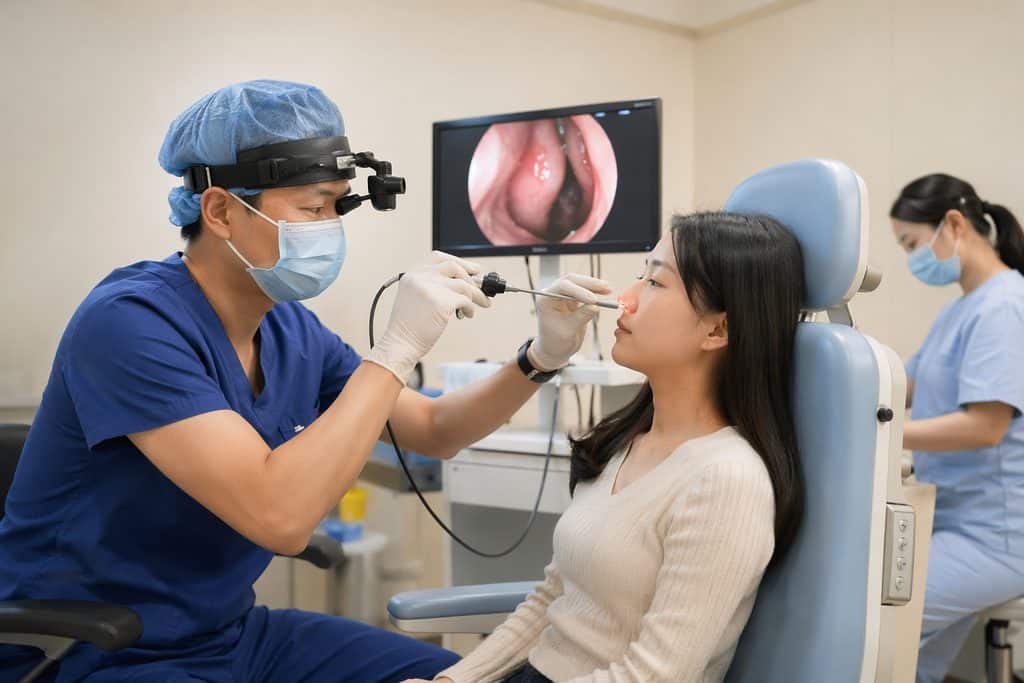
Key Takeaways
- Tonsillectomy cost China for adults typically runs $2,000–$5,000 in a top-tier public hospital and $6,000–$12,000 in a private international hospital — roughly one-fifth to one-tenth of US pricing.
- The same surgeons who handle thousands of airway cases a year work in hospitals ranked among China’s top 10 for otolaryngology (ENT) on the Fudan specialist reputation list.
- Public hospital outpatient slots cannot be booked from overseas in advance. Surgery follows an in-person consultation, and international departments or VIP channels are the realistic route for a fixed date.
- You need an S2 visa for medical treatment — not an M visa, which covers commercial and trade activity only.
Here is a number that surprises most Western patients: a 2023 analysis in JAMA Otolaryngology–Head and Neck Surgery found that the median price hospitals publish for a tonsillectomy in the United States sits above $7,000 when facility, surgeon, and anesthesia fees are combined — and that figure climbs past $12,000 at many urban centers once real billed charges are counted. In China, the same operation, performed by a surgeon at a hospital ranked in the country’s top 10 for ENT, commonly lands between $2,000 and $5,000 all-in. That gap is the reason searches for “tonsillectomy cost China for adults” have climbed steadily over the past three years.
But cost is only half the question. Adults considering tonsil removal usually have a specific reason: recurrent strep, chronic tonsillitis, sleep-disordered breathing, or a peritonsillar abscess that scared them. They want a real number, a safe hospital, and a process they can actually navigate from 8,000 miles away.
That is what this guide covers.
The Problem: Adult Tonsillectomy Is Expensive, Slow, and Often Delayed
In the United States, roughly 300,000 to 500,000 tonsillectomies are performed each year, and adults make up a growing share of that total. The American Academy of Otolaryngology–Head and Neck Surgery (AAO-HNS) has documented a clear shift: more procedures are now done for recurrent infection and obstructive sleep apnea in patients over 18, not just for children with enlarged tonsils.
The bottleneck is rarely the surgeon. It is the system around the surgeon. A 2022 survey by the American Academy of Otolaryngology found that patients in several metropolitan markets waited six to twelve weeks for a routine surgical consultation, with elective operating room time adding another four to eight weeks on top. For a working adult juggling a job and family, that is a three-month project for a procedure that takes about 30 minutes.
Cost compounds the delay. Even with insurance, a US adult tonsillectomy frequently carries $2,500 to $4,500 in out-of-pocket exposure when deductibles and coinsurance are applied. Uninsured patients face the full figure. And a meaningful number of adults fall into a coverage gap: the procedure is deemed “elective” by some plans unless a strict threshold of documented infections is met — typically seven episodes in one year, five per year for two years, or three per year for three years, per AAO-HNS criteria.
So patients wait. They take antibiotics again. They lose sleep. Some develop a peritonsillar abscess and end up in an emergency department at 2 a.m., where the bill alone can exceed the cost of the surgery they were postponing.
Why China Delivers Results for Adult Tonsil Removal
Lower cost means nothing if quality drops. So let’s deal with that objection directly.
Clinical Volume at a Scale Western Hospitals Rarely Match
China’s top-tier hospitals are enormous. A single leading ENT department at a major tertiary hospital may perform well over 2,000 tonsillectomies a year, compared with a few hundred at a typical US community hospital. High volume matters in surgery. It correlates with shorter operative times, fewer intraoperative complications, and more standardized post-operative pain protocols.
The Fudan University Hospital Rankings — China’s closest equivalent to the US News hospital rankings — evaluate hospitals across 45 specialties, including otolaryngology. The top 10 ENT hospitals on that specialist reputation list are concentrated in Beijing, Shanghai, and Guangzhou. If you want to compare centers, our department-by-department rankings page breaks down the top 10 hospitals for each specialty.
Technology and Efficiency Without the Wait
Modern tonsillectomy in China’s top hospitals uses the same techniques you would find in the US: coblation, monopolar electrocautery, and in selected cases, intracapsular tonsillotomy. Coblation — which uses low-temperature plasma to remove tissue — is widely available because it reduces post-operative pain and bleeding risk, and Chinese ENT departments adopted it early.
The operational difference is throughput. A Chinese tertiary hospital can move a patient from consultation to pre-operative labs to surgery within days, not months, once a clinical decision is made. Pre-operative workup — complete blood count, coagulation panel, ECG, chest imaging where indicated — is typically completed in a single morning.
Why the Cost Is Lower Without Cutting Corners
The price gap is structural, not a quality signal. Surgeon compensation in China is a fraction of US levels. Hospital overhead is lower. Drug and consumable procurement runs through centralized national purchasing, which has driven down the cost of many surgical supplies. Anesthesia fees, operating room time, and a multi-day inpatient stay are all priced on a national fee schedule rather than negotiated per insurer.
None of that changes the skill of the person holding the instrument. It changes the invoice.
| Cost Component | Top Public Hospital in China | Private International Hospital in China | Typical US Hospital |
|---|---|---|---|
| Surgeon fee | $600–$1,200 | $2,000–$4,000 | $2,000–$4,500 |
| Anesthesia | $300–$600 | $800–$1,500 | $1,500–$3,000 |
| Operating room & facility | $500–$1,200 | $1,500–$3,000 | $3,000–$6,000 |
| Inpatient stay (2–3 nights) | $400–$900 | $1,500–$3,500 | $2,000–$5,000 |
| Pre-op labs & imaging | $150–$400 | $400–$900 | $500–$1,500 |
| Estimated total | $2,000–$5,000 | $6,000–$12,000 | $9,000–$20,000+ |
These are ranges. Final pricing varies by hospital, city, technique, length of stay, and case complexity — and any hospital quote should be confirmed in writing before you travel.
How Much Does Tonsil Surgery Cost in China? Breaking Down the Real Numbers
City matters. Beijing and Shanghai run 15–30% higher than Chengdu, Wuhan, or Xi’an for the same procedure, largely because of demand and the concentration of top-ranked specialists. A coblation tonsillectomy at a leading Shanghai hospital might total $3,500, while the equivalent at a strong tertiary hospital in Chengdu could come in near $2,400.
Technique matters too. Cold-steel dissection is cheapest. Coblation adds $300–$800 but is often worth it for adult pain control. Intracapsular tonsillotomy — which leaves a thin rim of tonsil tissue and dramatically reduces post-operative bleeding — is increasingly offered for adults with obstructive symptoms rather than recurrent infection.
Length of stay is the wild card. Most Chinese hospitals keep adult tonsillectomy patients two to three nights for observation, since delayed bleeding risk peaks between days 5 and 10 but early bleeding can occur within 24 hours. Private international hospitals sometimes discharge after one night at a higher per-night rate.
If you are weighing whether to pursue treatment in China at all, our overview of China’s top-ranked hospitals by city is a useful starting point for matching a facility to your condition and travel preferences.
Best Hospital in Shanghai for Tonsil Removal — and How to Choose Anywhere
Shanghai consistently places multiple hospitals on the Fudan ENT specialist reputation list, and it is the most common first stop for international patients because of flight connections, hotel infrastructure, and a dense concentration of English-capable international departments. Beijing offers comparable depth with a different hospital mix. Guangzhou anchors the south.
When patients ask about the best hospital in Shanghai for tonsil removal, the honest answer is that “best” depends on your specific case. Here is how to evaluate any center, in China or anywhere:
- Annual tonsillectomy volume. Ask directly. A department doing 1,000+ per year has standardized protocols for pain control and bleeding management.
- Coblation availability. Not every hospital stocks the equipment. If pain control matters to you, confirm it before committing.
- International department or VIP channel. This is the difference between a bookable appointment and a same-day queue. International departments provide English-speaking coordinators and pre-scheduled slots.
- Post-operative bleeding protocol. The single most important safety question. Ask what happens if you bleed on day 7 — is there a 24-hour ENT on call, and can you return without re-registering?
- Discharge instructions in English. Sounds trivial. It is not, when you are managing pain medication and diet restrictions alone in a hotel.
Private international hospitals — the JCI-accredited facilities with English-speaking staff and direct insurance billing — are another category entirely. They cost more but remove nearly all friction. Our guide to private international hospitals in China covers which ones accept international insurance and how billing works.
Is Tonsil Removal Safe for Adults in China? What the Evidence Shows
Adult tonsillectomy is a safe, well-established procedure — but it is not risk-free, and anyone who tells you otherwise is selling something.
Published complication rates for adult tonsillectomy cluster around 2–4% for post-operative hemorrhage requiring intervention, with primary bleeding (within 24 hours) and secondary bleeding (days 5–10) roughly splitting that figure. Dehydration from poor oral intake is the most common reason for an unplanned return visit. Rare but serious risks include airway compromise from swelling and, very rarely, anesthetic complications.
These numbers are consistent across countries. The surgical risk profile in a Chinese tertiary hospital is comparable to that in a US academic center, because the technique, the equipment, and the training standards are comparable. What differs is the surrounding logistics — which is exactly where international patients need the most support.
One more consideration: pre-existing conditions change the calculus. Uncontrolled hypertension, bleeding disorders, and poorly managed diabetes all raise risk. Any reputable hospital will require pre-operative clearance, and you should expect it.
Practical Considerations: Visas, Payment, Records, and Follow-Up
The logistics trip up more patients than the surgery does. Here is what actually matters.
Visa. International patients traveling to China for medical treatment use the S2 visa, which covers short-stay private affairs including medical treatment, subject to the latest requirements from the Chinese embassy or consulate in your country. Accompanying family members apply under the same category. You will typically need a hospital-issued invitation or appointment confirmation letter as supporting documentation. The M visa is for commercial and trade activity and has nothing to do with medical care — do not apply for it.
Records. Bring your full history: prior throat cultures, antibiotic courses with dates, sleep study results if you have them, and any imaging. Chinese ENT surgeons work from documented evidence, and a well-organized file shortens the consultation considerably. Translated records help, though top international departments can work with English originals.
Payment. Public hospitals require prepayment or deposit before surgery; you settle the balance at discharge and claim from your insurer afterward. International credit cards are accepted at international departments, but daily transaction limits and foreign card restrictions can bite — arrange a wire transfer or bring a backup card. Private international hospitals frequently bill your insurer directly, which is a major practical advantage.
Insurance. Most US and European insurers treat overseas elective surgery as out-of-network, reimbursing a percentage after you pay upfront. Get pre-authorization in writing if your plan allows it, and keep every itemized receipt.
Follow-up. Arrange a post-operative check before you leave China, ideally at day 10 to 14, and get your operative notes and pathology report in English. Your home physician will want them.
Frequently Asked Questions
Expect $2,000–$5,000 at a top public hospital and $6,000–$12,000 at a private international hospital, against $9,000–$20,000+ in the US. The range reflects hospital tier, city, technique, and length of stay. Always confirm a written estimate before committing.
Not directly at a standard public outpatient clinic — those slots are issued on the day and require an in-person consultation before surgery is scheduled. The workable path is through a hospital’s international department or VIP channel, which can pre-arrange a consultation date. Remote video consultation with the specialty team is also possible and is often the smartest first step, since it clarifies whether surgery is even indicated before you book flights.
Yes, at accredited tertiary hospitals. Post-operative bleeding rates of roughly 2–4% match international benchmarks, and the surgical techniques used are the same ones employed in the US and Europe. Safety depends far more on your individual health status and the hospital’s post-operative protocol than on the country.
Be careful with the word “package.” Legitimate coordination covers hospital matching, appointment scheduling, medical record translation, bilingual accompaniment on consultation and admission days, and visa documentation guidance. It does not include the hospital’s surgical fees, and no service can guarantee a specific surgeon or a specific surgery date. Treat any offer that promises otherwise as a red flag.
Plan for 18 to 21 days: two to three days for consultation and pre-operative workup, two to three nights inpatient, then a minimum of 10 to 14 days locally before flying, so that any delayed bleeding can be managed in a hospital rather than in the air.
Your Next Step
The core message is simple: adult tonsillectomy in China costs a fraction of Western pricing, at hospitals with genuine ENT depth, provided you plan the logistics properly. The surgery is the easy part. The visa, the appointment, the language, and the recovery timeline are where patients get stuck.
China Medical Services is a coordination service, not a hospital. We do not diagnose, and we do not perform surgery. What we do is connect international patients with 340+ top-ranked hospitals across 37 cities, arrange written second opinions and video consultations with the relevant specialty team, and support the practical side of treatment in China when a patient decides to travel. A good starting point is a remote consultation, which clarifies whether surgery is appropriate before you commit to anything larger.
If you would like to understand your options, you can start with a free consultation — no obligation, no pressure, just a clear picture of what is realistic for your case.
This article is for general information only and does not constitute medical advice. Treatment decisions should always be made with a qualified physician who has reviewed your individual history.
For more medical information and treatment options in China, visit chinamedservices.com (China Medical Services).
