Transport: Bundled With Your Companion for Medical Travel to China
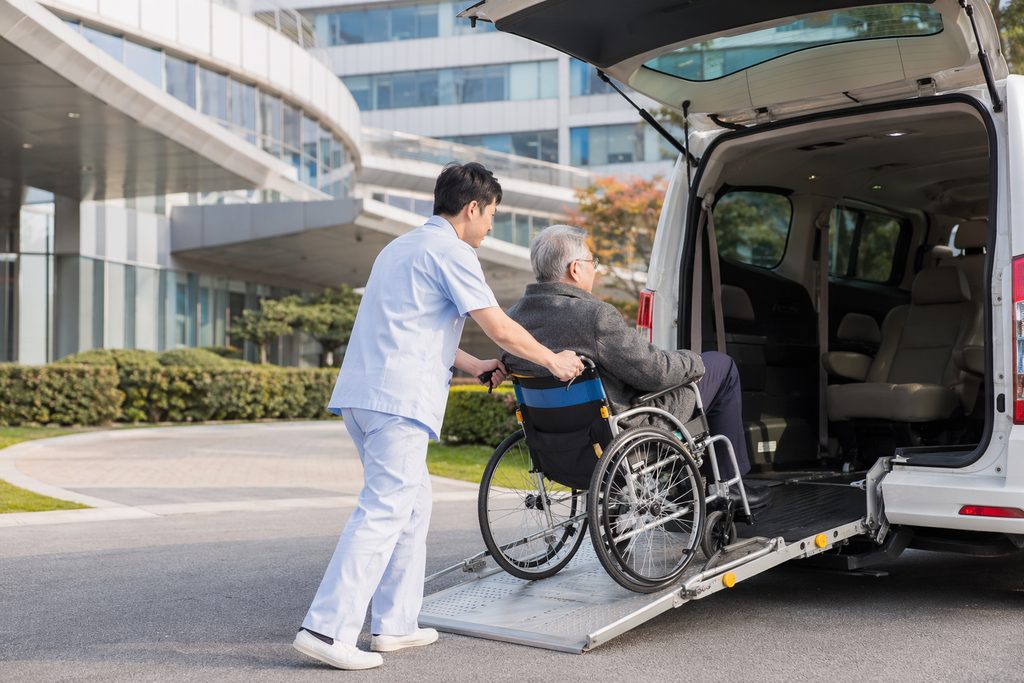
Transport: Bundled With Your Companion for Medical Travel to China
Key Takeaways
- A medical travel package with companion China typically bundles airport pickup, hospital transfers, and bilingual accompaniment — but rarely includes airfare itself.
- Companion travel adds roughly 30–50% to the non-medical cost of a trip, yet most patients report it is the single highest-value expense they incur.
- Chinese public hospitals do not provide inpatient companions the way Western hospitals sometimes do; a family member or hired companion handles meals, pharmacy runs, and communication.
- You need to clarify exactly what “bundled” means before paying — some coordinators bundle transport, others bundle only hospital navigation, and the difference matters.
When a patient travels to China for surgery, the word “transport” rarely means just the flight. It means the ride from Pudong Airport to a hotel near Huashan Hospital at 11 p.m. It means finding the right building among 12 outpatient towers. It means knowing which elevator goes to the international ward. A medical travel package with companion China is designed to remove that entire layer of friction — but only if you understand what is actually bundled, what is not, and what you are paying for.
Most international patients underestimate the logistical load of a medical trip. You are not booking a vacation. You are coordinating a hospital admission, a caregiver, a recovery plan, and a foreign city — often while in pain. That is why the companion component matters as much as the medical component. And that is why transport, when bundled correctly, is the difference between a chaotic first 48 hours and a calm one.
The Problem: Medical Travel Logistics Are Heavier Than Patients Expect
Roughly 14 million people cross borders for medical care each year, according to the Medical Tourism Association. A significant share travel with a spouse, adult child, or sibling. Yet very few of them have planned for what happens after the plane lands.
Consider a patient flying from London to Shanghai for orthopedic surgery. They land at PVG at 10:40 p.m. They have a printed hospital address in Chinese characters. They do not speak Mandarin. Their phone has no local SIM. The taxi queue is 40 minutes deep. And their surgery consultation is at 8:00 a.m. the next morning.
That scenario is not unusual. It is the default.
Now imagine the same patient with a bilingual companion waiting at arrivals, holding a sign, with a pre-booked vehicle, a wheelchair if needed, and a hotel reservation already confirmed. Same flight. Same hospital. Completely different experience.
That is what bundling transport with a companion actually means. Not a luxury. A load-bearing service.
Why a Medical Travel Package With Companion China Delivers Results
Clinical Navigation Requires Local Knowledge
China’s top hospitals are enormous. Fuwai Hospital in Beijing performs over 14,000 cardiac surgeries annually — more than any other center globally. Its outpatient volume exceeds 10,000 patients per day. A foreign patient walking into that environment without a Chinese-speaking guide will lose hours simply finding the right registration window.
A companion who knows the hospital layout, the payment counters, the pharmacy locations, and the imaging department sequence can compress what would take a solo patient most of a day into under two hours. That time matters when you are fasting for labs or recovering from a procedure.
Transport in Chinese Cities Is Not Like Transport in Western Cities
Ride-hailing apps work well in China — if you have a local payment method and a functioning phone number. But hospital-adjacent traffic in Shanghai, Beijing, and Guangzhou is notoriously congested. A driver who does not know which gate serves the international department can circle for 20 minutes while you wait on a curb with surgical drains.
Bundled transport typically means a dedicated vehicle with a driver familiar with hospital access points. It means the companion confirms pickup locations in Chinese, tracks flight delays, and adjusts schedules when a consultation runs 90 minutes over.
That is not a taxi service. That is operational continuity.
Cost Is Transparent When Bundled — Opaque When Improvised
Let us be direct about numbers. A bilingual medical companion in China typically costs from $300 per day. Airport transfer runs about $200 round-trip. A written second opinion from a top specialist costs $300–500. A top-specialist video consultation costs $500–800.
When you improvise — hailing taxis, hiring translators ad hoc, paying a hotel concierge to call hospitals — the costs scatter. You lose track. And you lose time.
Bundling forces clarity. You see the line items. You know what the companion does and does not cover. You can budget.
What “Bundled Transport” Actually Includes — Item by Item
Here is where patients get confused. One coordinator’s “bundle” is another’s “basic package.” Before you compare quotes, understand the common components.
| Bundle Component | Typically Included? | Typical Cost Range (USD) | Notes |
|---|---|---|---|
| Airport pickup and drop-off | Yes — usually round-trip | $200 (round-trip) | Includes driver, parking, meet-and-greet |
| Hospital transfers (hotel ↔ hospital) | Sometimes — often per-trip | $15–30 per trip | Varies by city and distance |
| Bilingual companion (half-day, 4 hours) | Often included in base package | from $150 | Covers registration, payment, translation |
| Bilingual companion (full-day, 8 hours) | Sometimes — depends on package tier | from $300 | Recommended for surgery admission day |
| Hotel booking assistance | Usually included | No fee (hotel cost separate) | Companion can recommend hospital-adjacent options |
| Visa document preparation | Sometimes included | Varies | S2 visa support letters, hospital invitation documents |
| Airfare | Almost never included | Varies by origin | Patients book their own flights |
| Hospital treatment charges | Never included | Varies by procedure | Paid directly to hospital |
Read the table carefully. The most common misunderstanding is assuming airfare is bundled. It is not. The second most common is assuming the companion is available 24/7. Most packages define clear hours.
Does Medical Tourism Include Caregiver Travel? What the Industry Actually Covers
The short answer: sometimes, but not automatically. The longer answer requires understanding how medical travel packages are structured.
Most facilitators price per patient. The companion — spouse, adult child, sibling — is treated as an add-on. That add-on typically includes the same airport transfers, the same hotel booking support, and the same hospital navigation. But it does not include the companion’s airfare, meals, or personal expenses.
Some packages explicitly bundle the companion’s ground transport with the patient’s. That is the model we recommend. It means one vehicle, one schedule, one point of contact. When the patient is admitted, the companion uses the same transport to return to the hotel, run errands, or pick up prescriptions.
Why does this matter? Because splitting transport creates two logistical streams. The patient goes to imaging while the companion waits at the pharmacy. The patient is discharged while the companion is at the bank. Bundling keeps both people on one timeline.
How to Arrange Companion for Surgery Abroad — Without Losing Your Mind
Arranging a companion for surgery abroad is not one decision. It is a sequence of decisions. Here is the order that works.
Step 1: Decide who travels. If you are the patient, you need someone who can advocate for you when you are sedated, confused, or in pain. That person needs a valid passport, the ability to take leave from work, and — ideally — emotional steadiness under pressure.
Step 2: Confirm the hospital’s companion policy. Chinese public hospitals vary. Some international wards allow one overnight companion. Others do not. Some provide a fold-out cot; others expect the companion to book a nearby hotel. Ask before you fly.
Step 3: Get the visa right. Both the patient and the companion apply for an S2 visa, which covers short-term private affairs including medical treatment. Stays exceeding 180 days require an S1 visa. The companion should carry a copy of the hospital’s invitation letter and the patient’s medical records.
Step 4: Bundle transport explicitly. When you book a service package, ask: “Does this include my companion’s airport transfer and hospital transport, or is that separate?” If separate, ask for the add-on price.
Step 5: Define the companion’s daily role. A companion is not a nurse. They are not a translator for every conversation. They handle logistics: meals, medications, phone calls, payment counters, and communication with the coordination team.
Spine Surgery Package With Companion Shanghai: A Realistic Cost Picture
Shanghai is one of the most popular destinations for international spine surgery. The city hosts several Fudan-ranked orthopedic centers, and the cost advantage versus the United States is substantial. A lumbar fusion that might cost $80,000–120,000 in the US typically runs $25,000–40,000 in a top Shanghai hospital, depending on implants and case complexity.
But what does the non-medical side cost?
Let us build a realistic 14-day spine surgery package with companion in Shanghai:
| Line Item | Patient Cost | Companion Cost | Notes |
|---|---|---|---|
| Round-trip airport transfer | $200 | Included in same vehicle | One booking, two passengers |
| Bilingual companion (10 days, half-day) | from $1,500 | Included | Covers hospital navigation, translation, errands |
| Hotel near hospital (13 nights) | $800–1,300 | Shared room | Hospital-adjacent options recommended |
| Hospital transfer per trip | $15–30 | Included | Approximately 8–10 trips during stay |
| Meals (14 days) | $300–500 | $300–500 | Local food is affordable; hotel breakfast often included |
| Visa fees (S2, per person) | $140–180 | $140–180 | Varies by nationality and consulate |
| Airfare (round-trip, economy) | $800–1,500 | $800–1,500 | Varies by origin and season |
Total non-medical cost for patient and companion: roughly $4,000–6,500, excluding airfare. The companion’s share is typically $2,000–3,000 of that. Not trivial. But when measured against the $50,000–80,000 saved on the surgery itself, it is a rounding error.
And the value is not just financial. A patient recovering from spinal fusion cannot bend, lift, or twist for weeks. Having a companion who can handle luggage, pharmacy runs, and hotel check-ins is not optional. It is the recovery plan.
Can My Companion Stay With Me in Chinese Hospital? The Honest Answer
This is one of the most frequently asked questions we receive. And the honest answer is: it depends on the hospital, the ward, and the room type.
Private international wards in Shanghai and Beijing often permit one overnight companion. The room may include a sofa bed or a fold-out cot. Some hospitals charge a small nightly fee for the companion — typically $15–30. Others include it in the room rate.
Public general wards are different. Many do not allow overnight companions at all. Visiting hours are restricted, often to a few hours in the afternoon and evening. The companion stays at a nearby hotel and returns during permitted hours.
This is not a policy designed to be unfriendly. Chinese public hospitals run at extraordinary scale. A single ward floor may have 60 beds. Adding companions overnight creates crowding, infection risk, and disruption. The system is built around nursing staff, not family caregivers.
So if having your companion stay overnight matters to you — and for many patients it does — you need to specify that requirement before choosing a hospital. It may push you toward an international ward or a private hospital. That choice has cost implications. Know them in advance.
Practical Considerations: Documentation, Payment, and Follow-Up
For a typical 10–14 day stay, expect $4,000–6,500 in non-medical costs for two people, excluding international airfare. That includes hotel, meals, local transport, companion service, and visa fees. The companion’s share is usually $2,000–3,000.
This happens more often than patients expect. If your companion cannot travel, you have two options: proceed alone with a hired bilingual companion (from $300 per day), or reschedule the entire trip. Most hospitals will reschedule a consultation once without penalty if you notify them at least a week in advance. Surgery dates are harder to move.
Yes. In fact, we strongly recommend it. The companion should be present for every consultation, taking notes and asking questions you may forget. A bilingual companion can translate in real time. If you have hired a companion, they handle interpretation so your family member can focus on you.
Chinese cities are generally very safe for foreign visitors, including solo travel. Violent crime is rare. The main challenges are language and payment. If your companion does not speak Mandarin, they should carry the hotel’s business card, use a translation app, and set up mobile payment before leaving the hotel.
Your Next Step
Frequently Asked Questions
Is it safe to have surgery in China?
Yes. The hospitals used for international patients are JCI-accredited and follow the same international safety standards as top hospitals in the US and Europe. Surgical teams perform high volumes of procedures — often more than their Western counterparts — which studies show leads to better outcomes.
How much does medical treatment cost in China?
Costs vary by procedure and hospital, but international patients typically save 40-80% compared to US prices — even when factoring in travel and accommodation. A consultation with our team will give you an exact, all-inclusive quote with no hidden fees.
How do I start the process?
Send us your existing medical reports to get started. We handle everything from hospital selection and appointment scheduling to visa assistance and post-operative recovery planning. Your medical records are reviewed by the specialist before you even book a flight.
Yes. The hospitals used for international patients are JCI-accredited and follow the same international safety standards as top hospitals in the US and Europe. Surgical teams perform high volumes of procedures — often more than their Western counterparts — which studies show leads to better outcomes.
Costs vary by procedure and hospital, but international patients typically save 40-80% compared to US prices — even when factoring in travel and accommodation. A consultation with our team will give you an exact, all-inclusive quote with no hidden fees.
Send us your existing medical reports to get started. We handle everything from hospital selection and appointment scheduling to visa assistance and post-operative recovery planning. Your medical records are reviewed by the specialist before you even book a flight.
For more medical information and treatment options in China, visit chinamedservices.com (China Medical Services).
