Transport: How We Track Your Flight to China
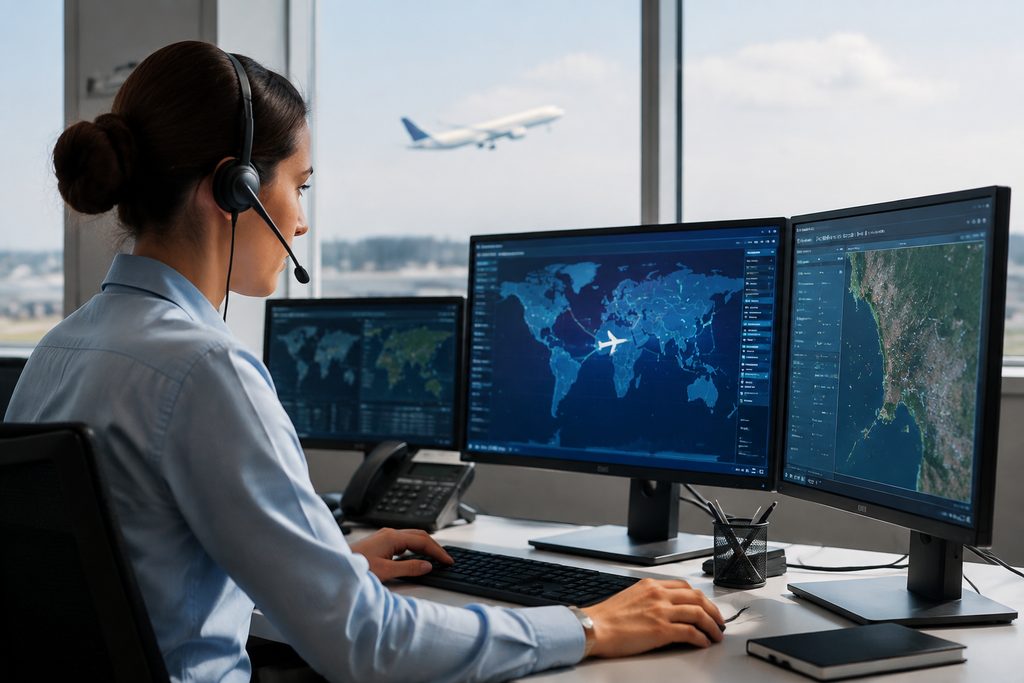
Every year, an estimated 300,000 international patients seek medical care in China, according to data from China’s National Health Commission. Most of them land exhausted, disoriented, and worried about one thing: has anyone actually noticed my plane touched down? Flight tracking for medical travel China is not a luxury add-on. It is the operational backbone that determines whether you wait 15 minutes at arrivals or 2 hours at a taxi stand with a phone that will not connect.
Our coordination team monitors flight status from wheels-up to gate arrival. Here is exactly how that works, what it costs, and what happens when things go wrong.
Flight Tracking for Medical Travel China: The Short Answer
We track your flight using live ADS-B and airport data feeds, not airline apps. A coordinator checks your flight at departure, again mid-route, and a third time 45 minutes before scheduled landing. If your flight is delayed, diverted, or cancelled, the ground team adjusts pickup time automatically. You do not call anyone. You do not send a message. The system catches it.
The caveat: this only works when you book arrival support through a coordination service. Hospitals themselves do not track incoming international flights. That is not their job. Their job starts when you walk through the outpatient door. The gap between the aircraft door and the hospital door is precisely where flight tracking matters.
Who This Is Right For — and Who It Isn’t
Flight tracking with coordinated pickup makes sense for a specific type of traveler. You are a good candidate if any of these apply:
- You are arriving in China for a scheduled consultation, surgery, or hospital admission within 24–72 hours of landing
- You are traveling with limited mobility, a wheelchair, oxygen support, or post-operative restrictions
- You have never been to China and do not speak Mandarin
- Your flight involves a connection, especially through a third country with unpredictable delays
- You are arriving late at night or during Chinese public holidays, when taxis and ride-hailing are scarce
You probably do not need this service if you are flying in for a wellness checkup with flexible dates, staying at a hotel with a dedicated airport shuttle, or traveling with a fluent Mandarin-speaking family member who knows the city. And if you are medically unstable enough that a flight delay could become an emergency, you should not be flying commercially at all — that is a discussion for a medical evacuation provider, not a ground coordinator.
The Options, Compared
There are three realistic ways to handle airport arrival when traveling to China for medical care. They differ in cost, reliability, and what happens when your flight goes sideways.
| Option | Typical Cost | Flight Monitoring | Delay Handling | Language Support |
|---|---|---|---|---|
| Self-arranged taxi or DiDi | $20–60 | None — you check your own app | You wait; driver may leave after 30 min | None; driver likely Mandarin-only |
| Hotel shuttle service | $0–40 | Manual — you must call or email hotel | Shuttle may depart on fixed schedule, not your arrival | Limited; front desk may speak basic English |
| Coordinated medical pickup with flight tracking | $200 round-trip | Live ADS-B + airport data, checked 3x per flight | Driver rescheduled automatically; no action needed from patient | Bilingual coordinator and driver briefed on your case |
The self-arranged option works for healthy travelers on direct flights landing midday. The coordinated option earns its cost when you factor in what a missed pickup actually costs: a night in an airport hotel, rescheduling a specialist consultation, or waiting outside in summer humidity after a 14-hour flight. For a patient arriving for cardiac surgery or oncology evaluation, that $200 round-trip is a rounding error against the cost of a disrupted treatment timeline.
How Do Hospitals Track My Flight Arrival?
The honest answer: they don’t. No public hospital in China — not Fuwai, not Peking Union Medical College Hospital, not Ruijin — has staff watching flight trackers for incoming international patients. Hospital international departments handle scheduling, registration, and interpreter requests. They assume you will arrive at the appointed time. If you do not, the appointment slot simply passes.
This surprises many patients. They assume that because they are flying across the world for treatment, someone at the hospital is monitoring their journey. The reality is that hospital systems are built around domestic patient flows. Outpatient departments at top-tier Chinese hospitals see 10,000+ visits per day. A delayed flight from Frankfurt or Dubai does not register.
That is why real time flight monitoring patient transport matters as a separate service layer. A coordination team acts as the bridge. When your flight is delayed by 3 hours, the coordinator contacts the hospital international department, explains the situation in Mandarin, and requests a revised slot or confirms that the original slot can still work. Sometimes it can. Sometimes it cannot — and then you need a plan B, which is easier to arrange from the ground than from seat 34C.
What Happens If My Flight Is Delayed — Medical Pickup Edition
Delays happen on roughly 20% of long-haul international flights, based on 2024 data from FlightAware. Here is the sequence when you have coordinated pickup with flight tracking:
- T-60 minutes to scheduled landing: coordinator checks live arrival estimate against original schedule
- Delay detected (any length over 20 minutes): driver notified automatically; pickup time shifted without patient contact
- Delay over 2 hours: coordinator contacts the hospital or clinic to flag potential schedule impact
- Diversion or cancellation: coordinator reaches you via WeChat or WhatsApp (airport Wi-Fi permitting) with revised instructions; hotel booking adjusted if needed
Without this layer, you land, turn on your phone, and start making calls. Airport Wi-Fi in China requires a Chinese phone number for SMS verification in many cases. Your home SIM may not roam. You are effectively offline. That is the scenario where a $200 coordinated pickup pays for itself in avoided stress alone.
What It Costs: Medical Flight Tracking Service Pricing
The cost of medical flight tracking service is typically bundled into airport transfer coordination rather than sold separately. Our airport transfer runs $200 round-trip, which includes live flight monitoring, driver coordination, and delay adjustment. That is the full cost — no hidden per-hour tracking fees.
Some providers itemize tracking as a standalone service at $30–80 per flight. We do not, because tracking without a coordinated pickup is half a service. Knowing your flight is delayed helps only if someone can act on that information.
What drives variance:
- Airport: Shanghai Pudong (PVG) and Beijing Capital (PEK) have predictable pickup logistics. Smaller airports like Chengdu Tianfu or Xi’an Xianyang may require longer driver lead times.
- Time of day: arrivals between 11 PM and 5 AM often incur driver overtime rates
- Distance to hospital or hotel: PVG to downtown Shanghai is roughly 50 km. Beijing Daxing to the city center is similar. Longer distances mean higher fuel and time costs.
- Special vehicle needs: wheelchair-accessible vans or stretcher transport cost more than standard sedans
For comparison, a standard airport taxi from PVG to central Shanghai runs about $30–45. A hotel shuttle is often free. The premium for coordinated pickup is not about the vehicle — it is about the monitoring, the language bridge, and the guarantee that someone is watching your flight when you cannot.
Practical Considerations: Arrival Logistics for Medical Travelers
Before you board, a few things make arrival smoother regardless of who picks you up.
Visa: For medical treatment in China, you need an S2 visa with the purpose of treatment noted. Family members accompanying you apply for the same category. The M visa is for commercial and trade activities and is not appropriate for medical travel. Processing times vary by embassy, so start at least 4–6 weeks before your planned departure.
Documents to carry in hand luggage: passport with S2 visa, hospital appointment confirmation (printed, in English and Chinese if possible), your medical records summary, and the pickup coordinator’s phone number in a format you can read without internet access.
Phone connectivity: Before departure, install WeChat and set up an account. If your phone supports eSIM, purchase a China data plan before you land. Airport Wi-Fi is unreliable for first-time visitors without a Chinese number.
Payment: Chinese hospitals require prepayment for most services. International credit cards are accepted at private international hospitals and some public hospital international departments, but not everywhere. Carry a mix: some RMB cash, a Visa or Mastercard, and if possible, set up Alipay or WeChat Pay with a foreign card before arrival.
Insurance: Most international insurance plans reimburse after treatment rather than paying directly. Public hospitals in China operate on a pay-first model. Private international hospitals like United Family or Jiahui often offer direct billing with major insurers. Bring your insurance documentation and confirm coverage before you travel.
You can review hospital options by city on our top-ranked hospitals page, which groups China’s 340+ top-tier institutions by location and specialty. For a deeper look at specific departments, our specialty rankings break down 45 clinical areas by hospital reputation.
Frequently Asked Questions
No. Public hospitals in China do not track incoming patient flights. If you have a coordinated service, your coordinator contacts the hospital on your behalf. If you are traveling independently, you need to call or email the hospital’s international department yourself — and they may or may not be able to reschedule quickly.
Early arrivals are less common than delays but do happen, especially on trans-Pacific routes with favorable tailwinds. Coordinated pickup includes monitoring from departure, so the driver adjusts to the earlier arrival time. For self-arranged taxis, you may wait. For hotel shuttles, you almost certainly will.
Yes. The $200 covers both airport pickup and return transfer, with live flight monitoring and delay adjustment included. There is no separate tracking fee. The only additional costs would be for special vehicles, unusual distances, or late-night surcharges.
This is rare but not unheard of, especially for flights into Shanghai during typhoon season or Beijing during winter fog. If your flight diverts to another city, the coordinator will contact you with options: wait for the aircraft to continue, or arrange alternative ground transport. If the diversion means you miss your hospital appointment, the coordinator contacts the hospital and requests rescheduling. Be aware that rescheduling a top specialist may mean a delay of days or weeks.
You can try. But airport Wi-Fi access for foreign numbers is inconsistent, and ride-hailing drivers in China frequently cancel on passengers they cannot communicate with. The value of coordinated tracking is that it removes you from the communication loop entirely. The system works when you are offline.
Your Next Step
Flight tracking for medical travel to China is not about watching a map. It is about having someone on the ground who knows your flight status, knows your hospital schedule, and can speak to both the driver and the admissions desk when things shift. That is the difference between a smooth arrival and a stressful scramble.
We are China Medical Services, a coordination team that connects international patients with top-tier Chinese hospitals. We are not a hospital, we do not diagnose, and we do not promise clinical outcomes. What we do is manage the logistics — hospital matching, appointment coordination, bilingual companionship, and yes, airport pickup with real flight monitoring — so you can focus on your health. If you are planning treatment in China and want to understand your options, start with a free consultation. No pressure. Just a conversation about what you need and whether we can help.
Arrive informed. Arrive supported. The flight tracking is one small piece — but it is the piece that makes the rest of the journey possible.
For more medical information and treatment options in China, visit chinamedservices.com (China Medical Services).
