Treatment in China: Follow-Up at Home — What Happens After You Fly Back
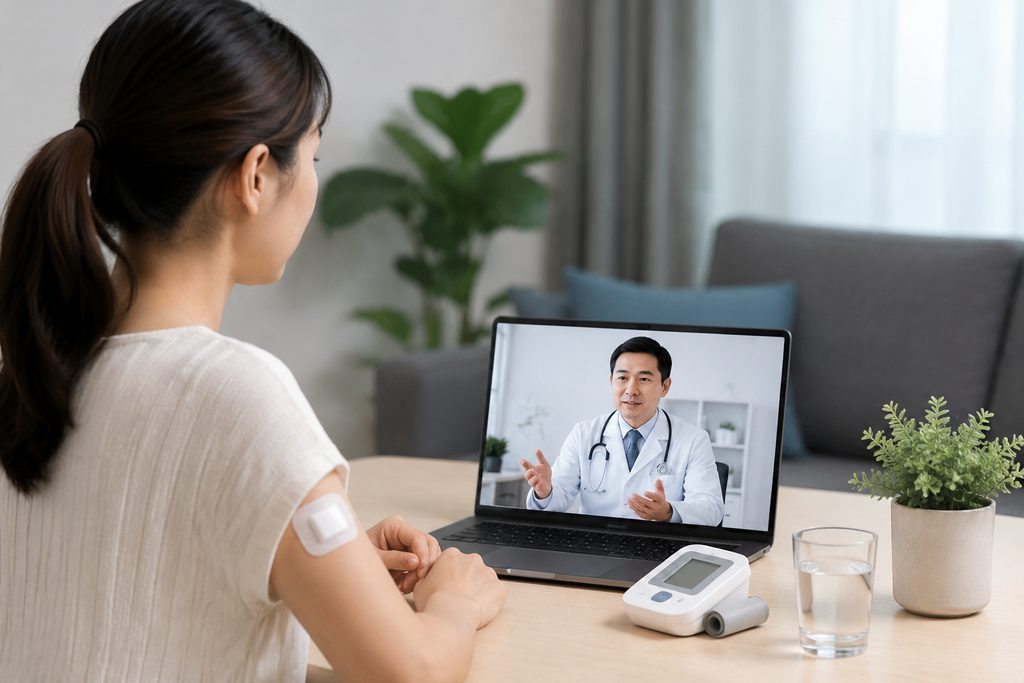
Treatment in China: Follow-Up at Home
Roughly 1 in 5 international patients who travel abroad for surgery never complete the follow-up schedule their surgeon recommended. That figure comes from long-running research on medical travel outcomes, and it has almost nothing to do with laziness. It happens because the patient lands back in Ohio or Lagos or Dubai, the discharge paperwork is in a language their local doctor cannot read, and nobody owns the next step. Treatment in China follow-up care at home is the part of the journey most people plan last — and it is the part that determines whether the whole trip was worth it.
Here is the good news. Follow-up after treatment in China is genuinely manageable from another country, provided you set it up before you leave the hospital bed, not after.
How This Actually Works, Step by Step
The sequence is less complicated than most patients expect. What matters is the order.
Step one happens before discharge. You ask the treating department for a complete discharge summary, operative notes, imaging on disc or via cloud link, pathology reports, and the medication list with generic drug names. Ask for English versions where the hospital provides them. Most top-tier Chinese hospitals with international departments do. If they do not, a certified medical translation is a normal part of the process and usually runs a few hundred dollars.
Step two is naming a home physician. Before you fly, identify the doctor who will receive those records — your primary care physician, your cardiologist, whoever owns your long-term care. Send them the package. Get written confirmation they received it.
Step three is the first remote review. Somewhere between two and four weeks after you land, the Chinese specialty team reviews your recovery markers — wound photos, lab values, imaging if any was done locally — and issues written guidance. This is where China Medical Services does most of its work: translating, transmitting, and chasing responses so nothing sits in an inbox.
Step four is the local execution. Your home doctor orders the bloodwork, changes the dressing, adjusts the medication. The Chinese surgeon advises. The local physician acts. That division of labor is the entire model.
Can You Really Get Follow-Up Care After Surgery in China From Abroad?
Yes — with honest limits. Nobody can examine a wound through a video call. Nobody can palpate an abdomen over email.
What remote follow-up does well is narrower and still valuable. It catches medication errors. It interprets lab trends. It answers the question your local doctor cannot answer because they did not perform the operation: is this normal for this procedure, at this stage? That question causes more anxiety than any other in the first ninety days.
What it does not do is replace emergency care. If you develop a fever above 38.5°C, chest pain, sudden swelling in one leg, or a wound that will not stop weeping, you go to the nearest emergency room. Not a video call. Not an email. That rule has no exceptions, and any provider who tells you otherwise is selling something.
For chronic conditions rather than surgical recovery — diabetes management, thyroid disease, autoimmune care — remote follow-up works better still, because the monitoring is mostly lab-based and the labs can be done anywhere.
A Realistic Timeline
These ranges assume a straightforward recovery. Complicated cases stretch everything.
| Stage | Timing | What Happens |
|---|---|---|
| Pre-discharge | 2–3 days before flying | Collect discharge summary, operative notes, imaging, pathology, medication list |
| Medical translation | 3–10 business days | Certified translation if the hospital does not issue English records |
| Flight clearance | Day of discharge | Surgeon confirms fitness to fly; long-haul flights typically require 10–14 days after major abdominal or cardiac surgery |
| Home physician handover | Week 1–2 after landing | Records delivered, local doctor confirms receipt and assumes day-to-day care |
| First remote review | Week 2–4 | Chinese team reviews recovery photos and local labs, issues written guidance |
| Second remote review | Month 2–3 | Medication taper, activity progression, imaging if indicated |
| Long-term check-ins | Month 6 and month 12 | Outcome documentation, any late complications, comparison against baseline |
Two waiting steps catch people out. Translation adds up to two weeks you probably did not budget. And appointment lead time at home — getting in to see your own GP or specialist — can run three to six weeks in the US, the UK, and Canada. Build both into your return plan.
What Can Go Wrong — and What Happens Then
Let us be direct about the failure modes, because they are predictable.
The records never arrive. This is the most common breakdown. You leave with a folder, the folder gets lost in a suitcase, and nobody has a digital copy. The fix is simple: photograph every page before you leave the hospital, upload it to cloud storage, and email it to yourself. Do this in the ward, not at the airport.
Your home doctor will not engage. Some physicians are uncomfortable co-managing a patient whose surgery they did not perform, and a few will say so. The recourse is to ask the Chinese team for a structured summary written for a general practitioner — one page, plain language, specific instructions. That document changes the conversation more often than not.
The remote team goes quiet. Hospitals are busy. A question sent to a general inbox can sit for a week. This is a coordination problem, not a medical one, and it is the single strongest argument for having someone whose actual job is following up.
A complication appears at month three, not week three. Late complications are rarer but real. Your follow-up schedule should not end at the six-week mark just because you feel fine.
Is It Safe to Fly Home After Surgery in China?
For most procedures, yes — after a defined waiting period. The risk is not the flight itself but the cabin environment: pressurization, low humidity, and immobility.
Venous thromboembolism is the concern that gets taken most seriously. Long-haul flights after major orthopedic, abdominal, or cardiac surgery carry elevated clot risk, which is why surgeons impose a minimum interval and usually prescribe compression stockings or prophylactic anticoagulation. Typical guidance runs 10 to 14 days for major abdominal and cardiac procedures, longer for certain lung surgeries, and shorter for minor outpatient work.
The clearance has to come from your operating surgeon, in writing, and it should state the date you are fit to fly and any in-flight precautions. Airlines sometimes ask. Your travel insurer almost certainly will if you file a claim.
One more thing worth saying plainly: do not book a non-refundable flight before discharge. Recovery timelines move.
Practical Considerations: Records, Payment, and Insurance
Records. Request them in digital form on the day of discharge. Paper only is a liability.
Visa. If you need to return to China for a scheduled follow-up procedure, the applicable short-stay category for medical treatment is the S2 visa, with S1 for stays exceeding 180 days. Accompanying family members apply under the same category. Requirements shift, so confirm current rules with the Chinese embassy or consulate in your country and bring the hospital’s supporting documents. Approval is never guaranteed and no single visa fits every case.
Payment. Chinese public hospitals typically require prepayment, with insurance reimbursement handled afterward in your home country. Private international hospitals more often bill insurers directly. Keep every itemized receipt — reimbursement without itemization is close to impossible.
Insurance. Call your insurer before you travel, not after. Ask specifically whether follow-up care delivered by a foreign physician via telehealth is covered. Many policies exclude it.
Language. Records in Chinese are unusable to most Western physicians. Budget for certified translation.
Frequently Asked Questions
It depends entirely on what you need. A single written remote review from a top-tier Chinese specialty typically runs $300–500, and a video consultation $100–800 depending on whether a standard international department or a top specialist is involved. Ongoing coordination across several months is quoted case by case. Any consultation fee is credited in full toward on-the-ground coordination if you return to China within 90 days — a one-time credit applied to the coordination fee only, never to hospital treatment charges.
You arrange it before you travel, not after. Tell the coordinating team at the outset that you need a structured discharge package, a named remote contact, and a follow-up schedule with defined review points. Hospitals with international departments handle this routinely; smaller institutions often do not. Getting the commitment in writing before you book flights is the difference between a plan and a hope.
It happens, and it is usually a communication problem rather than a refusal. A one-page summary written for a general practitioner, in English, with specific test names and reference ranges, resolves most of these cases. If it does not, your local physician’s clinical judgment governs — they are the one with legal responsibility for your care in your home country.
For monitoring, medication management, and interpretation of results, yes. For physical examination, no. The model works when both sides understand their role: the Chinese team advises, your home physician examines and prescribes, and someone in the middle keeps the records moving.
Your Next Step
Follow-up is not an afterthought to treatment abroad. It is the half of the episode that happens after the plane lands, and it deserves the same planning you gave the surgery itself. Get the records in digital form, name your home physician, and lock in remote review points before you fly.
Our team at China Medical Services connects international patients with more than 340 top-ranked hospitals across 37 cities, and we handle the unglamorous middle part — translation, transmission, and follow-up so your records do not vanish into an inbox. We are not physicians and we do not practice medicine; every clinical decision belongs to your treating doctors, in China and at home. When you are ready, a free consultation is the place to start.
For more medical information and treatment options in China, visit chinamedservices.com (China Medical Services).
