Getting a Urology Opinion in Shanghai: Costs, Top Hospitals & How It Works
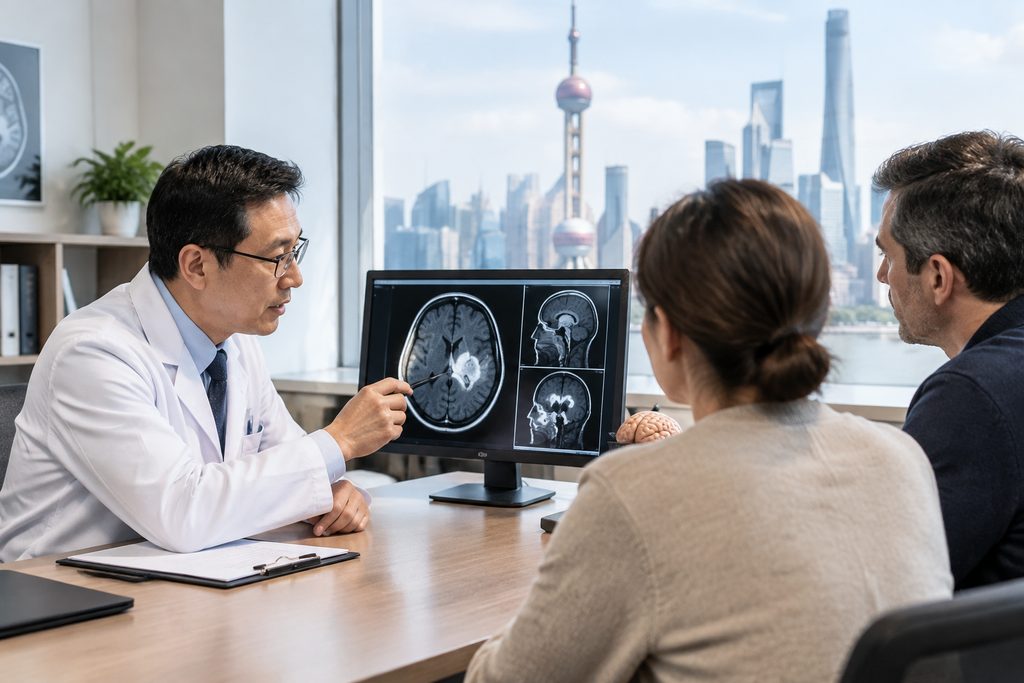
Getting a Urology Opinion in Shanghai: What International Patients Need to Know
What if the urology answer you’ve been waiting months for is sitting in a hospital 7,000 miles away — and it costs less to reach than a single night in a U.S. hospital bed? Getting a urology opinion in Shanghai has become a realistic option for international patients facing prostate cancer, kidney stones, bladder conditions, or unresolved urinary symptoms, and the pathway is more structured than most people expect.
Here’s the honest version: you don’t fly to China first and hope for the best. You start with your existing records, get a written opinion or video consultation from a Chinese urology team, and only then decide whether traveling makes sense. That sequence saves money, time, and a lot of uncertainty.
How This Actually Works, Step by Step
The process begins with documents, not plane tickets. You gather what you already have: MRI or CT imaging, PSA history, biopsy pathology reports, cystoscopy notes, ultrasound results, medication lists, and any prior surgical summaries. Digital copies are fine — DICOM files for imaging, PDFs for reports.
Step two is translation and case preparation. Chinese hospital international departments review English records routinely, but a clean summary in Chinese helps the urology team move faster. Our team handles that medical-record translation as part of case management.
Step three is the written second opinion. The relevant specialty — urologic oncology, endourology, or reconstructive urology, depending on your case — reviews your file and returns written analysis, treatment suggestions, and a recommended direction. Turnaround typically runs 5–10 business days, sometimes longer if imaging needs a second read.
Step four, if you want direct interaction, is a video consultation. You speak online with the Chinese specialty team, explain your symptoms and goals, and hear their recommendations in real time. Written second opinions run $300–500; video consultations range from $100–300 at a standard international department up to $500–800 with a top specialist. Multidisciplinary team reviews, where several departments weigh in together, run $1,500–2,000.
Step five is the decision point. If the plan is feasible and you agree, we coordinate arrival support, hospital communication, and available green-channel logistics. Nothing is promised in advance — admission and treatment remain subject to hospital rules and the treating physician’s judgment.
Which Shanghai Hospitals Carry Weight in Urology
Shanghai is home to 18 hospitals on the Fudan Top 100 list — the second-largest concentration in China after Beijing. For urology specifically, the Fudan specialty reputation rankings list the top 10 hospitals nationally in each of 45 specialties, and Shanghai institutions appear consistently in urology and urologic oncology.
Three categories matter, and they are not interchangeable.
- Top public tertiary hospitals (三甲) — enormous volume, deep surgical experience, and the strongest outcomes data in complex cases. They are also crowded, Chinese-language by default, and require in-person registration for standard outpatient visits.
- International or VIP departments within public hospitals — same senior specialists, English-speaking coordinators, faster scheduling. Expect roughly 1.5–2x the standard-channel price.
- Private international hospitals — JCI-accredited, English-speaking staff, direct insurance billing, Western-style service. Better for diagnostics, second opinions, and straightforward procedures; less suited to rare or highly complex surgical cases.
You can browse Shanghai’s ranked institutions on our Shanghai city page and filter by specialty through the 45-specialty directory. Urology cases split across urologic oncology, endourology (stones), and functional urology — the right department depends on your diagnosis, not on which hospital has the biggest name.
A Realistic Timeline
Nobody’s case moves at the speed of a brochure. Here’s what the calendar actually looks like for a patient who decides to pursue a urology opinion in Shanghai.
| Stage | Typical Duration | What Slows It Down |
|---|---|---|
| Record collection and digitization | 3–7 days | Missing pathology slides, hospital release delays |
| Medical translation and case prep | 2–5 days | Volume of imaging; complex surgical history |
| Written second opinion | 5–10 business days | Additional imaging review; specialist availability |
| Video consultation scheduling | 1–3 weeks | Time zone alignment; top-specialist calendars |
| S2 visa application | 1–3 weeks | Embassy processing times; supporting hospital documents |
| Appointment coordination in Shanghai | 1–4 weeks | Department lead time; whether VIP channel is used |
| In-person consultation and workup | 2–5 days on the ground | Additional tests ordered at first visit |
| Surgery scheduling (if indicated) | 1–6 weeks after consultation | Pre-operative clearance; operating room availability |
Add it up and a realistic door-to-decision window is 4–10 weeks. Patients who assume they can fly in next Tuesday and operate on Friday are usually disappointed. Public hospitals in China generally require an in-person outpatient consultation before surgery can be scheduled — that rule applies to international patients too.
What Can Go Wrong — and What Happens Then
The failure modes in medical travel are predictable, and pretending otherwise doesn’t help anyone.
The opinion says “your case needs in-person examination.” This is common. Imaging and pathology tell part of the story; a digital rectal exam, cystoscopy, or urodynamic study can’t happen remotely. In that case, the remote work still narrowed the field and prepared your file — but you’ll need to travel, or pursue the same tests locally first.
You can’t get the specific appointment date you wanted. Top specialists book out. Our appointment coordination service starts from $300, and if we can’t secure the appointment shown in your order, that fee is refunded in full. What we never do is promise a named surgeon or a guaranteed surgical date — nobody legitimate can.
The visa timeline slips. Medical travel to China uses the S2 visa category for short stays, with supporting hospital documents; S1 applies for stays over 180 days. Accompanying family members apply under S2 as well. Processing times shift with embassy workload, and no service can guarantee approval. Apply early, and never book non-refundable flights before the visa is in hand.
The recommended treatment differs from what you expected. Sometimes the Chinese team agrees with your local urologist. Sometimes they suggest active surveillance where you anticipated surgery, or the reverse. That disagreement is valuable information — it’s exactly what a second opinion is for.
Costs, and How They Compare
Urology procedures in China’s top public hospitals typically run one-fifth to one-tenth of U.S. prices for equivalent interventions. A few reference points, keeping in mind that final quotes depend on hospital tier, case complexity, and whether the VIP channel is used:
- Diagnostic workup (imaging, labs, consultation): often $500–1,500
- Flexible ureteroscopy with laser lithotripsy for kidney stones: commonly $3,000–8,000
- Transurethral resection of the prostate (TURP): roughly $4,000–10,000
- Radical prostatectomy: typically $12,000–25,000
These are ranges, not quotes. Hospital fees are paid upfront in the public system, with insurance reimbursement handled afterward; private international hospitals often bill insurers directly. Add travel, accommodation, and companion costs on top — Shanghai hotels near major hospital districts run $80–200 per night for international-standard rooms.
Compare that to U.S. figures, where a radical prostatectomy frequently exceeds $100,000 before insurance negotiation. The gap is real. So is the friction: language barriers, registration queues, and a system that operates very differently from what Western patients know.
Practical Considerations: Records, Visa, Payment, and Follow-Up
Bring more records than you think you need. Pathology slides, not just reports. Imaging on disc, not just printed summaries. A medication list with generic names. If your local hospital can release a USB drive with DICOM files, take it.
The S2 visa requires supporting documents from the receiving hospital — an invitation or confirmation letter arranged through the international department. Start this in parallel with your medical review, not after it.
Language is the single biggest practical hurdle. A top Shanghai hospital can see tens of thousands of outpatient visits in a day. Signage, registration kiosks, and pharmacy instructions are in Chinese. Bilingual medical companions handle registration, queuing, payment, wayfinding, and translation from $300 per day (half-day or full-day options), and airport transfers run $200 round-trip.
Plan your follow-up before you leave. Ask the treating team what surveillance schedule they recommend — PSA intervals, imaging frequency, catheter or stent removal timing — and confirm whether your home urologist can execute it. Most can. Get the operative report and discharge summary in English before departure; requesting them later from abroad is slow.
For a broader view of how international patients navigate the system, see our guide to medical treatment in China for foreign patients.
Frequently Asked Questions
Yes. A written second opinion or video consultation lets a Chinese urology team review your records remotely and give you direction before any travel decision. This is the standard starting point, and it costs far less than a trip. Physical examination may still be required later for certain diagnoses.
Medical travel uses the S2 visa category for short stays, with supporting hospital documentation; S1 applies if your stay exceeds 180 days. Accompanying family members apply under S2 as well. Requirements vary by embassy and consulate, so confirm current rules with the relevant Chinese mission before applying. Note that the M visa is for commercial and trade activities and is not the medical-travel category.
That happens, and it’s useful. A second opinion that confirms your current plan is reassuring; one that diverges gives you specific questions to bring back to your local urologist. Neither outcome obligates you to travel or to change treatment.
Your Next Step
The takeaway is simple: a urology opinion in Shanghai is reachable, affordable, and best pursued in stages — records first, opinion second, travel only if it makes sense. Our team connects international patients with 340+ top-ranked hospitals across 37 cities, handles medical-record translation and appointment coordination through official international departments, and provides bilingual support on the ground. We are not physicians, and we don’t diagnose or promise outcomes. If you’d like to know whether your case fits this pathway, start with a free consultation — no pressure, no obligation, just a clear read on your options.
This article is for general information only and does not constitute medical advice. Treatment decisions should always be made with a qualified physician who has reviewed your individual case.
For more medical information and treatment options in China, visit chinamedservices.com (China Medical Services).
