Cancer Treatment Cost China: Combining Therapy With Recovery
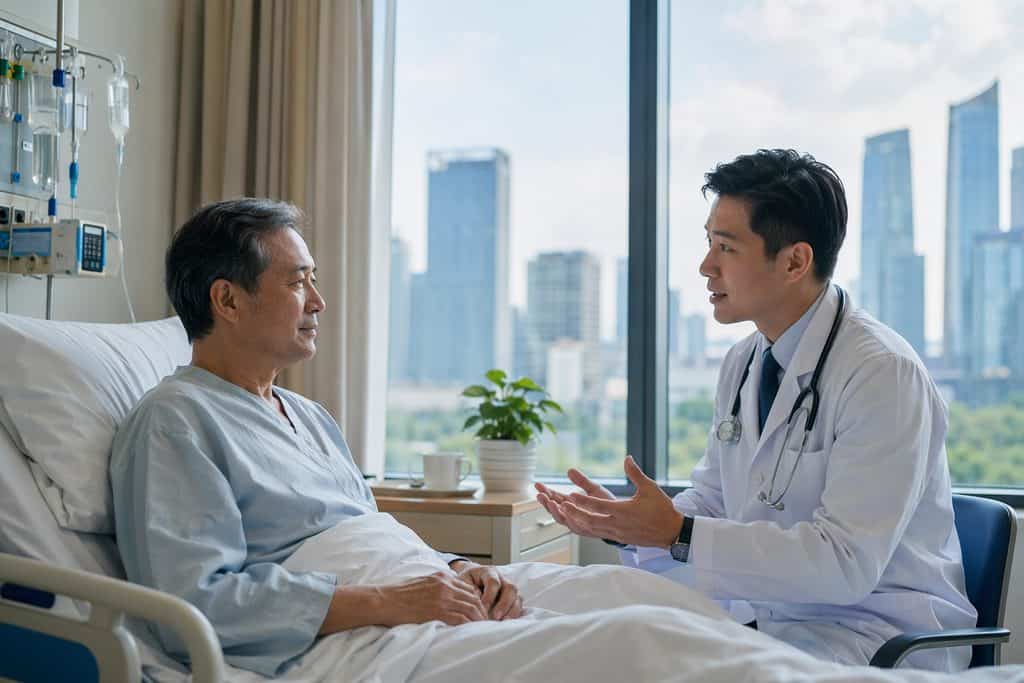
When 54-year-old Daniel from Manchester got his colorectal cancer diagnosis, the oncologist laid out a clear protocol: surgery, then six months of chemotherapy. The timeline was fixed. The price was not. His insurance covered treatment at home, but the recovery environment—a cramped flat, grey weather, no family nearby—felt like an afterthought. Daniel started searching for alternatives. Could he get the same protocol somewhere warmer, calmer, and dramatically cheaper? That search led him to a question we hear constantly: can you actually combine cancer treatment with recovery in China?
The short answer is yes. Cancer treatment cost China typically runs 50% to 80% below comparable care in the United States or Western Europe. But the real value proposition is different. Patients who travel to China for oncology care are not just buying a cheaper chemo session. They are buying an integrated experience—treatment at a high-volume specialty hospital, recovery in a dedicated rehabilitation setting, and a cost structure that makes longer, slower, more humane recovery financially possible. The catch? This model is not for everyone, and the logistics demand planning.
Combining Cancer Treatment With Recovery in China: The Short Answer
Yes, you can combine active cancer treatment with a structured recovery period in China. The country’s top-tier hospitals handle enormous oncology volumes—some single institutions manage more cancer surgeries annually than entire regional health systems in Europe. That volume translates into technical proficiency. Meanwhile, recovery infrastructure, from TCM-based rehabilitation to dedicated post-operative care facilities, is more developed than most Western patients expect.
But here is what makes it complicated. China’s public hospital system does not operate like a medical tourism resort. You cannot book a chemo chair online from overseas. You cannot schedule surgery before a face-to-face consultation. The integration of treatment and recovery happens through the hospital’s international department or VIP channel, which requires coordination. Done right, it works smoothly. Done casually, it becomes a frustrating maze.
Who This Is Right For — and Who It Isn’t
This path suits a specific profile. Not every cancer patient should get on a plane to Shanghai or Beijing. Being honest about that is the first thing any responsible coordinator should do.
Typically a good candidate:
- You have a confirmed diagnosis with imaging, pathology reports, and a proposed treatment protocol from your home oncologist
- Your condition is stable enough for international travel—your doctor has not advised against flying
- You want a second opinion from a high-volume oncology center before committing to a treatment plan
- You are paying out of pocket, or your insurance allows treatment abroad with reimbursement
- You value the idea of recovering in a setting designed for rehabilitation rather than being discharged home too early
Who should not pursue this:
- Patients in active medical crisis—uncontrolled pain, rapid deterioration, or unstable vital signs
- Those requiring emergency surgery within days
- Patients whose cancer type is so rare that even China’s largest centers see only a handful of cases annually
- Anyone expecting a Western-style private hospital experience at public hospital prices—the two are different products
- Patients unwilling to spend at least two to four weeks in China for initial evaluation and treatment planning
If you fall into the first group, read on. If the second group sounds familiar, staying closer to home is genuinely the better call.
The Options, Compared
International patients considering oncology care in China face a real choice between three distinct models. Each has different implications for treatment quality, recovery support, and cancer treatment cost China pricing.
| Model | Typical Cost Per Cycle | Recovery Support | Language Access | Best For |
|---|---|---|---|---|
| Public hospital, standard outpatient | $800–$2,500 | None—discharged same day, recover at hotel | Minimal English; Chinese essential | Budget-focused patients with local support |
| Public hospital, international/VIP department | $1,500–$4,500 | Coordinated follow-up, possible rehab referral | English-speaking coordinators, some bilingual doctors | Most international patients—balanced cost and support |
| Private international hospital (JCI-accredited) | $3,000–$8,000 | Integrated recovery programs, Western-style nursing | Fully English-speaking staff | Patients wanting maximum comfort and direct insurance billing |
The international department model is where most of our patients land. It offers senior specialists, English coordination, and priority scheduling—at roughly 1.5 to 2 times the standard public price. That premium buys something real: the ability to actually combine treatment with recovery without getting lost in a system that sees 10,000 outpatient visits per day at top hospitals.
Private international hospitals like United Family or Jiahui charge more, but they offer direct insurance billing and a Western care model. The trade-off is that their oncology departments, while competent, do not match the sheer case volume of a Fudan-ranked public hospital cancer center.
What “Recovery in China” Actually Looks Like
This is the part most articles skip. Recovery after cancer treatment in China is not a spa retreat. It is a structured, medically supervised process that varies enormously by hospital and city.
At a major oncology center in Shanghai or Beijing, post-surgical recovery typically involves a hospital stay of 5 to 10 days, depending on the procedure. After discharge, patients who choose the international department route often transition to a rehabilitation ward or a partnered recovery facility. These are not luxury resorts. They are clinical environments where nurses monitor wound healing, manage pain, and coordinate with the surgical team.
For chemotherapy patients, “recovery” means something different. It means managing side effects between cycles—hydration, nutritional support, blood count monitoring. Some patients do this as outpatients, returning to a serviced apartment near the hospital. Others opt for Traditional Chinese Medicine (TCM) adjunctive care. Acupuncture for chemo-induced nausea has real evidence behind it. Herbal formulations are commonly used to support appetite and energy. The key is integration: your oncologist should know what your TCM practitioner is prescribing, and vice versa. China’s top TCM hospitals are accustomed to this collaborative model.
The cities that handle this best? Shanghai and Beijing lead in oncology volume. Guangzhou and Chengdu offer strong programs at lower living costs. Hangzhou has carved out a niche in integrated cancer rehabilitation, combining Western oncology with TCM recovery protocols.
What It Costs: Cancer Treatment Cost China in Real Numbers
Let’s talk money. The numbers below are ranges, not quotes. They vary by hospital tier, cancer type, stage, and treatment complexity. But they give you a realistic picture.
A single cycle of standard chemotherapy at a top public hospital in China runs $800 to $2,500, depending on the drugs. Immunotherapy cycles range $3,000 to $8,000. A colorectal cancer surgery at a Fudan-ranked hospital might cost $12,000 to $20,000. The same procedure in the United States frequently exceeds $60,000. Lung cancer surgery? $15,000 to $25,000 in China versus $80,000 to $120,000 in the US.
Recovery costs add up separately. A serviced apartment near a major hospital in Shanghai runs $800 to $1,500 per month. A bilingual medical companion costs from $300 per day. TCM rehabilitation sessions—acupuncture, tuina massage, herbal consultations—typically run $50 to $150 per session.
What is not included: international flights, visa fees, meals outside the hospital, and any treatment complications that require extended stays. What is included depends on the hospital package—some international departments bundle consultation, imaging, and basic nursing into a single quote. Always ask for a written breakdown before committing.
Practical Considerations: Records, Visas, and the Language Barrier
You cannot just show up. The process starts with documentation. Chinese oncology departments want to see your complete medical record: pathology reports, imaging studies (DICOM files preferred), surgical notes if applicable, and a summary letter from your treating oncologist. All of this should be translated into Chinese by a certified medical translator. Our team handles this as part of case management.
Visa comes next. Medical treatment in China falls under the S2 visa, which is issued for short-term private affairs including medical treatment. Family members accompanying you apply for the same S2 category. The hospital’s international department will issue an invitation letter confirming your treatment plan—this is a required supporting document. Processing typically takes one to three weeks, depending on your home country’s Chinese embassy or consulate. The S2 visa usually allows stays of up to 180 days. For treatment extending beyond that, an S1 visa applies.
Payment is another friction point. Public hospitals in China require prepayment—you deposit funds at admission, and treatment draws down the balance. International credit cards are accepted at international departments, but not always at standard registration counters. Private international hospitals often bill insurance directly. If you are paying out of pocket and claiming reimbursement later, keep every receipt. Chinese hospital billing is itemized and detailed, which helps with insurance claims.
Language is the final hurdle. Top public hospitals see thousands of patients daily. Signage is in Chinese. Queues are long. Without Chinese language ability, even simple tasks—finding the right window, understanding lab results, filling a prescription—become exhausting. This is where a bilingual medical companion earns their fee. They handle registration, queue management, payment, and translation. They are not medical staff. They are your navigator through a system built for speed and volume, not for foreign patients.
Is Cancer Treatment in China Safe for Foreigners?
The honest answer: yes, at the right hospitals, with the right coordination. China’s top-tier oncology centers are not inferior to Western hospitals. In some areas—surgical volume, certain interventional techniques, early adoption of specific targeted therapies—they are ahead. Fudan University’s hospital rankings, which evaluate clinical reputation and research output, place institutions like Fudan University Shanghai Cancer Center and Peking Union Medical College Hospital among Asia’s best.
But safety is not just about medical skill. It is about communication, infection control, and continuity of care. A patient who cannot communicate their symptoms to a nurse is less safe than one who can. A patient who does not understand their discharge instructions is at risk. This is why the international department model matters. It is not a luxury. It is a safety feature.
What about follow-up after you return home? How long is recovery after cancer surgery abroad depends on the procedure, but most patients need ongoing monitoring for months or years. Chinese hospitals are generally willing to share complete medical records and imaging with your home oncologist. Some offer video follow-up consultations. The key is establishing this continuity before you leave—get written summaries, digital copies of all imaging, and a clear medication list in English.
Best Oncology Hospitals in Shanghai: Where Patients Actually Go
Shanghai dominates the conversation for international oncology patients. The city has 18 hospitals on the Fudan Top 100 list, more than any city except Beijing. For cancer specifically, three names come up repeatedly.
Fudan University Shanghai Cancer Center is the highest-volume oncology hospital in China. Its departments cover every major cancer type, and its surgical teams perform procedures that smaller centers refer out. Zhongshan Hospital, affiliated with Fudan University, runs a renowned liver cancer and gastrointestinal oncology program. Ruijin Hospital, part of Shanghai Jiao Tong University, is known for hematologic malignancies and complex surgical oncology.
These are public hospitals. They are busy. They are not designed for medical tourists. But their international departments have spent years refining the process of receiving foreign patients. That experience matters. A hospital that sees 50 international cancer patients a year handles you differently than one that sees 500.
For patients who want a Western-style experience from day one, Shanghai’s private international hospitals—Jiahui, United Family, Parkway—offer oncology services with English-speaking staff and direct insurance billing. The trade-off is case volume. A private hospital oncologist may see a few hundred cancer patients annually. A public hospital specialist sees thousands.
Frequently Asked Questions
Yes, but continuity is critical. You will need your complete treatment record, including drug names, dosages, cycle timing, and any adverse reactions. The Chinese oncology team will review this before continuing your protocol. They may suggest adjustments based on their own assessment. Some patients come for a second opinion mid-treatment and decide to continue locally. Others transfer care entirely. Both are possible.
There are, but be wary of anything that looks like a fixed-price all-inclusive deal. Cancer treatment is too variable for honest package pricing. What legitimate coordinators offer is a structured service bundle: hospital matching, record translation, appointment coordination, visa documentation, bilingual companionship, and accommodation guidance. The medical costs themselves are billed separately by the hospital. Anyone quoting you a single flat price for “cancer treatment in China” is not being straight with you.
This is the question everyone should ask and few do. Chinese hospitals have clear protocols for treatment complications. The international department will coordinate emergency care, additional surgery if needed, and extended hospitalization. Your financial exposure depends on your payment arrangement. Public hospitals require prepayment, so complications may require topping up your deposit. Private international hospitals may bill insurance directly. Medical malpractice is handled through China’s legal system, which is unfamiliar to most foreign patients. This is why choosing a hospital with a strong international department and clear communication protocols matters more than choosing the cheapest option.
At top international departments, yes. These units employ English-speaking coordinators and often have bilingual physicians. Outside those departments, the language barrier becomes a genuine safety risk. We would not recommend navigating a standard public oncology ward without either Chinese language skills or a bilingual companion. The medical care is competent. The communication gap is the risk.
This depends entirely on the surgery. For minimally invasive procedures, some patients fly home within two to three weeks. For major open surgery—esophagectomy, pancreatic resection, radical cystectomy—you should plan on four to eight weeks in China. Your surgical team will clear you for air travel based on wound healing, risk of thrombosis, and overall stability. Long-haul flights increase deep vein thrombosis risk after major surgery, so most surgeons recommend waiting until you are mobile and off strong pain medication.
Your Next Step
Combining cancer treatment with recovery in China is not a shortcut. It is a strategic choice that works for patients who plan carefully, choose the right hospital tier, and understand what they are buying: high-volume clinical expertise, integrated recovery support, and a cost structure that makes extended recovery financially feasible. If you are considering this path, start with a written second opinion before booking any flights. Send your records to a Chinese oncology team and see what they say. The consultation costs $300 to $500 for a written review, and if you later proceed with treatment coordination in China, that fee is credited in full toward the on-the-ground service.
We are China Medical Services. We are not a hospital, and we do not diagnose or treat anything. We are the bridge: we translate your records, match you with the right oncology department, coordinate your S2 visa documentation, and put a bilingual companion beside you when you arrive. If you want to explore this further, request a free consultation. We will look at your case and tell you honestly whether China makes sense for you. No pressure. Just a clear-eyed assessment from people who do this every day.
Your diagnosis set the course. Where you recover is still your choice.
For more medical information and treatment options in China, visit chinamedservices.com (China Medical Services).
