Scoliosis Surgery in China: What to Expect, Step by Step
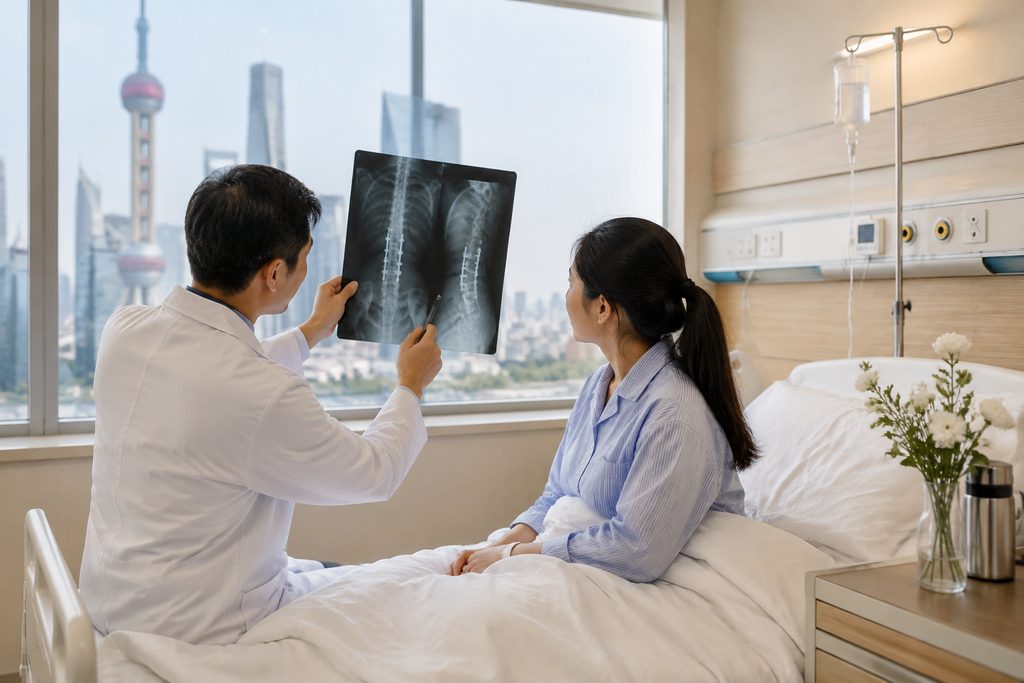
Scoliosis Surgery in China: What to Expect
Roughly 1 in 300 children develops some form of scoliosis, and about 1 in 10,000 needs surgery to correct a curve that keeps progressing despite bracing. For families in the United States, that surgery often comes with a quote north of $150,000. The same procedure at a top Chinese public hospital frequently lands between $12,000 and $30,000. That gap is why so many parents now search for scoliosis surgery cost China figures before they book anything. But cost is the easy part. The hard part is understanding what actually happens, in what order, and where the process can stall.
This guide walks through the real sequence — from the first email you send to the last follow-up X-ray — so you can decide with clear eyes. No hype, no promises. Just how the system works.
How This Actually Works, Step by Step
You do not fly to China and hope for the best. The sensible path starts months before any flight.
Step 1 — You gather records. Full-length standing X-rays (PA and lateral), a side-bending or traction film if you have one, MRI or CT reports, your Cobb angle measurements, growth records, and any prior treatment notes. These go to the hospital’s international department.
Step 2 — A Chinese spine specialist reviews them. Not a salesperson. A pediatric or adult deformity surgeon looks at the curve, the Risser sign, skeletal maturity, and whether surgery is even indicated. Some families learn their child still has bracing options. That is a real outcome, and a good one.
Step 3 — You get a written opinion or a video consultation. The team explains whether surgery is appropriate, which approach they would use, and roughly what it involves. Translation matters here. A curve described as “moderate thoracic dextroscoliosis” needs to reach you in plain English.
Step 4 — You decide, then travel. If surgery makes sense, the hospital issues an invitation letter. You apply for an S2 visa. You arrive, attend an in-person consultation, complete pre-operative testing, and the surgery is scheduled.
Step 5 — Surgery, recovery, and a plan for home. Expect a hospital stay, a gradual return to walking, and a discharge plan you can hand to your doctor back home.
Where the Best Spine Centers Are — and What “Best” Means
China has more than 35,000 hospitals. The top 5%, ranked by the Fudan University hospital index and JCI accreditation, are where complex deformity work concentrates. Beijing and Shanghai hold the largest share of these.
If you are searching for the best spine hospital Shanghai for scoliosis, the names that come up most often sit within the Fudan top tier — large academic centers with dedicated spine deformity units and high annual surgical volumes. High volume matters. A center performing hundreds of deformity corrections a year has seen your curve’s variation before.
Beijing is the other hub. Families looking for JCI accredited spine hospitals Beijing will find a mix of top public academic centers and private international hospitals. The private ones offer English-speaking staff, direct insurance billing, and Western-style rooms — at a higher price. The public ones offer deeper subspecialty expertise and lower cost, with more crowded conditions.
You can browse hospitals by city and specialty through our department rankings for orthopedics and spine surgery, or compare accredited private options on the private international hospital directory. Both routes are legitimate. They serve different priorities.
A Realistic Timeline
Nobody flies in on Monday and has surgery on Wednesday. Here is what the calendar usually looks like.
| Stage | Typical Duration | What Slows It Down |
|---|---|---|
| Records collection and translation | 1–3 weeks | Missing X-rays, unclear imaging formats |
| Specialist review and written opinion | 3–10 business days | Requests for additional imaging |
| Video consultation (if chosen) | Scheduled within 1–2 weeks | Time zone gaps, interpreter availability |
| Invitation letter and visa application | 2–4 weeks | S2 processing times vary by consulate |
| Travel and in-person consultation | 3–7 days after arrival | Pre-op testing results |
| Surgery and hospital stay | 5–10 days inpatient | Curve complexity, fusion levels, age |
| Local recovery before flying home | 2–4 weeks | Surgeon clearance, wound healing |
| First follow-up X-ray at home | 6–12 weeks post-op | Coordinating with your local doctor |
Total realistic window: six to twelve weeks from first contact to surgery, assuming records are complete and the visa moves without delays. Families who rush this tend to regret it.
What Can Go Wrong — and What Happens Then
Scoliosis surgery is major surgery anywhere on earth. Honesty here matters more than reassurance.
The curve is not surgical yet. Sometimes the review comes back recommending observation or bracing. You have spent time and possibly a consultation fee for an answer you did not want. That is still a good outcome — it saved you an unnecessary operation.
The visa is delayed. S2 processing is not guaranteed and timelines shift. If your surgery date is tight, a delay can push everything back. Build buffer into your plans.
Complications occur. Neurological monitoring changes, infection, hardware issues, and revision surgery are real possibilities in any country. Top Chinese centers use intraoperative neuromonitoring and have protocols for these events. Ask specifically about their neuromonitoring setup before you commit.
The language gap bites. A large Chinese public hospital can see over 10,000 outpatient visits in a single day. Signage, queues, and paperwork are in Chinese. Without a bilingual companion, small misunderstandings become big ones.
Follow-up falls apart at home. Your surgeon in China cannot see you next month. You need a clear discharge summary, imaging on disc, and a local orthopedist willing to take over. Arrange this before you leave, not after.
Is Scoliosis Surgery Safe in China? Reading the Numbers Honestly
This is the question every parent asks, usually at 2 a.m. The honest answer: safety depends far more on the specific center and surgeon than on the country. China’s top deformity units perform high volumes of these cases, use modern instrumentation, and follow international protocols. Outcomes at those centers are comparable to major Western institutions.
But “China” is not one hospital. A top-tier academic spine center and a mid-level provincial hospital are not the same product. The gap between them is wider than the gap between a top Chinese center and a top American one.
So evaluate the way you would anywhere. Ask about annual case volume. Ask about the surgeon’s specific deformity experience, not general orthopedics. Ask what happens if a revision is needed. Ask whether the hospital is JCI accredited or holds a top Fudan ranking. If a provider dodges these questions, walk away.
Cost should never be the only reason you choose a hospital. It can be a reason. It cannot be the reason.
Practical Considerations: Records, Visas, Payment, and Follow-Up
Most patients stand and walk within a few days of surgery and leave the hospital in five to ten days. Light activity resumes over the first six weeks. Full recovery, including return to school or desk work, usually takes three to six months. Fusion continues to mature for a year or more. Your surgeon’s protocol overrides any general timeline.
Technically yes, but the practical barriers are steep. Public hospitals rarely schedule surgery from overseas without an in-person consultation, and the paperwork, queuing, and language demands are substantial. Many families use coordination help for registration, interpretation, and logistics while the medical decisions stay entirely with the hospital.
At high-volume, top-ranked spine centers, outcomes are broadly comparable to major Western hospitals. Safety varies far more between individual hospitals than between countries. Ask about annual case volume, neuromonitoring, and revision rates before committing.
The S2 visa covers short-stay medical treatment, and accompanying family members apply under the same category. Stays over 180 days require S1. Rules change, so verify current requirements with your nearest Chinese embassy or consulate and bring supporting hospital documents.
Your Next Step
The core message is simple: scoliosis surgery in China can be excellent and affordable, but only if you choose the right center and plan the logistics properly. The medical decision belongs to you and your surgeon. The navigation — records, translation, appointments, visas, and on-the-ground support — is where we come in. China Medical Services connects international patients with top-ranked Chinese hospitals and handles the coordination around the care; we do not practice medicine or promise outcomes. If you would like a clear read on your options, start with a free consultation and we will help you map the path.
This article is for general information only and is not medical advice. Always consult a qualified physician about diagnosis and treatment.
Frequently Asked Questions
Yes. The hospitals used for international patients are JCI-accredited and follow the same international safety standards as top hospitals in the US and Europe. Surgical teams perform high volumes of procedures — often more than their Western counterparts — which studies show leads to better outcomes.
Costs vary by procedure and hospital, but international patients typically save 40-80% compared to US prices — even when factoring in travel and accommodation. A consultation with our team will give you an exact, all-inclusive quote with no hidden fees.
Send us your existing medical reports to get started. We handle everything from hospital selection and appointment scheduling to visa assistance and post-operative recovery planning. Your medical records are reviewed by the specialist before you even book a flight.
For more medical information and treatment options in China, visit chinamedservices.com (China Medical Services).
