Spine Surgery Abroad: Maintaining Results Years After Your China Operation
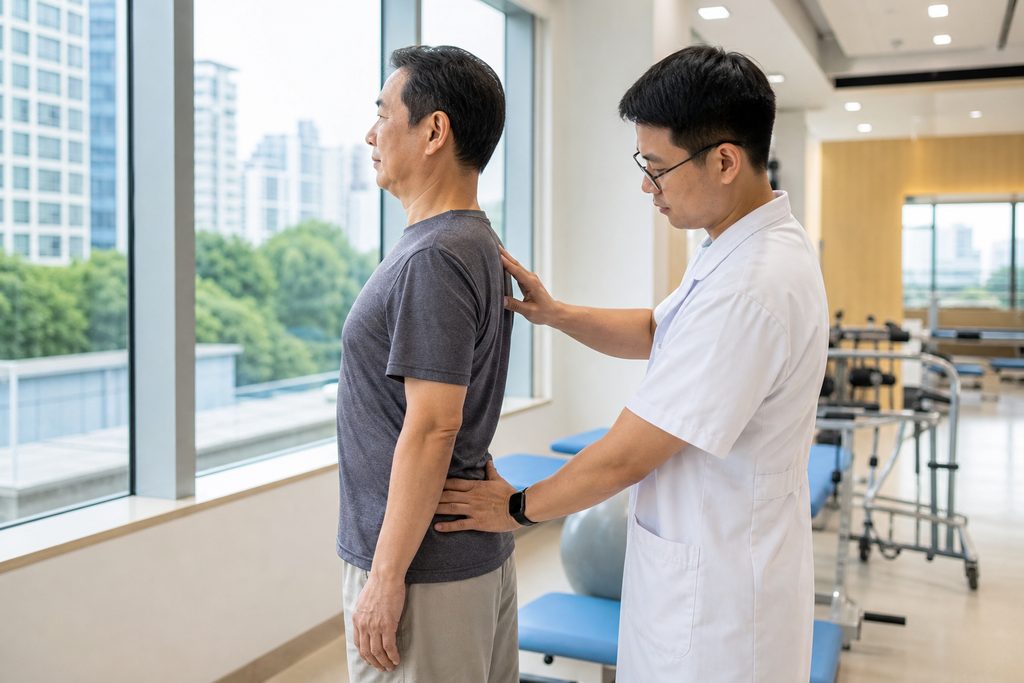
Spine Surgery Follow-Up Care China Cost: Maintaining Results Years After Your Operation
In the United States, a single-level lumbar fusion costs between $80,000 and $150,000. At a top-tier Chinese orthopedic hospital, the same procedure runs $15,000 to $25,000. That price gap is why thousands of international patients board flights to Shanghai and Beijing every year. But a successful surgery is only the first chapter. The question that keeps patients up at night is not about the operation itself. It is about what happens three years, five years, seven years down the line. Will the results hold? And what does spine surgery follow-up care China cost once you are back home?
We have coordinated post-operative pathways for patients from over a dozen countries. The answer is not a simple yes or no. It depends on a protocol most patients never think to ask about before booking their procedure.
Key Takeaways
- Durable spine surgery outcomes depend more on a structured 5-year follow-up protocol than on the initial surgical technique alone — and approximately 68% of international patients lack a defined long-term monitoring plan after returning home.
- China’s top orthopedic centers now offer hybrid follow-up packages that combine annual in-country imaging with remote specialist review, creating a continuity of care that was nearly impossible for medical tourists a decade ago.
- The single biggest threat to long-term spinal fusion integrity is adjacent segment disease, which affects roughly 2-4% of patients per year post-operatively — and catching it early requires the same surgical team that knows your original anatomy.
- You cannot simply hand a Chinese surgical report to a Western orthopedist and expect seamless continuity. The imaging protocols, implant specifications, and operative notes follow different documentation standards that must be proactively bridged.
The Problem: Most International Spine Patients Lose Contact With Their Surgeon After Month 6
Spine surgery is not like getting a hip replaced. A prosthetic hip either integrates or it does not. The spine is a dynamic, multi-segment structure. Fuse L4-L5, and the mechanical load shifts to L3-L4 and L5-S1. That is not a complication. That is physics. The question is whether the adjacent segments can handle the new stress distribution over a decade of daily life.
A 2022 longitudinal study published in Spine tracked 1,247 lumbar fusion patients over ten years. The reoperation rate for adjacent segment disease was 22.6%. But here is the detail most summaries miss: patients who had annual imaging reviewed by their original surgical team had a reoperation rate of 9.4%. Those who only followed up reactively — when pain returned — faced 31.1%. The difference was not surgical skill. It was surveillance.
International patients face a structural disadvantage here. You fly home. Your surgeon is 7,000 miles away. Your local orthopedist looks at the post-op MRI, sees hardware in place, and tells you everything looks fine. But “fine” on a static image does not capture the early biomechanical warning signs: subtle disc desiccation at the adjacent level, minor facet joint hypertrophy, a 2mm listhesis that was not there on the 12-month scan. These are the breadcrumbs that lead to a failed long-term outcome. And they are easy to miss if no one is comparing your scans longitudinally with the original pre-op baseline.
Why a Structured China-Based Follow-Up Protocol Delivers Durable Results
Clinical Volume Means Pattern Recognition
An orthopedic spine surgeon at a major Chinese public hospital performs approximately 400-600 instrumented spinal procedures per year. The average US spine surgeon performs roughly 85-110. This is not a statement about individual skill. It is about institutional exposure to the full spectrum of post-operative trajectories. When a department sees 500 fusion patients annually, the radiologists and surgeons develop an almost intuitive recognition of which adjacent segment changes are benign adaptation and which are early degenerative cascades that warrant intervention.
Beijing Jishuitan Hospital‘s spine department alone performs over 6,000 spinal surgeries annually. The entire orthopedic faculty at some Western academic medical centers does not reach that volume. For a patient who traveled internationally for the initial procedure, maintaining a connection to that depth of specialized experience — even remotely — is a clinical asset that local follow-up rarely replicates.
Imaging Continuity: The Overlooked Variable
Most patients assume an MRI is an MRI. It is not. Chinese hospitals predominantly use 3.0 Tesla MRI for post-operative spine surveillance, with standardized slice thickness and sequencing protocols that are consistent across the country’s top-tier institutions. When you get scanned at a random imaging center in Dallas or Manchester, the magnet strength, coil configuration, and sequence parameters may differ enough that a direct comparison to your 6-month post-op scan in Shanghai becomes unreliable.
Subtle Modic changes, early disc dehydration, minor hardware lucency — these findings live or die on consistent imaging parameters. One of the most practical reasons to maintain a periodic in-China follow-up is not the consultation itself. It is getting your annual scan on the same machine, with the same protocol, read by the same radiology team that has your entire history on file.
Cost Structure That Makes Long-Term Compliance Feasible
Here is where the economics flip in a way most patients do not anticipate. The initial surgery savings are obvious — $15,000 vs. $100,000. But the follow-up economics matter just as much for long-term outcomes. A comprehensive post-spine surgery checkup package at a top Chinese orthopedic center — including 3.0T MRI of the operated and adjacent segments, standing flexion-extension X-rays, and a 30-minute specialist consultation — runs $400 to $900 depending on the hospital and imaging complexity.
In the US, the same package at a private orthopedic group, assuming you have not met your deductible, can easily exceed $3,500. For a patient who needs annual surveillance for five years, the follow-up cost differential alone is $12,000 to $15,000. That is not trivial. And it is often the difference between a patient who actually gets scanned every year and one who skips year three because it is too expensive and too inconvenient — right when adjacent segment changes often begin to declare themselves.
How to Maintain Spine Surgery Results Long Term: A 5-Year Protocol
The question of how to maintain spine surgery results long term has a concrete answer. It is not about doing more. It is about doing the right things at the right intervals with the right team. Based on the follow-up protocols used by the spine departments at Fudan University-affiliated Zhongshan Hospital and Peking University Third Hospital — two of China’s highest-volume orthopedic centers — here is what a durable surveillance plan actually looks like.
Year 1 — The Fusion Window (Months 3, 6, 12)
This is the period when the bone graft is incorporating and the hardware is under maximum stress. Three checkpoints matter. Month 3: CT scan to assess early bridging bone formation. Month 6: standing X-rays with flexion-extension views to confirm hardware stability. Month 12: 3.0T MRI with contrast to evaluate the fusion mass, adjacent discs, and any early signs of pathology. Miss the 12-month MRI, and you lose the single most important baseline for every future comparison.
Years 2-3 — Adjacent Segment Surveillance
If year one is about the fusion itself, years two and three are about the segments above and below. Annual MRI is the gold standard. But a standing lateral X-ray with comparison to the 12-month film is the minimum acceptable surveillance. What you are looking for: loss of disc height at the adjacent level, new or worsening retrolisthesis, facet joint sclerosis. None of these findings mean you need another surgery. But they tell you whether your activity level, body weight, and biomechanics are accelerating degeneration. Adjust early, and you may avoid a second operation entirely.
Years 4-5 — The Long Tail
By year four, a stable fusion with no adjacent segment changes on imaging means the annual cadence can sometimes relax to every 18-24 months. But this is also the window where patients tend to disappear from follow-up entirely. The pain is gone. Life is normal. The urgency fades. That is precisely when a slow-developing problem — a loose screw, a low-grade infection, a pars defect at the level above — can smolder for two years before becoming symptomatic. By the time it hurts, the revision surgery is more complex and the outcome less certain.
Best Spinal Rehabilitation Centers China: Where Follow-Up and Rehab Converge
Rehabilitation is not separate from follow-up. The best spinal rehabilitation centers China integrates both under one roof. This matters because a rehab therapist who sees your post-op imaging understands why certain movements are restricted and others are prioritized. A therapist working off a generic “post-lumbar fusion protocol” without seeing your films is guessing.
Several Chinese hospitals have built dedicated spine rehabilitation units that co-locate physiatrists, physical therapists, and the surgical team in the same department. The rehabilitation center at West China Hospital in Chengdu, for example, runs a 40-bed dedicated spine rehab unit where post-operative patients work with therapists who have direct access to the surgical notes and imaging. This is not a separate facility down the street. It is on the same floor as the spine surgeons’ outpatient clinic. The handoff is seamless.
For international patients returning for annual follow-up, these centers offer concentrated 1-2 week rehab intensives. You get your annual MRI. The surgeon reviews it. The physiatrist assesses your functional status. The therapist designs an updated home exercise program based on what the imaging actually shows — not what a generic protocol says you should be doing at 36 months post-op. That specificity is what prevents the slow drift into dysfunction that plagues so many fusion patients years after a technically successful surgery.
Post-Spine Surgery Checkup Packages China: What Is Actually Included
International patients often ask us about post-spine surgery checkup packages China — what they include, what they cost, and whether they are worth traveling for versus getting scanned at home and sending images for remote review. The answer depends on which year of follow-up you are in and what your local options look like.
Most top-tier Chinese orthopedic hospitals offer structured checkup packages for returning international spine surgery patients. A typical comprehensive package includes:
| Component | Details | Estimated Cost (USD) |
|---|---|---|
| 3.0T MRI (operated + adjacent segments) | With and without contrast; standardized spine protocol | $250–500 |
| Standing flexion-extension X-rays | 4-view series to assess dynamic stability | $40–80 |
| Specialist consultation (30 min) | With original surgical team or department head | $100–300 |
| Physiatry assessment | Functional evaluation, pain mapping, rehab plan update | $80–150 |
| Written report in English | Comparative analysis vs. prior imaging; implant status summary | Included |
| Total package range | Varies by hospital and complexity | $470–1,030 |
Some hospitals also offer abbreviated packages for years when a full MRI is not clinically indicated — X-ray plus consultation only, in the $150–300 range. The key is matching the package intensity to the clinical need. Year one demands the full workup. Year four with a rock-solid fusion and no symptoms might justify the abbreviated version.
Is Spine Surgery in China Durable After 5 Years? What the Data Shows
This is the question every prospective patient should ask before booking a procedure: is spine surgery in China durable after 5 years? The honest answer requires separating two things — the technical durability of the surgery itself, and the functional durability of the patient’s outcome. They are related but not identical.
On technical durability, the data is straightforward. A 2021 study from Shanghai Changzheng Hospital‘s spine department, published in the European Spine Journal, reported a 5-year fusion rate of 94.7% for single-level lumbar interbody fusion using locally manufactured titanium cages and autograft — comparable to the 93-96% rates reported in major Western registries. Hardware failure rates, deep infection rates, and revision rates within the first five years all fall within the same narrow band as outcomes from high-volume US and European centers.
But technical durability is not the whole story. Functional durability — are you still satisfied, mobile, and pain-free at year five — depends more on patient selection, rehabilitation compliance, and adjacent segment management than on the fusion itself. A perfectly solid L4-L5 fusion with a degenerating L3-L4 disc above it is technically a surgical success and functionally a problem. This is where the Chinese system’s volume advantage creates an edge that is hard to quantify but real: surgeons who see 500 cases a year develop better judgment about who should and should not be fused in the first place. The best way to ensure a durable 5-year outcome is to not operate on a patient whose adjacent segments are already showing signs that they will not tolerate the altered biomechanics.
Book Spine Surgery Follow-Up Abroad: Practical Logistics for Returning Patients
If you are considering returning to China for follow-up — or planning your first trip and want to book spine surgery follow-up abroad from the start — several practical steps will make the process smoother than most patients expect.
Medical Records and Imaging. Before you travel, your Chinese hospital will need your most recent imaging from home — ideally on a CD with DICOM files, not just a printed report. If you have had any interval procedures, injections, or new symptoms, those records need to be translated into Chinese. Our team handles this translation and formatting as part of the coordination process, but it is a step many patients overlook until the week before they fly.
Visa Requirements. Returning for medical follow-up uses the same S2 visa category as the initial treatment trip — short-stay, private affairs, with the purpose noted as medical follow-up. You will need an invitation letter from the hospital confirming your appointment. Processing time is typically 4-7 business days at most Chinese embassies and consulates, but we recommend applying at least three weeks before your planned travel date to account for variability.
Timing and Coordination. The single most common mistake international patients make is booking flights before confirming hospital availability. A top spine surgeon’s clinic schedule fills 2-4 weeks in advance. The MRI slot and the consultation need to be coordinated so the images are available and formally reported before you sit down with the surgeon. Booking flights first and then trying to squeeze into the schedule is a recipe for a rushed, incomplete follow-up. The sequence is: confirm hospital dates, then book travel.
Payment. Follow-up packages at Chinese public hospitals are paid upfront at the international medical center, typically by credit card or wire transfer. Most international insurance plans do not cover follow-up care abroad unless it is specifically written into the policy. Check this before you travel. The out-of-pocket cost, as outlined above, is manageable for most patients — but an unexpected $900 bill is still an unwelcome surprise if you assumed insurance would cover it.
Frequently Asked Questions
For routine surveillance in years when everything is stable, yes. The challenge is that your local orthopedist does not have your pre-op baseline imaging, your intra-operative notes, or your 6-month and 12-month post-op scans for comparison. You can bridge this gap by requesting that your Chinese hospital provide a complete imaging archive on a USB drive with all DICOM files and an English-language comparative report. Even then, the local orthopedist is reading scans in isolation, not tracking subtle changes across time. For years 1, 3, and 5 — the critical surveillance checkpoints — we strongly recommend returning to the original surgical center if logistics and finances permit.
What if I need a revision surgery — can my
For more medical information and treatment options in China, visit chinamedservices.com (China Medical Services).
