Varicose Vein Treatment Cost in China: A 2026 Price Guide for Foreign Patients
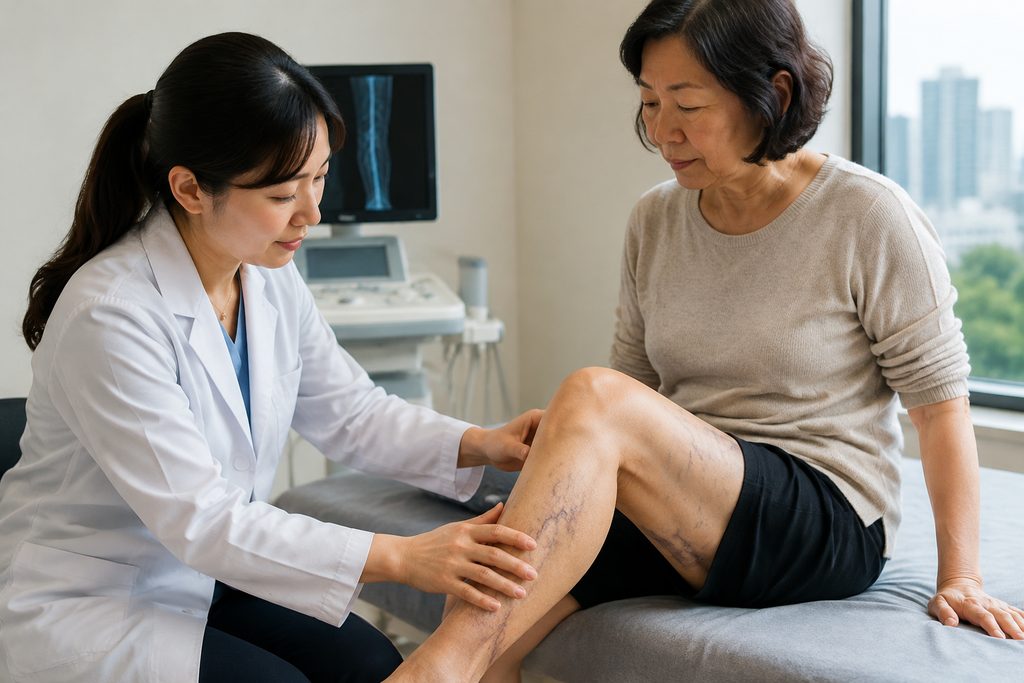
You’ve probably heard that getting medical care in China means either sketchy clinics or luxury hospitals priced for expats. That binary misses the actual landscape. The varicose vein treatment cost China market sits in a middle zone that most Western patients never see: top-tier vascular departments in public hospitals charging $800–$3,500 for procedures that run $5,000–$15,000 in the United States. The gap is real. But so are the logistics, the language barrier, and the upfront payment rules that catch unprepared travelers off guard.
This guide breaks down what you’ll actually pay, which hospitals deliver consistent results, and where the hidden costs live. No vague estimates. No marketing fluff.
Varicose Vein Treatment Cost China: The Short Answer
For endovenous laser treatment (EVLT) on one leg, expect to pay $800–$2,200 at a top public hospital in Shanghai or Beijing. For radiofrequency ablation (RFA), the range is $1,000–$2,800. Classic surgical stripping, increasingly rare but still performed, runs $1,200–$3,500. Sclerotherapy for spider veins and smaller reticular veins costs $150–$600 per session, and most patients need two to four sessions.
Those numbers assume you’re using the hospital’s international department or VIP channel. That’s the only realistic path for a foreign patient who wants to schedule in advance rather than queue at 6 a.m. for a same-day registration number. The VIP premium adds roughly 50–100% over what a Chinese resident pays through the standard outpatient system. But even with that markup, you’re still paying a fraction of Western prices.
Who This Is Right For — and Who It Isn’t
Traveling to China for vein treatment makes sense for a specific profile. You’re a good candidate if:
- You have confirmed venous reflux on duplex ultrasound and your home-country quote exceeds $4,000 for a single-leg procedure
- You need bilateral treatment (both legs) and want to do both in one trip
- You’re combining treatment with business or family travel to China anyway
- You can commit 5–7 days on the ground, including a follow-up ultrasound before departure
- You’re comfortable paying upfront and filing for insurance reimbursement yourself
You should not pursue this path if you have a history of deep vein thrombosis without a recent full coagulation workup, if you’re pregnant, if you have active leg ulcers with signs of infection, or if you cannot arrange a local vascular specialist for follow-up after returning home. Also think twice if you need the procedure done within a specific calendar window — Chinese public hospitals schedule around their own capacity, not your travel dates. And if your only concern is cosmetic spider veins, the cost savings rarely justify the flight. Sclerotherapy is cheap everywhere.
The Options, Compared
China’s vascular departments offer the same treatment modalities you’d find in Cleveland or Hamburg. The difference is volume, price, and how you access the service. Here’s the honest comparison:
| Treatment | China (VIP/Int’l Dept) | United States | Recovery | Best For |
|---|---|---|---|---|
| EVLT (Laser Ablation) | $800–$2,200 | $3,500–$7,000 | 1–3 days | Great saphenous vein reflux |
| Radiofrequency Ablation | $1,000–$2,800 | $4,000–$8,000 | 1–3 days | Similar to EVLT; less bruising |
| Foam Sclerotherapy | $150–$600/session | $350–$800/session | Same day | Spider veins, small varicosities |
| Microphlebectomy | $600–$1,800 | $2,000–$5,000 | 3–7 days | Large bulging veins |
| Surgical Stripping | $1,200–$3,500 | $5,000–$12,000 | 2–4 weeks | Rare now; severe cases |
Most international patients we coordinate choose EVLT or RFA. The technology is mature, the complication rate is low, and the recovery window fits a short trip. If you’re asking “is varicose vein laser treatment safe in China,” the answer is yes — at the right hospital. The key is choosing a department that performs at least 500 endovenous procedures annually. Volume predicts outcomes better than any marketing brochure.
What “Book Varicose Vein Removal China Package” Actually Means
That search phrase — book varicose vein removal China package — reflects a common assumption that you can buy a fixed-price bundle online like a hotel room. You can’t. Not at a reputable public hospital. What you can do is arrange a coordinated package through a service like China Medical Services that includes hospital registration, bilingual accompaniment, and logistics. The medical fees themselves are always paid directly to the hospital, item by item.
A realistic package structure looks like this: initial consultation with duplex ultrasound ($80–$150), the procedure itself (priced above), compression stockings ($30–$80), post-procedure ultrasound ($50–$100), and medications if needed ($20–$60). Coordination and interpretation services run from $300 per day for a bilingual medical companion. So a single-leg EVLT with all diagnostics and one day of companion service lands around $1,300–$2,700 all-in. That’s the number to budget.
What It Costs: The Full Breakdown
Let’s get granular. The varicose vein treatment cost China figure you’ll see quoted online usually covers only the procedure fee. Here’s what else hits your wallet:
Pre-treatment diagnostics. A proper venous duplex ultrasound is non-negotiable. Without it, no responsible vascular surgeon will treat you. Cost: $80–$150 at a public hospital international department. Some private international hospitals bundle this into the consultation fee.
The procedure. This is the headline number. EVLT: $800–$2,200. RFA: $1,000–$2,800. The variance comes from hospital tier, whether one or both legs are treated, and whether you go through the standard international clinic or request a named senior specialist. Requesting a specific professor adds $200–$500.
Compression therapy. You’ll need medical-grade compression stockings after any endovenous procedure. Budget $30–$80 for a proper pair. Cheap stockings from a pharmacy won’t cut it.
Follow-up imaging. A post-procedure ultrasound at day 3–5 confirms the vein is closed. $50–$100. Some hospitals include this in the package; ask explicitly.
What’s not included. Flights, hotel, food, visa fees, and any treatment for complications (rare, but budget for the possibility). Also not included: treatment of the other leg if it wasn’t part of the original plan. And if the ultrasound reveals deep vein insufficiency rather than superficial reflux, the whole treatment pathway changes — and so does the price.
Practical Considerations: Records, Visas, and Payment
You cannot fly to Shanghai, walk into a hospital, and get your veins treated the same day. The system doesn’t work that way. Here’s what the logistics actually look like.
Records before you travel. Send your existing duplex ultrasound report and any relevant medical history ahead of time. The hospital’s vascular department will review it and confirm whether you’re a candidate for treatment. This remote evaluation is often free or costs under $50. It prevents the nightmare scenario of arriving and being told you’re not eligible.
Visa. Medical treatment falls under the S2 visa category, which covers short-term private affairs including medical care. You’ll need an invitation letter or supporting documentation from the hospital, plus proof of appointment. Processing takes 1–4 weeks depending on your home country’s Chinese embassy or consulate. Do not apply for an M visa — that’s for commercial and trade activities, not medical treatment.
Payment. Chinese public hospitals require upfront payment. Credit cards are accepted at international departments, but have a backup: a debit card on the UnionPay network, or cash. Private international hospitals like United Family or Jiahui are more flexible and may bill your insurer directly. Public hospital international departments typically give you itemized receipts for reimbursement claims.
Language. Even in “international” departments, the level of English varies dramatically. A vascular surgeon may read English literature fluently but struggle with conversational nuance. This is where a bilingual medical companion earns their fee — not just translation, but navigating the payment counter, the ultrasound queue, and the pharmacy.
Frequently Asked Questions
Shanghai prices run slightly higher than other Chinese cities because of demand and hospital prestige. At a top-tier public hospital like Zhongshan Hospital Fudan University, expect EVLT to start around $1,200 for a single leg through the international department. At a private international hospital like Jiahui, the same procedure starts around $2,500. The gap reflects service level, not clinical quality. Both are staffed by experienced vascular surgeons.
At high-volume hospitals, yes. The complication profile mirrors what you’d see in Western centers: minor bruising, temporary numbness along the treated vein, occasional skin discoloration. Serious complications — deep vein thrombosis, nerve damage, infection — occur in under 1% of cases at experienced centers. The risk rises at low-volume clinics where EVLT is a side business rather than a core competency. This is why hospital selection matters more than country selection. The top-ranked hospitals in our database all maintain vascular surgery departments with dedicated endovenous teams.
In Thailand, surgical stripping runs $2,500–$5,000. In South Korea, $3,000–$6,000. In Turkey, $1,800–$4,000. China’s $1,200–$3,500 range is competitive but not dramatically cheaper than Turkey. Where China genuinely wins is on the newer endovenous techniques — EVLT and RFA — where the cost gap versus the US and Western Europe is widest. Also note that stripping is increasingly rare everywhere; most surgeons now consider it outdated for all but the most complex cases.
Several Beijing hospitals maintain strong vascular surgery programs. Peking Union Medical College Hospital (PUMCH) is the most recognized name internationally and has a well-established international medical department. Beijing Anzhen Hospital, known primarily for cardiac care, also runs a high-volume vascular surgery unit. For private care with English-speaking staff throughout, Beijing United Family Hospital offers endovenous procedures with direct insurance billing. The “best” choice depends on whether you prioritize clinical reputation, English service, or insurance compatibility. Our department rankings can help narrow this down based on your specific case.
Your Next Step
The varicose vein treatment cost China question has a clear answer: you’ll likely pay $1,300–$2,700 all-in for a single-leg EVLT at a top hospital, including diagnostics and one day of bilingual support. That’s roughly a third to a fifth of US prices. But the number only matters if you choose the right hospital and navigate the system correctly.
We’re China Medical Services. We’re not a hospital and we don’t diagnose or treat anything. What we do is handle the parts that make medical travel stressful: matching you with an appropriate vascular department, coordinating the remote evaluation, arranging your visa documentation, and providing a bilingual companion on the ground. If you have a recent ultrasound report and a rough travel window, tell us about your case and we’ll give you an honest assessment of whether this makes sense for you. No obligation, no pressure.
For more medical information and treatment options in China, visit chinamedservices.com (China Medical Services).
