Vein Treatment: How Soon Can I Return to Normal? Recovery Timelines
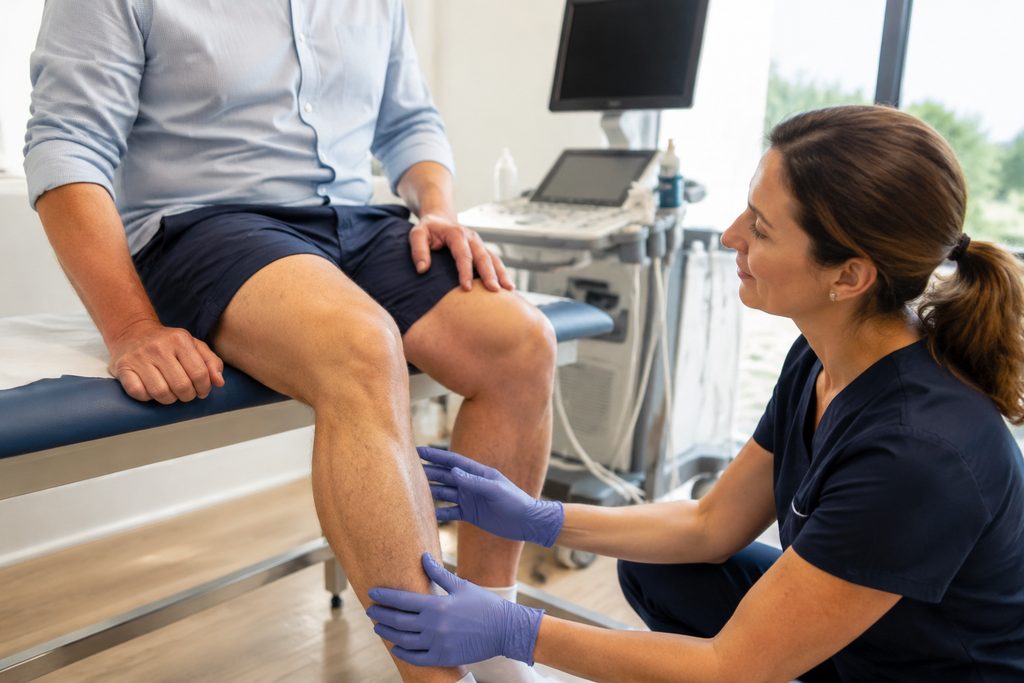
You have probably heard that fixing your veins means weeks on the couch. That is outdated. For most modern vein treatments, “returning to normal” is measured in days, not months. The real answer to “how soon can I return to normal” depends on the specific procedure: sclerotherapy often means 24 hours of taking it easy, while endovenous laser ablation typically has you back at a desk in 2 to 3 days. Walking is not just allowed after most vein procedures—it is prescribed.
But there is a catch. “Normal” is a sliding scale. Normal walking? Almost immediate. Normal gym routine? That takes longer. And if you are planning to travel internationally for treatment, the timeline shifts again. The varicose vein treatment cost China is a major draw for international patients, but the recovery calendar matters just as much as the price. Here is what to expect, week by week.
Vein Treatment Recovery: The Short Answer
For endovenous laser ablation (EVLA) and radiofrequency ablation (RFA), you can return to most daily activities within 48 to 72 hours. For ultrasound-guided foam sclerotherapy, expect 24 hours of reduced activity. For microphlebectomy, plan on 3 to 5 days before you feel comfortable standing for long periods. None of these require bed rest. In fact, your doctor will tell you to walk for 20 to 30 minutes daily starting the day of the procedure.
What complicates the answer is your baseline. A 45-year-old with one problematic vein recovers differently than a 68-year-old with chronic venous insufficiency in both legs. And “return to normal” for a software engineer is not the same as for a construction worker. The procedure matters, but your physiology matters more.
Who This Is Right For — and Who It Isn’t
Vein treatment is not cosmetic for everyone. For many, it is a functional necessity. You are a good candidate for early intervention if you have persistent leg heaviness, visible bulging veins, swelling that worsens by evening, or skin changes near the ankle.
Typically good candidates:
- Adults with symptomatic varicose veins (aching, throbbing, restless legs)
- People who have failed conservative management—compression stockings, elevation, exercise
- Patients with venous reflux confirmed on duplex ultrasound
- Those planning pregnancy who want to address veins beforehand
Who should pause or reconsider:
- People with active deep vein thrombosis (DVT) or a recent pulmonary embolism
- Those with severe peripheral arterial disease—compression and procedures can worsen ischemia
- Pregnant women (treatment is typically deferred until after delivery and breastfeeding)
- Patients with active skin infection over the treatment area
- Anyone who cannot commit to post-procedure compression stockings for the prescribed period
If you are traveling from abroad, the calculus changes. A minor complication that would be a nuisance at home becomes a bigger problem when you are 7,000 miles from your primary care doctor. That is not a reason to avoid treatment. It is a reason to choose a hospital with an international patient department and clear follow-up protocols.
The Options, Compared
Not all vein treatments are equal. The table below compares the four most common approaches available at major Chinese hospitals, including recovery expectations and price ranges for international patients.
| Procedure | Typical Recovery | Return to Desk Work | Return to Exercise | Price Range (China, USD) |
|---|---|---|---|---|
| Foam Sclerotherapy | 24–48 hours | Same day or next day | 3–5 days | $800–2,500 per session |
| Endovenous Laser Ablation (EVLA) | 2–4 days | 2–3 days | 1–2 weeks | $2,500–6,000 per leg |
| Radiofrequency Ablation (RFA) | 2–4 days | 2–3 days | 1–2 weeks | $2,500–6,000 per leg |
| Microphlebectomy | 3–7 days | 3–5 days | 2–3 weeks | $1,500–4,000 |
Which column fits you? If you have small spider veins or reticular veins without significant reflux, sclerotherapy is the least invasive and cheapest option. If ultrasound shows reflux in the great saphenous vein, laser or radiofrequency ablation is the standard of care—sclerotherapy alone will not fix the underlying problem. Microphlebectomy is often combined with ablation when veins are too large or tortuous for a catheter.
Prices vary by hospital tier and case complexity. A public hospital’s international department will typically charge less than a private international hospital like United Family or Jiahui. The varicose vein treatment cost China generally runs 60% to 80% below comparable US pricing, even at top-tier facilities.
How Soon Can I Fly After Vein Treatment? The Travel Question
This is the question that actually matters for international patients. You are not flying from Shanghai to Suzhou. You are flying from Shanghai to London, Dubai, or Los Angeles. Long-haul flights mean prolonged sitting, cabin pressure changes, and a real—if small—risk of thrombosis after any vein procedure.
The consensus among vascular surgeons is clear: wait 48 to 72 hours after sclerotherapy, and 5 to 7 days after endovenous laser or radiofrequency ablation before flying. For microphlebectomy, wait at least 5 days. These are minimums, not targets. If you can stay longer, do.
Why the caution? Venous procedures trigger an inflammatory response in the treated vein. Flying within the first 48 hours increases the risk of superficial thrombophlebitis and, rarely, extension into the deep system. Your surgeon will also want to perform a follow-up ultrasound before you leave—typically at day 3 to 7 post-procedure—to rule out asymptomatic DVT. That ultrasound should happen before you board a plane, not after you land.
If you are asking “how soon can I fly after vein treatment” because you want to minimize time away from work, the honest answer is: plan for 7 to 10 days in China for any ablation procedure. That covers the procedure, the follow-up scan, and a safe buffer before your flight. For sclerotherapy alone, 4 to 5 days is often sufficient.
What It Costs: Varicose Vein Treatment Cost China in Context
The varicose vein treatment cost China is not a single number. It is a range that depends on which procedure you need, which hospital you choose, and whether you go through the public international department or a private facility.
Here is what you are actually paying for:
- Initial consultation and duplex ultrasound: $150–400
- EVLA or RFA, one leg: $2,500–6,000 (public international department: lower end; private international hospital: higher end)
- Foam sclerotherapy, one session: $800–2,500 (most patients need 2–3 sessions)
- Microphlebectomy, one leg: $1,500–4,000
- Compression stockings: $50–150 per pair (you will need two pairs)
- Follow-up ultrasound: $100–250
For comparison, the same EVLA procedure in the United States typically costs $4,000 to $10,000 per leg out of pocket, and in Western Europe, €2,500 to €6,000. The savings are real, but they are not the only factor. You are also paying for the logistics of being abroad: flights, accommodation, and time away from work.
What is not included in the quoted procedure price: your visa application fee, airport transfers, hotel, meals, and any treatment for complications. Budget an additional $1,500 to $3,000 for a 7–10 day stay in Shanghai or Beijing, excluding the procedure itself.
Practical Considerations: Records, Visa, and Payment
You cannot just show up. Chinese public hospitals do not allow overseas patients to book outpatient appointments online without a local presence. The standard rule applies: you need a proxy or a service coordinator to register you, create a hospital medical card, and schedule the initial consultation. Once you have seen the specialist in person, the hospital can schedule your procedure.
For the visa, you will apply for an S2 visa, which covers short-term private affairs including medical treatment. Your supporting documents should include a letter from the treating hospital confirming your appointment and the planned procedure. Family members accompanying you also apply for S2 visas. Processing times vary by embassy, so start at least 4 to 6 weeks before your intended travel date.
Payment is another practical hurdle. Public hospitals require prepayment—you deposit funds at admission and the hospital deducts from that balance. International credit cards are accepted at most international departments, but confirm before you arrive. Private international hospitals often accept direct insurance billing, which simplifies things if your insurer has a partnership. Public hospital international departments typically require you to pay upfront and seek reimbursement from your insurer afterward.
Language is the final consideration. Even at top-tier hospitals, the nursing staff on the vascular surgery ward may not speak English. The specialist might. The front desk probably will not. A bilingual medical companion—someone who handles registration, translates during consultations, and navigates the payment system—changes the experience from stressful to manageable. It is not a luxury for international patients; it is the difference between a 45-minute consultation and a 3-hour ordeal.
Can I Walk After Varicose Vein Surgery? Yes, and You Should
Walking is not optional after vein treatment. It is the single most important thing you can do to reduce complication risk. Walking activates the calf muscle pump, which pushes blood through the deep veins and reduces the chance of clot formation in the treated superficial veins.
Your surgeon will likely tell you to walk for 20 to 30 minutes daily, starting the evening of the procedure. Not a leisurely stroll—a purposeful walk at a normal pace. You will also wear compression stockings for 1 to 2 weeks after ablation, and possibly longer after microphlebectomy. The stockings are uncomfortable. Wear them anyway. They reduce bruising, swelling, and the risk of recanalization.
What you should not do: run, lift heavy weights, cycle, or do high-impact exercise for at least 1 to 2 weeks after ablation. Hot baths and saunas are off-limits for the first week. And do not sit for more than 2 hours at a stretch without getting up and walking for 5 minutes. On a long flight, that means aisle seat, compression stockings on, and standing up every 90 minutes without exception.
Frequently Asked Questions
Laser vein removal recovery time is shorter than most people expect. You can return to desk work in 2 to 3 days and resume light exercise in about a week. Full resolution of bruising and tenderness takes 2 to 4 weeks. The treated vein does not disappear immediately—it hardens, then gradually shrinks over 6 to 12 weeks as your body absorbs it.
Shanghai has several strong options. Public hospital international departments—such as those at Zhongshan Hospital or Ruijin Hospital—offer experienced vascular surgeons at lower prices than private facilities. Private international hospitals like Jiahui and United Family provide English-speaking staff and direct insurance billing. The best vein clinic Shanghai for foreigners depends on your priorities: cost, language support, or insurance convenience. Our hospital database covers both public and private options across 37 cities.
Sclerotherapy price Beijing international hospital typically runs $1,200 to $2,500 per session at private facilities like Beijing United Family or ParkwayHealth. At a public hospital’s international department, expect $800 to $1,500. Most patients need 2 to 3 sessions spaced 4 to 6 weeks apart, which makes sclerotherapy a repeated expense rather than a one-time cost.
It depends on your policy. If your insurer covers varicose vein treatment as medically necessary—not purely cosmetic—you may be reimbursed for treatment at a Chinese hospital. Private international hospitals with direct billing agreements simplify this. Public hospital international departments typically require upfront payment with reimbursement afterward. Request a detailed treatment plan and itemized invoice before you leave; your insurer will want both.
This is the scenario you need to plan for. Most complications—bruising, mild phlebitis, numbness near the treatment site—resolve on their own and can be managed by your local doctor. But you should leave China with a written discharge summary, the treating surgeon’s contact information, and a copy of your post-procedure ultrasound. If your local doctor has questions, they need to be able to reach the team that treated you. Choose a hospital that provides this documentation without you having to ask twice.
Your Next Step
Vein treatment is one of the most straightforward procedures to plan internationally. The recovery is predictable, the costs are transparent, and the technology is the same in Shanghai as it is in Seattle. What differs is the logistics—and that is where most patients stumble.
We are China Medical Services, a coordination team that connects international patients with top-ranked Chinese hospitals. We are not a hospital, and we do not diagnose or treat anything. What we do is handle the parts that are hard to manage from abroad: hospital selection, appointment coordination, bilingual accompaniment, and visa guidance. If you are weighing varicose vein treatment cost China against recovery time and travel logistics, start with a conversation. You can find more on our consultation service page or explore our vascular surgery department listings to see which hospitals specialize in venous procedures.
The right treatment at the right hospital, with a recovery plan you understand before you board the plane—that is the whole game. Plan the recovery first. The savings will follow.
For more medical information and treatment options in China, visit chinamedservices.com (China Medical Services).
