Weight Loss Surgery with Fatty Liver in China: Full NAFLD Care
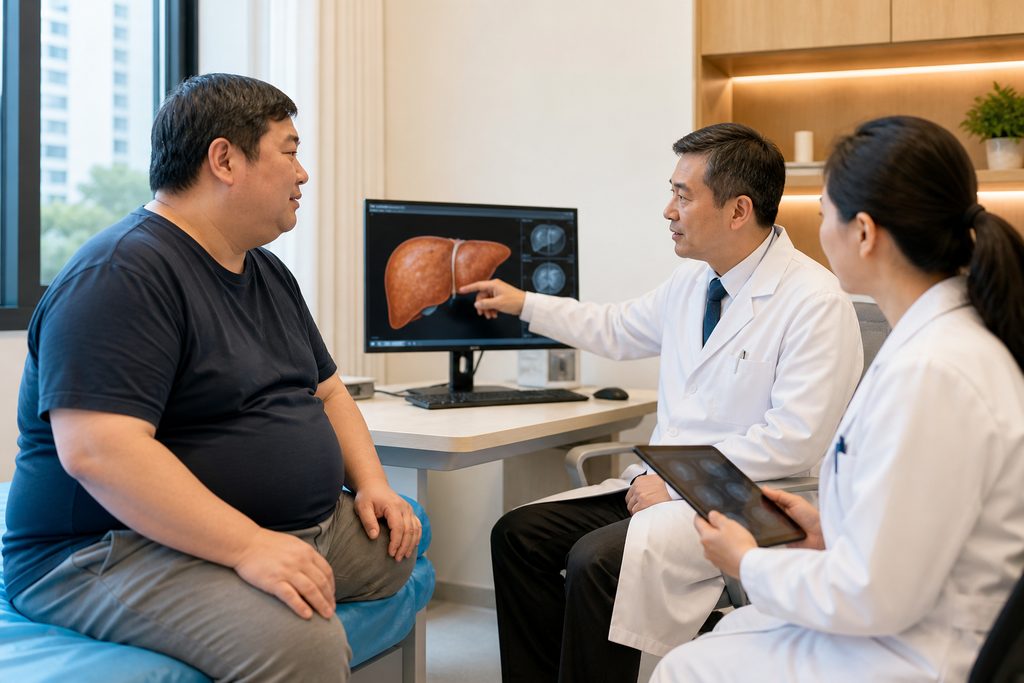
When 42-year-old Michael first heard the diagnosis, he had no idea where to start looking for treatment. His gastroenterologist in Manchester had been blunt: his non-alcoholic fatty liver disease had progressed to NASH with stage 2 fibrosis. The specialist told him to lose at least 15% of his body weight, and soon. Diet and exercise had failed him for a decade. The word “cirrhosis” hung in the air, unspoken but understood. Michael needed a metabolic reset, and he needed it before his liver scarring became permanent. What his local doctor didn’t mention was that combining a bariatric procedure with comprehensive liver management in a single, coordinated trip could change the entire trajectory of his disease. That’s the pathway we help patients navigate every day.
The connection between severe obesity and a failing liver is not a coincidence. It is a direct mechanical and metabolic relationship. Approximately 65% of individuals with a BMI over 35 have some form of steatosis, and up to 20% of those progress to NASH. The liver becomes a warehouse for fat it cannot process. But the data on surgical intervention is striking. A 2020 meta-analysis published in *The Lancet Gastroenterology & Hepatology* found that bariatric surgery leads to complete resolution of steatosis in 66% of patients and fibrosis improvement in 40% within one year. This is not just about losing weight. It is about halting a disease that has no effective pharmaceutical cure.
For international patients, the question shifts from “should I do this?” to “where can I do this safely, affordably, and without a two-year wait?” That’s where a well-planned medical journey to China enters the picture.
How This Actually Works, Step by Step
The process is not a single click. It is a sequence of decisions, documents, and verifications. Here is the real path, stripped of marketing gloss.
First, you send us your existing medical records. We need a recent abdominal ultrasound or FibroScan result, your full liver function panel, a fasting lipid profile, and a letter from your hepatologist or GP confirming the NAFLD/NASH diagnosis and clearing you for surgical consideration. Do not worry if your documents are in English, French, Arabic, or Russian. Our team handles certified translation into Mandarin for the Chinese surgical teams.
Second, we submit your de-identified case to two or three bariatric-metabolic surgery departments at top-tier hospitals. These are not general surgery wards. We target centers where the hepatology and bariatric teams co-manage NAFLD patients. The departments we work with sit on the Fudan University hospital ranking lists for general surgery and gastroenterology. They see this specific patient profile daily.
Third, you receive a written second opinion. This is a formal document. It will state whether you are a surgical candidate, which procedure they recommend—usually a sleeve gastrectomy or a Roux-en-Y gastric bypass—and why. It will also outline the pre-operative liver optimization protocol they want you to follow. This document costs between $300 and $500. If you proceed to travel, that fee is credited in full toward your on-the-ground coordination service.
Fourth, you decide. No pressure. Some patients take the written opinion back to their local doctor. Others schedule a video consultation with the Chinese team to ask questions directly. A top-specialist video call runs $500 to $800. It is the moment where you look the surgeon in the eye and ask: “Can you reverse my fibrosis?”
Fifth, we lock in dates and documents. We confirm your surgery slot through the hospital’s international department. We guide you through the S2 visa application, providing the official hospital invitation letter and treatment confirmation that the Chinese embassy or consulate requires. We book your airport transfer and your bilingual medical companion.
Sixth, you arrive. You attend your pre-operative face-to-face consultation. The surgical team runs their own confirmatory tests. Then, the procedure happens. You recover in the hospital, typically for three to five days, with your companion translating every interaction. After discharge, you stay locally for a follow-up period before flying home with a detailed post-operative care plan for your doctor back home.
The Real Cost of Weight Loss Surgery with Fatty Liver Cost China vs. The West
Let’s talk about the numbers that matter. The search query “weight loss surgery with fatty liver cost China” reveals a patient who is comparing value, not just seeking the cheapest option. And the differential is stark.
In the United States, a sleeve gastrectomy without complications averages $16,000 to $22,000. For a patient with NASH, who requires extended intra-operative monitoring and a longer post-op stay, the bill can easily push past $30,000. In the UK, private-pay patients face £10,000 to £15,000, with NHS waiting lists stretching 18 to 24 months—time a fibrotic liver does not have.
In China, at a top-tier public hospital’s international department, the all-inclusive surgical package for a primary bariatric procedure ranges from $12,000 to $18,000. This includes the surgeon’s fee, anesthesia, the stapling device, a private room, and standard post-operative medications. The pre-operative liver workup, including a high-precision FibroScan and a full metabolic panel, adds another $1,000 to $1,500.
| Cost Component | US Private Pay (USD) | China Top-Tier International Dept. (USD) |
|---|---|---|
| Sleeve Gastrectomy Package | $16,000 – $22,000 | $12,000 – $18,000 |
| Pre-op NAFLD Workup (FibroScan, biopsy if needed) | $3,000 – $5,000 | $1,000 – $1,500 |
| Bilingual Companion (5 days) | N/A | from $1,500 |
| Airport Transfer & Logistics | N/A | $200 |
| Written Second Opinion (credited if you travel) | $800 – $1,200 | $300 – $500 |
| Estimated Total | $20,000 – $28,000+ | $15,000 – $21,200 |
The price difference is real, but it is not the only number that matters. The coordination fee—our service charge for managing the entire sequence—starts at $5,000 for a VIP end-to-end package. That covers case management, translation, appointment scheduling, and a dedicated bilingual companion. It does not buy you a different surgical outcome. It buys you the absence of chaos.
Can You Get Gastric Bypass if You Have Fatty Liver Disease?
This is the question that keeps patients awake. The fear is logical: if my liver is already sick, can it survive the metabolic shock of surgery?
The short answer is yes. The nuanced answer is that it depends on the degree of fibrosis.
Surgeons classify liver disease severity using the METAVIR or Kleiner scoring system. A patient with simple steatosis or mild fibrosis (F0-F2) is a standard bariatric candidate. The liver is fatty but still soft and functional. The surgical risk is only marginally higher than for a patient without NAFLD.
A patient with advanced fibrosis (F3) or compensated cirrhosis (F4) enters a different risk category. Portal hypertension, low platelet counts, and esophageal varices become real concerns. But even here, the data is evolving. A 2021 study from the *Journal of Hepatology* demonstrated that in carefully selected patients with compensated cirrhosis, laparoscopic sleeve gastrectomy achieved a 95% survival rate at one year with significant improvement in hepatic venous pressure gradient.
The Chinese centers we coordinate with take a conservative approach. If your FibroScan suggests F3 or higher, they will almost certainly require a pre-operative liver biopsy. They will also mandate a four-to-six-week pre-surgical optimization protocol: a very-low-calorie liquid diet to shrink liver volume, vitamin K supplementation to support clotting, and strict abstinence from any alcohol. The goal is to turn a high-risk liver into a lower-risk liver before the first incision.
How Does Weight Loss Surgery Affect NAFLD Recovery
The biological mechanism is not mysterious. Bariatric surgery forces the body into a sudden, profound caloric deficit. The liver, starved of excess free fatty acids, begins to oxidize its own stored triglycerides. Within days, hepatic insulin sensitivity improves. Within weeks, intrahepatic fat content drops measurably.
But the real question is about fibrosis. Can scar tissue regress?
The answer is a cautious yes. A landmark 2019 study by Lassailly et al., published in *Gastroenterology*, followed 180 bariatric patients with biopsy-proven NASH. At five years post-surgery, 84% showed NASH resolution. Fibrosis regressed in 70% of patients. The mean NAFLD Activity Score (NAS) fell from 5 to 1. These are not marginal improvements. They are disease reversals.
The key variable is time. The liver’s regenerative capacity is remarkable, but it is not infinite. Patients who undergo surgery while still in the F1-F2 fibrosis stage have the best odds of complete histological recovery. Waiting until F3 means you are racing against the clock. That is why the 18-month NHS waiting list is not just an inconvenience. It is a clinical risk.
Chinese bariatric teams track these metrics obsessively. At a center like Shanghai’s Huashan Hospital, the standard post-operative protocol for NAFLD patients includes a FibroScan at three, six, and twelve months. They are not just measuring weight loss. They are measuring liver stiffness in kilopascals. They want to see the curve trending down.
A Realistic Timeline
This is not a two-week sprint. It is a three-to-four-month project with a concentrated period on the ground. Here is what a realistic calendar looks like.
| Phase | Duration | What Happens |
|---|---|---|
| Document Collection & Translation | 1–2 weeks | You gather liver scans, bloodwork, and doctor’s letters. We translate and format them for Chinese clinical review. |
| Hospital Review & Written Second Opinion | 1–2 weeks | We submit your case to 2–3 surgical teams. You receive a formal written opinion on candidacy and recommended procedure. |
| Decision & Pre-Habilitation | 4–6 weeks | You accept the plan. The surgical team prescribes a pre-op liver-shrinking diet. You start this at home. We lock in your surgery date. |
| Visa Processing (S2) | 2–4 weeks | We provide the hospital invitation letter. You apply at your nearest Chinese embassy or consulate. Processing times vary by country. |
| Travel & Pre-Op Consultation | 3–5 days | You arrive. Your bilingual companion meets you. You attend the face-to-face surgical consult and final pre-op testing. |
| Surgery & In-Hospital Recovery | 3–5 days | The procedure. Pain management. Clear liquid diet. First mobilization. Daily rounds with the surgical team, translated in real time. |
| Local Post-Op Recovery | 7–10 days | You stay in a nearby hotel. Your companion accompanies you to follow-up appointments. Stitches come out. You transition to a pureed diet. |
| Return Home & Remote Follow-Up | Ongoing | You fly back. The Chinese team provides a detailed discharge summary in English. At 3, 6, and 12 months, you send updated labs and FibroScan results for review. |
The most common point of friction is the visa. An S2 visa is what you need for private medical treatment. It is typically valid for 30 to 90 days. You must apply with the official hospital documentation we provide. We cannot guarantee approval—no one can—but a complete application with a clear treatment plan from a recognized hospital has a high success rate.
What Can Go Wrong — and What Happens Then
Surgery in a foreign country carries risks that have nothing to do with the scalpel. We have seen them. Here is what they are and how they get managed.
The surgeon cancels the case after the pre-op consult. This happens in about 5% of cases we coordinate. The in-person FibroScan or endoscopy reveals something the remote records missed. Maybe the fibrosis is F4, not F2. Maybe there is an unexpected hiatal hernia. The Chinese surgical teams we work with are conservative. They will not proceed if the risk profile has changed. If this happens, you have two options. You can pivot to a medically supervised weight loss program through the hospital’s endocrinology department and stay for that treatment. Or you can return home. Our coordination fee is non-refundable for the work already done, but any hospital pre-payment for the surgery itself is refunded per the hospital’s own policy.
You develop a post-operative complication. A leak. A bleed. A pulmonary embolism. The incidence of major complications in high-volume centers is below 2%, but it is not zero. The hospitals we coordinate with are tertiary centers with 24-hour interventional radiology and ICU capacity. They manage these complications in-house. Your bilingual companion stays with you. Your family back home gets a direct line to our coordination desk. You are not abandoned in a foreign ward with a translation app.
Your home-country follow-up falls apart. You return to Manchester or Houston, and your local GP has no idea how to manage a post-bariatric NAFLD patient. We have seen this gap. That is why the written discharge summary is so detailed. It includes target ranges for liver enzymes, a recommended nutritional supplement schedule, and red-flag symptoms that demand immediate imaging. We also facilitate a one-time handover video call between the Chinese surgeon and your local hepatologist, if needed. The goal is continuity, not a cliff edge.
Best Hospital for Bariatric Surgery with Fatty Liver Beijing and Shanghai: How to Choose
The phrase “best hospital for bariatric surgery with fatty liver Beijing” implies a single answer. There isn’t one. There are several excellent options, and the right one depends on your specific fibrosis stage, your BMI, and your personal tolerance for a bustling versus a more boutique environment.
In Beijing, you are looking at centers like Peking Union Medical College Hospital (PUMCH) and Beijing Friendship Hospital. PUMCH’s general surgery department is consistently ranked in the top tier of the Fudan rankings. Their international department is fluent in managing complex metabolic cases. The trade-off is volume. PUMCH is a medical city. The corridors are crowded. The pace is fast. For a patient who wants the absolute highest academic pedigree and does not mind a less hand-held experience, it is a strong choice.
In Shanghai, the landscape shifts. Huashan Hospital, affiliated with Fudan University, runs a dedicated bariatric-metabolic surgery program with a specific research interest in NAFLD outcomes. Their surgeons publish on this topic. For a patient whose primary concern is liver recovery, not just weight loss, this alignment of research and clinical practice is valuable. Shanghai also offers Jiahui International Hospital, a private, JCI-accredited facility. The bariatric surgery price at Jiahui runs higher—closer to $25,000 to $30,000—but the environment is Western-style, with all-English-speaking staff and direct insurance billing. For a patient with a complex NAFLD history who feels anxious about a purely Chinese-language setting, Jiahui removes that variable entirely.
The decision comes down to three questions. First, how advanced is your fibrosis? If you are F3, choose the center with the most published data on high-risk bariatric patients. Second, what is your budget? The public hospital international departments offer the best value. The private international hospitals offer the smoothest cultural experience. Third, how much clinical hand-holding do you need? If the answer is “a lot,” pick a center with a dedicated international patient coordinator on staff, not just a general admissions desk.
We also maintain a database of over 340 top-ranked hospitals across 37 cities. You can explore our ranked hospital listings by city to see the full landscape. For a deep dive into a specific facility, our specialty department rankings let you cross-reference general surgery excellence with gastroenterology strength—a crucial overlap for the NAFLD patient.
Practical Considerations: Records, Visa, and the Follow-Up Gap
The success of this journey depends on what happens before you board the plane and after you land back home.
Your medical records are the foundation. A single-page “fatty liver” ultrasound report is not enough. The Chinese surgical team will want to see a FibroScan result with a CAP score and a kPa measurement. They will want your ALT, AST, GGT, platelets, albumin, and INR. If you have had a biopsy, they want the full pathology report with a fibrosis stage. If you do not have these, get them done before you contact us. It will save weeks of back-and-forth.
The S2 visa is for short-term private medical treatment. The hospital provides a formal “Invitation Letter for Medical Treatment” and a “Confirmation of Appointment” document. You submit these with your passport, photo, and application form. Processing takes two to four weeks in most countries. Do not book a non-refundable flight until the visa is in your hand.
Payment is upfront. The hospital will issue a pro-forma invoice. You wire the funds. The hospital confirms receipt and locks your surgical slot. This is standard practice in China. It is not a scam. But it means you need to have the capital available. Insurance reimbursement comes later. We provide the documentation you need to file that claim.
Language is the invisible barrier. The surgeon may speak some English. The nurses on the ward almost certainly will not. The dietician who explains your post-op pureed diet will speak Mandarin. Your bilingual companion is not a luxury add-on. They are the person who ensures you understand your discharge instructions correctly.
The follow-up gap is the hardest part. You will lose weight rapidly. Your liver enzymes will normalize. You will feel, for the first time in years, like you are winning. And then you will be back in your home system, where your GP may have never managed a post-bariatric NAFLD patient. Insist on a formal handover. The Chinese team’s discharge summary is your new medical bible. Share it with your hepatologist back home. Schedule your three-month FibroScan before you even travel to China. The data from that scan is what will tell you if the surgery truly worked for your liver.
Frequently Asked Questions
For most patients with F0-F2 fibrosis, the answer is a strong yes. Clinical studies show steatosis resolution in roughly two-thirds of patients and fibrosis improvement in 40-70% within the first year. The effect is driven by rapid weight loss and hormonal changes that reduce liver fat. For F3 fibrosis, improvement is possible but not guaranteed. You will need close monitoring.
If the Chinese surgical team determines you have decompensated cirrhosis, they will refuse the bariatric procedure. This is a hard clinical stop. At that point, the conversation shifts to ongoing hepatology management. We can coordinate a consultation with a hepatologist to discuss medical optimization and, in a separate pathway, transplant evaluation. But we do not coordinate solid-organ transplants.
You can coordinate a comprehensive treatment journey, but it is not a one-click “package” purchase. The hospital’s surgical fee, our coordination service, your companion, your accommodation, and your flights are separate components that we align into a single timeline. The total cost, including surgery and all coordination, typically falls between $17,000 and $26,000, depending on the hospital and the complexity of your case.
You will have the Chinese surgeon’s direct contact protocol for urgent questions. You will also have a detailed discharge summary that any local general surgeon or gastroenterologist can use to understand exactly what was done. For non-urgent follow-up, we facilitate remote consultations with the Chinese team to review your progress labs and imaging.
Your Next Step
Michael’s story is not unique. It is the story of a disease that gives you a window of time and a surgical tool that can widen that window, if used correctly. The decision to travel for this care is significant. It requires trust in a system you do not know, in a language you may not speak, and in a clinical team you have never met.
Our organization exists to build that trust. We are not a hospital. We are a case management team that connects you with China’s top-tier bariatric and hepatology departments, translates your records, guides your visa process, and places a bilingual medical companion at your side from the moment you land. We do not perform surgery. We do not make clinical decisions. We make sure you understand every clinical decision that is made for you.
If you are carrying a NAFLD diagnosis and a BMI that qualifies you for bariatric surgery, the clock is ticking. The data says action now yields better liver outcomes than action in two years. To start the conversation—with no commitment and
For more medical information and treatment options in China, visit chinamedservices.com (China Medical Services).
