West China Hospital Anesthesiology: China’s Standard for Perioperative Safety
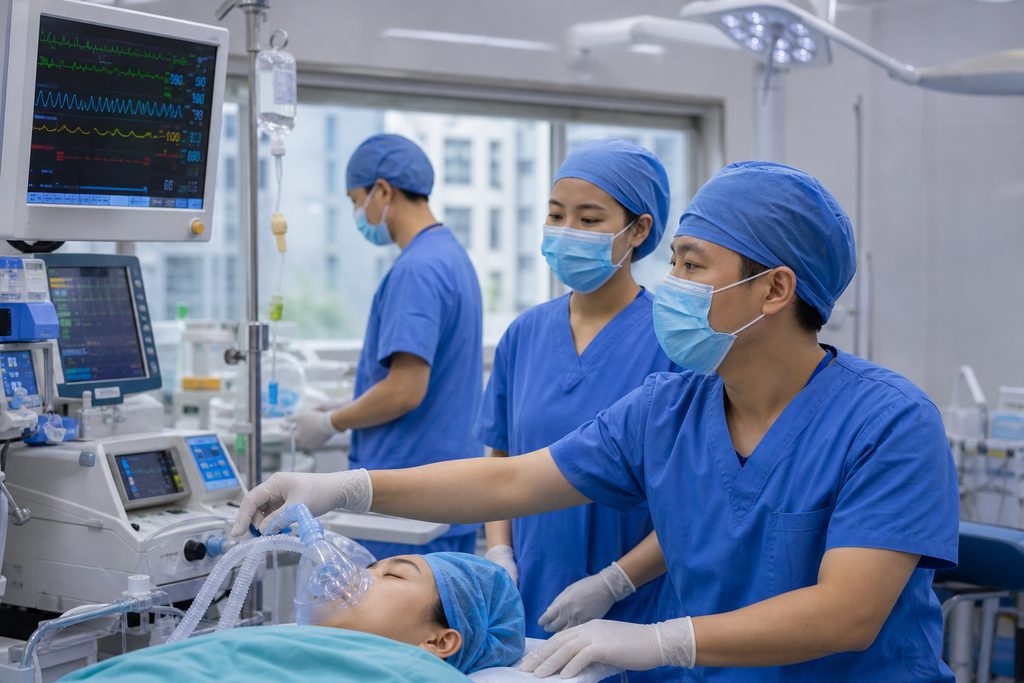
What if the fear of waking up during surgery—or not waking up at all—could be neutralized by a hospital that performs over 200,000 anesthetic procedures every single year? That number isn’t a typo. It’s the annual caseload of the Department of Anesthesiology at West China Hospital of Sichuan University. For a patient considering a major operation abroad, the surgeon’s name gets all the attention. But the anesthesiologist holds your life in their hands, minute by minute, while you are utterly defenseless on the table. This is where West China Hospital in Chengdu has quietly built a fortress of safety.
Key Takeaways
- West China Hospital’s anesthesiology department handles a massive volume exceeding 200,000 cases annually, driving expertise in complex airway management and elderly patient care that few Western centers can match.
- The hospital utilizes a unique “Perioperative Surgical Home” model where anesthesiologists manage your pain and physiology from the pre-op clinic through full recovery, not just during surgery.
- Language barriers and the sheer scale of a 4,300-bed public hospital make navigating the system independently extremely difficult for international patients without local bilingual support.
- Understanding the West China Hospital anesthesia cost structure—often bundled yet significantly lower than US fees—requires direct coordination with their International Medical Center, as public pricing fluctuates.
The Problem: Anesthesia Anxiety Is Rational, Not Irrational
Let’s be blunt. You aren’t just scared of the surgery. You are scared of the needle in your spine. You are scared of the drug that paralyzes your lungs. A study published in the Journal of Clinical Anesthesia found that preoperative anxiety regarding anesthesia affects approximately 60% to 80% of surgical patients. The fear isn’t about pain alone. It is about losing control. It is about the rare, terrifying complication of intraoperative awareness—where muscle relaxants work, but the sedatives don’t. And for international patients, the anxiety doubles. You are in a foreign country. You don’t speak the language. You wonder, “Is anesthesia safe in China for surgery?”
That question deserves a hard, data-driven answer, not a brochure. The reality is that safety in Chinese top-tier hospitals isn’t a gamble. It’s a protocol. But the gap between a top-tier academic center and an unvetted local clinic is a chasm. If you pick wrong, the safety net disappears. If you pick right, you access a system that has industrialized safety checks to a degree that is impressive even by strict Western standards. West China Hospital sits firmly in that “pick right” category. It is one of the largest single-site medical centers in the world, and its Department of Anesthesiology is the engine that keeps its 80+ operating rooms running with a mortality rate that rivals the best US academic hospitals.
Who We Are
We are not clinicians. We do not administer anesthesia, nor do we provide medical advice on your specific case. We are China Medical Services. Our team acts as the logistical bridge between you and the massive, complex machinery of China’s top-ranked hospitals. We handle the friction points—translating your medical records, verifying that the hospital’s International Medical Center accepts your case, securing visa invitation letters, and placing a bilingual medical companion by your side so you never face a preoperative checklist in Chinese alone. When you ask us about the West China Hospital anesthesia cost, we give you the real numbers from the official international department, not estimates scraped from a forum.
Why West China Hospital Sets the Standard for Perioperative Safety
You don’t become the hospital ranked at the very top of China’s Fudan Hospital Rankings (Consistently A++++ tier) by accident. The Department of Anesthesiology here isn’t just a service department; it’s a national center for research and training. This changes how they treat you.
Volume Breeds a Specific Kind of Calm
There is a concept in high-risk industries called “normalization of the crisis.” If a team only sees a difficult airway once a month, it’s a panic event. If they see it five times a day, it’s Tuesday. West China Hospital handles the highest volume of anesthetic cases in the country. This means the attending covering your case has likely managed your exact comorbidity—be it severe cardiac stenosis or morbid obesity—hundreds of times. They aren’t guessing about your hemodynamic response to induction. They know it. This is especially critical for elderly patients. China’s population is aging, and West China has become a national referral center for geriatric surgery. Their protocols for cerebral oxygenation monitoring during major abdominal surgery in octogenarians are not experimental. They are standard operating procedure.
The Perioperative Surgical Home: Pain Management Before the Scalpel Touches Skin
How does West China Hospital manage pain after surgery? The answer is that they start managing it before the incision is made. This is the “Enhanced Recovery After Surgery” (ERAS) protocol executed at scale. The anesthesiology team runs a preoperative clinic that is central to the hospital’s success. You aren’t just cleared for surgery; you are optimized. They might start you on carbohydrate loading, pre-habilitation exercises, or specific nerve-block planning weeks in advance. This is the core of their perioperative safety China hospital reviews often highlight. They have aggressively adopted ultrasound-guided regional anesthesia. This means instead of heavy IV narcotics that fog your brain and slow your gut, you get a precise nerve block that numbs the surgical site for up to 24 hours. You wake up clear-headed. You walk sooner. You go home faster.
Cost: The Structural Advantage of a Public Academic Giant
Let’s address the obvious question. What is the West China Hospital anesthesia cost? The billing structure is different from the US model, where you get a separate, eye-watering bill from the anesthesiology group. In China’s public hospitals, anesthesia and operating room fees are often bundled with the surgical procedure. For a complex surgery like a total knee replacement, the total package—surgeon’s fee, OR time, anesthesia, standard implants—often falls between $12,000 and $18,000 USD in the international VIP wing. The anesthesia component itself is a fraction of that, usually ranging from $500 to $1,500 depending on the length of the case and the monitoring required. Compare this to the US, where a board-certified anesthesiologist’s professional fee alone can easily hit $2,000 to $4,000 for a standard orthopedic case. The lower cost here does not imply a lower standard of care. It reflects China’s regulated public hospital pricing and the sheer efficiency of a high-volume center. You are paying for expertise, not administrative bloat.
What You Need to Know Before Going Alone
We respect the DIY spirit. But walking into West China Hospital without a plan is like walking into a busy airport without a ticket or a map. It’s loud, vast, and operates on a logic you won’t instantly grasp. Here is what you are up against.
- The Registration Wall: The public outpatient hall serves over 20,000 patients daily. Registration kiosks and signage are almost exclusively in Chinese. You cannot book a surgery slot from overseas via the public system. You must see a surgeon in the clinic first. Getting that clinic appointment without a local phone number and ID is technically possible, but practically a nightmare.
- Payment Systems: The hospital runs on a prepaid card system for public patients. You load cash or scan WeChat Pay. Your international Visa or Mastercard is useless at the standard cashier. The International Medical Center handles this differently, but you need to know it exists and how to route yourself there from the start; otherwise, you’ll be stuck in a queue that leads to a dead end.
- Medical Coding & Translation: To get an accurate surgical plan and anesthesia risk assessment, the pre-op team needs your full medical history. A translated discharge summary isn’t enough. They need imaging in DICOM format, pathology slides, and a detailed medication list with generic names. A single missing report can delay your clearance by days.
How We Help You Navigate This
These barriers aren’t signs of a broken system. They are signs of a system designed for 1.4 billion locals, not international visitors. We re-route you to the right channel. The process starts with your records. You send us your files. We have them terminologically translated and presented to the International Medical Center for a pre-assessment. The anesthesiology department can review your case and confirm whether they can safely manage your comorbidities before you book a flight. This is vital. We don’t want you flying 12 hours just to be deemed “too high risk” because of a miscommunication. Once cleared, we coordinate the S2 visa invitation letter from the hospital. When you land in Chengdu, a bilingual medical companion meets you. They don’t just translate words; they translate context. They ensure the anesthesiologist understands your history of post-operative nausea. They confirm the nerve block plan is documented. They sit in the pre-op holding area with you until you are wheeled in.
For those who want to explore options without committing to travel immediately, we also coordinate remote video consultations with specialists. Any fees paid for a pre-travel consultation are credited in full toward your on-ground coordination if you decide to proceed with surgery within 90 days. It’s a way to test the waters with zero financial risk.
Frequently Asked Questions
In a top-tier academic center, the safety standards meet or exceed international benchmarks. West China Hospital uses the same modern volatile anesthetics (Sevoflurane, Desflurane), target-controlled infusion pumps for Propofol, and standard ASA monitoring (ETCO2, pulse oximetry, NIBP, temperature) you’d find at Johns Hopkins. The difference is the volume of complex cases they manage, which sharpens the team’s crisis management skills. Safety is not about the country. It’s about the specific institution.
They rely heavily on multimodal, opioid-sparing pathways. A typical protocol for a colectomy would include a pre-operative ultrasound-guided Transversus Abdominis Plane (TAP) block, intraoperative IV Lidocaine infusion, and scheduled Acetaminophen and NSAIDs post-op. Patient-Controlled Analgesia (PCA) pumps with opioids are available, but the goal is to use them as a rescue, not a first line. This approach significantly reduces ileus and speeds up the return of bowel function.
The cost is not a fixed menu item; it is calculated based on the duration of the surgery and the complexity of monitoring (e.g., invasive arterial line vs. standard cuff). For a 3-hour surgery in the VIP wing, the anesthesia and operating room fees combined typically range from $1,200 to $2,500. This is usually billed as one package with the surgery itself. We always request a binding quote from the hospital’s international department before you commit to travel, so there are no surprises.
You can try, but it’s extremely difficult. The international department handles foreign bookings, but they are a small team within a 4,300-bed behemoth. Response times can be slow if your case isn’t clearly presented. Furthermore, the anesthesiologists in the pre-op clinic might not have the time to decipher poorly translated medical records. You risk being denied clearance not because you are unfit, but because your records weren’t legible to the reviewing physician.
Your Next Step
The safety of your surgery hinges on the team managing your airway and your hemodynamics. At West China Hospital, that team is world-class, but the path to their door is complicated. You don’t need to navigate the maze of China’s largest hospital alone. If you want to know whether your specific case is a fit for their perioperative program, let’s start with the facts. Send us your medical records. We’ll get a straight answer from the source, so you can make a decision based on certainty, not hope.
For more medical information and treatment options in China, visit chinamedservices.com (China Medical Services).
