West China Hospital of Stomatology: Dental Implant Costs for Internationals
When 47-year-old Daniel from Manchester lost his second molar to a failed root canal, his UK dentist quoted him £2,800 for a single implant with a six-month wait. The quote made him pause. He started searching for alternatives and landed on a phrase that changed his plan entirely: dental implant cost West China Hospital of Stomatology. What he found looked almost too good to be true. A top-ranked dental hospital, a fraction of the price, and a process that seemed navigable with the right help.
Daniel is not alone. Every month, dozens of international patients contact us asking the same questions. Is this hospital actually good? What does it really cost? How long will I need to stay in Chengdu? This guide answers those questions directly, without the fluff.
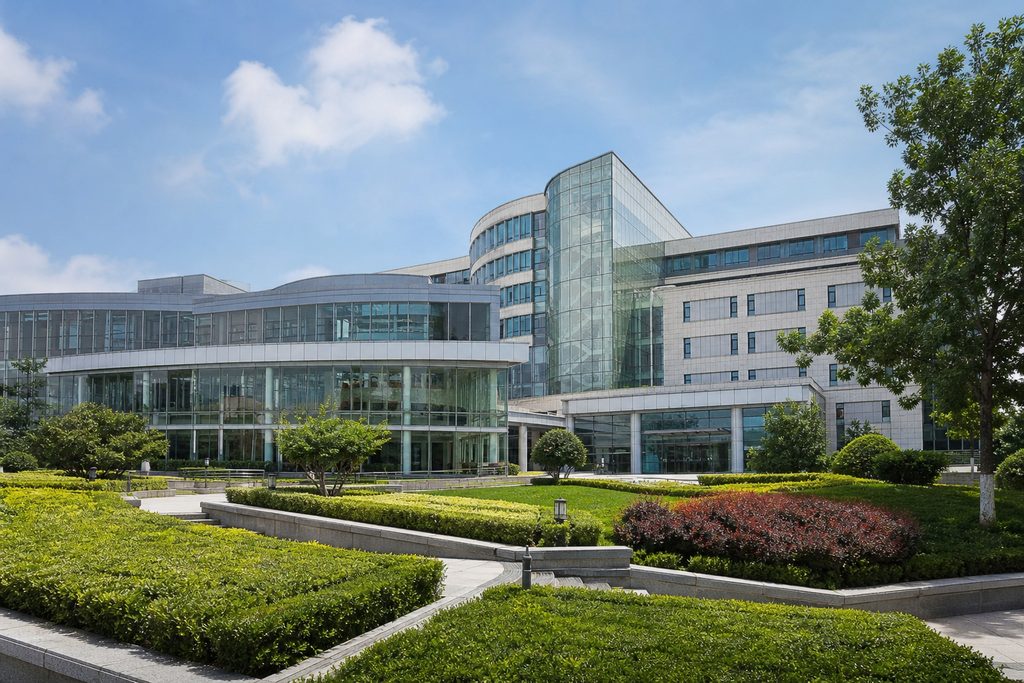
West China Hospital of Stomatology sits inside Sichuan University in Chengdu. It consistently ranks among China’s top dental institutions in the Fudan specialty reputation rankings. For international patients considering dental implants, it represents one of the most compelling combinations of clinical volume, academic rigor, and price anywhere in the world. But accessing it from abroad is not as simple as booking a flight. Understanding the real process matters.
How This Actually Works, Step by Step
The path from “I’m considering implants in China” to “I’m sitting in the dental chair in Chengdu” follows a sequence that surprises most first-time international patients. Here is the unvarnished version.
First, you send us your existing dental records. Panoramic X-rays, CBCT scans if you have them, any treatment plans from your home dentist, and a brief description of what you need. We translate these into Chinese and route them to the hospital’s international coordination channel or a senior prosthodontics team for preliminary review. This step typically takes 5 to 10 business days.
Second, you receive a written preliminary assessment. The team reviews your bone density, the number of missing teeth, whether sinus lift or bone grafting appears necessary, and any complicating factors like periodontal disease or smoking history. They provide a recommended treatment approach and a cost estimate range. This is not a binding quote. But it tells you whether you are a good candidate before you spend money on flights.
Third, you decide whether to proceed. If yes, we coordinate appointment scheduling through the hospital’s official channels. Here is the critical reality: public hospital outpatient clinics in China generally cannot be pre-booked from overseas through ordinary registration. You need the international department or a coordinated proxy arrangement. That is where our bilingual medical companion service becomes essential. We handle registration, queue management, payment, and translation on the ground.
Fourth, you arrive in Chengdu for the in-person consultation and treatment. Your first visit involves a clinical examination, updated imaging, and a finalized surgical plan. Surgery is typically scheduled within days to a few weeks after that first visit, depending on the surgeon’s calendar and the complexity of your case.
Dental Implant Cost West China Hospital of Stomatology: Real Numbers
Let us talk about the number that brought you here. The dental implant cost West China Hospital of Stomatology varies significantly based on the implant system used, the complexity of your case, and whether you need adjunctive procedures like bone grafting. But we can give you realistic ranges based on current market data and patient-reported figures.
| Procedure | West China Hospital of Stomatology (USD) | Typical US Price (USD) | Typical UK Price (USD) |
|---|---|---|---|
| Single implant (Korean brand, e.g. Osstem) | $800 – $1,400 | $3,000 – $4,500 | $3,200 – $4,800 |
| Single implant (European brand, e.g. Straumann) | $1,500 – $2,500 | $4,500 – $6,500 | $4,000 – $6,000 |
| Full arch restoration (All-on-4 or All-on-6) | $8,000 – $15,000 | $25,000 – $45,000 | $22,000 – $40,000 |
| Sinus lift or bone graft (per site) | $300 – $800 | $1,500 – $3,000 | $1,200 – $2,500 |
| CBCT scan and diagnostic workup | $80 – $150 | $300 – $600 | $250 – $500 |
These ranges reflect the dental implant cost West China Hospital of Stomatology as reported across Korean, European, and domestic Chinese implant systems. The final price depends on your specific clinical situation. A patient with excellent bone density getting a single Korean-brand implant may pay under $1,000 all-in. A patient needing full-arch restoration with bone grafting and premium implants will land closer to $15,000.
Compare that to the United States, where the average single implant costs $3,000 to $6,000, and full-arch solutions routinely exceed $30,000. Even with international travel, accommodation, and our coordination fees included, most patients save 50% to 70% on total treatment cost. That is not marketing spin. That is arithmetic.
Is West China Hospital of Stomatology Good for Dental Implants?
The short answer: yes, with qualifications that matter. West China Hospital of Stomatology is one of the oldest and most respected dental institutions in China. It traces its roots to the West China Union University dental school founded in 1917. Today it operates as a comprehensive stomatological hospital with over 500 dental chairs and one of the highest annual patient volumes in the country.
For implantology specifically, the hospital’s Department of Oral Implantology runs multiple operating rooms and handles thousands of implant cases annually. The volume matters. Implant success correlates strongly with surgeon experience. A prosthodontist placing 500 implants a year has seen complications that a general dentist placing 50 a year has only read about.
But here is the honest caveat. Volume does not automatically mean the best experience for a foreign patient. The hospital’s public clinics are crowded, fast-paced, and conducted almost entirely in Chinese. You will not find Western-style bedside manner in every consultation. That is why we pair international patients with senior clinicians through coordinated channels and provide a bilingual companion to translate every step. The clinical quality is there. The experience requires management.
A Realistic Timeline
Dental implants are not a one-week procedure. Anyone promising same-week permanent teeth is selling a specific immediate-loading protocol that does not apply to every case. Here is what a realistic timeline looks like for an international patient at West China Hospital of Stomatology.
| Stage | What Happens | Duration |
|---|---|---|
| Week 1–2 | Document translation, preliminary remote review, cost estimate | 5–10 business days |
| Week 3–6 | S2 visa application, flight booking, accommodation arrangement | 2–4 weeks (varies by embassy) |
| Week 7 (arrival) | In-person consultation, CBCT imaging, surgical plan finalization | 1–2 days |
| Week 8 | Implant placement surgery (single or multiple implants) | 1 day for surgery; 3–7 days recovery |
| Month 3–4 | Osseointegration period. You return home during this phase. | 3–6 months, depending on bone quality |
| Month 4–7 | Second trip to Chengdu for abutment placement and impressions | 3–5 days |
| Month 5–8 | Final crown delivery. May be same trip or a third short visit. | 2–4 days |
Most single-implant cases require two trips to Chengdu. The first for surgery, the second for the final restoration. Some immediate-loading protocols allow temporary teeth on the same day as surgery, but the final crown still comes months later. Full-arch cases may require three visits. Plan for that reality, not the optimistic version.
And remember: the S2 visa is the correct category for medical treatment in China. It covers short-term private affairs including medical visits. Your accompanying family member also applies for an S2. Processing times vary by embassy, so start early. We provide the hospital invitation and supporting documentation to strengthen your application.
What Can Go Wrong — and What Happens Then
Let us be blunt about failure modes. Dental implants fail. The global literature reports implant survival rates of 90% to 95% over 10 years, which means 5% to 10% of implants do not survive a decade. At a high-volume center like West China Hospital of Stomatology, the rates align with international standards. But “standard” still means some patients experience complications.
The most common issues: peri-implantitis (infection around the implant), failure of osseointegration (the bone does not fuse to the implant), nerve damage in the lower jaw, and sinus complications in the upper jaw. If any of these occur during your treatment window in Chengdu, the hospital manages them directly. If they occur after you return home, you face a difficult choice: fly back to Chengdu for revision, or find a local dentist willing to take over another surgeon’s case.
Many Western dentists are reluctant to manage complications from implants placed abroad. This is not snobbery. It is liability. Before you commit to treatment in China, ask your home dentist directly: “If I have a complication, will you see me?” If the answer is no, factor that into your decision. We can also coordinate follow-up video consultations with the Chengdu team if issues arise after you return home.
Another failure mode is expectation mismatch. You arrive expecting a leisurely, spa-like experience. You get a busy teaching hospital where consultations are efficient rather than chatty. That gap is manageable if you know it is coming. We prepare every patient with a clear picture of what the hospital experience actually looks like.
Best Dental Implant Clinic China for Foreigners: How West China Compares
West China Hospital of Stomatology is not the only option. When international patients search for the best dental implant clinic China for foreigners, they often encounter three types of providers: top public academic hospitals like West China, private international dental clinics in Shanghai and Beijing, and mid-tier public hospitals in smaller cities.
The private international clinics — think United Family Dental, Jiahui, or Parkway-affiliated practices — offer English-speaking staff, Western-style service, and direct insurance billing. A single implant there costs $2,500 to $4,500. That is still cheaper than the US or UK, but significantly more than West China. You pay for comfort and language convenience.
West China offers the opposite trade-off. You get top-tier clinical expertise and lower prices, but the environment is Chinese-speaking and the service model assumes you can navigate a public hospital. With a bilingual companion, that navigation becomes manageable. Without one, it is genuinely difficult. The hospital’s international patient price is essentially the same as the domestic price for most procedures, with modest coordination fees added through official channels.
For patients prioritizing clinical quality and cost over service polish, West China is hard to beat. For patients who want a Western-style experience and are willing to pay more, a private international clinic may be the better fit. There is no universal “best.” There is only the best match for your priorities. Our role is helping you figure out which one that is.
Practical Considerations: Records, Visa, Payment, and Follow-Up
Before you book anything, gather your records. You need recent panoramic X-rays, ideally a CBCT scan, any previous dental treatment history, and a list of medications you take. If you have diabetes, osteoporosis, or a history of bisphosphonate use, disclose it. These conditions affect implant success and the surgical team needs to know.
Visa category: S2, not M. The M visa is for commercial and trade activities. Applying for the wrong category delays everything. Your accompanying family member also needs an S2. We provide the hospital invitation letter and supporting documentation to accompany your application. Approval is never guaranteed, but a complete application with a legitimate medical purpose has a strong track record.
Payment at West China Hospital of Stomatology is typically required upfront for each stage of treatment. Public hospitals in China do not bill insurance directly. You pay, then claim reimbursement from your insurer if your policy covers overseas dental treatment. Most international health insurance plans exclude dental implants, but some premium policies include them. Check before you travel.
Language is the practical hurdle most patients underestimate. Registration desks, pharmacy counters, imaging departments, and billing offices all operate in Chinese. A bilingual medical companion handles all of this for you. Our companions are not medical interpreters in the traditional sense — they are trained to navigate the specific workflows of Chinese public hospitals, which is a different skill entirely.
Follow-up at home: your home dentist can perform routine maintenance and hygiene visits. The implant itself rarely needs intervention once integrated. But keep the Chengdu team’s contact information. If your local dentist identifies an issue, a video consultation with the original surgeon is often the fastest way to determine whether it is serious.
Frequently Asked Questions
A single implant typically ranges from $800 to $2,500 depending on the implant brand and whether bone grafting is needed. Korean brands like Osstem sit at the lower end. European brands like Straumann or Nobel Biocare sit at the higher end. The final quote depends on your specific clinical situation.
Plan for 4 to 8 months total, with two or three trips to Chengdu. The first trip covers consultation and implant surgery. The second trip, 3 to 6 months later, covers the abutment and final crown. Some cases can be completed faster with immediate-loading protocols, but those are not suitable for every patient.
Not through ordinary public registration. The hospital’s international coordination channel allows preliminary remote review and appointment scheduling, but the actual surgical plan is finalized only after an in-person consultation. We coordinate this process through official channels. No one can guarantee a specific surgeon or surgery date before you arrive.
For clinical expertise and volume, West China ranks among the top dental institutions in China. For service experience and English-language convenience, private international clinics are stronger. The right choice depends on whether you prioritize clinical quality and cost, or comfort and language support.
You have two options. You can return to Chengdu for revision, which is often the most clinically consistent path since the original surgeon knows your case. Or you can seek a local dentist willing to manage the complication. Many Western dentists are reluctant to take over implants placed abroad. Discuss this with your home dentist before committing to treatment in China.
Your Next Step
West China Hospital of Stomatology offers genuinely world-class implantology at prices that remain dramatically lower than Western equivalents. The clinical quality is real. The logistical complexity is also real. That is where we come in.
We are China Medical Services, a coordination team that helps international patients navigate Chinese healthcare. We do not perform medical procedures. We do not guarantee outcomes. What we do is handle the documentation, translation, appointment coordination, visa support, and on-the-ground bilingual assistance that makes treatment at a hospital like West China feasible for someone who does not speak Chinese.
If you are seriously considering dental implants at West China Hospital of Stomatology, start with a free consultation. Send us your records. We will review them, give you an honest assessment of whether this path makes sense for your case, and outline the exact steps and costs involved. No pressure. No obligation. Just clarity.
Request a free consultation and let us help you figure out whether Chengdu is the right destination for your dental implants.
For more medical information and treatment options in China, visit chinamedservices.com (China Medical Services).
