Wisdom Teeth Recovery: How Long It Really Takes and What Affects Healing
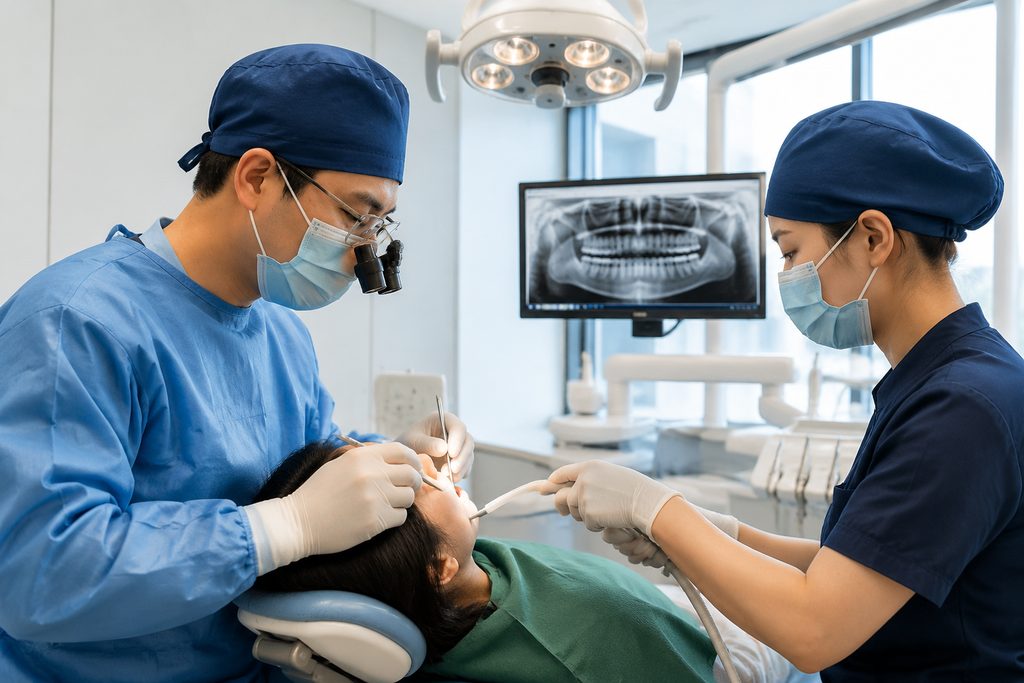
You have probably heard that flying abroad for surgery means gambling with quality. The assumption is that lower prices equal lower standards. That assumption falls apart when you look at the actual data on dental surgery volume and outcomes. The reality is that a country performing millions of these procedures annually develops a level of clinical repetition that most Western oral surgeons simply never reach. And that repetition translates into precision. If you are searching for wisdom teeth removal cost China, you are likely weighing that exact equation: can I get safe, high-quality extraction without paying $3,000 for four impacted teeth?
Recovery is the part nobody budgets for. The surgery itself takes under an hour. The healing takes weeks. Understanding that timeline before you book a flight is the difference between a smooth trip and a stressful one. We will walk you through exactly how long recovery takes, what can go wrong, and how to plan the logistics if you are traveling for care.
How This Actually Works, Step by Step
Here is the real sequence, stripped of marketing gloss. You do not fly to a new country, walk into a hospital, and get surgery the same day.
First, you send your existing dental records. That means panoramic X-rays (the full-mouth view showing root position and nerve proximity), any recent CBCT scans if you have them, and a note from your current dentist about your symptoms. Without these, no credible oral surgeon will evaluate you remotely.
A specialist reviews those records. They assess impaction angle, root curvature, proximity to the inferior alveolar nerve, and bone density. This review determines whether your case is straightforward or complex. It also determines whether you are a candidate for all four extractions in one sitting or whether staging makes more sense.
Then you get a written assessment. It includes the recommended approach, anesthesia options, expected surgical time, and a recovery plan. This is not a prescription. It is a clinical opinion based on your imaging. You take this to your own dentist at home if you want a second read.
After you agree to proceed, the coordination begins. Appointment scheduling, hospital registration, and payment deposits. You arrive, have the surgery, and begin recovery. The sequence is simple on paper. The waiting periods between steps are what people underestimate.
How Long Does Wisdom Teeth Recovery Take: The Real Timeline
The question seems simple. The answer is not a single number. Recovery splits into distinct phases, and each phase has its own functional milestones. Here is what actually happens in your mouth after the surgeon removes the teeth.
Blood clot formation happens in the first 24 hours. This clot is the foundation for everything that follows. Lose the clot, and you get a dry socket — one of the most painful complications in dentistry. Swelling peaks around day 3. Pain typically peaks between days 2 and 4. You will not feel your best on day one; you will feel worse on day three.
For simple extractions of fully erupted teeth, most people return to normal eating and light work within 5 to 7 days. For impacted teeth requiring bone removal, expect 10 to 14 days before you feel genuinely functional. Complete soft tissue closure takes 3 to 4 weeks. The bone underneath keeps remodeling for 3 to 6 months, but you will not feel that.
Age matters more than most surgeons admit in consultations. A 19-year-old with soft, elastic bone and partially formed roots heals dramatically faster than a 35-year-old with dense bone and fully developed roots. The same surgery in the same mouth at different ages produces different recovery curves. If you are 30 or older, add 2 to 4 days to every phase.
A Realistic Timeline
Here is the full sequence from your current situation to full recovery — including the steps most articles skip.
| Stage | What Happens | Realistic Duration |
|---|---|---|
| Remote evaluation | Send X-rays and records; specialist reviews | 3–7 days |
| Treatment plan and quote | Written opinion, surgical plan, cost estimate | 2–5 days after review |
| Visa processing (S2) | Apply with hospital invitation letter | 1–4 weeks, varies by consulate |
| Travel and arrival | Fly, settle, attend pre-op consultation | 2–3 days before surgery |
| Surgery day | Extraction under local, sedation, or general anesthesia | 45–90 minutes |
| Acute recovery | Pain, swelling, soft diet, medication | Days 1–5 |
| Functional recovery | Return to normal eating, work, light activity | Days 6–14 |
| Soft tissue healing | Gums close over extraction sites | 3–4 weeks |
| Full bone remodeling | Internal healing, no symptoms | 3–6 months |
Notice the gap between remote evaluation and surgery. That is where most international patients stall. The visa is the bottleneck. Apply for the S2 visa category — the one used for short-term medical treatment and private affairs. Your hospital provides an invitation letter and treatment confirmation. Consulates process these at different speeds depending on your nationality and the season. Budget a month to be safe.
What Can Go Wrong — and What Happens Then
Dry socket. It affects roughly 2–5% of all extractions, but the rate climbs to 20–30% for impacted lower wisdom teeth. The blood clot dislodges or dissolves, exposing bone and nerve endings. Pain starts around day 3 to 5 and radiates to the ear. It will not resolve with over-the-counter medication. Treatment is a medicated dressing placed into the socket, replaced every few days until healing restarts. It is not dangerous. It is miserable.
Infection is less common but more serious. Signs include worsening pain after day 5, fever, pus, or swelling that spreads to the neck. This requires antibiotics and sometimes surgical drainage. Delayed treatment can lead to deeper neck space infections, which are genuinely dangerous.
Nerve injury is the risk nobody wants to discuss. The inferior alveolar nerve runs close to lower wisdom tooth roots. Injury causes numbness in the lip, chin, or tongue. Temporary nerve disturbance occurs in up to 8% of lower extractions. Permanent injury is rare — under 1% in experienced hands. A pre-operative CBCT scan shows the exact nerve position and lets the surgeon adjust the approach. This is why you want a surgeon who does these daily, not occasionally.
What happens if any of these occur while you are abroad? A responsible provider has a protocol. You return to the same clinic for evaluation. Dressings, antibiotics, and follow-up are handled on site. You do not fly home with an unresolved dry socket. The recovery window matters here: do not book a return flight 48 hours after surgery.
Is Wisdom Teeth Removal Safe in China? What the Numbers Show
Safety statistics for dental surgery in China are not published in a single national registry that Western patients can easily access. But you can evaluate safety indirectly. Volume is the first signal. Major oral surgery departments at top public hospitals perform thousands of extractions annually. Individual surgeons at high-volume centers may extract more wisdom teeth in a month than a suburban Western oral surgeon does in a year.
The second signal is imaging standards. Reputable Chinese hospitals now use CBCT (cone-beam CT) as standard for impacted lower wisdom teeth, not just for complex cases. This is the same technology used in the US and Europe. It reduces nerve injury risk by giving the surgeon a 3D view of root position relative to the nerve canal.
Infection control protocols at accredited public hospitals follow international standards. Sterilization, single-use instruments, and operating room discipline are not optional. The question is not whether Chinese hospitals can do this safely. The question is which hospitals. A top-tier public hospital in Shanghai or Beijing is a different universe from a small private clinic in a tourist district.
So the honest answer: yes, wisdom teeth removal is safe in China when performed at a properly vetted hospital with modern imaging and experienced surgeons. The safety comes from selection, not from the country itself. You would apply the same standard at home.
Practical Considerations: Records, Visa, Payment, and Follow-Up
Records come first. You cannot get a meaningful remote evaluation without current panoramic X-rays. If your images are more than 6 months old, get new ones before contacting anyone. Blurry smartphone photos of X-ray films are not acceptable. Request digital files from your dentist.
The visa category is S2. Not M. M visas are for commercial and trade activities. Medical treatment falls under S2 for short stays under 180 days. Your hospital provides the invitation letter and treatment confirmation documents. Processing times vary by consulate, and no one can guarantee approval. Apply early.
Payment is typically upfront for public hospitals. International patients pay a deposit before surgery, with the balance settled before discharge. Private international hospitals may accept direct insurance billing. Public hospitals generally do not — you pay, then claim reimbursement from your insurer. Confirm your policy covers overseas dental surgery before committing.
Language is the practical barrier most patients underestimate. A large public hospital in Shanghai sees tens of thousands of patients daily. Registration desks, payment windows, and pharmacy counters operate in Mandarin. Signage is increasingly bilingual in top hospitals, but the system is not built for English-speaking patients navigating alone. A bilingual medical companion who handles registration, payment, and translation changes the entire experience.
Follow-up at home is straightforward. Your local dentist can monitor healing and remove any non-dissolving sutures if needed. Get a written discharge summary and a copy of your post-operative X-rays before leaving China. These documents let your home dentist understand exactly what was done.
Frequently Asked Questions
Impacted teeth requiring bone removal and sectioning take longer to heal than simple extractions. Expect significant swelling and pain for 4 to 6 days, functional recovery within 10 to 14 days, and full soft tissue closure at 3 to 4 weeks. Bone remodeling continues for months, but you will not feel it.
In China, extracting all four wisdom teeth — including impacted ones — typically ranges from $400 to $1,500 at a top public hospital, depending on complexity and anesthesia. In the United States, the same procedure commonly runs $1,500 to $3,500 or more, especially with sedation. The wisdom teeth surgery price abroad is one of the clearest savings categories in dental care. Prices vary by hospital and case complexity.
You can, but you should not. Flying within 24 hours of extraction creates two problems. Cabin pressure changes can dislodge the blood clot, triggering dry socket. And if complications arise, you are already gone. Stay at least 5 to 7 days after surgery. This gives you time to manage peak swelling, get follow-up care if needed, and fly home with the riskiest window behind you.
Age increases surgical complexity. Roots are fully formed, bone is denser, and healing is slower. But the procedure is still safe when imaging is thorough and the surgeon is experienced. A CBCT scan is non-negotiable for patients over 30 with lower impacted teeth. The nerve position must be mapped precisely before any incision is made.
Packaged deals that bundle surgery, hotel, and airport transfers can look appealing. The risk is that the package prioritizes convenience over clinical quality. Before considering any package, verify the hospital’s accreditation, the surgeon’s experience, and whether CBCT imaging is included. A package from a top-tier public hospital’s international department is legitimate. A package from an unvetted clinic marketed to tourists is not.
Your Next Step
Recovery from wisdom teeth surgery is predictable when the surgery is done well. The timeline stretches from a few days of genuine discomfort to a few weeks of gradual return to normal. Planning around that timeline — not against it — is what makes the difference between a smooth experience and a stressful one.
Our team at China Medical Services connects international patients with vetted oral surgery departments at top Chinese hospitals. We handle record review coordination, appointment scheduling, and bilingual support on the ground. We do not perform surgery, and we do not promise outcomes. What we do is make the logistics manageable so you can focus on healing.
If you are weighing wisdom teeth removal cost China against staying home, start with your X-rays. Send them for a remote evaluation. Get a clinical opinion before you book anything. Request a free consultation and we will help you understand your options — no pressure, just information.
For more medical information and treatment options in China, visit chinamedservices.com (China Medical Services).
