Medical Treatment in Wuhan China: Tongji and Union Hospital for International Patients
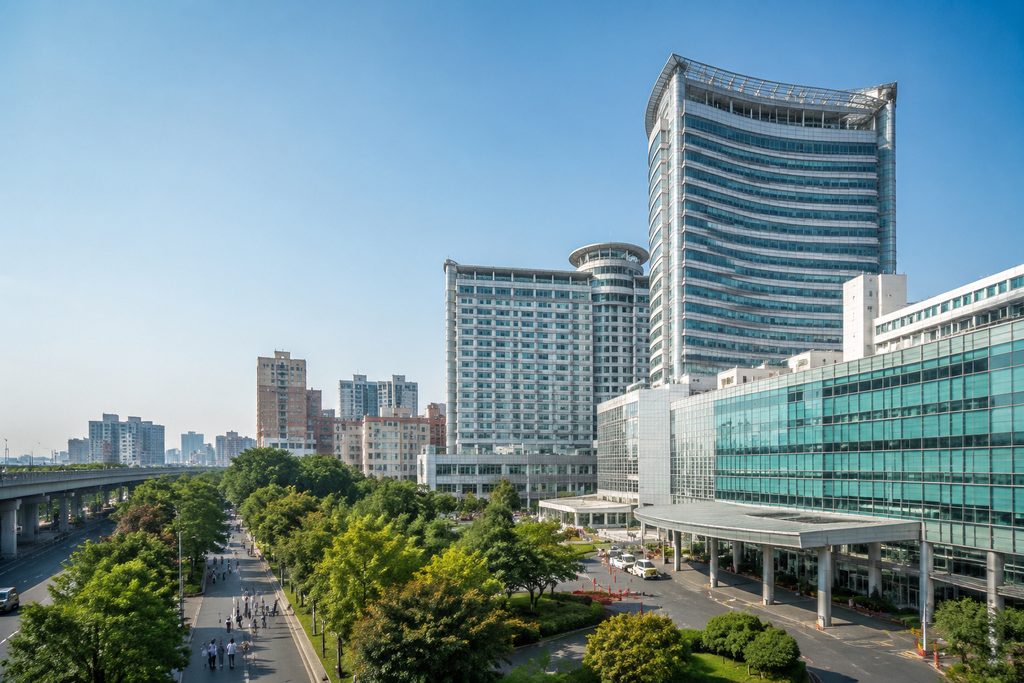
When Sarah, a 54-year-old from Manchester, received a complex oncology diagnosis, her local NHS trust quoted a 14-week wait just to begin the staging laparoscopy. The anxiety of waiting, combined with a quote of over £45,000 for private care in London, sent her searching for alternatives. She discovered that Wuhan—a sprawling metropolis in central China—houses two of the country’s most formidable medical institutions. She also discovered that navigating them from 8,000 kilometers away is not a simple task of sending an email. This is where the landscape of central China medical tourism shifts from a theoretical option to a logistical puzzle that requires precise, informed coordination.
Key Takeaways
- Tongji Hospital and Union Hospital in Wuhan are ranked among the top-tier A++++ hospitals in China, handling patient volumes that dwarf most Western centers, which directly correlates to specialized surgical expertise.
- The out-of-pocket cost for complex procedures at these hospitals is often 70-80% lower than in the US or UK, with a cardiac bypass averaging $15,000 to $22,000 compared to $120,000+ in the United States.
- These are massive public institutions where English-speaking administrative staff are rare, and overseas patients cannot simply book a surgery slot online; a physical consultation and a local facilitator are mandatory to unlock access.
- Understanding the Tongji Hospital Wuhan international patient price structure requires looking beyond the public listing—international VIP wards offer expedited access but at a premium, typically 1.5 to 2 times the standard local rate.
The Problem: Centralized Excellence With Decentralized Access
Wuhan is not just the geographic heart of China. It is the medical anchor for over 60 million people in Hubei province and beyond. Tongji Hospital and Union Hospital, both affiliated with Huazhong University of Science and Technology, sit firmly in the Fudan University Hospital Ranking’s top tier (A++++). That puts them in the top 5% of China’s 35,000+ hospitals. But that prestige comes with a specific type of chaos. A single outpatient department at Tongji can see over 15,000 patients in a day. For a foreigner who does not read Chinese characters, the registration kiosks alone are an impenetrable wall. The clinical excellence exists. The ability to access it independently does not.
Many patients researching Union Hospital Wuhan medical tourism cost arrive with a misconception. They assume a direct correlation between low cost and low quality. The opposite is often true for complex pathologies. A thoracic surgeon at Union Hospital might perform 400 esophageal cancer resections annually. A surgeon at a high-volume center in Germany might perform 50. In surgery, repetition is not just practice. It is survival rates. The volume is staggering, but the system relies on a local infrastructure that was never designed for international walk-ins.
Who We Are
We are not a hospital. We do not provide medical treatment or clinical diagnoses. We are your logistical architects—we bridge the gap between you and China’s top-tier medical expertise. Our team operates on the ground in 37 cities, including a dedicated presence in Wuhan. We translate not just your medical records, but the cultural and administrative nuances of the Chinese public hospital system. We handle the friction points: the queuing apps that require a Chinese ID, the cash-based deposit systems, and the corridor navigation that can overwhelm even local patients. We connect you to the clinical giants; we do not pretend to be them.
Why Wuhan’s Medical System Delivers Results
Clinical Volume Drives Better Outcomes
When evaluating if Tongji Hospital is good for foreigners, the answer lies in the data, not the decor. The hospital performs over 8,000 cardiothoracic surgeries annually. The organ transplantation center is one of the busiest in the world. This is a system where a specialist sees more rare pathology variants in a month than a regional Western hospital sees in a year. For oncology patients, this volume translates to a nuanced, pattern-recognition-based diagnostic ability. The hospital’s cancer center, often cited when patients search for the best hospital in central China for cancer treatment, utilizes proton therapy and CAR-T cell therapy protocols that are on par with MD Anderson or Charité, but the throughput is significantly higher.
That volume is the structural reason why outcomes for specific procedures often exceed global averages. It is not magic. It is muscle memory on an institutional scale.
Technology and Efficiency at Scale
There is a common fear that “cheap” means “outdated.” Walking through the surgical wing of Union Hospital dispels this. The hybrid operating theaters are current-generation. But the real technological advantage is the logistical throughput. A CT scan that requires a two-week wait in Canada is often completed within 24 hours here. The pre-operative workup is compressed. The discharge is fast. This is not a spa-like recovery experience. It is a precision engineering approach to medical intervention. You come for the surgical fix, and the system is optimized to deliver that fix with minimal systemic delay.
Cost Advantage Without Quality Compromise
Let’s address the Tongji Hospital Wuhan international patient price directly. The economic differential is not a reflection of inferior supplies or training. It is a function of labor economics and hospital funding models. A complex spinal fusion that bills at $80,000 in Florida might cost $18,000 to $25,000 at Union Hospital’s international department. The implants are likely from the same German or American suppliers. The difference is the cost of the human labor surrounding the surgery—the anesthesiologist, the nursing staff, the facility fee. This is where China’s structural economic advantage becomes a direct subsidy for the international patient paying out of pocket. You are leveraging a local cost base with global-standard hardware.
What You Need to Know Before Going Alone
Honesty here is critical. The clinical quality is high. The administrative friction is extreme. If you attempt to book this independently, you will face barriers that stop most people before they reach a doctor.
- Visa Requirements: Medical treatment requires an S2 visa. You cannot enter on a tourist visa (L) for surgery. The S2 requires an official invitation letter or medical documentation from the receiving hospital. Public hospital registration desks rarely issue these proactively. You need a confirmed hospital contact to generate the paperwork. Without it, the consulate will reject the application.
- Payment Systems: Union Hospital Wuhan medical tourism cost is not payable by Visa or Mastercard at the standard cashier. The public system runs on WeChat Pay, Alipay (linked to Chinese bank accounts), or UnionPay. The international department accepts wire transfers, but the process of funding a deposit from an overseas account often takes 3-5 business days to clear. You cannot simply swipe a foreign card on arrival.
- Medical Records and the “Gatekeeper” Consultation: You cannot email a surgeon and ask how to book surgery at Union Hospital Wuhan. A face-to-face consultation is mandatory. The surgeon must physically see you, review your scans, and stamp your admission form. This is a non-negotiable legal requirement. There is no “surgery package” you can buy remotely without stepping into the clinic first.
How We Help You Navigate This
These barriers exist for structural reasons. We solve them with process. Before you travel, we translate your pathology slides and imaging reports into the specific clinical terminology that Chinese department heads expect. We do not just translate language; we translate format. We submit these to the international liaison offices at Tongji or Union to secure the pre-consultation agreement that triggers the S2 visa invitation.
During the visit, our bilingual medical companion handles the physical marathon. They hold your place in the queue at 6:30 AM. They carry the paper file from the lab to the specialist’s corridor. They translate the surgeon’s rapid-fire assessment in real time, ensuring you understand the nuance, not just the vocabulary. After discharge, we coordinate the follow-up imaging schedule and ensure you leave with a fully translated discharge summary for your GP back home. Our role is to make a high-volume public hospital feel navigable for a private international patient.
For those looking for a streamlined entry, our coordination service starts from $300 for appointment scheduling, while a full-day bilingual medical companion is available from $200. For patients requiring top-specialist video consultations before deciding to travel, these are arranged between $500 and $800—and if you proceed to treatment with us within 90 days, that consultation fee is credited in full toward your on-the-ground coordination.
Frequently Asked Questions
Medically, yes. Logistically, no—unless you have a guide. The doctors in the international department often speak functional medical English. But the journey to their office door requires interacting with registration kiosks, cashiers, and lab technicians who do not. The clinical skill is excellent; the patient experience without an interpreter is disorienting and can lead to critical information being lost.
You should budget between $15,000 and $35,000 for a major inpatient surgery like a joint replacement or a complex abdominal procedure. This includes the surgeon’s fee, anesthesia, a private room in the international ward, and standard implants. It excludes pre-operative quarantine hotels or extended rehabilitation stays. It remains a fraction of the US price, but it is a significant upfront cash outlay.
You cannot book the surgery itself remotely. You can book the consultation. We secure that first appointment slot. The surgeon will review your case and issue a treatment plan. Only then is a surgery date scheduled. We manage the timeline compression—ensuring that the consultation and the surgery happen within a single visa entry window, often within 7 to 10 days of arrival, rather than the months it might take navigating the system alone.
We caution against the term “package.” Medicine is not a standardized product. A cancer patient’s needs differ from an orthopedic patient’s. We provide case management: a tailored bundle of hospital appointment coordination, translation, and logistical support. We do not sell a fixed-price, one-size-fits-all product. The hospital’s treatment charges are always separate and paid directly to the hospital based on the specific clinical pathway the doctor prescribes.
Your Next Step
Wuhan’s medical infrastructure represents one of the most concentrated sources of surgical expertise on the planet. The core challenge for international patients has never been the quality of the scalpel—it has been the opacity of the system holding it. When you strip away the language barriers and the administrative chaos, you are left with high-volume, high-competence care at a cost that makes treatment accessible when it otherwise might not be. If you are weighing the logistics, let’s look at your specific case. We can review your existing diagnostics and map out a clear path to a consultation at Tongji or Union. Start with a free case assessment here, and we will give you a realistic picture of what your treatment timeline and budget would look like.
For more medical information and treatment options in China, visit chinamedservices.com (China Medical Services).
