Wuhan Tongji Hospital Neurosurgery for International Patients: Costs, Quality, and How to Book
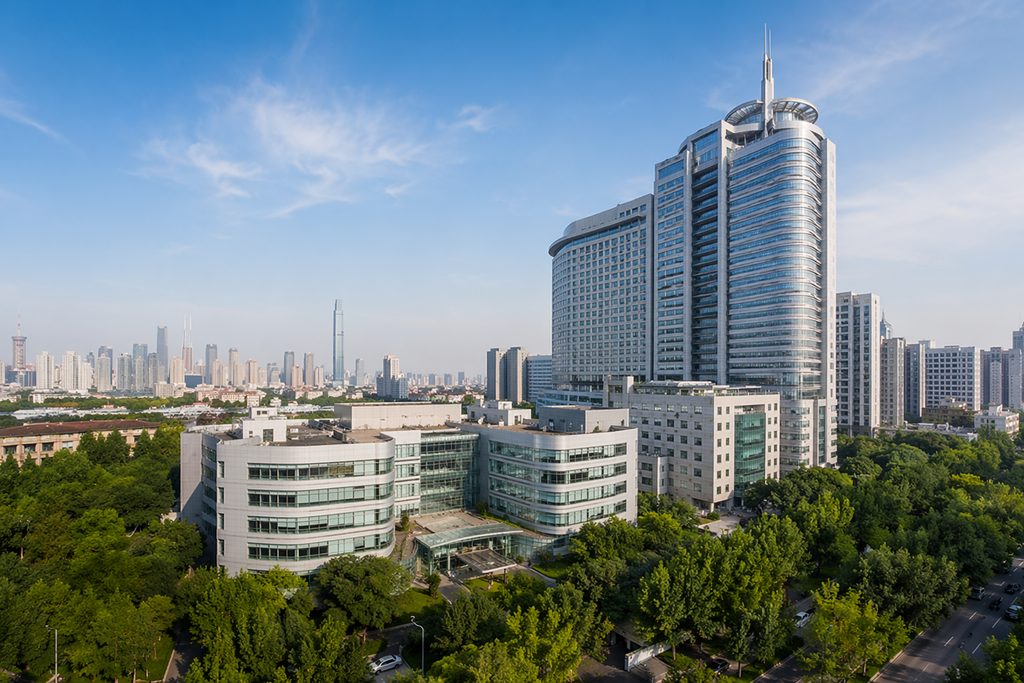
Wuhan Tongji Hospital Neurosurgery: The Short Answer
Wuhan Tongji Hospital runs one of China’s largest neurosurgery departments, handling over 7,000 cranial and spinal procedures annually across 400+ dedicated beds. The Wuhan Tongji Hospital neurosurgery price for foreigners typically ranges from $18,000 to $45,000 for complex tumor resections — roughly one-fifth to one-third of comparable U.S. bills. But getting here is not a simple booking. The hospital’s regular outpatient clinic does not accept overseas reservations in advance. You need the international medical pathway, which we explain below.
That price spread matters. A pituitary adenoma resection via the transsphenoidal route might land near $18,000. A skull-base meningioma requiring extended monitoring and a longer ICU stay could push toward $45,000. The hospital itself does not publish a fixed foreigner price list. Estimates come from case complexity, implant costs, length of stay, and whether you go through the standard international department or a VIP green channel. More on that shortly.
Who This Is Right For — and Who It Isn’t
Not every international patient should fly to Wuhan for brain surgery. The people who benefit most share a few traits. They have a confirmed or strongly suspected neurosurgical diagnosis from imaging done at home. They are stable enough to travel. They want high surgical volume without paying Western private-hospital rates. And they are willing to work through a coordination layer rather than trying to manage a Chinese public hospital alone.
Good candidates typically include:
- Patients with clearly diagnosed tumors — meningiomas, gliomas, pituitary adenomas, acoustic neuromas — who have recent MRI or CT scans
- Those with spinal conditions requiring fusion or decompression, who have exhausted conservative care
- Patients with vascular neurosurgical needs, such as aneurysm clipping or AVM resection, who are not in acute rupture
- Families seeking a written second opinion before committing to travel
Who should not pursue this path? Anyone with an acute, unstable neurological emergency — a ruptured aneurysm with active bleeding, severe traumatic brain injury, or rapidly deteriorating consciousness. Those patients need care where they are, immediately. Also, patients with multiple uncontrolled comorbidities that would make a long international flight dangerous. And anyone expecting a Western-style private hospital experience with guaranteed English at every touchpoint. Tongji is a top public hospital. It is busy. The corridors are crowded. English is limited outside the international department.
If you are unsure which group you fall into, a remote evaluation is the cheapest way to find out.
The Options, Compared
When international patients consider neurosurgery in China, they are usually weighing three realistic paths. Here is how they stack up for a typical complex brain tumor case.
| Path | Typical Cost (USD) | Wait for Surgery | English Support | Best For |
|---|---|---|---|---|
| Wuhan Tongji Hospital — international department | $18,000–$45,000 | 2–6 weeks after in-person consult | Partial; bilingual coordinator recommended | Complex cranial cases, high surgical volume, cost-sensitive patients |
| Beijing or Shanghai top neurosurgery center (e.g., Tiantan, Huashan) | $25,000–$60,000 | 3–8 weeks after in-person consult | Better international infrastructure | Patients who want the most famous names and larger expat support networks |
| U.S. or Western Europe private hospital | $80,000–$250,000+ | 1–4 weeks | Native English | Patients with insurance coverage, or those unwilling to travel to China |
Which column fits you? If cost is the dominant factor and your case is complex but stable, Wuhan Tongji sits in the sweet spot. If you want the absolute highest-profile neurosurgery brand names in China, Beijing’s Tiantan Hospital or Shanghai’s Huashan Hospital may carry more weight — at a higher price and with more competition for beds. If your insurance covers treatment in the U.S. or Europe, staying home often makes more sense than paying out of pocket in Wuhan.
Is Wuhan Tongji Hospital Good for Neurosurgery? What the Data Shows
The short answer is yes. Is Wuhan Tongji Hospital good for neurosurgery by objective measures? The department consistently ranks among China’s top ten neurosurgery units in the Fudan University hospital rankings — the country’s most authoritative hospital evaluation system. It runs one of the largest neurosurgical intensive care units in central China.
Volume matters in neurosurgery. Surgeons who perform hundreds of tumor resections annually develop pattern recognition that lower-volume centers cannot match. Tongji’s neurosurgery team performs more than 7,000 procedures a year across its subspecialties: neuro-oncology, skull-base surgery, cerebrovascular surgery, functional neurosurgery, and spinal neurosurgery. That is a scale few Western centers approach.
But volume is not everything. You should also weigh what the hospital does not offer. Post-operative rehabilitation is functional but not luxurious. Nursing ratios in public wards are lower than in Western private hospitals. Family members often supplement bedside care. If those trade-offs are acceptable given the price difference, Tongji becomes a very rational choice.
How to Book Neurosurgery at Tongji Hospital as an International Patient
Here is the reality most people discover too late: how to book neurosurgery at Tongji Hospital as an international patient is not a matter of sending an email and picking a date. The public registration system requires in-person queueing for a clinic ticket. Surgery is only scheduled after a face-to-face outpatient consultation with a neurosurgeon, who reviews your imaging and orders any additional tests.
That means your first trip to Wuhan is a consultation trip, not a surgery trip. The typical sequence:
- Submit your existing MRI, CT, pathology, and clinical records for remote review
- Receive a preliminary assessment on whether your case is suitable for treatment at Tongji
- Travel to Wuhan for an in-person consultation with the neurosurgery team
- Complete any additional imaging or laboratory tests the team requires
- Receive a surgery date, typically 2 to 6 weeks later depending on urgency
- Return to Wuhan for admission, surgery, and post-operative recovery
For patients who cannot make two trips, some choose to stay in Wuhan between the consultation and surgery. Others opt for a written second opinion first — a lower-cost way to confirm the treatment plan before committing to travel. The Wuhan Tongji Hospital international patient department contact details are not published as a direct public hotline for overseas callers. Access runs through the hospital’s international medical services office, which coordinates with approved medical facilitation partners. This is where a bilingual coordinator earns their fee: handling registration, queueing, document translation, and communication with the medical team.
Be realistic about timing. No one — including us — can guarantee a specific surgeon or a specific surgery date before you arrive. Anyone promising that is not being honest about how Chinese public hospitals operate.
What It Costs: Wuhan Tongji Hospital Neurosurgery Price for Foreigners
Let’s get concrete. The Wuhan Tongji Hospital neurosurgery price for foreigners breaks down into hospital charges and coordination costs. Hospital charges include the surgical procedure, anesthesia, operating room time, implants if needed, ICU days, ward bed days, medications, and diagnostic imaging. Coordination costs cover document translation, appointment scheduling, bilingual accompaniment, and logistical support.
Typical ranges for common procedures:
- Pituitary adenoma resection (transsphenoidal): $18,000–$25,000
- Meningioma resection (convexity or skull-base): $22,000–$38,000
- Glioma resection with intraoperative monitoring: $25,000–$45,000
- Acoustic neuroma resection: $20,000–$32,000
- Spinal fusion (single or two-level): $15,000–$28,000
- Aneurysm clipping: $28,000–$50,000
These figures exclude international travel, accommodation, and post-discharge rehabilitation. They also assume a standard international department pathway. Choosing a VIP green channel — where a named senior specialist leads the surgical team and you receive priority scheduling and upgraded ward amenities — typically adds 50% to 100% to the base hospital cost. For a $30,000 procedure, that means $45,000 to $60,000.
Does insurance cover any of this? Some international insurers reimburse treatment at approved Chinese hospitals, but Tongji’s public system generally requires upfront payment. You settle the bill, then file for reimbursement. Check with your insurer before traveling. Private international hospitals in China — which are not what we are discussing here — more commonly offer direct billing.
Practical Considerations: Records, Visa, Payment, and Follow-Up
The logistics are manageable, but they are not trivial. Start with records. You need recent imaging — MRI or CT within the past three months — plus any pathology reports, surgical history, and a summary letter from your current neurologist or neurosurgeon. All documents must be translated into Chinese for the hospital’s medical records department. A certified medical translator or your coordination service handles this.
Visa category matters. Medical treatment in China falls under the S2 visa, which covers short-term private affairs including medical treatment. Accompanying family members also apply for S2. The hospital provides an invitation letter and treatment confirmation documents to support the application. Processing times vary by embassy and nationality. Apply only after you have a confirmed consultation appointment — the invitation letter must reference a real hospital contact.
Payment is upfront. Chinese public hospitals require a deposit at admission, typically 50% to 100% of the estimated treatment cost. Major credit cards work at the international department payment counter. Bank transfers are also accepted. Bring more than you think you need; unexpected ICU days or additional implants can raise the final bill.
Follow-up after returning home is the part most people under-plan. Your surgeon will want post-operative imaging at specific intervals — usually 1 month, 3 months, and 6 months. You can do these scans at home and send them back for review. Some patients schedule a video consultation with the Tongji team at the 3-month mark. Budget $100 to $300 for each remote follow-up consultation.
Practical tip: Arrange accommodation near the hospital before you arrive. Tongji Hospital sits in Wuhan’s Qiaokou District. Hotels within a 15-minute drive fill quickly during peak treatment seasons. Your coordination team can recommend options that accommodate post-surgical patients.
Frequently Asked Questions
No. The hospital requires an in-person outpatient consultation before any surgery is scheduled. You can, however, submit your records for remote review first. That gives you a preliminary assessment of whether your case is suitable and what the likely treatment plan would be. It reduces — but does not eliminate — the risk of traveling for a consultation that does not lead to surgery.
The cost of brain tumor surgery at Tongji Hospital China for international patients is generally higher than for local patients. Local patients with Chinese national insurance pay subsidized rates. Foreigners pay the unsubsidized self-pay rate, which is the same rate Chinese patients without insurance would pay. Expect $18,000 to $45,000 for complex tumor resections depending on tumor location, size, and required monitoring.
Yes, for most cases. Tongji’s neurosurgery department ranks among China’s top ten nationally by case volume and clinical capability. Beijing Tiantan and Shanghai Huashan have stronger international reputations and more developed international patient infrastructure. But Tongji offers comparable surgical quality at a lower total cost, with less competition for beds. For complex but stable cases, the difference in surgical outcome is unlikely to justify the price gap.
Chinese law requires hospitals to carry medical liability insurance. But pursuing a malpractice claim as a foreigner is difficult, slow, and rarely results in large settlements by Western standards. Your realistic protection is choosing a high-volume, reputable department — which you are doing — and understanding that no surgical outcome is guaranteed. Discuss the specific risks of your procedure with the surgeon during the pre-operative consultation. Ask about complication rates for your exact tumor type and location.
Strongly recommended. Outside the international department, very few staff speak English. Registration, queueing, payment, pharmacy pickup, and test scheduling all require Chinese. A bilingual companion handles these logistics so you can focus on your medical care. The cost starts around $300 per day, which is minor compared to the total treatment bill.
Your Next Step
Wuhan Tongji Hospital offers genuinely world-class neurosurgery at a fraction of Western prices. The catch is that accessing it requires navigating a system built for Chinese patients, not foreigners. That is where we come in. China Medical Services is not a hospital and we do not provide medical advice. We are a coordination team that connects international patients with top-ranked Chinese hospitals, handles document translation, appointment scheduling, bilingual accompaniment, and visa guidance.
If you are considering neurosurgery at Tongji or another top Chinese center, start with a remote evaluation. Send your records, get an honest preliminary assessment, and decide whether travel makes sense. You can request a free consultation through our patient services page. No pressure. Just clarity on whether this path is right for you.
For more medical information and treatment options in China, visit chinamedservices.com (China Medical Services).
