First Affiliated Hospital Xi’an Jiaotong Gastroenterology: A Complete Guide for International Patients
Key Takeaways
- First Affiliated Hospital of Xi’an Jiaotong University ranks among western China’s most experienced GI centers, handling over 80,000 endoscopic procedures annually.
- Gastroenterology treatment cost China typically runs 70-85% below US private-pay rates for comparable diagnostic and therapeutic procedures.
- International patients cannot book public outpatient appointments from overseas — you need either an in-person visit or a coordination pathway through the hospital’s international department.
- S2 visa is the correct category for medical travel to China. M visa does not apply to treatment purposes.
While a patient in the United States can expect to pay $2,500–$4,500 out-of-pocket for a diagnostic colonoscopy, the same procedure at First Affiliated Hospital of Xi’an Jiaotong University typically costs between $300 and $600 through the international department. That gap is not marketing noise. It reflects a fundamentally different cost structure for gastroenterology treatment cost China, one that has drawn a growing number of foreign patients to Xi’an for GI care.
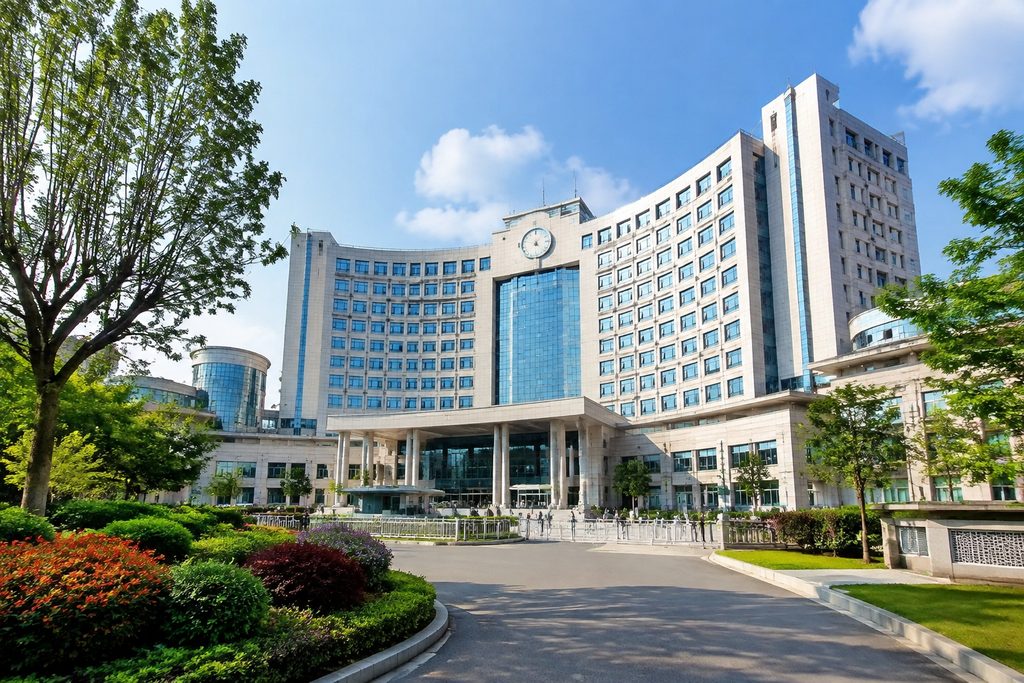
The hospital itself is not a small operation. It handles more than 4 million outpatient visits per year across all departments, with the gastroenterology division among the busiest in northwest China. For international patients weighing where to access high-volume GI expertise without the price tag common in North America or Western Europe, this institution deserves a serious look.
The Problem: GI Care Costs and Wait Times Are Pushing Patients to Look Abroad
Gastrointestinal disease does not wait for insurance approvals. Inflammatory bowel disease flares, unexplained bleeding, persistent abdominal pain, and colorectal cancer screening needs all carry urgency. Yet in several Western systems, access has become the bottleneck.
In Canada, the median wait time for a gastroenterology consultation after referral is approximately 12 weeks, according to the Fraser Institute’s 2023 waiting list survey. For a non-urgent colonoscopy in the UK’s NHS, patients can wait 6 to 18 weeks depending on trust and triage category. In the US, the problem is different but equally real: even insured patients face deductible exposure that turns a standard endoscopy into a multi-thousand-dollar event.
Now consider the uninsured or underinsured patient. A therapeutic upper endoscopy with biopsy in the US routinely bills between $4,000 and $8,000. A colonoscopy with polypectomy can exceed $6,000. For a patient facing those numbers, the decision to explore gastroenterology treatment cost China becomes rational, not exotic.
Why First Affiliated Hospital of Xi’an Jiaotong University Delivers Results
Clinical Volume That Builds Procedural Muscle
The gastroenterology department at First Affiliated Hospital of Xi’an Jiaotong University performs more than 80,000 endoscopic procedures each year, spanning diagnostic gastroscopy, colonoscopy, endoscopic ultrasound (EUS), and endoscopic retrograde cholangiopancreatography (ERCP). That procedural density matters. Endoscopists who perform 1,500 or more colonoscopies annually demonstrate significantly higher adenoma detection rates than low-volume peers, according to research published in Gastrointestinal Endoscopy.
For a foreign patient, volume translates into something concrete: a team that has seen rare presentations, managed complex polypectomies, and developed the muscle memory that only repetition builds. The hospital is also a major teaching center for Xi’an Jiaotong University’s medical school, which means the department operates under continuous academic scrutiny.
Technology Without the Premium Price Tag
The department runs a full suite of modern GI diagnostic equipment — high-definition endoscopes, narrow-band imaging for early cancer detection, capsule endoscopy, and double-balloon enteroscopy for small bowel evaluation. EUS-guided fine-needle aspiration is available for pancreatic and mediastinal lesions. These are not niche capabilities; they are standard tools in the department’s daily workflow.
And because the hospital operates within China’s public healthcare cost structure, the technology does not carry the capital-cost surcharge that inflates American hospital bills. An EUS procedure that might bill at $8,000–$12,000 in the US is typically priced between $800 and $1,500 at this institution through the international department.
Cost Advantage Without Quality Compromise
Lower cost does not mean lower quality — but the burden of proof falls on the system making that claim. Here is the structural reality: Chinese public hospitals pay lower labor costs, amortize equipment across far higher patient volumes, and operate without the administrative overhead that consumes roughly 25% of US hospital spending. The savings are structural, not clinical.
First Affiliated Hospital of Xi’an Jiaotong University is a Grade III Class A hospital — the highest tier in China’s hospital accreditation system. It holds a position in the Fudan University hospital rankings, the country’s most authoritative assessment. For international patients, that means the institution has been evaluated against rigorous clinical, research, and teaching benchmarks, not just patient satisfaction surveys.
Gastroenterology Treatment Cost China: A Procedure-by-Procedure Breakdown
The table below compares typical self-pay prices at First Affiliated Hospital of Xi’an Jiaotong University’s international department with US national averages. Figures are approximate and vary by hospital and case complexity.
| Procedure | First Affiliated Hospital (Int’l Dept) | US Average (Self-Pay) | Savings |
|---|---|---|---|
| Diagnostic upper endoscopy (EGD) | $250–$500 | $2,500–$4,500 | ~85% |
| Diagnostic colonoscopy | $300–$600 | $2,500–$4,500 | ~83% |
| Colonoscopy with polypectomy | $500–$900 | $4,000–$7,000 | ~82% |
| Endoscopic ultrasound (EUS) | $800–$1,500 | $8,000–$12,000 | ~85% |
| ERCP (biliary/pancreatic) | $1,500–$3,000 | $12,000–$20,000 | ~83% |
| Capsule endoscopy | $600–$1,000 | $2,000–$4,000 | ~72% |
These are self-pay figures through the hospital’s international or VIP channel, which is the only realistic pathway for a foreign patient who wants to lock in an appointment before arriving in Xi’an. Standard public outpatient pricing is lower still, but international patients cannot practically access that channel without Chinese language ability and in-person registration.
How Safe Is Endoscopy in China? A Data-Literate Answer
The question is fair. Foreign patients often ask how safe is endoscopy in China, and the answer requires more than reassurance — it requires context.
China’s top-tier hospitals follow infection control protocols aligned with international standards. Endoscope reprocessing at Grade III Class A institutions uses automated washing machines, enzymatic cleaning, and high-level disinfection, with documentation required at each step. The Chinese Society of Digestive Endoscopy publishes national guidelines that mirror the World Gastroenterology Organisation’s standards.
Complication rates for diagnostic endoscopy are low across all developed systems — perforation occurs in roughly 1 in 2,500 to 1 in 10,000 colonoscopies depending on whether polypectomy is performed. There is no credible evidence that complication rates at China’s top academic hospitals exceed Western benchmarks. What does differ is the patient experience: language barriers, unfamiliar workflows, and the absence of Western-style bedside manner. Those are real frictions, and they are exactly what a bilingual medical companion addresses.
First Affiliated Hospital Xi’an Jiaotong International Patient Department: What to Expect
The First Affiliated Hospital Xi’an Jiaotong international patient department functions as a coordination layer between foreign patients and the hospital’s clinical departments. It handles appointment scheduling, provides English-speaking staff, and manages the administrative side of a visit — payment, records, and follow-up communication.
Here is what it does not do: it does not allow you to book a public outpatient slot from overseas. That rule applies to every public hospital in China, not just this one. What the international department offers instead is access to the hospital’s VIP or special-needs channel, where senior gastroenterologists see patients by appointment. The cost is roughly 1.5 to 2 times the standard outpatient fee, but it buys something the public channel cannot: a confirmed appointment time before you board a plane.
For patients who want to book colonoscopy Xi’an medical tourism arrangements, the pathway typically runs like this: you send your existing medical records and a summary of symptoms. The international department reviews them with the gastroenterology team. If a procedure is indicated, they schedule it. You arrive in Xi’an, complete the bowel preparation, undergo the procedure, and receive results — often within 48 to 72 hours of arrival.
Stomach Cancer Treatment Price Abroad: Why Early Detection Changes the Math
Stomach cancer is the fourth most common cancer globally and the third leading cause of cancer death. In East Asia, incidence rates run several times higher than in North America or Europe — approximately 40 per 100,000 in China versus 5 per 100,000 in the US, according to GLOBOCAN data.
That epidemiological reality has produced a clinical advantage: Chinese gastroenterologists see far more early gastric cancer than their Western counterparts. The department at First Affiliated Hospital of Xi’an Jiaotong University performs endoscopic submucosal dissection (ESD), a technique that removes early-stage gastric lesions without open surgery. ESD costs roughly $3,000–$5,000 in China, compared to $25,000–$50,000 for an equivalent procedure in the US or $15,000–$30,000 in Western Europe.
For a patient diagnosed with early gastric cancer, the stomach cancer treatment price abroad is one factor. The other is expertise. ESD is a technically demanding procedure with a steep learning curve, and Chinese endoscopists perform it at volumes that few Western centers match. A patient who needs this procedure has a strong case for considering Xi’an.
Practical Considerations: Records, Visas, Payment, and Follow-Up
Before you contact any hospital in China, gather your medical records. The gastroenterology team needs prior endoscopy reports, pathology slides or reports, imaging (CT, MRI), and a current medication list. If records are not in English or Chinese, translation is required. Hospitals review records before scheduling, so incomplete documentation delays everything.
Visa is the next step. Foreign nationals traveling to China for medical treatment apply for an S2 visa, which covers short-term private affairs including medical care. Accompanying family members also apply for S2. Stays exceeding 180 days require an S1 visa. The hospital provides an invitation letter and treatment confirmation document to support the application. Approval is never guaranteed, and processing times vary by consulate. Apply at least 4 to 6 weeks before your planned travel date.
Payment at public hospitals in China is prepaid. You deposit funds at registration, and the hospital deducts charges as services are rendered. International credit cards are not always accepted at hospital cashiers; bring a UnionPay card, or arrange payment through the international department, which typically handles foreign transactions. Most international patients pay out of pocket and claim reimbursement from their insurer afterward. Private international hospitals in China offer direct billing, but First Affiliated Hospital is a public institution — expect to pay first and claim later.
Follow-up after returning home is a real consideration. The hospital will provide a discharge summary and procedure reports in English upon request. You will need to share these with your home gastroenterologist. For ongoing conditions like IBD or post-polypectomy surveillance, establish a local follow-up plan before you travel.
Frequently Asked Questions
Not through the public outpatient system. You can, however, coordinate a confirmed appointment through the hospital’s international department, which operates a VIP channel with senior gastroenterologists. This requires sending your medical records in advance for review.
Through the international department, expect to pay between $300 and $600 for a diagnostic colonoscopy. If polyps are removed, the cost rises to $500–$900. These figures include the procedure fee and facility charge but exclude pre-procedure consultation and any pathology analysis.
At Grade III Class A teaching hospitals like First Affiliated Hospital of Xi’an Jiaotong University, yes. The department performs over 80,000 endoscopic procedures annually, follows national infection control guidelines, and uses high-definition equipment with narrow-band imaging. The main gap is not clinical quality but patient experience — language, workflow familiarity, and communication style.
If endoscopy reveals a malignancy or complex lesion, the hospital can arrange immediate consultation with its oncology or surgical teams. You would then decide — with your family and home physician — whether to proceed with treatment in Xi’an or return home. The hospital does not pressure patients into treatment decisions.
Yes. You need an S2 visa for short-term medical treatment in China. The M visa is for commercial and trade activities and does not apply to medical travel. The hospital’s international department provides supporting documents for your visa application.
Your Next Step
Choosing where to receive gastroenterology care is a decision that balances cost, expertise, and logistics. First Affiliated Hospital of Xi’an Jiaotong University offers high-volume GI expertise at a fraction of Western prices, but navigating the system from abroad requires preparation and local knowledge. China Medical Services helps international patients understand their options, coordinate with hospital international departments, and arrange bilingual support on the ground. We are not a hospital and do not provide diagnoses or treatment recommendations. If you are weighing gastroenterology care in Xi’an, start by getting your records in order and understanding the visa timeline. The rest can be worked through step by step.
The decision to seek care abroad is never simple. But for patients facing five-figure endoscopy bills or months-long waits at home, Xi’an’s gastroenterology capacity is worth understanding on its own terms. The numbers are real. The pathway is defined. What remains is your choice.
For more medical information and treatment options in China, visit chinamedservices.com (China Medical Services).
